How was Baalbek built?
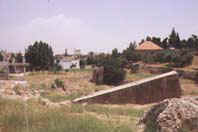 This view from the
quarry shows that the distance to the Baalbek acropolis is not huge -
no more than a third of a mile. Nor is the elevation very different
between the two points. Although we do not know the topography of the
site at the time the wall was constructed, it does seem feasible that
the stones might have been dragged up a ramp to the position where they
now lie. Theoretically, then, the lifting of the stones would have been
limited only to positional adjustments.
This view from the
quarry shows that the distance to the Baalbek acropolis is not huge -
no more than a third of a mile. Nor is the elevation very different
between the two points. Although we do not know the topography of the
site at the time the wall was constructed, it does seem feasible that
the stones might have been dragged up a ramp to the position where they
now lie. Theoretically, then, the lifting of the stones would have been
limited only to positional adjustments.
Nevertheless, when we consider the size
and weight of the Baalbek
stones and the fact that the route to the acropolis is not entirely
flat, transportation via non-technological means would have presented
the builders with formidable problems.
So, how was the job done? How were
three 800-ton stones cut,
moved
and erected in the Baalbek acropolis?
This is a question which must be
tackled with great caution, for
it
is not at all clear who the builders of Baalbek actually were.
If you ask an archaeologist, he will
tell you that the Romans
built
the temples of Baalbek and he or she might well point out that there
are work gang inscriptions which date the construction of the Temple of
Jupiter to the 1st century ad, i.e. to the Roman era. The archaeologist
might also point out to you that the Romans did know how to move and
lift heavy stones; after all, we know that they transported a large
number of multi-hundred ton obelisks to Rome from Egypt, and that was
no mean feat two thousand years ago.
The archaeologist will thus suppose
that the platform of Baalbek,
on
which the Roman temples stand, must also belong to the Roman era. And
he or she will thus explain the construction of the Trilithon by
reciting what is known about Roman construction techniques. Thus the
explanation involves the erection of the Trilithon by push-and-shove
methods, with the Romans probably using nothing more than wooden
rollers, ropes, wooden lifting frames and human muscle power.
Archaeologists typically overlook the
fact that experiments with
stones much lighter than 800 tons have crushed the wooden rollers. And
even if such a method was feasible, it would, by one estimate, have
required the combined pulling power of 40,000 men to move the Stone of
the South.[5] Incredible indeed.
Is there any evidence that the Romans
built the platform of
Baalbek
as well as the temples upon it? One text book assures us that: 'Part of
a [Roman] drum or column similar to those found in the Temple of
Jupiter was used as a block in the foundation under the Trilithon'.[6]
But where is the evidence for this Roman drum? I myself have been to
Baalbek and I can show you dozens of photographs of the foundation
walls, but I cannot show you the alleged Roman drum. It seems to have
vanished into thin air.
A good counter argument lies in the
fact that the Baalbek
platform
is out of all proportion to the temples which stand upon it, being thus
suggestive of two different phases in construction.[7] This same
observation was made by Professor Daniel Krencker of the German
archaeological mission, although it led him to the conclusion that the
Temple of Jupiter was originally planned on the same colossal scale as
these foundations.[8] In other words, Krencker believed that the Roman
builders must have had a change of mind. (How many times have we heard
this before? Call me a sceptic but it seems to me that 'a change of
mind' is archaeologist-speak for anything which the archaeologist
cannot comprehend!)
In the absence of any proof as to who
built the platform of
Baalbek,
it becomes very difficult to draw any firm conclusions as to the
construction methods used. What we can do, however, is demonstrate the
scale of the job by explaining how the Trilithon would be erected using
today's technology.
The Baldwins Challenge
In 1996, I posed the problem of the
Baalbek stones to Baldwins
Industrial Services - one of the leading crane hire companies in
Britain. I asked them how they might attempt to move the 1,000-ton
Stone of the South and place it at the same height as the Trilithon.
Although it is sometimes claimed that
modern cranes cannot lift
stones as heavy as 800-tons,[9] this is actually incorrect. Bob
MacGrain, the Technical Director of Baldwins, confirmed that there were
several mobile cranes that could lift and place the 1,000-ton stone on
a support structure 20 feet high. Baldwins themselves operate a 1,200
ton capacity Gottwald AK912 strut jib crane,[10] whilst other companies
operate cranes which can lift 2,000 tons. Unfortunately, however, these
cranes do not have the capability to actually move whilst carrying such
heavy loads.
How, then, might we transport the Stone
of the South to the
Baalbek
acropolis?
Baldwins suggested two possibilities.
The first would use a
1,000-ton capacity crane fitted with crawler tracks. The disadvantage
of this method would be the need for massive ground preparation works -
to provide a solid, level roadway for the crane to move.
The alternative to a crane would be a
series of modular hydraulic
trailers, combined to create a massive load carrying platform. These
trailers raise and lower their loads using hydraulic cylinders built
into their suspension. The initial lift at the quarry would be achieved
by the use of a cut-out section beneath the stone, which the trailer
would drive into. The final positioning in the wall, at a height of 20
feet, would be achieved by using an earth ramp.
This is all very interesting, and gives
us some feel for the
scale
of the engineering challenge, but there is, of course, one slight
problem with the Baldwins scenario, namely that none of this twentieth
century technology was supposedly available when Baalbek was built.
The Puzzle of Baalbek
Here is a fascinating question. Why did
the builders of the
Trilithon struggle with 800-ton weights when it would hatones rather than a cumbersome 800-tonner?
According to my engineer-friends, it
was very risky to use
800-ton
blocks in the way seen at Baalbek. This is because any vertical defects
running lengthwise through the stone might have led to a critical
structural weakness. In contrast, a similar fault in a smaller block
would not have affected the overall construction. Either the builder
was incompetent and just plain lucky or he was competent and supremely
confident in his materials.
Whichever way we look at it, however,
it makes no sense to
imagine
tens of thousands of men struggling to move and erect three of these
monstrous 800-ton stones.
So the question is "why did they not
split the stones?".
One possible answer to this puzzle is
that the builders moved the
stones in huge sizes simply because they could. In other words, it
might have been the case that, with a high technology available, the
builders found it more expeditious to cut and move one large stone
rather than several smaller ones. This presupposes the kind of
high-tech 'lost civilisation' which has been mooted by writers such as
Bauval, Hancock and West, or the more plausible 'lost race' as
advocated by myself in 'The Phoenix Solution' (1998).[11]
Large stone. It is amazing how they ancients moved such stones to build the
temples
The Megalomaniac Theory
What possible motive could there have
been for the Romans to drag
three shapeless stone blocks, weighing 800-tons each, and place them
into the wall of a structure in a remote region of the Roman empire?
Here is a possible scenario. Let us
imagine that the distant
Roman
empire wished to stamp its authority on one of the most sacred sites of
the Near East. Let's say an instruction was issued from the central
bureaucracy to erect the world's largest temple. An over-zealous Roman
governor at Baalbek then conceived a temple plan on an unimaginable
scale and ordered the local people to comply. Thousands of workers were
drafted in from all around the Bekaa Valley. Then, as the platform
neared completion, even bigger stones were dragged to the site. The
workers became exhausted, time and resources became a problem, and the
megalithic layer was abandoned. A new official then arrived and blew
the whistle, stopped the brutality and brought a sense of realism to
the enterprise; the order was thus given for a massive down-grading of
the yet-to-be-built temples.
This is a purely hypothetical and
imaginative scenario, and there
is
a problem with it, because there is no historical evidence for it.
Where, for example, is the record of a megalomaniac Roman governor at
Baalbek? Surely such a man would have been notorious for one of the
greatest acts of folly ever witnessed. And yet we find no recollection
of this mad dictator among the Romans and no recollection where we
would most expect to find it - in the legends of the local people...
The Local Legends of Baalbek
Curiously, it would seem that not one
Roman emperor ever claimed
credit for the Baalbek temple complex or for the construction of its
massive foundations.[12]
Similarly, we find no evidence for
Roman construction among the
local people. What we do find instead are legends which suggest that
Baalbek was built by super-human powers in an epoch long before human
civilisation began.
The Arabs believed that Baalbek once
belonged to the legendary
Nimrod, who ruled this area of Lebanon. According to an Arabic
manuscript, Nimrod sent giants to rebuild Baalbek after the Flood.
Another legend states that Nimrod rebelled against Yahweh and built the
Tower of Babel here, in order to ascend to Heaven and attack his God.
According to one version of this legend, Nimrod ascended to the top of
the Tower but found himself as far from his objective (Heaven) as when
he had begun; after the Tower collapsed, Nimrod attempted to scale the
heavens in a carriage drawn by four strong birds, but the carriage,
after wandering for a long time in space, eventually crashed on Mount
Hermon, thus killing Nimrod. Earlier in this tale, Nimrod had been
visited by Abraham, who came as a messenger of God to warn Nimrod of
punishment for his sins. But Nimrod, vexed by these threats, had cast
Abraham into a blazing furnace (from which the latter somehow emerged
unscathed).[13]
The local Muslims believed that it was
beyond the capability of
humans to move the enormous stones of Baalbek. Instead of giants,
however, they credited the work to demons or djinn. Muslim tradition
states that Baalbek was once the home of Abraham, and later of Solomon.
It is also suggested that the prophet Elijah was taken into Heaven from
Baalbek - upon a steed of fire.[14]
Other legends associated Baalbek with
the Biblical figure of Cain
-
the son of Adam - claiming that he built it as a refuge after his god
Yahweh had cursed him. According to Estfan Doweihi, the Maronite
Patriarch of Lebanon: 'Tradition states that the fortress of Baalbek...
is the most ancient building in the world. Cain, the son of Adam, built
it in the year 133 of the creation, during a fit of raving madness. He
gave it the name of his son Enoch and peopled it with giants who were
punished for their iniquities by the flood.'[15]
Modern Theories of Baalbek
Few modern writers have dared to tackle
the enigma of Baalbek,
perhaps because Lebanon was off-limits to tourists during the troubled
decades at the close of the second millennium.
One writer to take an interest is
Andrew Collins, whose articles
suggest the possibility that Baalbek was some kind of astronomical
observatory.[16]
The best known 'alternative' theory,
however, is that of ancient
astronaut writer Zecharia Sitchin, who asserted that Baalbek was a
space centre, built by a visiting race of 'Anunnaki' gods as a
launching pad for their space rockets.[17] An intriguing aspect of
Sitchin's theory was the connection between Baalbek-Heliopolis - the
City of the Sun - and the ancient legend of the Sun-god who used to
park his chariot at Baalbek. This rather appealing theory is, however,
sunk (in my mind at least) by the revelations in my book 'When The Gods
Came Down' (April 2000). In this book I revealed that the Sun-god and
the Anunnaki had nothing whatsoever to do with ancient astronauts.[18]
To close with an amusing anecdote, the
prize for the most
imaginative theory of Baalbek must undoubtedly be awarded to the
English traveller, David Urquhart, who suggested that the builders of
Baalbek had used mastodons - huge extinct elephant-like mammals - as
mobile cranes to help them move the stones![19]
Conclusions
Why did successive Roman emperors
travel thousands of miles to
Baalbek to receive oracles? Why did the Romans build the grandest of
all their temples so far away from Rome? What motivated them to ship
red granite columns all the way from Aswan in Egypt to the port of
Tripoli, and from there to Baalbek via Homs, a detour which, in order
to circumnavigate the mountains, required a journey of 200 kilometres?
This was certainly a most inconvenient place to erect the greatest
Roman temple in the world, so why did it have to happen here, in the
Bekaa Valley, of all places?
If we can answer this question, we can
perhaps solve the mystery
of
Baalbek. As one authority on Baalbek commented, however, 'nowhere is it
clearly stated to what cause the religious importance of this town is
attributed'.[20]
Ultimately, one suspects that the
answer to the sanctity of
Baalbek
lies in a decoding of its ancient religion, for it is religion which
has been the driving force at Baalbek since time immemorial.
The sanctity of Baalbek in Roman times
has already been mentioned
and one's attention is drawn inevitably to the trinity of gods who were
worshipped here: Venus, Bacchus and the mighty Jupiter. The latter -
equivalent to the Greek god Zeus - embodied all the symbolism of the
archetypal Storm God. The fifth century writer Macrobius described the
statue of Jupiter as follows:
'The statue of the god is of gold,
representing a person without
a
beard, who holds in his right hand a whip, charioteer-like, and in his
left a thunderbolt with ears of corn.' [21]
What was the meaning of this Storm-God
with thunderbolt? To
modern
scholars, Jupiter was a god of thunder and lightning and nothing but
thunder and lightning. If modern scholars are to be believed, our quest
for religious meaning at Baalbek culminates anti-climactically in the
primitive worship of mundane weather-gods.
However, readers of my book 'When The
Gods Came Down' will
recognise
in the statue described by Macrobius a crucial esoteric meaning in the
connection between the thunderbolt and the 'ears of corn'.
Furthermore, it should be noted that
the Roman gods are only part
of
the answer to the sanctity of Baalbek, for the town was in fact named
after Baal, the Storm-God of the Canaanites/Phoenicians. And the
legends of the god Baal provide numerous fascinating parallels to the
gods of the ancient Mesopotamian exploded planet cults (as decoded in
my books). Indeed, my own private research suggests that the
Canaanite/Phoenician religion could itself be described as an exploded
planet cult.
Inevitably, then, we must ask whether
the importance of Baalbek
might have resulted from a celestial event - perhaps the impact of a
meteorite - during the pre-literate era. Might a meteorite be the key
to the importance of Baalbek - the northern 'Heliopolis' - just as the
meteorite called 'the Benben Stone' was the key to the importance of
Annu - the southern 'Heliopolis' in ancient Egypt?
And what about those gigantic stones in
the Trilithon? Were they
constructed deliberately, perhaps to evoke the idea of the meteorites -
the giant seeds of life - lying embedded in the foundations (or Womb)
of Mother Earth? Or were they simply the remains of an unfinished
defensive wall?
Perhaps we will never know the answer
to this question or to the
question of how the stones of the Trilithon were moved. The problem is
that everyone sees at Baalbek what they want to see, based on their own
preconceptions and their own paradigm. Perhaps it will always be so.
One final thought to close. If the
mysterious stones of Baalbek
are
impelling us to exercise our minds, then perhaps the ancient builders
are partly achieving their objectives. But in order for us to pass, as
initiates, the Test of the Trilithon, it is necessary for us to do
something more than merely exercise our minds. It is necessary first to
challenge everything that we have ever been taught about the meaning
and origins of religion...
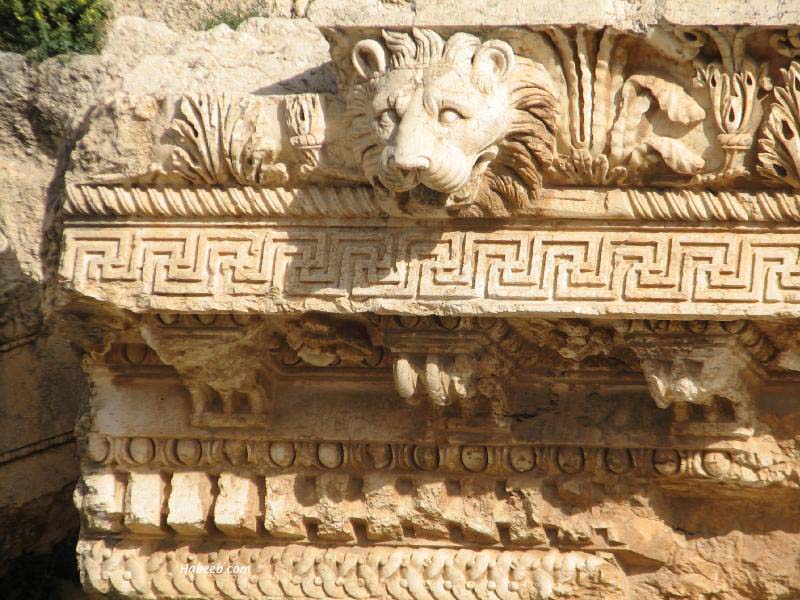
Detail of the famous Lion's Head. The
Lion's Head is in the front of the Temple of Jupiter
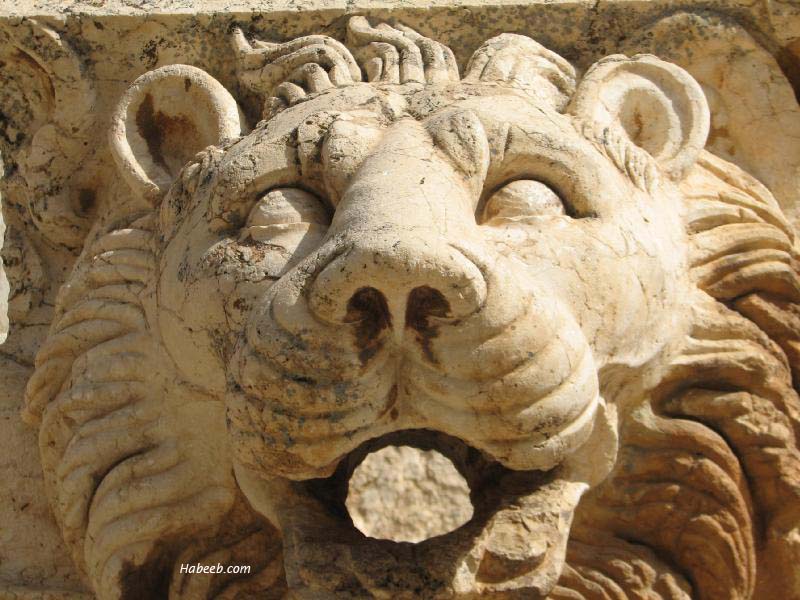
Lion Head
close up - you can see right into his mouth!
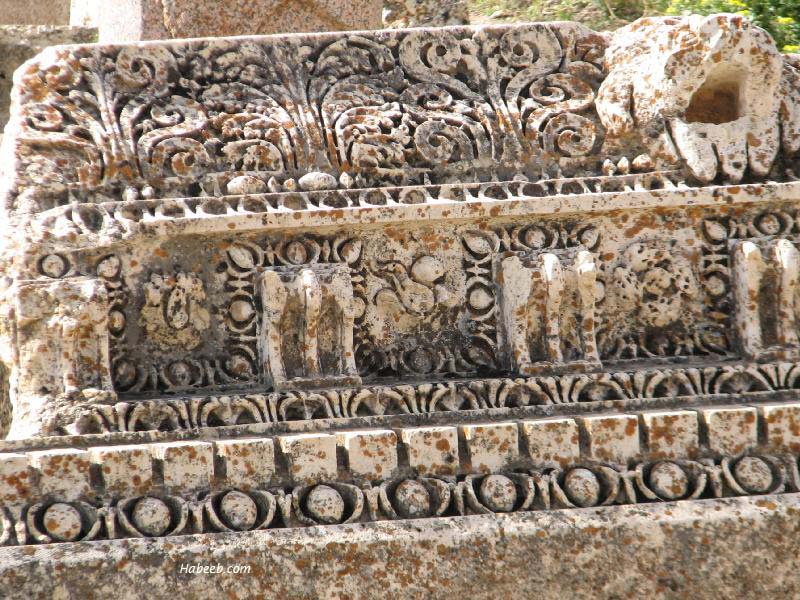
How long would it take to carve stone like this?
Footnotes
[1] A Boeing 747 aircraft
weighs in at 337,840 kg.
[2] N. Jidejian, 'Baalbek
Heliopolis, City of the
Sun',
Dar El-Machreq, Beirut, 1975, p. 15.
[3] N. Jidejian, 'Baalbek
Heliopolis, City of the
Sun',
op. cit., p. 67.
[4] M. Alouf, 'History of
Baalbek', 25th edition, p.
92.
[5] Estimate by Monsieur F.
Caignart de Saulcy, cited
in
M. Alouf, op. cit., p. 101.
[6] N. Jidejian, 'Baalbek Heliopolis, City of the
Sun',
op. cit., p. 24.
[7] This factor persuaded both the French scholar
Louis
Felicien de Saulcy and the French archaeologist Ernest Renan that the
platform walls were pre-Roman.
[8] Professor Daniel Krencker, German Archaeological
Mission, cited in Alouf, op. cit., p. 80.
[9] G. Hancock, 'Fingerprints of the Gods', Mandarin,
1995, chapter 39, p. 362. Also Z. Sitchin, 'The Stairway to Heaven',
Avon Books, 1980, chapter IX, p. 179.
[10] The Gottwald AK912 crane uses a 10.7-metre
square
outrigger base, a 35 metre maxiboom, a 43 metre maximast, a 117-ton
upper counterweight and a 400-ton maxi-counterweight.
[11] A.F. Alford, 'The Phoenix Solution', Hodder
&
Stoughton, 1998.
[12] That is to say that there is no contemporary
Roman
inscription. There is, however, a 7th century manuscript
('Chronographia') in which John Malalas of Antioch credits the Temple
of Jupiter to the Roman emperor Antonius the Pius. See M. Alouf, op.
cit., p. 43.
[13] M. Alouf, op. cit., pp. 26-28.
[14] N. Jidejian, 'Baalbek Heliopolis, City of the
Sun',
op. cit., p. 7. Also M. Alouf, op. cit., pp. 26-28.
[15] M. Alouf, op. cit., p. 26.
[16] A. Collins 'Baalebk: Lebanon's Sacred Fortress'
in
New Dawn Issue Nos. 43 & 44 (1997).
[17] Z. Sitchin, 'The Stairway to Heaven', op. cit.,
chapters IX, XII.
[18] A.F. Alford, 'When The Gods Came Down', Hodder
& Stoughton, 2000.
[19] D. Urquhart, The Lebanon Diary, cited in M.
Alouf,
op. cit., p. 26.
[20]M. Alouf, op. cit., p. 32.
[21] N. Jidejian, 'Baalbek Heliopolis, City of the
Sun',
op. cit., p. 17. Also M. Alouf, op. cit., pp. 35-36.
Copyright Notice
This article is the copyright of Eridu Books 2004. The images and
diagrams are the copyright of Alan Alford or of other photographers,
where indicated. Eridu Books welcomes the reproduction and
dissemination of these pages, in original, unaltered form, for
non-commercial purposes, but permission must be sought for any other
usage, other than 'fair dealing' quotations.
The Official 'Alan Alford Website'
Reprinted
with permission
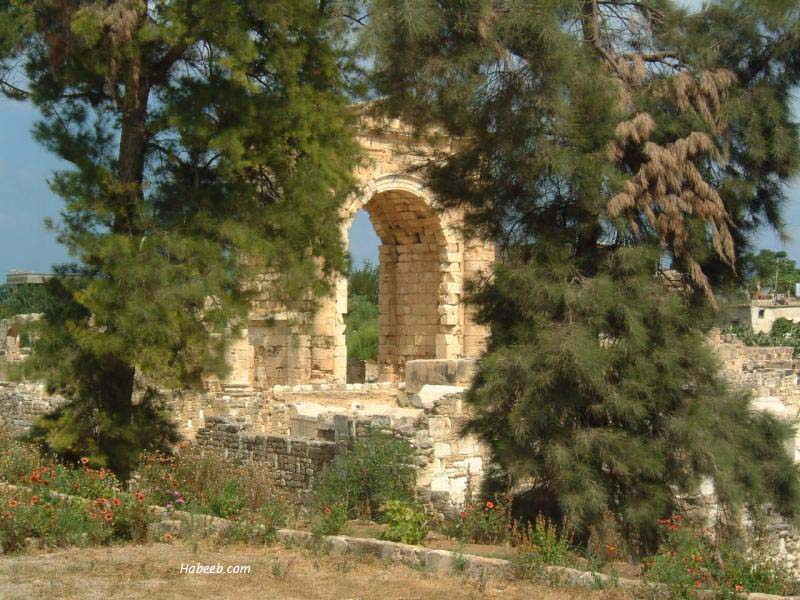
THE BIBLICAL TYRE
PHOTOS OF THE
CEDARS OF LEBANON
Related Links:
http://www.world-mysteries.com/mpl_2_1.htm
www.theforgottentechnology.com
www.stonehengetheanswer.com
Video
clip of Gordon's Method
BAALBECK INTERNATIONAL FESTIVAL
MOT Photobase: Baalbeck, Bekaa
Baalbak - Historic Photos
Unfinished Obelisk - from Nova
STONE
TECHNOLOGY
Ancient Stone Technology
Professor Davidovits
www.theforgottentechnology.com
www.stonehengetheanswer.com
Video
clip of Gordon's Method
Athena and Eve
http://www.eridu.co.uk/Author/Mysteries_of_the_World/Baalbek/baalbek2.html
BOOKS
by Alan Alford
PYRAMID OF SECRETS The Architecture
of the Great Pyramid Reconsidered (US) |
UK
The Atlantis Secret (US) |
UK
When the Gods Came Down (UK only)
The Phoenix Solution (US) |
UK
Gods of the New Millennium (US) |
UK
http://www.world-mysteries.com/pex_1.htm#Bibliography
Levitation and technology
Myths and megaliths
The megalithic structures found at many
sites around the world have generated endless controversy as to how
they were built. Conventional archaeologists, who dismiss the
possibility of highly advanced civilizations in the remote past, insist
that they were built solely with the use of primitive tools and brute
force. Some of the structures, or parts of them,
could have been built in this way. However, a number of
engineers have stated that some features would be difficult if not
impossible to duplicate today, even using the most advanced technology.
The sheer weight and size of some of the stone blocks have prompted
several researchers to wonder whether the ancient builders had mastered
some form of levitation technology.*
*The acoustic and magnetic levitation techniques
currently under development by mainstream scientists create a physical
lifting force stronger than the force of gravity and do not modify
gravity or generate an antigravitational force.
The pre-Incan fortresses at Ollantaytambo
and Sacsayhuaman in the Peruvian Andes consist of cyclopean walls
constructed from tight-fitting polygonal stone blocks, some weighing
120 tonnes or more. The blocks used at Ollantaytambo were somehow
transported from a quarry located on another mountaintop 11 km away,
the descent from which was impeded by a river canyon with 305-metre
vertical rock walls. The ruins of Tiahuanaco (Tiwanaku) near Lake
Titicaca in Bolivia include blocks weighing around 100 tonnes, which
were transported from quarries 50 km away.
1 According to the local Aymara Indians,
the
complex was built at the ‘beginning of time’ by the founder-god
Viracocha and his followers, who caused the stones to be ‘carried
through the air to the sound of a trumpet’. An alternative theme is
that they created a ‘heavenly fire’ that consumed the stones and
enabled large blocks to be lifted by hand ‘as if they were cork’.
According to a Mayan legend, the temple complex of Uxmal in the Yucatan
Peninsula was built by a race of dwarfs who were able to move heavy
rocks into place by whistling.2
Legends of occult power being employed to
lift and transport stone blocks are in fact universal. For example,
according to tradition the megalithic city of Nan Madol on the
Micronesian island of Pohnpei was built by the god-kings Olosopa and
Olosipa, who used magic spells to make the huge stones ‘fly through the
air like birds’.
3 Legends about the huge stone statues or moai
on Easter Island, many of which are as high as a three-storey building,
tell how magicians or priests used mana, or mind power, to
make them ‘walk’, or float through the air.4
According to early Greek historians, the
walls of the ancient city of Thebes were built by Amphion, a son of
Jupiter, who moved the large stones ‘to the music of his harp’ while
his ‘songs drew even stones and beasts after him’. Another version
claims that when he played ‘loud and clear on his golden lyre, rock
twice as large followed in his footsteps’. The 10th-century Arab
historian Mas’di wrote that, to build the pyramids, the ancient
Egyptians inserted papyri inscribed with certain characters beneath the
stone blocks; they were then struck by an instrument, producing a sound
which caused them to rise into the air and travel for a distance of
over 86 metres.5
The achievements of the ancient Egyptian
builders have caused even some fairly orthodox investigators to wonder
whether levitation might have been employed.
6 For instance the roof of the King’s
Chamber
in the Great Pyramid, 200 feet up, consists of huge granite beams
weighing up to 70 tonnes. What’s more, the major temples on the Giza
plateau – the two next to the Sphinx and those besides the Second and
Third Pyramids – contain colossal limestone blocks weighing between 50
and 200 tonnes and placed on top of one another. The largest are 9
metres long, 3.6 metres wide and 3.6 metres high. It is interesting to
note that there are only a few cranes in the world today capable of
lifting objects weighing 200 tonnes or more.7
The largest blocks used in any known
man-made structure are found in the ancient platform beneath the Roman
Temple of Jupiter at Baalbek in Lebanon.
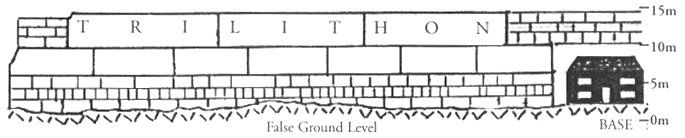
8 The foundation platform is enclosed by a
cyclopean retaining wall; in the western side, on the fifth level, at a
height of 10 metres, there are three colossal stones known as the
Trilithon, each measuring about 19.5 metres long, 4.5 metres high and
3.5 metres deep, and weighing a staggering 1000 tonnes. The stones fit
together perfectly and not even a knife blade can be pushed between
them. At the quarry, half a kilometre away, there remains a fourth,
even larger block, weighing as much as 1200 tonnes, the lower part of
its base still attached to the bedrock. The course beneath the
Trilithon contains seven mammoth stones weighing about 450 tonnes each.
There are no traces of a roadbed leading
from the quarry and no traces of any ramp. Nor are there any written
records as to how the platform was built. According to local Arab
legend, Baalbek’s first citadel was built before the Flood, and rebuilt
afterwards by a race of giants. The Phoenician historian Sanchoniatho
stated that Lebanon’s first city was Byblos, founded by the god
Ouranus, who designed cyclopean structures and was able to make stones
move as if they had a life of their own.
Fig. 5.1 The massive Trilithon at Baalbek.9
(The silhouetted two-storey house has been inserted for scale.)
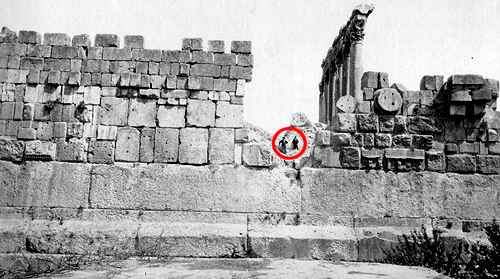
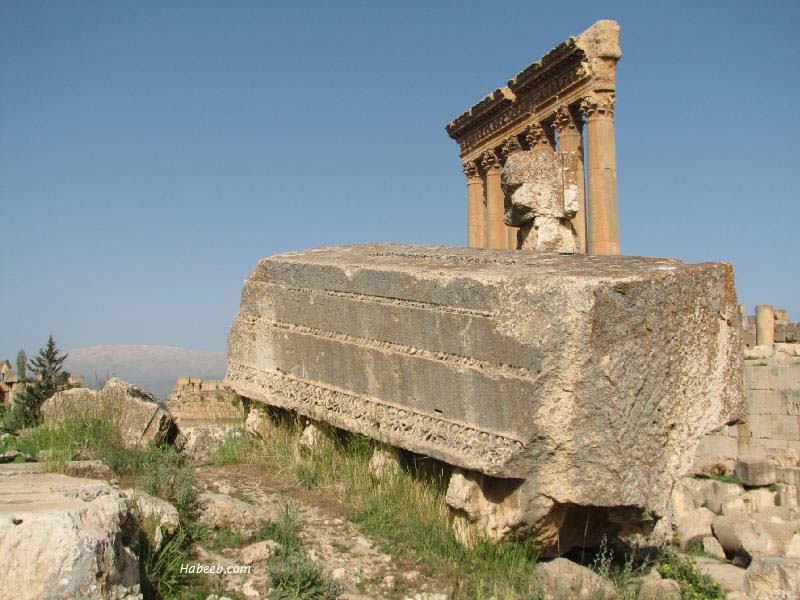
Fig. 5.2 Another view of the Trilithon.
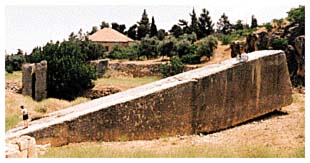
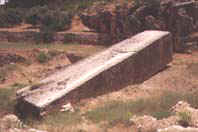
Fig. 5.3 The ‘Stone of the South’ still in the quarry at
Baalbek.10
Related Links:
http://www.world-mysteries.com/mpl_2_1.htm
www.theforgottentechnology.com
www.stonehengetheanswer.com
Video
clip of Gordon's Method
BAALBECK INTERNATIONAL FESTIVAL
MOT
Photobase: Baalbeck, Bekaa
Baalbak
- Historic Photos
Unfinished
Obelisk - from Nova
STONE
TECHNOLOGY
Ancient
Stone Technology
Professor
Davidovits
www.theforgottentechnology.com
www.stonehengetheanswer.com
Video
clip of Gordon's Method
Athena and Eve
http://www.eridu.co.uk/Author/Mysteries_of_the_World/Baalbek/baalbek2.html
BOOKS by Alan Alford
PYRAMID
OF SECRETS The Architecture
of the Great Pyramid Reconsidered (US) |
UK
The
Atlantis Secret (US) |
UK
When
the Gods Came Down (UK only)
The
Phoenix Solution (US) |
UK
Gods
of the New Millennium (US) |
UK
http://www.world-mysteries.com/pex_1.htm#Bibliography
LEBANON DATABASE ON THIS SITE
HEZBOLLAH DATABASE ON THIS SITE
ISRAEL DATABASE ON THIS SITE
RELIGION DATABASE ON THIS SITE
BIBLE DATABASE ON THIS SITE
HEBREW DATABASE ON THIS SITE
WAR DATABASE ON THIS SITE
WW III DATABASE ON THIS SITE
DREAMS OF THE GREAT EARTHCHANGES - MAIN
INDEX
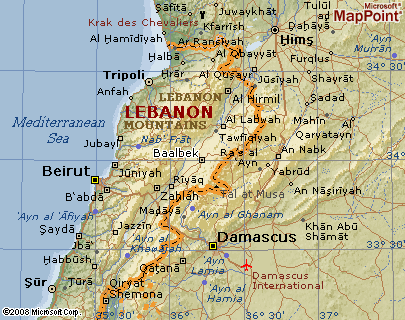
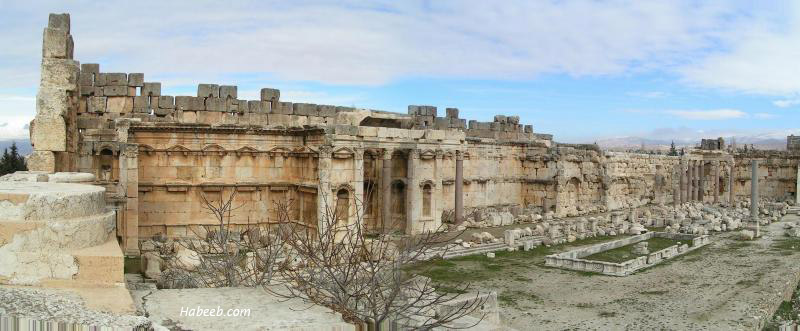




 The
mysterious ruins of Baalbek. One of the great Power Places of the
ancient world. For thousands of years its secrets have been shrouded in
darkness, or bathed in an artificial light by those who would offer us
a simplistic solution to its mysteries.
The
mysterious ruins of Baalbek. One of the great Power Places of the
ancient world. For thousands of years its secrets have been shrouded in
darkness, or bathed in an artificial light by those who would offer us
a simplistic solution to its mysteries. 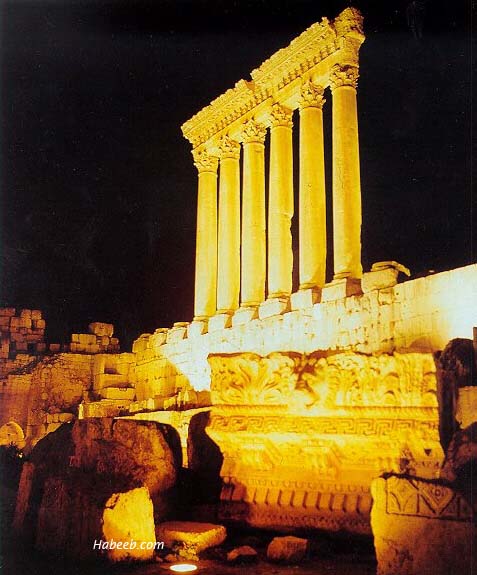
 Some
archaeologists might well wish that Baalbek had been buried forever.
For it is here that we find the largest dressed stone block in the
world - the infamous Stone of the South, lying in its quarry just ten
minutes walk from the temple acropolis. This huge stone weighs
approximately 1,000 tons - almost as heavy as three Boeing 747
aircraft.[1]
Some
archaeologists might well wish that Baalbek had been buried forever.
For it is here that we find the largest dressed stone block in the
world - the infamous Stone of the South, lying in its quarry just ten
minutes walk from the temple acropolis. This huge stone weighs
approximately 1,000 tons - almost as heavy as three Boeing 747
aircraft.[1] 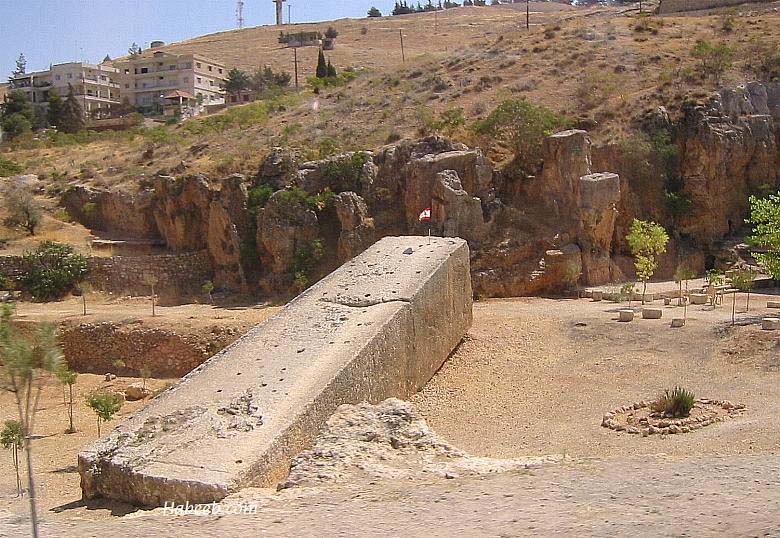
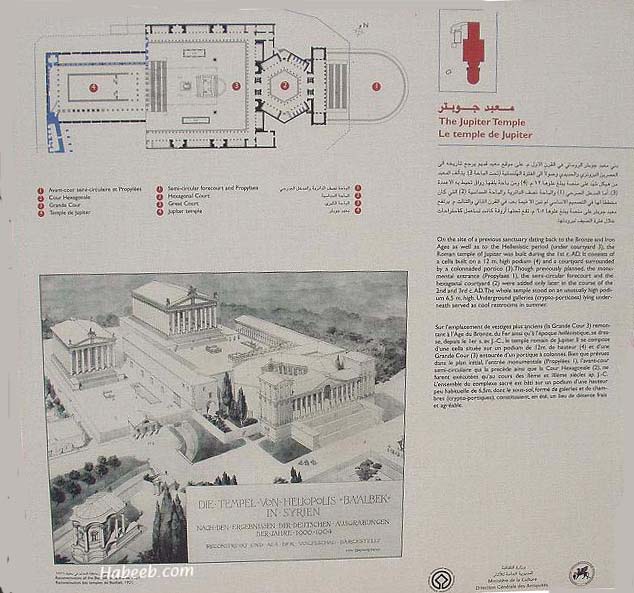
 The
Temple of Venus can be dealt with briefly. Situated in what is now a
field of rubble, its former elegance can no longer be seen, and only
four of its ten columns remain standing. Being outside the fortified
acropolis, this temple was swallowed up by an Arab town, to such an
extent that the German Archaeological Mission had to remove five metres
of debris to clear the first step of the monumental staircase at its
entrance. The remains of the temple were dismantled and re-erected in
the early 1930s, but they now threaten to collapse again.
The
Temple of Venus can be dealt with briefly. Situated in what is now a
field of rubble, its former elegance can no longer be seen, and only
four of its ten columns remain standing. Being outside the fortified
acropolis, this temple was swallowed up by an Arab town, to such an
extent that the German Archaeological Mission had to remove five metres
of debris to clear the first step of the monumental staircase at its
entrance. The remains of the temple were dismantled and re-erected in
the early 1930s, but they now threaten to collapse again. 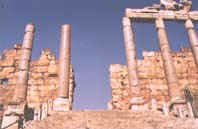 We
now enter the main acropolis via the Propylaea - what we see here is a
reconstruction by the German archaeological expedition in 1905. The
original staircase was destroyed by the Arabs to fortify the site and
they dismantled the 12 granite columns which they re-used for defensive
purposes. Only the bases of those columns survived, and they bore
inscriptions identifying their Roman origin.
We
now enter the main acropolis via the Propylaea - what we see here is a
reconstruction by the German archaeological expedition in 1905. The
original staircase was destroyed by the Arabs to fortify the site and
they dismantled the 12 granite columns which they re-used for defensive
purposes. Only the bases of those columns survived, and they bore
inscriptions identifying their Roman origin.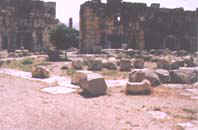 Having
come through the entrance, we find ourselves in the middle of the
impressive Hexagonal Courtyard, which is a unique feature for a temple
of this period (it may well have been a concession by the Romans to
local customs and traditions). Roman inscriptions are found here in
abundance, but the purpose of the Hexagonal Courtyard remains unknown.
Having
come through the entrance, we find ourselves in the middle of the
impressive Hexagonal Courtyard, which is a unique feature for a temple
of this period (it may well have been a concession by the Romans to
local customs and traditions). Roman inscriptions are found here in
abundance, but the purpose of the Hexagonal Courtyard remains unknown.
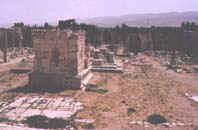 We now proceed into the Great
Courtyard - an immense square court, thought to have housed the statues
of the pantheon of the twelve Great Gods. The photograph shows the
remains of the Altar of Sacrifice. Although constructed by the Romans,
it apparently supersedes a much earlier altar which was dedicated to
the god Baal-Hadad, and is built over a natural crevice some 150 feet
deep, at the bottom of which is a small rock-cut altar. There are few
tourists around to provide a comparative scale of measurement, but such
a person would in fact be no taller than the base of this altar.
We now proceed into the Great
Courtyard - an immense square court, thought to have housed the statues
of the pantheon of the twelve Great Gods. The photograph shows the
remains of the Altar of Sacrifice. Although constructed by the Romans,
it apparently supersedes a much earlier altar which was dedicated to
the god Baal-Hadad, and is built over a natural crevice some 150 feet
deep, at the bottom of which is a small rock-cut altar. There are few
tourists around to provide a comparative scale of measurement, but such
a person would in fact be no taller than the base of this altar. 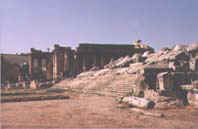 On the
other side of the Great Courtyard lies a truly monumental staircase
leading up to a raised platform on which the Temple of Jupiter once
stood.
On the
other side of the Great Courtyard lies a truly monumental staircase
leading up to a raised platform on which the Temple of Jupiter once
stood. 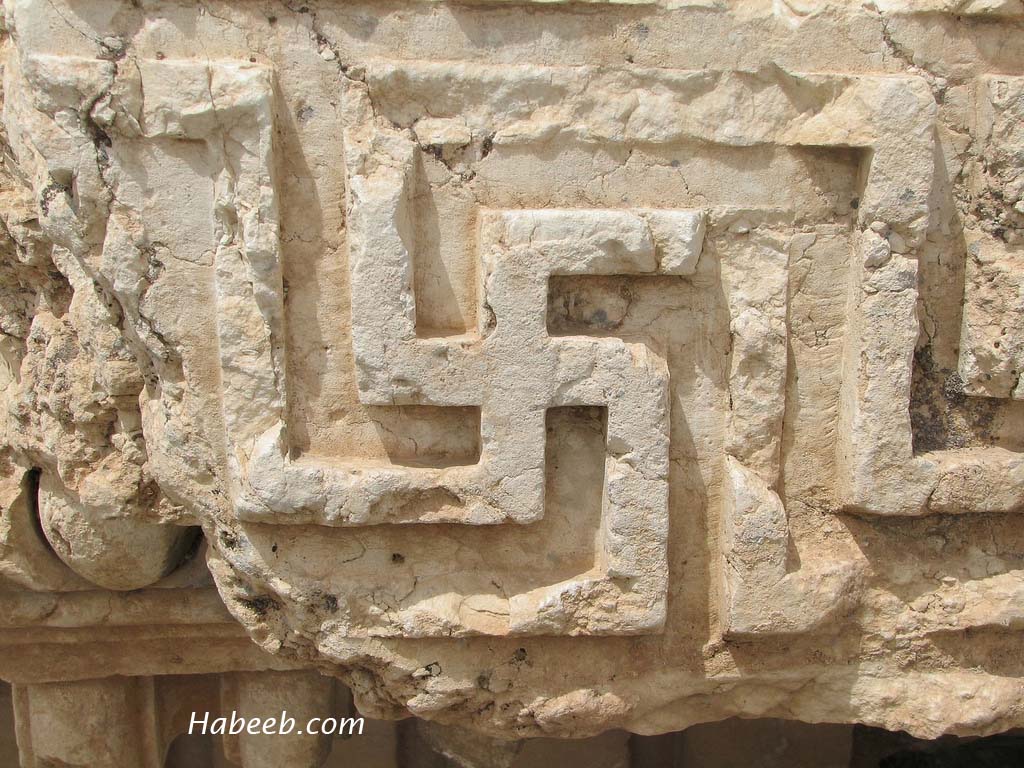
 The
southern side of the Temple of Bacchus, in contrast, has suffered
badly. Here I am setting the scale of the infamous leaning column - a
tourist favourite - which was probably felled by the earthquake of
1759. This massive column, formed of three parts, stands 60 feet high
including the base and the capital. Incidentally, the drums are held
together by dowels made of bronze, embedded in lead.
The
southern side of the Temple of Bacchus, in contrast, has suffered
badly. Here I am setting the scale of the infamous leaning column - a
tourist favourite - which was probably felled by the earthquake of
1759. This massive column, formed of three parts, stands 60 feet high
including the base and the capital. Incidentally, the drums are held
together by dowels made of bronze, embedded in lead. 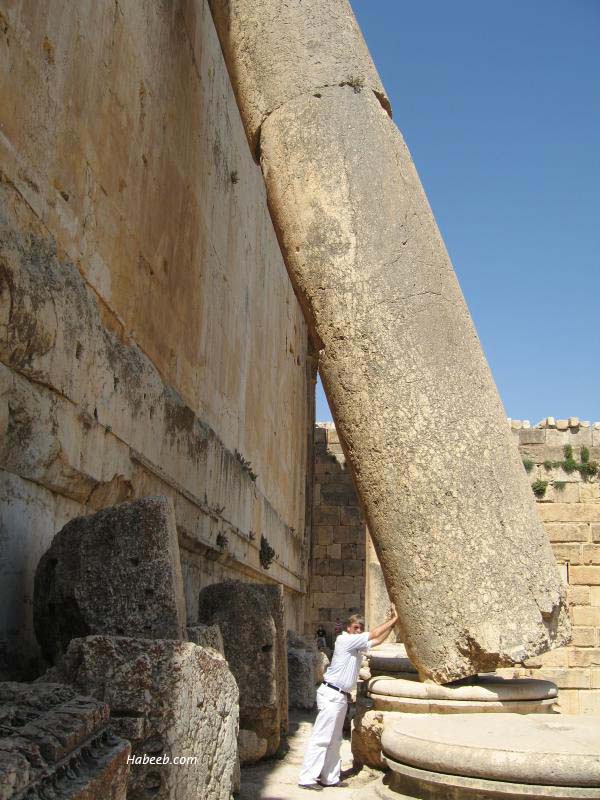
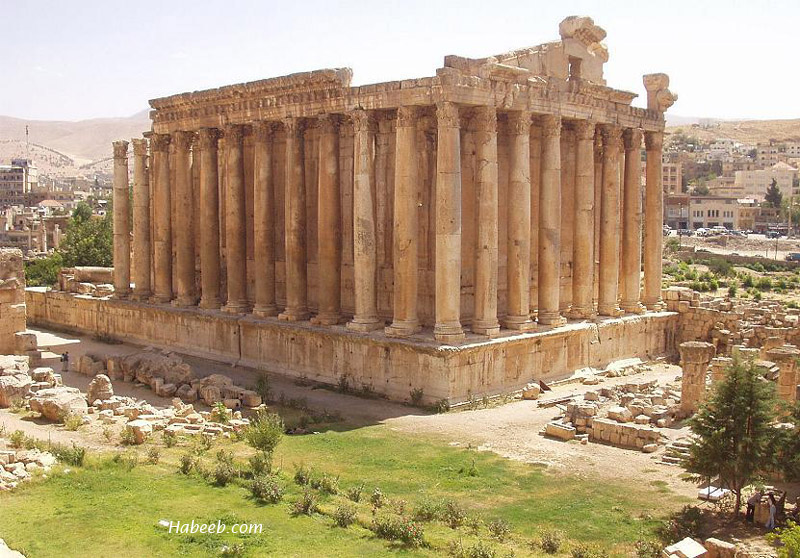
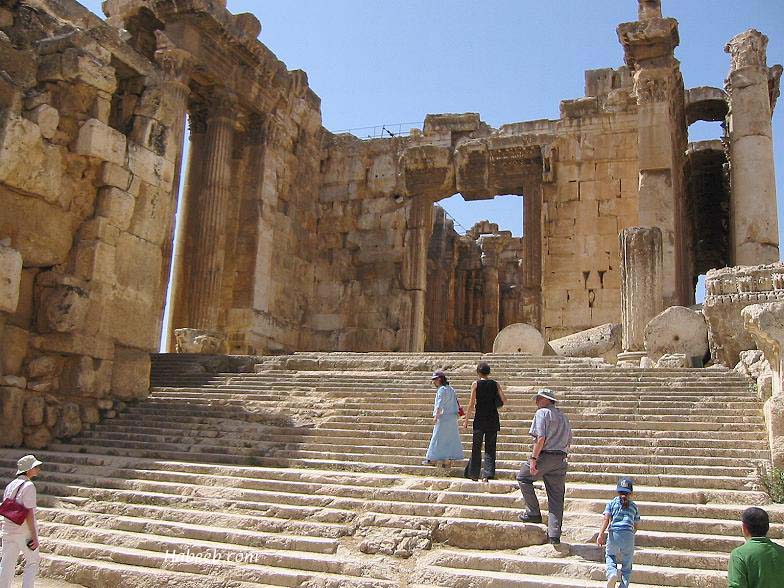
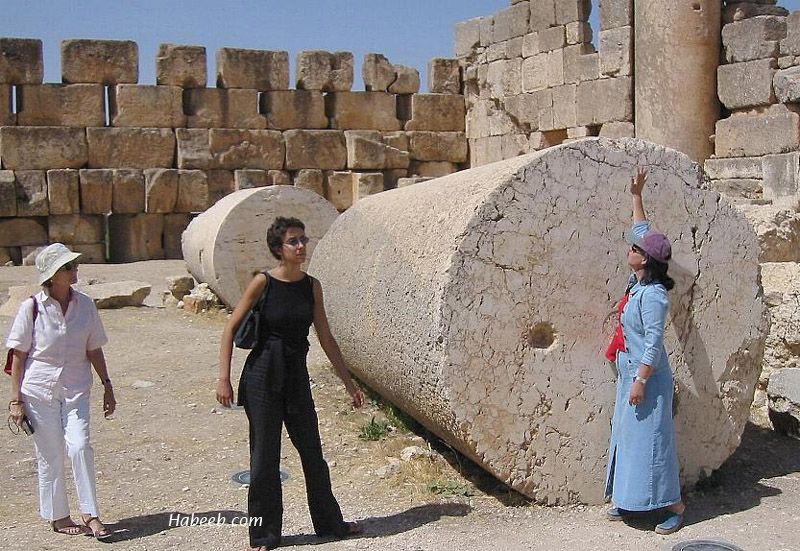
 The
main temple of Baalbek, however, was reserved for the chief deity
himself - Iovi Optimo Maximo Heliopolitano 'Jupiter the Most High, the
Most Great'. This is the view of what remains from the staircase we saw
earlier. The destruction of this magnificent temple is thought to have
begun with the earthquake of 526 or 551. Curiously, the chronicler
Michael the Syrian records the popular belief that the temple was
destroyed by fire from the sky.[3] Historians assume this is a
misunderstanding and think that the fire was a consequence of the
earthquake.
The
main temple of Baalbek, however, was reserved for the chief deity
himself - Iovi Optimo Maximo Heliopolitano 'Jupiter the Most High, the
Most Great'. This is the view of what remains from the staircase we saw
earlier. The destruction of this magnificent temple is thought to have
begun with the earthquake of 526 or 551. Curiously, the chronicler
Michael the Syrian records the popular belief that the temple was
destroyed by fire from the sky.[3] Historians assume this is a
misunderstanding and think that the fire was a consequence of the
earthquake. 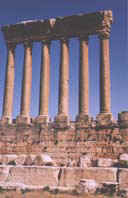 The last really big quake in 1759
brought down three columns, leaving only the six that we see here. The
Temple was so utterly destroyed that it has never been possible to
accurately reconstruct its ground plan, and little can be gleaned from
visiting the site.
The last really big quake in 1759
brought down three columns, leaving only the six that we see here. The
Temple was so utterly destroyed that it has never been possible to
accurately reconstruct its ground plan, and little can be gleaned from
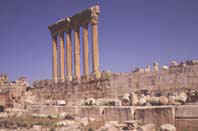
visiting the site. 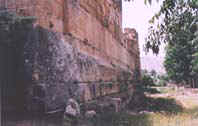 At last we turn a
corner and see, in the western (strictly south-western) wall of the
platform, the great Trilithon.
At last we turn a
corner and see, in the western (strictly south-western) wall of the
platform, the great Trilithon. 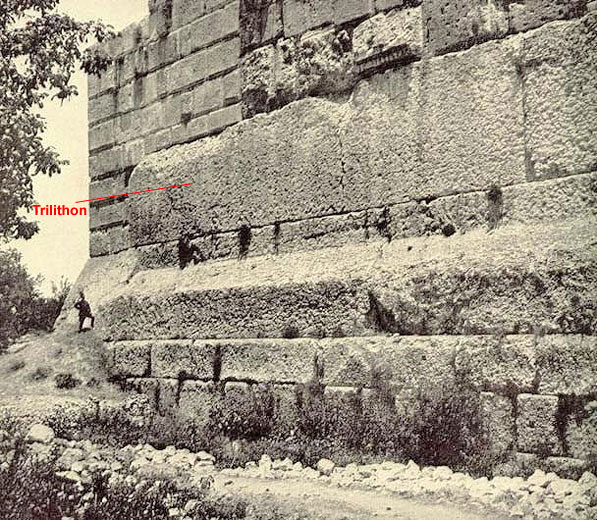

'Hardball with Chris Matthews' for August 14
Read the transcript to the Monday show
Updated: 10:37 a.m. CT Aug 15, 2006
Guests: Seymour Hersh, Mike Barnicle, Michael Smerconish
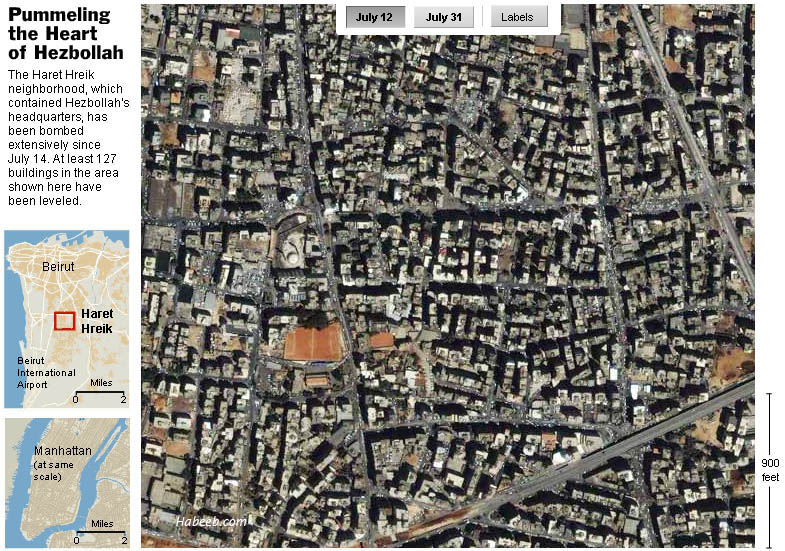
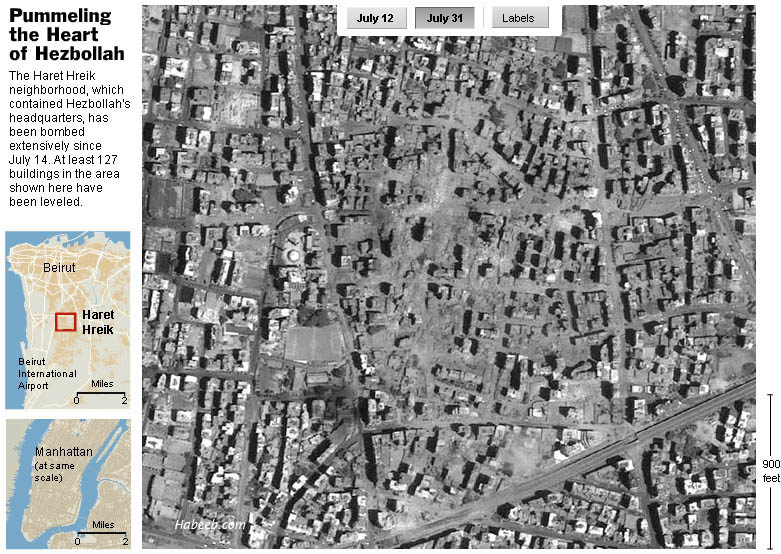
MATTHEWS: We go now to the man who started the big fight this week, “New Yorker” investigative reporter Seymour Hersh, who has a big report, as I said, in this issue of the magazine, “New Yorker” magazine. Here it is, a great quote from it. I think this is a pretty good nut for the whole story.
“President Bush and Vice President Cheney were convinced, current and former intelligence officials and diplomatic officials told me, that a successful Israeli Air Force bombings campaign against Hezbollah‘s heavily-fortified underground missile and command and control complexes in Lebanon could ease Israel‘s security concerns, and also serve as a prelude to a potential American, preemptive attack to destroy Iran‘s nuclear installations, some of which are also buried deep underground.”
How sound are you, Sy, on the fact that we‘re planning to go into Iran with an attack on their nuclear facilities?
SEYMOUR HERSH, “NEW YORKER” INVESTIGATIVE REPORTER: Well, we‘ve been planning this for a year. I mean, there‘s been a fight. I‘ve been writing about it in the “New Yorker” in previous articles. There‘s been a internecine warfare between the Air Force—the American Air Force says we can do it. Strategic bombings can work in Iran.
And, you know, the Iranians have been digging holes for what, eight, nine centuries now. And they‘re deeply buried underground. Most of the—the suspected facilities. We‘re not sure where anything is. We really don‘t know.
MATTHEWS: But these are like the pyramids. These are way down, right?
HERSH: Seventy-five feet under rock.
MATTHEWS: What kind of a bunker buster would you have to use, and how many people would that kill?
HERSH: Well, you know, one of the early thoughts was something attack a nuke, of course. That was ruled out only after the Joint Chiefs protested personally.
MATTHEWS: What‘s our biggest conventional bomb?
HERSH: Five thousand pounder, and we‘ve got a—well, the ones they‘re talking about, that there are bunker busters that are 5,000 pound bombs that the Israelis know quite a bit about. So what happens ...
MATTHEWS: Is that what Israel was asking for last week in the “New York Times”? They leaked something. Somebody leaked. That may be political. They put it in the “New York Times.” They are having trouble getting it from us. I assume somebody was facing some static in getting them the weapon they wanted. I don‘t know what happened.
HERSH: I don‘t know that part of it. I know that Israel has—knows much more about these kind of bombs than we think we have do and we started working with them. What happened is the Air Force plan got into a lot of heat over there.
The Army, the Marine Corps, and the Navy said are you kidding?
Strategic bombing doesn‘t work. Look at Chakano (ph) in Iran—and Iraq.
We‘re going to end up putting boots on the ground and we don‘t have them.
MATTHEWS: Who says that bombing Iran would stop their nuclear production? Who says that? The Air Force?
HERSH: The Air Force pushes it hard.
MATTHEWS: Because they‘re trying to sell a weapons system?
HERSH: Well, because they believe in strategic bombing. You know, bomb them back to the Stone Age, Curtis LeMay. That‘s ...
MATTHEWS: Did that work in the Second World War?
HERSH: Of course not. Studies show that ...
MATTHEWS: Hitler was still fighting when the Soviets got to his bunker.
HERSH: He made more tanks in ‘44 than he did in the previous years after intensive bombings of all the wars that he did. But, nonetheless, you know, McNamara, by the way, Robert McNamara was one of the leaders of the study—the strategic study after World War II, and he, of course, pushed for bombing in Vietnam. Everybody wants to bomb.
MATTHEWS: It doesn‘t work. So Curtis LeMay didn‘t know what he was doing?
HERSH: No, he was a pretty good officer.
MATTHEWS: But he wasn‘t right about this?
HERSH: You know what he said? He said at one point—and I think in February of 1945 -- I actually spent a lot of time looking at this. And he said, “I‘m out of targets, I can‘t bomb anything, I‘ve leveled everything and they‘re still fighting.”
MATTHEWS: In Vietnam.
HERSH: No, Curtis LeMay in 1944 in World War II. His point was that even though we had been bombing everything with B-29s—you know, once we got control over the islands, you know, at Okinawa we got some bases, we could hit Japan. In—three months before, five months before the war that he was out of targets, but the Japanese kept on resisting.
MATTHEWS: Let me ask you about this, because it‘s so critical to the next two years. We‘re not going to have a presidential election for a couple of years now. We won‘t have an election for more than two years. It‘ll begin to be the process by the end of next year.
It looks like we‘ll have a primary up in—we‘ll have a caucus in Iowa probably by this time next year, practically. But we‘re stuck with this president for better or worse. He‘s our leader. Do you believe he wants to bomb Iran before he leaves?
HERSH: Absolutely. No, I should say this. I believe that he does not want to leave his office with Iran still posing a threat. I believe he sees a nuclear arm, Iran as an existential threat to his policies, the policies of Israel, the whole notion he has of making the Middle East, turning it into a democracy, which he still holds onto. I do believe that, and as part, one of the options ...
MATTHEWS: Does he—let me cut you off here, because we always conflate these issues. Does he see Iran as a regional threat to countries who are on our side, like Israel and the other so many Arab countries, or does he see it as a strategic threat?
Because this was the whole fight over Saddam Hussein. Of course he was a regional pain in the butt, of course he was a problem to some tactical extent to Israel—he wasn‘t a strategic threat to Israel—but is Iran a strategic threat to the United States? Does he believe that?
HERSH: I don‘t know what he believes.
MATTHEWS: How could he be a strategic threat to the United States?
HERSH: I don‘t know what he believes. He said today Hezbollah lost the war. I mean, I don‘t know. Is the moon made of green cheese? I don‘t know what he believes.
MATTHEWS: Do you believe the president says what he believes?
HERSH: Oh, yes. I believe he‘s—one of the things ...
MATTHEWS: You think he‘s totally genuine in what he presents to the American people? He believes what he tells us.
HERSH: I think you really have to listen to what he says, and I think one of the problems—you know, one of the reasons this story came about is somebody on the inside said, you know, these guys, here are the—they pushed the Israeli air force for the same reason you said in the intro. They wanted—it‘s sort of a demo for Iran.
They wanted a—there were reasons. You know, he‘s a terrorist, Nasrallah, he has got some missiles and we want to beef up the Lebanese government. The real reality is it‘s a test case for Iran. He pushed them into it. It was a disaster. They ended up sending in ground troops, just like all the guys in the Pentagon would say, and yet guys on the inside tell me there‘s no learning curve there. These guys ...
MATTHEWS: You know what it brings into question? Here‘s an administration that for political or other moral reasons or historic reasons—maybe because his father was pro-Arab—is the most openly pro-Israeli administration in history, in terms of the P.R.
And you have to ask yourself, has the loss of our power brokering ability in that region been a bigger loss for Israel than anything we could have done for them? Seymour Hersh is staying with us from “New Yorker” magazine. He‘s made the big story this week.