|
Reprinted from THE FUTURIST,
July-August 1989 |
[EDITORS NOTE: Seems that the government
didn't read this article]
The
Growing Threat of
Terrorism
By Marvin J. Cetron
Summary: International terrorism will continue to grow into
the twenty-first century. Increasingly, homegrown terrorism will be
a problem for the United States.
There can be no doubt that
terrorism will continue into the next century. It is the primary way
in which the weak and disenfranchised can ensure that their voices
will be heard and that governments will feel the pressure to meet
their demands, even when they are counter to the will of the
majority. It is a war of psychology and perception. The terrorist's
message to the targeted government is, "No matter how big and
powerful you are, no matter how small we are, we can hurt you if you
don't do what we want."
Bombing, assassination, and
kidnapping will continue because they carry the terrorist message
effectively. These crimes instill fear in the populace, because they
never know when they will be hurt. As a result, citizens question
the true power of their government.
Terrorist attacks are effective
because the terrorist can use any damage done anywhere to get his or
her point across. Since it is impossible to guard every person,
every bus or every place of business in a country all the time, the
terrorist merely has to wait for a convenient moment to strike. No
act of terrorism is ever "senseless," since a climate of fear and
mistrust is precisely what the terrorist wants.
In 1986, the U.S. Joint Chiefs of
Staff lumped all forms of Third World violence together under the
term "low-intensity conflict." According to the joint chiefs, "Low
intensity conflict is a limited, politico-military struggle to
achieve political, social, economic, or psychological objectives. It
is often protracted and ranges from diplomatic, economic, and
psychological pressures through terrorism and insurgency.
Low-intensity conflict is generally confined to a geographical area
and is often characterized by constraints on the weaponry, tactics,
and level of violence." Former Secretary of Defense Caspar
Weinberger says that "low-intensity conflict [is] the most immediate
threat to free-world security for the rest of this century."
Since the 1960s, low-intensity
conflict has undergone a worldwide revolution in its scope and
organization. The United States and Great Britain organized special
operations military and paramilitary forces to deal with
insurrections in the Third World, while the Soviet Union began
teaching the Palestine Liberation Organization how to fight
effectively after Israel's victory in the Six-Day War in 1967.
Terrorist activity has always had
its roots in specific political or religious conflicts within
specific geographic areas. But when nations saw the chance to extend
their spheres of influence without expending their own troops, they
fostered this covert warfare, raising levels of training and even
developing weapons specifically for terrorism and counterinsurgency.
The quantum leap in the level of terrorist activity from 1960 to the
present — both in numbers and sophistication — has left the
superpowers struggling to catch up.
New Weapons
The traditional weapons of the terrorist were cheap, readily
available, and would do the job. They ranged from the knife to the
small automatic rifle to the plastic explosive. But now that they
have the money and technical facilities of whole countries to back
them, terrorists have a whole new range of weapons to use against a
completely new set of targets:
- Stinger hand-held rockets.
Small, light, and powerful, Stingers can be used — with almost
no training — to knock out an airplane.
- Computer viruses.
Viruses are programs that destroy data stored in a computer's
memory. It is relatively easy for a programmer to write a program
that will tell the computer to erase its memory or otherwise
render its programs useless. What makes these viruses so hard to
trace is that they often contain timing instructions, so that it
might be months between the time a virus is introduced and the
time it is triggered. The programmer simply embeds the codes into
an otherwise harmless program, then tries to get the program into
a victim's computer.
- Electromagnetic pulse generators.
Put a pulse generator on the power line to an important
computer, and the pulse will wipe out the data in the computer's
memory.
- Chemical and biological weapons.
Chemical weapons range from old-fashioned poison in the water
and nerve gas to a new Liquid Metal Embrittlement agent (LME).
Applied with a felt-tip type pen, LME is a clear, invisible
substance that changes the chemical structure of a metal so that
it is no longer resilient and flexible. The result: The metal can
fracture under stress. Trucks, airplanes, or bridges would be
vulnerable to catastrophic failure without advance warning.
The standard chemical weapons
are frightening because they can be concocted from cheap and
readily available materials. Common pesticide and fertilizer
components can be used to make poison gas, while deadly chlorine
gas can be obtained from the electrolysis of ocean water.
Some 20 countries are now
developing chemical weapons, and at least 10 countries are working
on biological weapons, according to CIA Director William Webster.
Chemical and biological weapons
may become the "nuclear weapons" of small countries, since they
are weapons of mass destruction that are easier to come by than
nuclear weapons. Perhaps industrialized nations should consider
banning from their schools and universities students from
developing countries manufacturing biological or chemical weapons,
since you can't produce these without a substantial technical
education.
|
Unlikely
Terrorist Acts
Marvin Cetron says there
are five terrorist attacks that are unlikely to occur in the
near future in the United States, since such actions would
be absolute acts of war, requiring, high-power, violent
retaliation:
1. There will be no attack on the U.S. Congress.
2. There will be no nuclear attack on any U.S. city.
3. Though there will be threats, no one will poison the
water supply of a whole U.S. city.
4. The will be no well-coordinated, general attack on
transport (e.g., blowing up railroad bridges),
communications (destroying telephone centers), or the
electrical power system (destroying many line transformers)
to cripple a large part of the United States. Though
small-scale individual attacks could occur at any time, a
coordinated nationwide attack is beyond the means of most
likely terrorist groups in the next decade.
5. No violent attacks or hostage taking will take place at
TV or radio stations or newspaper offices, because
terrorists know they need media publicity. The American
media stick together against all outside attack. |
- Nuclear Weapons.
Technically, it is horrifyingly easy to produce an atomic bomb:
Actual plans for building a bomb have been printed several times.
The hardest part is obtaining the teaspoonful of weapons-grade
plutonium that will produce an explosion the size of that produced
by the Hiroshima bomb. Nuclear energy plants produce this
substance as waste material. Though waste-storage sites and
transports are closely guarded, there is at least 100 pounds of
plutonium missing from various sites and shipments around the
world. That's not very much over the course of the 40+ years since
the development of nuclear power, but it means that it is possible
that there are terrorists in possession of both the knowledge and
the materials to build atomic bombs.
The Coming Rise in Domestic Terror
The biggest change in low-intensity conflict in the next decade will
be an explosion in the incidence of domestic terror in the United
States. Security measures currently in place around the world will
help slow the spread of international terrorism, but the frustrated
in the United States will begin to take their cue from terrorists
abroad. Some of the groups that have already begun terrorist-type
actions include:
- Antiabortionists. Planned
Parenthood offices and women's health clinics that offer abortion
have already been bombed. Attacks will get worse because religious
groups believe that God's law puts them above civil law and other
people's rights.
- Drug dealers.
Terrorism by drug dealers will aim at breaking the resistance
of city and state governments and law enforcement agencies. It
will be sponsored by organized crime and "disorganized crime" —
the kind of crazed violence observed in crack users that stuns
those who haven't seen it. The methods may be inspired by the
international terrorists, but the organized-crime armies have been
trained and weaned in Colombian drug wars.
The U.S. government can muster
tremendous resources to fight terrorism within its borders, and
national leaders have always had to deal with threats from other
countries. Few city mayors or state governments, however, are
psychologically prepared or fiscally and strategically able to
deal with sustained pressure from terrorism.
- Counterterror from the right.
In Colombia, people who got tired of police inability to deal with
terrorism have formed death squads to "help out" the police. The
same thing could happen in the United States.
New Targets
Many vital industries and resources are staggeringly vulnerable
to attack. Even if there were the will to do so, it would be
expensive and inconvenient to guard every office and factory. But
some changes will have to be made to reduce their vulnerability to
crippling terrorist attacks.
Computer attacks already account
for some 60% of all terrorist attacks in the world. Twenty-four
computer centers were bombed in West Germany in one year. Italy's
Red Brigades and France's Action Directe have both targeted computer
systems in Europe. It is only a matter of time before someone takes
advantage of U.S. computer vulnerability.
France and Spain have already felt
the terror when antinuclear groups broke into nuclear plants to
protest their operation. These groups only shut down the power, but
there is the threat of reactor meltdown and widespread radiation
damage due to terrorist attacks on these facilities.
Only two pipelines supply
virtually all the natural gas to the northeastern United States.
Both are regulated by high-pressure pumps that are manufactured in
foreign countries, with replacement times of more than a year. Both
pipelines are essentially unprotected.
Two bridges, one over the Ohio
River near Cincinnati, the other over the Potomac River near
Washington, D.C., handle all the north-south railroad traffic in the
eastern United States. Neither is guarded.
Fewer than 10 regional switching
stations control virtually all the telephone communications in all
the large cities of the United States. In May 1988, one of these
stations caught fire in Hinsdale, Illinois, a suburb southwest of
Chicago. It is an automated facility, with a single watchman on site
and an overseer who monitors warning lights in a facility 100 miles
away. By the time the technicians actually believed their warning
lights and summoned help, the station was destroyed, plunging
one-third of all western Chicago phones into silence. Because the
station was between O'Hare Airport in Chicago and the regional air
traffic control center in Aurora, Illinois, O'Hare was without much
of its air traffic controls for hours.
Even with round-the-clock work
crews, it took three months to repair the station. Phone service was
not fully restored until August. With no phone transmission of any
kind, many computer networks also went down. Only cellular phones
using satellite transmission, such as car phones, were unaffected.
The telephone switching station
fire points to a vexing problem for the increasingly high-tech
industrial United States. There are fewer and fewer individuals who
monitor the safety of the nation's highly automated industrial
facilities. The human overseers who are there have enough experience
with faulty equipment that they often distrust malfunction signals.
The telephone overseer in Illinois disregarded his first "fire"
signal because there was an electrical storm between his office and
the switching station, and he knew that could cause a false display.
Another problem is that these automated systems often have security
systems that are tied to regular electric and phone transmission
lines. If something happens to the electrical or telephone system,
the security people are often "left in the dark."
Fighting the Plague
An effective war against terrorism must be fought on two fronts:
the military and the political. Until very recently, the U.S.
approach to fighting terrorism was completely defensive and
reactive. According to Admiral Bobby Ray Inman, formerly chief of
the CIA, "As late as 1980, there was no focused, ongoing
intelligence-collection effort to try to pin down the scale of
terrorist activity." In 1981, the Reagan administration set about
correcting this situation. The president called on the State
Department, the CIA, the FBI, and the military to pool their
resources. They formulated strategies for dealing with terrorists
and insurgents. From this brain trust came the notion of
low-intensity conflict.
Police, military, intelligence,
and security people are on alert now around the world. They look for
concealed weapons, check for correct ID and passports, and watch
borders for movements of known terrorists or suspicious characters.
These measures should help prevent incidents like the bombing of the
Marine barracks in Lebanon.
In combating terror, it is
important to recognize that terrorists themselves differ widely in
their motives and level of commitment. On a practical level, this
means that some activists will be more open to dissuasion and more
reachable than others. We can stop some violence — and we can tone
down other acts — by our response to terrorist actions.
Fawaz Younis is a terrorist. He
was the leader and spokesman for the group that hijacked and
destroyed a Royal Jordanian airliner, and he took part in the hijack
of TWA Flight 847, in which a U.S. Navy diver was killed. Younis was
tracked by the FBI and CIA, then set up and lured into a trap.
Arrested in international waters off Cyprus, Younis was brought by
the Navy to stand trial for his crimes and was recently found guilty
in a U.S. court. However, questions about the method of his arrest
and the conditions under which he made a confession raised the
serious possibility that Younis might be freed by a judge before he
ever faced trial.
Alberto Franceschini represents a
different type of activist — one much more like the type we are
likely to find within the United States. One of the three founders
of the Red Brigades, the terrorist organization that killed Italian
Prime Minister Aldo Moro in 1978, Franceschini was betrayed and
arrested. In prison, with time to analyze his experience,
Franceschini decided to give up terrorism. "Armed struggle was
useless," he says, "because Italy wanted not a revolution but simply
to live well." Franceschini contrasts his Red Brigades with the
Basque separatist movement, which has "a broad social base extending
from the bourgeoisie to the proletariat . . . it is an independence
movement, with deep cultural and historical roots, something the Red
Brigades lack."
If we can better understand these
different types of terrorism, we will be better able to deal with
them. Younis is typical of international terrorism today. He is
motivated by deep-seated nationalism and religion; for that reason,
his political movement has widespread popular support. There was
little question of his guilt, since he freely admitted his part in
terrorist activities. Convicted in his trial, he will likely be seen
by his supporters as a martyr to his cause. If he had been set free,
he would have declared it a victory for his movement and vindication
of their point of view, not a failure of the U.S. justice system.
The types of terrorists likely to
surface in the United States in the next decade will be closer to
the Franceschini type than to that of Younis. Like the Italians,
most Americans want only to live well, so that violent activists
must by their nature be tiny groups trying to impose their extreme
views on the majority. In order to defeat terrorism, that majority
must be unflinching in the face of extreme, unrelenting, painful
attacks.
The justice system must never waiver
in dealing as harshly as possible with those who resort to violence
to enforce their will. Groups that advocate or condone violence must
never be underestimated or overlooked. Granted, the most deeply
committed of the terrorists will never be fazed by the threat of
punishment. But group members may be persuaded to abandon violence.
An activist faced with life in prison for terrorist acts may well
decide that the risk is not worth the possible benefit gained.
The most dangerous of homegrown
activists in the United States are, by this reasoning, the
collection of groups with religious motivation, such as the
antiabortionists. These groups, which have already been involved in
a number of violent incidents around the United States, take God's
word as their stepping-off point. It is but a small step for the
most-fanatical antiabortionists to say that their stance is not
merely prolife but pro-God; for them, violence, even murder, may no
longer be a crime but a necessary if regrettable means to a
necessary end. In this, they have much in common with Moslem
fundamentalists, who swore to kill writer Salman Rushdie when his
novel The Satanic Verses seemed to grant their religion
less respect than they felt it was due.
If ever we let know terrorists go
free because of a technicality of the law, we only convince them
further of the rightness of their cause. If ever we negotiate with
kidnappers, we only demonstrate our weakness and their correct
selection of a target.
Former French Prime Minister
Jacques Chirac made a statement about dealing with terrorists
several years ago:
When you negotiate with people
who take hostages, you are obliged, in the negotiation, to give
something. It may be just a little…but you have to give something.
Once you have given something, the kidnapper gains from his
action. So what is his normal…reaction? He does it again, thinking
that it is a way of obtaining what he cannot obtain by other
means.
So you get caught in a process….
You can get two, three, or four hostages freed. But you give the
kidnapper an inducement to seize another four, five or six. So it
is an extraordinarily dangerous and irresponsible process. That's
why I don't negotiate.
Unfortunately, Chirac forgot his
high principles when he was losing a presidential election and
negotiated the release of three French citizens held captive in
Lebanon in return for paying off a French loan in Iran.
Winning the War Against Terrorism
War with terrorists is a bit of a high-wire act. A country's
response to a terrorist raid must be tough enough to encourage its
allies and to convey the message that the country won't stop
fighting after the first black eye. And the terrorists must be told
that the nation will not be intimidated, no matter what the threats
or crimes. On the other hand, the response must not be so harsh that
the allies desert the cause or the terrorists and their backers are
forced to escalate their response, starting a war.
U.S. law enforcement authorities
will have their hands full coping with the new tide of domestic
terrorism in the next century. Swamped by this flood of stateside
terrorism, local governments and police forces will press the
federal government to enact laws that allow extraordinary measures
to be taken in certain situations, the new legislation will define
terrorism and clarify the duties of federal and state authorities.
Meanwhile, the decriminalization of drugs will take away the
motivation for drug merchants to conduct a terrorist war against law
enforcement authorities. After a number of attacks on industrial
sites, the United States will finally get smart and post security
forces around computer centers, reservoirs, electrical power
stations, and phone switching stations.
Make no mistake about it:
Terrorism is here to stay because it is still a useful tool for
conveying an old message. It will take 10 to 15 years before the
United States can get its act together to end the new terrorism. In
the meantime, the best remedy against future terrorism is better
preparation now: The United States must prepare psychologically,
socially, and militarily. Security systems in the public and private
sectors must be rethought — and hard questions about laws and
theories of justice must be asked.
About the Author
Marvin J. Cetron
<mailto:marglo@tili.com>, Ph.D., is president of Forecasting
International Ltd., which for four decades has been tracking the key
forces changing our world. His most recent special report for the
World Future Society, "50
Trends Now Changing the World" (2001, 28 pages), is available
from the Futurist Bookstore for $8 ($7.20 for Society members), cat.
no. R-2369.
This article is
excerpted from American Renaissance: Our Life at the Turn of the
21st Century, co-authored by Cetron and Owen Davies.
(Reprinted from the July-August 1989 issue
of THE FUTURIST.)
From:
http://www.wfs.org/cetron89.htm
|
|
| WHY THE U.S. FAILED SO FAR!
AT LEAST 15 OF THE 19 SEPTEMBER 11th
TERRORIST MURDERS SHOULD HAVE HAD THEIR VISAS DENIED
The September 11th Terrorist Murder of
3,000 Innocent Americans and the Setting up of Sleeper Cells in
America... Brought to you Through the Indolence and Corruption of the
US Department of Justice and Immigration and Naturalization Service.
9/11 Mastermind: Original Plan
Involved 10 Planes and Combined Attacks When US Department of Justice
was Using its Resources to Silence Whistleblowers
DOJgov.net Newswire September
21, 2003
WASHINGTON - Khalid Shaikh Mohammed, mastermind of the Sept. 11
attacks, has told American interrogators that he first discussed the
plot with Osama bin Laden in 1996 and that the original plan called
for hijacking five commercial jets on each U.S. coast before it was
modified several times, according to interrogation reports reviewed by
The Associated Press.
At the same time, the
US Department of Justice and INS were using their resources to
threaten, terminate and silence USDOJ employee and
Whistleblower
Caryl Leventhal. While an employee of the USDOJ's Immigration and
Naturalization Service, Ms. Leventhal attempted to stop the selling of
Green Cards and issuing of visas without proper background checks.
Ms. Leventhal was
physically threatened, brutalized, terminated and threatened with
arrest and prosecution if she didn't stop in her efforts to keep
terrorist sleeper cells from being set up in America.
Mohammed also divulged that, in its final stages, the hijacking plan
called for as many as 22 terrorists and four planes in a first wave,
followed by a second wave of suicide hijackings that were to be aided
possibly by al-Qaida allies in southeast Asia, according to the
reports.
Over time, bin Laden scrapped various parts of the Sept. 11 plan,
including attacks on both coasts and hijacking or bombing some planes
in East Asia, Mohammed is quoted as saying in reports that shed new
light on the origins and evolution of the plot of Sept. 11, 2001.
INS Actions aid Muhammad
and Malvo in Murder Spree that Kills 10 in Maryland and Virginia
DOJgov.net Newswire October 27, 2002
Both psychologically and physically, John Allen Muhammad, 41, and John
Lee Malvo, 17 were joined at the hip. Muhammad was the Nation of Islam
Al Qaeda sympathizer who chose that name as a sign of kinship with the
Arab terrorists who murdered over 3,000 innocent Americans on
September 11, 2001. Malvo was the sociopathic illegal alien from
Jamaica who the US Department of Justice, Immigration and
Naturalization Service set loose on the American people.
They were bound by a
hatred of Americans and in a very real sense, fed off each other to
form a lethal combination of terrorism.
But on October 24, 2002 the Associated Press reported that a Justice
Department official defended the Immigration and Naturalization
Service's decision to set John Lee Malvo free even though the Jamaican
teenager faced possible deportation.
The official, who spoke on condition of anonymity, rejected criticism
voiced by Rep. Tom Tancredo, R-Colo., who attacked the INS decision.
Tancredo made his charge shortly after Malvo, 17, and John Allen
Muhammad, 41, were described by the leaders of a state and federal
police task force as the two individuals responsible for the deaths of
10 people in a series of sniper shootings that terrorized the
Washington, D.C., area.
The Justice Department official said the agency acted properly in
Malvo's case because it does not require the posting of bonds for
juvenile immigrants who are arrested with their parents.
In this case, Una James, Malvo's mother, who was also accused of
entering the United States illegally with her son, was required to
post a $1,500 bond, pending a Nov. 20 deportation hearing. Malvo, then
16, was released into the custody of his mother, which is standard INS
policy, the official said.
James and Malvo were cited by a Border Patrol officer in January for
illegally entering the United States after Bellingham, Wash., police
investigated an incident at a homeless shelter where they were living.
They told the officer that they had arrived in the United States as
stowaways on a ship filled with Asians, Tancredo said.
Although the Border Patrol officer who cited them in Bellingham listed
them as stowaways, the Justice Department official said they were not
stowaways under U.S. law. A stowaway does not have the right to be
released on bond, the official said. The Justice official said that
after their arrest, another INS official reclassified their arrest to
allow them to be released, pending their November hearing on the
illegal-entry charges. This was done, even though the officer who
arrested them described the two as likely to flee.
This is standard INS practice to reduce caseload, even at the expense
of safety to Americans.
In the legal profession, judicial ethics is little more than the
appearance of propriety. Put simply, fingers can't be pointed at you
as long as legal technicalities can be manipulated to validate your
actions. It has nothing to do with common sense, justice, safety or
not acting like a bureaucratic robot. And since the USDOJ INS writes
their own legal guidelines, they build in clauses to cloak themselves
behind this appearance of propriety whenever things go wrong.
Well things went very
wrong. But a bureaucratically traitorous US Department of Justice and
their Immigration and Naturalization Service continues to be more
interested in using self-serving regulations to cover their errors in
common sense. They continue responding to terrorism by ripping away
American liberty and waiting for more of us to die.
MORE AT:
http://www.justice-denied.net/Congressletter-12.htm |
WHAT ABOUT THIS GUY?
Gunman kills five in random attack in Utah shopping mall
By Jennifer Dobner, Associated Press |
February 13, 2007
SALT LAKE CITY -- A gunman entered a shopping mall and
began randomly opening fire on customers last night, killing
five people and injuring many others before he was killed,
police said.
|
More than three hours later, police were searching stores
for shocked shoppers and employees who were hunkered down
awaiting a safe escort from the Trolley Square mall.
"We have six fatalities and multiple victims at
hospitals," police Detective Robin Snyder said. "They were
found throughout the mall. "
The two-story enclosed mall, just southeast of
downtown, is a refurbished old trolley barn, with a series
of winding hallways and about 80 stores.
Barrett Dodds, 29, owner of a store selling antiques,
said he saw a man in a trench coat exchanging gunfire with a
police officer outside a card store. The gunman was backed
into a children's clothing store, he said. "I saw the cops
go in the store. I saw the shooter go down," Dodds said .
Barb McKeown, 60, of Washington, D.C., was in another
antique shop when two frantic women ran in and reported
gunshots. "Then we heard shot after shot after shot -- loud,
loud, loud," said McKeown . She and three other people hid
under a staircase until it was safe to leave.
Many employees and shoppers were afraid to leave the
scene even well after the shooting stopped. Police searched
the mall for people who were still hiding.
"This is a huge area to cover," Snyder said.
Streets were blocked outside the mall as police
swarmed the scene. Dozens of people lingered on the
sidewalk, many wrapped in blankets.
© Copyright 2007 Globe Newspaper Company.
|
Utah authorities guard against backlash
(Salt Lake City-AP) February 15, 2007 - Salt
Lake City authorities are assuring Bosnian
immigrants they won't stand for any backlash
against them after a Bosnian teenager shot
five people to death in a crowded shopping
mall Monday.Mayor Rocky Anderson is
condemning critics who have lashed out at
Bosnians in blogs, e-mails and phone calls.
Anderson says they've jumped to
"unjustified, outrageous conclusions" simply
because a Muslim was involved.
The police chief says investigators still
haven't determined the motive for the
attack.
The teenager (Sulejman Talovic) shot nine
people, five fatally, at the Trolley Square
mall. He died in a shootout with police. He
and his family emigrated to Utah as war
refugees in 1998.
As many as 10,000 people from the
Balkans, many of them refugees and some
Muslim, have made Utah their home.
Posted 10:34pm by
Chantelle Janelle
|
Lessons from a Muslim Youth's Killing Spree in Salt Lake City
Written by Dave Nalle
Published February 15, 2007
On Tuesday evening
Sulejman Talovic headed to Trolley Square Mall like
many other Salt Lake City teens. But instead of a credit
card and iPod, he had a shotgun and .38 caliber pistol
hidden under his black trenchcoat - plus a backpack full
of ammunition.
Within minutes five shoppers were dead and four injured
before Talovic was held at gunpoint by off-duty police
officer
Ken Hammond until more officers arrived, at which
point Talovic was fatally shot when he refused to
surrender his weapons. Law enforcement officials say the
body count could have been much higher if Officer Hammond
had not been armed and on the spot to intervene.
Little is known about Talovic's background, except that he
was an 18-year-old Bosnian Muslim who recently immigrated
to the U.S. with his mother. Apparently he had trouble in
school and was moved from one school to the next until
expelled from the school system altogether. It’s mostly
speculative what sort of resentments he may have harbored
toward the U.S. or American citizens as a result of his
religion and growing up in the midst of the Bosnian
conflict. But he clearly suffered from the same kind of
teenage alienation that has driven other young spree
killers, perhaps exacerbated by his background and
experiences.
It's possible that Talovic represents a growing trend
deeply concerning law-enforcement: the “perfect storm”
combination of teenage anger and alienation typified by
Columbine killers - with the sense of persecution and
identification with terrorists felt by some young Muslims
living in Western countries. This combination is a literal
recipe for the kind of sudden, minimally planned,
individual terrorist action which is very hard to predict
or prevent.
The anger of Muslim youth has been amply demonstrated by
occurrences like riots and violence in France, and
smaller-scale incidents in virtually every European
nation, such as the murder of film director
Theo van Gogh in Holland and the
attacks on the London mass transport system in 2005.
Law enforcement officials in England, France and other
European countries are taking Muslim youth volatility in
their countries very seriously.
This problem is obvious in European nations with
relatively large numbers of Muslim immigrants, but the
threat is also very real in the United States and Canada.
In December, Chicago police arrested
Derrick Shareef for plotting to carry out a hand
grenade attack at a local mall. Fortunately, the person he
approached for buying grenades turned out to be an FBI
informant, and Shareef was arrested before he could do any
harm.
Concern about this type of threat is very high in
Canada where a group of young Muslims were arrested
last summer for plotting to carry out truck bomb attacks
in Toronto. Canada's intelligence service has studied
young, alienated Muslims who are receptive to the message
of Jihad. They believe that one of the major factors in
motivating attacks is 24/7 access to the messages of
Jihadist “spiritual leaders” who are promoting terrorism
via the Internet. These leaders spread anti-Western
propaganda and play on anger over the conflicts in the
countries from which young immigrants come, to encourage
them to express anger and frustration through violence.
Major terror attacks have traditionally required
considerable organization and planning, and involved
specific and identifiable leaders who were directly
involved and promoted and organized attacks. Although some
of those terrorist plots were successful, they were
vulnerable to exposure by informants or to discovery by
law enforcement. This dynamic seems to be changing, as the
combination of direct access to leadership through the
internet and a population of alienated Muslim youth in
Western nations makes it far easier to launch sudden and
highly effective attacks, organized in isolation, and
without the vulnerability of a terror network or support
structure. These attacks may be smaller in scale, but they
are much harder to predict and prevent, making them
potentially highly effective.
Many teens in America are already alienated from their
parents, their schools and society. Factors like religion
and ethnicity can further isolate them from their peers.
Some may even embrace radical Islam when it is not part of
their family or cultural background, because they identify
with the enemies of the society from which they feel
alienated. Add to this the availability of advice,
leadership and encouragement from online provocateurs and
you have a powerful mixture for generating domestic
terrorism on a scale and with a frequency which dwarfs any
threat that Al Qaeda or other groups can generate from
beyond our borders.
Because terror-prone youths work in isolation and are hard
to identify and apprehend before they act, merely
increasing domestic surveillance and monitoring everyone
in the at-risk population is not a terribly effective
method for preventing violent incidents. As shown in Salt
Lake City this week, the most effective way to discourage
this sort of violence or stop it in its tracks is armed
citizen response.
Had Officer Hammond not been armed and present, the
death toll at Trolley Square Mall certainly would have
been much higher. Hammond happened to be an off-duty
police officer, but any trained and armed citizen could
have stopped Talovic just as effectively. Utah has a law
which allows any citizen over the age of 21 who receives
formal instruction before carrying a
concealed firearm - a legal option valid in 35 states
and under consideration in most others.
The ineffectiveness of normal police methods in pursuing
potential terrorists has resulted in increasing
infringements of the rights of citizens: to the point
where the price in the destruction of the values on which
our free society is based is higher than we can really
afford to pay. The presence of armed and trained citizens
is a deterrent to crime and terrorism, and creates the
potential for immediate response. This is far more
effective than all efforts by law enforcement to find and
identify potential terrorists who are not part of large
organized groups, and it comes from protecting and
preserving citizen rights, rather than restricting them.
It's a far more appropriate response to this threat for a
society which values freedom.
These lone-wolf terrorists are a more real and immediaate
threat to US citizens than Al Qaeda has ever been. But as
demonstrated this week in Salt Lake City, real homeland
security against such threats lies in giving citizens the
ability to defend themselves and others, not in wiretaps
and warrantless searches.
FROM:
http://blogcritics.org/archives/2007/02/15/120837.php
Omaha Mall Gunman Left a Suicide Note
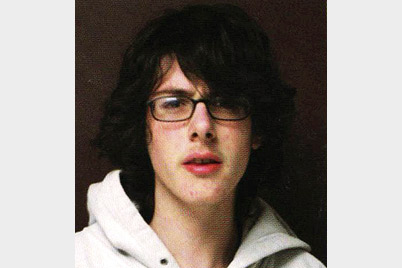
By OSKAR GARCIA,
AP
Posted: 2007-12-06 17:17:24
OMAHA, Neb. (Dec. 6) -- The teenage gunman who went on a
shooting rampage in a department store may have smuggled an
assault rifle into the mall underneath clothing, police said
Thursday.
Police Chief Thomas Warren said the young man "appeared to
be concealing something balled up in a hooded sweat shirt"
he was carrying, according to a surveillance video.
Moments later, as gunshots rang out over Christmas music,
those at Westroads Mall huddled in dressing rooms and
barricaded themselves in offices as the shooter, 19-year-old
Robert A. Hawkins, sprayed the third floor of Von Maur with
gunfire. When the shooting was over, Hawkins killed himself.
His victims included six store employees and two customers,
police said.
The customers killed included Gary Scharf, 48 of Lincoln and
John McDonald, 65, of Council Bluffs, Iowa. The employees
killed included Angie Schuster, 36, of Omaha; Maggie Webb,
24; Janet Jorgensen, 66 of Omaha; Diane Trent, 53 of Omaha;
Gary Joy, 56 of Omaha; and Beverly Flynn, 47, of Omaha.
The mall was closed Thursday as authorities continued to
investigate what may have motivated the teen to go on the
shooting spree. The shooting spree was Nebraska's deadliest
since January 1958, when Charles Starkweather killed 10
people in Nebraska and another in Wyoming.
Hawkins apparently had a troubled past. He recently split
with his girlfriend and been fired from McDonald's. He also
had a criminal record and had left or been kicked out of his
parents' house.
He dropped out of Papillion-La Vista High School as a senior
in March 2006, principal James Glover said Thursday. While
he wasn't a loner, he had a very small group of friends and
was not involved in extracurricular activities, Glover said.
"It was never a situation where he was out of the loop
because people were picking on him," Glover said.
Debora Maruca-Kovac and her husband, whose
sons were friends with Hawkins, welcomed him
into their home and tried to help him.
"When he first came in the house, he was
introverted, a troubled young man who was like
a lost pound puppy that nobody wanted,"
Maruca-Kovac told The Associated Press.
About an hour before the shooting, Hawkins
called her and told her he had written a
suicide note, Maruca-Kovac said. In the note,
which was turned over to authorities, Hawkins
wrote that he was "sorry for everything" and
would not be a burden on his family anymore.
More ominously, he wrote, "Now I'll be
famous."
"He had said how much he loved his family and
all his friends and how he was sorry he was a
burden to everybody and his whole life he was
a piece of (expletive) and now he'll be
famous," she told CBS' "The Early Show,"
Thursday, describing the note. "I was fearful
that he was going to try to commit suicide but
I had no idea that he would involve so many
other families."
Records in Sarpy and Washington counties
showed Hawkins had a felony drug conviction
and several misdemeanor cases filed against
him, including an arrest 11 days before the
shooting for having alcohol as a minor. He was
due in court in two weeks.
Maruca-Kovac told the Omaha World-Herald that
the night before the shooting, Hawkins and her
sons showed her an SKS semiautomatic Russian
military rifle — the same type used in the
shooting. She said she thought the gun
belonged to a member of Hawkins' family, but
didn't think much of it because the gun looked
too old to work.
Mickey Vickory, who worked in the store's
third-floor service department, said she heard
shots and went with coworkers and customers
into a back closet, emerging about a half-hour
later when police shouted to come out with
their hands up. As police led them to another
part of the mall for safety, they saw the
victims.
"We saw the bodies and we saw the blood," she
said.
Keith Fidler, another Von Maur employee, said
he heard a burst of five to six shots followed
by 15 to 20 more rounds. Fidler said he
huddled in the corner of the men's clothing
department with about a dozen other employees
until police yelled to get out of the store.
Witness Shawn Vidlak said the shots sounded
like a nail gun. At first he thought it was
noise from construction work at the mall.
"People started screaming about gunshots,"
Vidlak said. "I grabbed my wife and kids. We
got out of there as fast as we could."
The sprawling, three-level mall has more than
135 stores and restaurants. It gets 14.5
million visitors every year, according to its
Web site.
It was the second mass shooting at a mall this
year. In February, nine people were shot, five
of them fatally, at Trolley Square mall in
Salt Lake City. The gunman, 18-year-old
Sulejman Talovic, was shot and killed by
police.
Copyright 2007 The Associated Press.
Omaha gunman freed from
centers, homes
By ANNA JO BRATTON and NATE JENKINS, Associated Press
Writers 34 minutes ago
OMAHA, Neb. - The young man who killed eight people and
committed suicide in a shooting rampage at a department store
spent four years in a series of treatment centers, group homes
and foster care after threatening to kill his stepmother in
2002.
Finally, in August 2006, social workers, the courts and his
father all agreed: It was time for Robert Hawkins to be
released — nine months before he turned 19 and would have been
required to leave anyway.The group homes and
treatment centers were for youths with substance abuse, mental
or behavioral problems.
Altogether, the state spent about $265,000 on Hawkins,
officials said.
On Thursday, while some of those who knew Hawkins called
the massacre Wednesday at a busy
Omaha mall unexpected, not everyone was surprised.
"He should have gotten help, but I think he needed
someone to help him and needed someone to be there when in the
past he's said he wanted to kill himself," said Karissa Fox,
who said she knew Hawkins through a friend. "Someone should
have listened to him."
Todd Landry, state director of children and family
services, said court records do not show precisely why Hawkins
was released. But he said if Hawkins should not have been set
free, someone would have raised a red flag.
"It is my opinion, it was not a failure of the system to
provide appropriate services," Landry said. "If that was an
issue, any of the participants in the case would have brought
that forward."
After reviewing surveillance tape, a suicide note and
Hawkins' last conversations with those close to him, police
said they don't know — and may never know — exactly why
Hawkins went to the Von Maur store at
Westroads Mall and shot more than a dozen people.
But he clearly planned ahead, walking through the store,
exiting, then returning a few minutes later with a gun
concealed in a balled-up sweatshirt he was carrying,
authorities said.
Debora Maruca-Kovac, a woman who with her husband took
Hawkins into their home because he had no other place to live,
told the
Omaha World-Herald that the night before the shooting,
Hawkins and her sons showed her a semiautomatic rifle. She
said she thought the gun looked too old to work.
Police believe Hawkins was using that AK-47 when he
stormed off a third-floor elevator at the store and started
shooting.
Police said they have found no connections between the
19-year-old and the six employees and two shoppers he killed.
"The shooting victims were randomly selected," as was
the location of the shooting, Omaha Police Chief Thomas Warren
said.
Acquaintances said that Hawkins was a drug user and that
he had a history of depression. In 2005 and 2006, according to
court records, he underwent psychiatric evaluations, the
reasons for which Landry would not disclose, citing privacy
rules.
In May 2002, he was sent to a treatment center in
Waynesville, Mo., after threatening his stepmother. Four
months later, a Nebraska court decided Hawkins' problems were
serious enough that he should be under state supervision and
made him a ward of the state.
He went through a series of institutions in
Nebraska as he progressed through the system: months at
a treatment center and group home in
Omaha in 2003; time in a foster care program and
treatment center in 2004 and 2005; then a felony
drug-possession charge later in 2005. Landry said the court
records do not identify the drug.
The drug charge was eventually dropped, but he was
jailed in 2006 for not performing community service as
required.
On Aug. 21, 2006, he was released from state custody.
Under state law, Landry said, wards are released when
all sides — parents, courts, social workers — agree it is time
for them to go. Once Hawkins was set free, he was entirely on
his own. He was no longer under state supervision, and was not
released into anyone's custody.
Asked whether the state should have watched over Hawkins
after he was released, Peterson said: "When our role is ended,
we try to step out."
About an hour before the shootings, Hawkins called
Maruca-Kovac and told her he had written a suicide note,
Maruca-Kovac said. In the note, Hawkins wrote that he was
"sorry for everything" and would not be a burden on his family
anymore. More ominously, he wrote: "Now I'll be famous."
"He had said how much he loved his family and all his
friends and how he was sorry he was a burden to everybody and
his whole life he was a piece of (expletive) and now he'll be
famous," Maruca-Kovac said on CBS' "The Early Show,"
describing the note. "I was fearful that he was going to try
to commit suicide, but I had no idea that he would involve so
many other families."
The shoppers killed were Gary Scharf, 48, of Lincoln,
and John McDonald, 65, of
Council Bluffs, Iowa. The employees killed were Angie
Schuster, 36; Maggie Webb, 24; Janet Jorgensen, 66; Diane
Trent, 53; Gary Joy, 56; and Beverly Flynn, 47, all of
Omaha.
___
Nate Jenkins contributed to this report from
Lincoln, Neb. Associated Press writer Oskar Garcia in
Omaha also contributed.
12-09-07 - TWO MORE DEADLY SHOOTINGS IN COLORADO

Police seek link in Colo.
attacks; victims ID'd
MORE COMMENTS FROM AN
ASTROLOGER - DR. LUIS TURI
|
Dear Readers:
When I wrote in one of my newsletter titled
"Lord Of Hades" Dated of December 4th 2007 (http://www.drturi.com/newsletter/):
"This trend promises to be tough for many of
us, especially during a waning moon so be VERY
careful of what you do or say during Pluto's
jurisdiction. Be ready for the police to act
unwisely and for the worse element of our
society to kill innocent people. If you are in
a difficult relationship do NOT stir troubles
and AVOID any and all confrontations. With
Pluto in charge EMOTIONS rules NO common sense
is left to a choleric soul and control is a
MUST!"
I don't think I exaggerated a bit by
witnessing once more another "Death Wish
Generation" kid's rampage.
The shootings left four victims and the
19-year-old gunman dead, and six people were
wounded. Luckily for many people the Los
Angeles police arrested a 21-year-old Loyola
Marymount a University student in connection
with an online threat to shoot people on
campus. In case you forgot, the massacre at
Virginia Tech is also the result of "The Death
Wish" generation.
Gunman kills 2 at missionary training center.
The young killer had asked for housing for the
night and opened fire when the missionaries
refused. I wish I had the DOB of this kid but
I can only go with his age and indeed his UCI
denunciate his Pluto (death) was located in
the deadly sign of Scorpio and the tremendous
destructive forces involving such a placement.
It is common for those desperate kids to wear
black as the description of the man fit these
deadly characters walking our streets -- in
his early to mid-20s, dressed in a dark coat.
A simple refusal is enough to unleash the
deadly sleeping bomb and born in 1988 his
Dragon's Tail (past lives) was located in the
pious sign of Virgo (Virgin Marie).
I teach my students that anyone born with a
Dragon's Tail in Virgo carries a tremendous
amount of past lives as a female and "served"
the church as a nun. Many times the soul will
be "dragged" to where it once was, sure,
secure and comfortable or in any of the
millions of convents she operated. The role of
such a pious soul was to HELP anyone in
trouble where no questions were asked. The
refusal triggered a very deep subconscious
"disgusted" feelings against an organization
that "supposed" to help those in trouble and
during a Plutonic time, the deep rooted
emotional deadly feelings were unlashed. Now
be sure none of the psychologists or
psychiatrists investigating this awful case
can enter the archetypal realm of
consciousness and come to the fact of what
really transpired the way I do.
Traditionally educated and with no "Cosmic
Consciousness" what so ever, they can only use
logic and their rigid "accredited" training
and will find plausible excuses for his
actions. As usual, chances are such a soul may
also be a victim of the medical system and
walked around with "legal" drugs in his
system. As a rule, operating near the Dragon's
Tail past lives energy can only bring serious
troubles to the soul but like the majority of
the world's population the gunman had no
awareness of his natal Dragon, his past lives
and the "Cosmic Code". All elements were
there to produce the deadly results but as
always regardless of my OBVIOUS predictions
and constant pleas to raise this world
spiritual awareness, those in power are NOT
listening to me. I am confident with the New
Age of Aquarius to breach the door of
ignorance and further this rare wisdom as more
and more people are signing up to my
newsletters. Slowly but surely I am getting a
voice and as always each time you forward my
work to anyone in power, the more you are
helping me in my mission.
All those vulnerable kids are very concerned
in helping this sick world but working for
Neptune (deception/illusion/religions) is a
lost cause and the universe itself is there to
"wake them up" with serious omens. After all
they are working for God, how come such a
tragedy happened in the house of God? How come
working so hard volunteering for the "Life
Church" we are not protected by his son Jesus
the savior of the world? In all actions good
or bad, there is ALWAYS a valid reason and
Pluto's power is unknown to those good pious
kids. What they do not know is that; they are
MANIPULATED and even abused in they own
innocence and as a paycheck promised hell if
they do not fear God. Not knowing of course
that their instinct of conservation (fear of
death or denied the golden doors to paradise)
is what the manipulative "Church Inc" has used
for centuries to build his humongous wealth
worldwide.
All denominations are doing the same;
Scientology, Mormonism and over 875 other
different denominations in the US are fully
active "training" innocent young souls to
serve God for free. Anything to do with
Neptune (Pisces) is DECEIVING and may take
years for the soul to free itself from his
grasp. Many other souls don't have this luxury
and fall prey to Neptune's deadly powers and
poisoning tools. All that is confined such as
churches, asylums, hospitals, jails, and
synagogues are under his misleading
jurisdiction. All places where drugs
(Neptune's favorite toys) are legally or
illegally used are his castles where the soul
quickly falls in despair and madness. The only
way out is suicide…but how many traditionally
educated good Doctors are aware of such an old
disappeared wisdom?
But the Doctor himself is not aware of his own
subconscious drive, his Neptune position in
the chart and the incontrollable imagination
fueled by deep unconscious fears of death and
that IS the very reason why he BECAME a
Doctor!
But what is really AMAZING is this FACT! The
Rev. Ted Haggard, an evangelical Christian
leader ousted in 2006 after allegations that
he had been a client of a male prostitute from
whom he had purchased drugs, founded the
non-denominational New Life Church. After his
firing, Haggard admitted to undisclosed
"sexual immorality" and called himself "a
deceiver and a liar" in a letter to the
congregation.
All about Neptune's endeavors are simply to be
regarded with suspicion, not to be trusted,
illusory and indeed misleading and the plain
fact is there to see with the "seed/the
founder" himself. Knowing such a fact how can
anyone join such a group? Only a vulnerable,
innocent kid with pure intentions!
Who is there to wake them up and teach them?
The parents? You must be joking they are
probably religiously poisoned to the core for
years themselves. Dead end and as terrible as
it is and as mentioned in my book "The Power
Of The Dragon" ALL " Death Wish" generation
children have been victimized by the church in
previous past lives and are, subconsciously
aiming for religious groups. Anyone who read
my book is aware of this fact but are you?
Now as promised let's investigate another
"death Wish" generation kid's motivation by
looking at his Dragon's Tail. Robert A.
Hawkins, 19 killed eight people and then
himself at a Nebraska mall.
Born May 18, 1987 Robert was born with a
Dragon's Tail in Libra. This position make the
subject unlucky with partnerships or the law
if there is no wisdom of the Universal
structure.
PLANET POSITION (HOUSE)
Sun 26Tau33 (1)
(Self) To establish emotional, financial and
spiritual stability.
Moon 27Cap46 (9)
(Colleges/Universities/education).
Depressions-A very powerful drive to gain
recognition – Capricorn (Head of evil in
Christian theology)
Mercury 08Gem51 (2) (Money/Self
Esteem). A Dual personality
Venus 00Tau37 (1) (Self ).
Tenacious in all affairs of love, reluctant to
let go.
Mars 27Gem57 (2) (Money/Self
Esteem) Mars means danger/weapons, Gemini
rules the mind and the hands.
Jupiter 17Ari55 (12) (Subconscious
Motivation) Grandiose expectations, must find
oneself. International fame/un-fame).
Saturn 19Sag28 (8) (House of Death)
Karmic Location of Saturn and with Sagittarius
a strong drive for recognition.
Uranus 25Sag52 (8) (House of death)
Uranus rules surprising shocking eccentric
behavior involving death matters.
Neptune 07Cap38 (9)
(Colleges/Universities/education).
Deception/illusion/confusion.
Pluto 08Sco04 (7) (Facing
the public/partnerships) Regeneration house.
Losing a partners stimulated the deadly
action.
Dragon's Head 09Ari14 (12)
(subconscious Motivation) Wanting to find
self and a drive for leadership.
Dragon's Tail 09Lib14 (6) (House of
work/service to the world) Negative affliction
with the Dragon's Tail affecting relationships
and actions. O.J. Simpson was also born with
the Dragon's Tail (karma/negative) in his 6th
house of health, action and servicing the
world.
RULER OF CHART: Uranus The explosive
supremely eccentric unpredictable planet
Uranus rules the chart.
IN CRITICAL DEGREES: (Mansions of the
Moon): Pluto ( Deadly motivations regulates
the emotional response to life/dramatic
upbringing.
MOON PHASE: Disseminating (Waning
moon/depressions/guilt/a short life)
'I've just snapped', I know everyone will
remember me as some sort of monster; I can't
take this meaningless existence anymore. Just
think... I'm gonna be [expletive] famous,"
teenager writes his friends according to his
handwritten suicide note released Friday.
DT – Lot of elements are in action such as the
Plutonic trend in action this day but ruling
the chart "unpredictable" Uranus indeed made
him "Snap". His very recognition driven moon
(emotions) in Capricorn (getting to the top of
the mountain of fame) fueled his action.
"I know everyone will remember me as some sort
of monster" indeed depict a full awareness and
heavy guilt produced by his hidden Dragon's
Head in Pisces. His hidden Dragon's Tail in
Virgo (like the Gunman that killed 2 people at
the missionary training center) Hawkins did
not have much self esteem and felt he was
living in a corrupted world. Everything and
everyone never understood his "female"
sensitivity and simply responded to the very
powerful Plutonic trend.
Mrs Maruca-Kovac is a medical nurse and she
explained that Hawkins had been treated for
attention deficit/hyperactivity disorder and
depression but was not taking any medication.
She said he also had a drinking problem and
would occasionally smoke marijuana in his
bedroom.
DT- Note that his hidden Dragon's Tail in
Virgo is against anything non-natural and he
was subconsciously aware of the damage any
drugs can do to both his physical and
spiritual selves. Sad enough the Hidden
Dragons Head in Pisces is also extremely
addictive in nature and he probably (as many
kids of his age) believed that pot is a
natural safe drug. This Dragon in Pisces also
supports alcoholism guilt and religious
endeavors.
"he was sorry for everything, that he didn't
want to be a burden to anybody, he loved his
family, he loved all of his friends. He was a
piece of shit all of his life and now he'll be
famous." Mrs Maruca-Kovac thought he was
improving. "He was depressed, and he had
always been depressed," she said. "But he
looked like he was getting better."
DT - Obviously there is a serious conflict in
the chart with the drive induced by the Moon
(emotions) in Capricorn (over achieving) and
the hidden Dragon's Tail (nefarious) in Virgo
(perfection/lack of self esteem/depressions).
." Mrs Maruca-Kovac is obviously (like all
accredited mental workers prescribing anti
depressants) unaware of the hidden forces
regulating the subconscious drive induced by
the "universal Code" interacting with Hawkins'
UCI.
This kid was lost; he had NO way of
regenerating his spirit and NO one to tell him
the depth of his soul. An Aries Head (I am one
of them born with a Dragon's Head in Aries)
DEMANDS to find the golden key to what it
means to be human, and then fulfill its
purpose to become a leader in a particular
field of action (in my case a leader of the
mind). No institution, no school or University
was available to him and no one had the
answers he was so desperately looking for.
Questions such as;
Why am I so depressed all the time?
Why do I feel so worthless?
Why am I so sensitive?
Where do I belong?
What is my purpose in life?
What can I do to make it big?
What do I have to escape reality with pot or
drinking?
Why am I here on this hell?
Why everyone hates me?
Why was I born to do?
Why do I want to kill myself?
Who am I?
Is there anyone out there to help me?
Now do you the reader understand why it is SO
important to have Astropsychology accepted as
a solid disciple in ALL our colleges and
Universities? But wait a minute building more
churches or large buildings to accommodate
sports and religious fanatics pays back and is
this nonchalance more important than the
welfare of our children fragile psyche and
their future? Until then more "Death Wish"
generation kids and innocent people will die
and how many have to go before someone in
power listen to me and help me to turn things
around?
This is a DISASTER; funds should be spent
wisely for the future and not to numb an
unconscious society and irresponsible ignorant
political, scientific and religious leaders.
Instead those in power are receiving
ridiculous honors pertaining to natural events
making millions taping on your fears and
ignorance of the Universal scheme of things.
Gore, U.N scientist accept Nobel Peace
Prize; Al Gore and the U.N. climate panel's
chief scientist accepted the Nobel Peace Prize
today for sounding the alarm over global
warming. I believe in the human genius, the
Age of Aquarius and his advanced technology to
reverse this situation in time but who is
there NOW for the kids? Many of those kids
have the UCI to make a serious difference for
Mother Earth's welfare and should be
encouraged to work in that direction NOW!
Spiritual pride and honors are given to the
already famous but Mother Earth do not need Al
Gore or anyone else to take care of herself
trust me. But it is still a good fear plate to
tap on because again who wants to die
asphyxiated? Manipulation, greed, power and
ignorance rules this lost world but the real
future is the children, Mother Earth has been
there for billions of years and she will be
there well after all of us are gone to the
other side…
Blessings to all
Dr. Turi
----- Original Message -----
From: Heather
I have highlighted the part pertaining to
senator obama's fate and sent it to Oprah
Montel Williams and other media surely they
cannot ignore this how could they live with
themselves if they do nothing about it.
Sincerely
Heather
DT note – "But as I watched Oprah embrace
Obama as thousands of people went crazy, I
found myself wondering how many votes a hug is
worth…" Oprah is simply responding to "The
Universal Code". She was born in February and
Obama was born in August and the "Law of 7th)
is in full action because there is so much
more in the "Law of Attraction" than you
realize. The physical attraction is OBVIOUS
and she is simply in love with him. To
dedicate so much energy to help Obama
political endeavor is purely "emotions" driven
and depict the large amount of time they spent
together in private. Then the stars did what
they do best. Obama is an Aquarius Dragon Tail
and Oprah is an Aquarius and she is right on
his Dragon's Tail. Thus the attraction is
simply incredible, magnetic and most of all
KARMIC. My first 2008 "Cosmic Code" newsletter
is dedicated to both of them and the shocking
karmic results are ahead of us. Don't miss it.
We are getting close to 2008; don't miss your
first "Cosmic Code" newsletter – Sign up NOW!
POWER OF THE DRAGON - E-BOOK
|
|
|
|
Press Conference with Secretary Gates from Pakistan
US Department of Defense (press
release), DC - Feb 12, 2007
Q Mr. Secretary, did you talk and come to any
understanding with the president here about US military action in
Pakistan? I'm talking about the artillery ...
|
|
Gates Urges NATO Allies to Honor Commitments
All American Patriots (press
release), Sweden - Feb 12, 2007
In his first major address as the 22nd US defense
secretary, Gates told the security policy experts: that
NATO members are divided into two groups: those ...
|
WHO IS IN CHARGE OF TAKING CARE OF THE U.S.? |
Current
News about Secretary GATES
TERRORISM
DATABASE
WAR PAGES
WWIII
DATABASE
DREAMS OF THE GREAT EARTHCHANGES
|