 |
||||||||||||||||||||||||||||||||||||||||||||||||||
|
JOHNSTOWN FLOOD NATIONAL MEMORIAL
|
||||||||||||||||||||||||||||||||||||||||||||||||||
| 1-16-05 - DREAM - I was dreaming about researching the
floods of Illinois, Indiana, and Ohio and trying to connect it to my
friend Mary who lives in New York, but I couldn't find a connection. I
also knew that the flooding in Missouri wasn't connected to her.
1-16-05 - DREAM - Again I was dreaming about researching the massive flooding of '89. I wasn't shown any details, just that it was worth taking note of in history. |
||||||||||||||||||||||||||||||||||||||||||||||||||
|
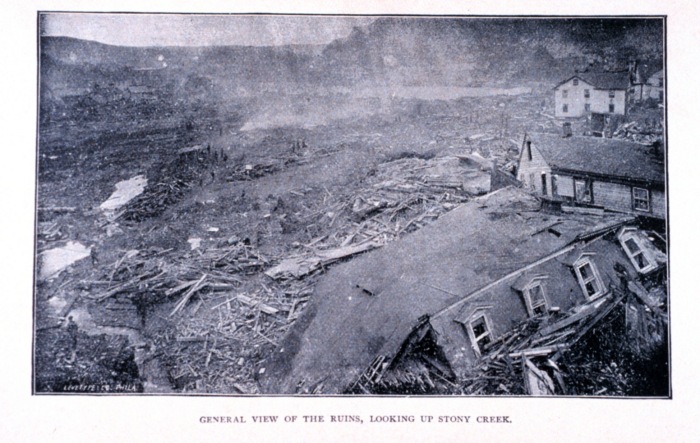
Johnstown Dam After the Destruction The South Fork dam was originally created for a reservoir on the western slope of Allegheny Mountain to supply extra water during the dry months for the Johnstown to Pittsburgh branch of the new canal system. The canal was part of a travel system called the “Main Line” canal, created to compete with New York’s Erie Canal. As part of the Allegheny Portage Railroad, the canal—along with a series of inclined planes and the Pennsylvania railroad—serviced the state from Philadelphia to Pittsburgh. Work began on the Western Reservoir above South Fork in 1838, with $30,000 appropriated for the project. The state engineer who designed the dam estimated a year to completion. With one lengthy delay due to lack of finances and another caused by a cholera epidemic, 15 years passed and another $210,000 was spent before the dam was finally completed on June 10, 1852—the same year the Cambria Iron Works was founded. The dam was made obsolete less than two years later when the Horseshoe curve in Altoona, Pennsylvania was completed, joining Philadelphia to Pittsburgh completely by rail. The canal was put out of business. The Pennsylvania Railroad later purchased the canal and Portage Railroad for the right of ways, but the dam remained unused, and nothing was done to maintain it. The dam first broke in 1862, five years after the state sold it to the Pennsylvania Railroad. The Union army had been marching through the Pennsylvania mountains on their way to Richmond when they were hit by heavy thunderstorms. The massive overflow from hundreds of creeks and runs had the Johnstown Tribune speculating for the first time over what could happen if the South Fork dam broke. Eight days later, on June 10, it happened. The exact size of the break is not known, but little damage was caused. The lake was only half full and the watchman at the dam had released much of the pressure by opening valves. For the next seventeen years the threat of damage from the dam breaking was nonexistent. The lake remained little more than a pond, ten feet deep at its deepest point. Its purchase in 1879 was to change all that. Benjamin Ruff purchased the 400-acre reservoir and 70 acres of land around it for two thousand dollars. His plan was to create a sportsman and vacation retreat for other wealthy Pittsburghers. Ruff’s method of repairing the earth dam included dumping in rock, mud, hay, tree stumps, and almost anything else he could get his hands on. What his method didn’t include was an engineer to supervise the work. The discharge pipes removed by the previous owner and sold for scrap were not replaced and many local bystanders looked askance on the “construction”. On Christmas day, 1879, less than two months after work was begun, a downpour washed away the repairs and work was discontinued until the following summer. Heavy rains again caused serious damage in February of 1881. The repair work was finally completed in March of that year. On the morning of June 10, 1881, during a flash flood, word spread through Johnstown that the dam was about to break. The Cambria Iron Company sent two men to the lake in order to make a critical inspection. Although they found the water at close to two feet from the breast of the dam they were unconcerned, reporting that the dam looked perfectly solid. Over the years many people voiced concerns about the dam but it became something of a local joke, when each year nothing happened. That this would be the day the dam would break was often said, then laughed off as an impossibility. Besides, some thought, even if the dam did break they were far enough away that nothing would happen. But one man was concerned enough about the dam to try to do something about it. From the time that Ruff had purchased the dam and raised the reservoir’s water level the head of the Cambria Iron Company, Daniel J. Morrell, expressed concerns about the dam. Morrell was also President of the Savings Bank and the First National Bank, the water company and the gas company, a powerful citizen in his own right. The Pittsburgh steel tycoons had enough respect for him to elect him president of the American Steel and Iron Association. Cambria Iron Company was a major Johnstown employer with an enormous concentration of holdings in the area. They had much to lose if the dam ever broke. He sent Cambria’s top engineer, John Fulton, to inspect the dam accompanied by three club members and another engineer sent from Pittsburgh. Fulton’s report was a serious indictment of the condition of the dam and Morrell forwarded his findings to the club’s president, Ruff. Two areas appeared to be of serious concern: 1) There was no discharge pipe to reduce or take the water out of the dam for needed repairs. 2) An existing lack of repairs had left a large leak, which appeared to be cutting a new embankment. Since the water could not be lowered, reaching the existing leaks seemed to be impossible. Fulton further stated that if the present level of 40 feet of water should ever reach 60 feet it would only be a matter of time until the former cutting was repeated. And should this break occur during a season of flood, considerable damage might ensue. Fulton advised a thorough overhauling of the present lining on the upper slope and the construction of an ample discharge pipe to reduce or remove the water to make necessary repairs. Ruff considered the dam to have been repaired sufficiently and denied the need for further repairs. Morrell then requested the Pennsylvania Railroad look into the matter, since they had the greatest investment next to Cambria. The railroad sent two engineers; one agreed with Fulton’s report and the other thought everything was fine. The railroad chose to agree with the optimistic assessment. Excerpted from: http://md.essortment.com/floodofjohnsto_renn.htm On June 1,1889, Americans woke to the news that Johnstown, Pennsylvania had been devastated by the worst flood in the Nation's history. Over 2,200 were dead, with many more homeless. When the full story of the flood came to light, many believed that if this was a "natural" disaster, then surely man was an accomplice. Johnstown in 1889 was a steel company town of Germans and Welsh. With a population of 30,000, it was a growing and industrious community known for the quality of its steel. Founded in 1794, Johnstown began to prosper with the building of the Pennsylvania Mainline Canal in 1834 and the arrival of the Pennsylvania Railroad and the Cambria Iron Company in the 1850’s. Fourteen miles up the Little Conemaugh, 3-mile long Lake Conemaugh was held on the side of a mountain - 450 feet higher than Johnstown - by the old South Fork Dam. The dam had been poorly maintained, and every spring there was talk that the dam might not hold. But it always had, and the supposed threat became something of a standing joke around town. But at 4:07 p.m. on the chilly, wet afternoon of May 31, 1889 the inhabitants heard a low rumble that grew to a "roar like thunder." Some knew immediately what had happened: after a night of heavy rains, the South Fork Dam had finally broken, sending 20 million tons of water crashing down the narrow valley. Boiling with huge chunks of debris, the wall of flood water grew at times to 60 feet high, tearing downhill at 40 miles per hour, leveling everything in its path. Thousands of people desperately tried to escape the wave. Those caught by the wave found themselves swept up in a torrent of oily, muddy water, surrounded by tons of grinding debris, which crushed some, provided rafts for others. Many became helplessly entangled in miles of barbed wire from the destroyed wire works. It was over in 10 minutes, but for some the worst was still yet to come. Darkness fell, thousands were huddled in attics, others were floating on the debris, while many more had been swept downstream to the old Stone Bridge at the junction of the rivers. Piled up against the arches, much of the debris caught fire, entrapping forever 80 people who had survived the initial flood wave. Many bodies were never identified, hundreds of the missing never found. Emergency morgues and hospitals were set up, and commissaries distributed food and clothing. The Nation responded to the disaster with a spontaneous outpouring of time, money, food, clothing, and medical assistance. Exerpted from: http://www.johnstownpa.com/History/hist19.html
David McCullough writing in his book The Johnstown Flood notes, "Seen from below, the dam looked like a tremendous mound of overgrown rubble, the work of a glacier perhaps. It reared up 72 feet above the valley floor and was more than 900 feet long." The dam wall had over the years become pock marked with brush and trees growing in the cracks of the rock wall. From below there was no indication that the lake was being held back by this man made creation. The rain that had started the day before continued on May 31st. At first there was little concern for the quickly rising streams and rivers that flowed into the South Fork Dam. However, the mills began sending men home late in the afternoon when the rain flooded streets and houses. People began to move seeking escape from the flood waters with friends who lived on "higher" ground. For some trying to protect family and property they remained in their houses determined to ride out the storm and the rising waters. Water flowing into the South Fork dam increased the height of the lake by an inch every ten minutes. This huge volume of water had by morning filled the lake nearly to the top of the dam. A work crew had assembled trying to free drainage screens covering the dam's catch basins. This attempt to release the increasing pressure on the dam wall failed. By mid-day fears for the safety of people living below the dam sent a rider warning the town of South Fork of the impending danger. These efforts proved meaningless as the citizens of South Fork ignored the warnings. However, attempts were made to warn Johnstown of the "threat" from the lake by telegraph but it was too late, the lines were down. "It was the worst downpour that had ever been recorded for that section of the country," according to the U.S. Signal Corp, which estimated that between eight and ten inches of rain fell in the twenty four hour period prior to the flood. When the dam broke it sounded to one eyewitness like a "roaring mighty battle." (Pg. 101) The water burst through the dam at tree top level. Later civil engineers estimated that it took the entire lake thirty-six or thirty seven minutes to empty. Advancing through the valley the wall of water uprooted everything in its path and scoured the earth to a depth of fifty feet.
Excerpted from: http://www.bgsu.edu/departments/acs/1890s/johnstown/page3.html
|
||||||||||||||||||||||||||||||||||||||||||||||||||
| BULLETIN ITEMS: Some Freaky Things On the Horizon...
Date: Wed, 19 Jan 2005
NEW ICE AGE Disaster Looms for Megacities, UN Official Says |
||||||||||||||||||||||||||||||||||||||||||||||||||
|
||||||||||||||||||||||||||||||||||||||||||||||||||
|
'Typical flash flood' makes traveling tough
BY BOB NIEDBALA, Staff writer niedbala@observer-reporter.com WAYNESBURG – A spring storm that dumped more than 2.5 inches of rain on parts of Greene County made it extremely difficult for some motorists attempting to make their way home from work Monday evening. The rain that fell throughout the day forced many small streams and creeks to overflow their banks and created streams in areas where there normally aren't any. "It was a typical flash flood," said Jeff Marshall, head of the county's Emergency Service Department. "We had a lot of water really quickly and the small streams and creeks just couldn't handle it." he said. A rain gauge at the Waynesburg Borough Sewage Plant, which is used to keep official records for the National Weather Service, measured 2.69 inches of rain between 7 a.m. Monday and 7 a.m. Tuesday, plant employee Bob Kiger said. Several major roads were covered with water Monday at about the time people were leaving work. They included sections of Route 21, between Waynesburg and Carmichaels; Route 88 in Carmichaels; Route 21 at Golden Oaks, west of Rogersville, and Route 18 between Sycamore and Waynesburg. Several secondary roads throughout the county also were water covered at times during the evening. Firefighters with the Carmichaels-Cumberland Township Volunteer Fire Co. were called about 8 p.m.to rescue several people who had driven into high water along Route 21, just west of Bailey's Crossroad. About five cars got stuck along the section of road, fire chief Jim Higgins said. Two trucks also became stranded in high water on nearby South Branch Muddy Creek Road. Two people in a mobile home off Route 21 also had to be rescued when water surrounded their home. The front-end loader of a backhoe owned by Cumberland Township was used to carry the people to safety, Higgins said. About a half dozen fire companies were called out during the late afternoon and evening to pump cellars, monitor the rising waters and rescue motorists who became stranded in high water, Marshall said. Most of the flooding seemed to involve small streams. Though Ten Mile Creek overflowed its banks in some areas, it did not create the problems it has created in the past, Marshall said. Waynesburg Borough also escaped serious flooding this time. Residents and businesses in the borough's south side watched as the water gradually rose, fearing a repeat of previous floods, police chief Tim Hawfield said. "There were a lot of anxious people," he said. Though High Street was closed for a time at Woodland Avenue, no other problems were reported in the borough, Hawfield said. The heavy rainfall also further saturated soils leading to additional
slides. The state Department of Transportation reported several slides
though only one, along Route 18 near Sycamore, had to be cleaned from
the roadway, a spokesman said. |
||||||||||||||||||||||||||||||||||||||||||||||||||
Ruthless rain causes rivers to swell and flood
Across north N.J., rising water filled homes, roads
Wednesday, March 30, 2005
BY RUSSELL BEN-ALI AND MARK MUELLER
Star-Ledger Staff
For the third time in three years, Roy Wilson raced the floodwaters spilling from the Pompton River yesterday. Bitter experience had taught him to save the washer and dryer first. That he did, dragging the heavy appliances from the basement of his Wayne home. He followed up with boxes and bags containing the assorted trappings of life, stacking the items haphazardly on his second-floor deck. But the river kept rising, and Wilson, three years running, ran out of time. The water flowed over his yard and into the basement, soaking everything that remained. "I have so much stuff in the basement, you wouldn't believe it," a frustrated Wilson, 37, said yesterday afternoon on a patch of dry ground near his inundated home. "I just couldn't get it all upstairs." Fed by Monday's relentless rains, the Pompton disgorged 2 feet of water onto Wilson's neighborhood, the township's Hoffman Grove section, and the river was expected to continue rising through today. Similar scenes played out in other flood-prone neighborhoods across northern New Jersey as residents scrambled to save their cars and most prized belongings. In some cases, they succeeded, and in some cases, they didn't. In the Bergen County community of Oakland, the overflowing Ramapo River damaged several cars and threatened 50 homes in a 2-square-mile area, the borough's emergency management coordinator, Roy Bauberger, said. While no evacuations were ordered, several families left of their own accord, Bauberger said. "We knew this problem was going to happen, so people were warned ahead of time," he said. In both Oakland and Wayne -- the two hardest-hit communities yesterday -- police called homes using a reverse 911 system and roamed the streets in cruisers, calling warnings from loudspeakers. But the worse may yet follow. A National Weather Service flood warning remains in effect today for the Passaic River in Little Falls, Passaic County, and the Pine Brook section of Montville in Morris County. The Passaic was expected to continue rising through the day today in both communities, cresting this evening in Pine Brook and tomorrow morning in Little Falls. Flood warnings also covered the Ramapo River in Pompton Lakes and the Wanaque River in Wanaque. Both communities are in Passaic County. An additional warning was issued for the Rockaway River in Boonton, Morris County. Street flooding occurred in numerous North Jersey communities, among them Middlesex Borough in Middlesex County, Franklin Township in Somerset County and Lincoln Park in Morris County. Blame the two-day deluge that finally eased out yesterday morning. The storm dropped 1 1/2 to 3 inches of rain across much of the state. The highest total was recorded in Jefferson Township, where 3.3 inches fell. Combined with a melting snowpack of 1 to 4 inches across the area, the storm pushed many rivers over their banks. More rain could follow. National Weather Service meteorologist Harry Woodworth called for a 40 percent chance of showers Thursday night and Friday, rising to 50 percent Saturday. "It looks as if it might be another wet one," Woodworth said. "It could be potent." In Wayne, Wilson wanted nothing to do with more rain. Previous floods -- in 2004 and 2003 -- each claimed a washing machine and a dryer. The 2003 surge also destroyed many personal items. "I lost about 35 years of photos and clothes, stuff we collected over the years," the married father of two said. "We still haven't cleaned up since the last flood." After three years of renting in the community, Wilson said he's had enough. He plans to move to Allentown, Pa., next month. Others have learned to cope with the water. In Warren County, weather-weary residents along Hutchinson River Road in Harmony Township have their routines when the Delaware rises. Cheryl Fortner tracks Web sites to predict how high the river will reach. Anything above 13 feet means water will be on the road. At about 18 feet -- the height yesterday -- the first floor of the house becomes the new basement and the garage becomes an unheated indoor swimming pool. As a stream began to form on the road, Fortner pumped up her hydraulic lift to get her refrigerator above water level. She moved the kayak, the power tools, the lawn chairs, the bicycles, the lawnmower, the garbage can. She drove her car to higher ground. "Anything that's down low gets moved up high -- anything," Fortner said. "I'm not taking any chances." Staff writers Mike Frassinelli, Maura McDermott, Matthew J. Dowling and Victoria St. Martin contributed to this report. |
||||||||||||||||||||||||||||||||||||||||||||||||||
|
Pakistan, Pakistan floods kill nearly 300 2-12-05 5 Hour,46 minutes Ago [Pakistan News]: LAHORE, Pakistan -- Pakistan has launched a massive rescue and relief operation for hundreds of people stricken by torrential rains in the southwest, as floods and avalanches pushed the death toll to nearly 300 nationwide, officials said on Saturday. More than half a dozen avalanches across northern Pakistan have killed more than 80 people since Friday, officials said. And on Saturday, Pakistan President Pervez Musharraf toured the scene of Thursday's dam break in southwestern Pakistan that left at least 145 people dead and dozens more missing. It is unclear how many of those missing have simply not yet returned to their homes after fleeing the flood caused the Shadi Kor dam broke. Musharraf told Pakistan's Geo television by phone that personnel from the army and navy were helping people affected by the rains, according to The Associated Press. He said all the roads and bridges damaged by rains will soon be repaired, and financial assistance will be provided to those who lost their family members, or whose property was damaged. The Shadi Kor dam is located near Pasni Tehsil in southwestern Pakistan. Pasni and many other coastal areas were cut off as the waters washed out a coastal highway and bridges linking the city with Karachi and Gwadar. The dam was built in 2003 to provide irrigation in the area, but could not cope with more than a week of heavy rains. The airport was also closed after the runway became submerged. Electricity and phone service has been disrupted. Relief operations were launched by the army, navy and coast guard. Another 65 deaths are blamed on heavy rains in other parts of Pakistan in the last several days, officials said. Tribal areas and northern areas of Pakistan have been hit by heavy rain and snowfall, but actual death toll and damages were not immediately available as communication lines were down. |
||||||||||||||||||||||||||||||||||||||||||||||||||
|
Pasni
Dam Bursts: Heavy Rains Kill 150 in Pakistan QUETTA: More than 150
people have been killed across Pakistan in the heaviest rains in 16
years that caused a dam to burst, provincial officials said on Friday. Musharraf grieved
over loss of lives by rains
|
||||||||||||||||||||||||||||||||||||||||||||||||||
|
Venezuela Floods
Leave at Least 16 Dead Friday February 11, 2005 12:01 AM By CHRISTOPHER TOOTHAKER Associated Press Writer LA GUAIRA, Venezuela (AP) - Venezuela sent helicopters and navy ships to evacuate thousands of people stranded by floodwaters Thursday as torrential rains began to ease. The death toll from three days of floods and landslides rose to 16 with thousands left homeless. Army helicopters landed at the country's main international airport in La Guaira bringing hungry and shivering victims rescued along the Caribbean coast. Some covered themselves with wet blankets, while others carried babies. Tears streamed down the face of Mirna Garcia, 36, as she gazed through a chain link fence waiting for a helicopter to appear with her father and husband, whom she feared were trapped in a house in the coastal town of Naiguata. ``I know the authorities are doing what they can to look for them and get them out of there, but I'm afraid for what could have happened to them,'' said Garcia, who made it out with her three children. More than 5,000 people were rescued the mountainous coast in Vargas state, Defense Minister Gen. Jorge Garcia Carneiro told the Venezuelan radio station Union Radio. He said about 2,000 remained to be evacuated from coastal areas blocked by overflowing rivers. Visiting the area, President Hugo Chavez urged calm. ``We are prepared to face a situation like this,'' said Chavez, who announced a $52 million fund to help in relief efforts. Five years ago, catastrophic floods and mudslides in the same coastal state of Vargas killed at least 6,000. Chavez said this time ``a lot more rain has fallen'' but he said rescue efforts have been working. Hundreds of people streamed off a Navy ship Thursday after being evacuated to La Guaira's port. More than a dozen military helicopters and 10 navy patrol and transport ships were helping evacuate people, the defense minister said. Many of the evacuees were tourists who had gone to the beach for carnival earlier in the week. Some came off the helicopters barefoot or in sandals, carrying beach towels and tennis rackets. Images from the air showed rivers of water, mud and debris winding through coastal towns. Parts of the coastal highway disappeared under landslides. Torrential rains turned to drizzle in many areas Thursday afternoon. The death toll rose Thursday to 15 in Venezuela and one in Colombia. A man died in the Caracas suburb of Los Teques when a landslide came down on his house, said Rodolfo Sanz, an official of Miranda state. Nine deaths were reported in the north-central state of Carabobo, three in the capital of Caracas and two elsewhere. About 3,700 people have had their homes destroyed in the floods since Tuesday, said Antonio Rivero, director of Civil Protection rescue squad. Thousands more were forced to flee, officials said. Some moved into emergency shelters, while others took refuge with family or friends. In north-central Colombia, more than 100 homes were destroyed by floods, and a 52-year-old man in the colonial town of Giron died Wednesday when his house collapsed while he was sleeping, said Eduardo Gonzalez, director of the Colombian disaster office. Venezuela declared a state of emergency in Caracas and six states on Wednesday. Chavez attributed the heavy rains, unusual for this time of year, to global warming. ``This is the result of those ecological problems of the world, that rich countries don't want to hear about, of global warming,'' Chavez said. --- Associated Press reporters Fabiola Sanchez in Caracas and Dan Molinski in Bogota contributed to this report.
|
||||||||||||||||||||||||||||||||||||||||||||||||||
Record flooding forecast for Grand River in Ottawa CountyJanuary 22, 2005, 4:24 PM ROBINSON TOWNSHIP, Mich. (AP) -- The National Weather Service on Saturday reissued a flood warning for the Grand River in Ottawa County's Robinson Township, where residents of 50 homes have been evacuated since Tuesday. A six-mile-long ice jam continued causing moderate flooding over a 15-mile area and could cause record flooding by Sunday morning, forecasters said. Icy flood waters had reached four-to-six feet by Saturday afternoon, and the river was at 17.5 feet Saturday, four feet above flood stage, though it had receded slightly overnight. It was expected to crest at about 18.5 feet early Sunday. The previous record of 18 feet was set Feb. 25, 1994. Weather service hydrologist Mark Walton said the snow was strengthening the jam by filling in cracks. The area is not expected to warm significantly any time soon, he said. Authorities already had evacuated two subdivisions of low-lying homes. "The flooding is bad enough, but when it freezes, it's very dangerous, because it's ice on top, but a very strong current underneath, as that water tries to find a way around the jam," Walton said. Ice jams exposed to that sort of cold generally stay locked for an entire season, said Kathleen White, a cold-weather researcher with the U.S. Army Corps of Engineers in New Hampshire. "They'll typically remain in place for the rest of the winter," White told The Grand Rapids Press for a Saturday story. "This particular jam is unusual and problematic because it froze at a very high level. The only thing that is likely to change that is a warm or rain event, and that could really cause problems." Some residents of the evacuated area were returning to their homes to retrieve possessions, despite warnings from local authorities. Walton said some people had fallen through the ice, though no serious injuries were reported. He also said a special airboat had to be used to return to the homes and retrieve cats and other pets. |
||||||||||||||||||||||||||||||||||||||||||||||||||
| Flooding may close roadways 1-22-05 -- Flooding in trouble spots could trigger automatic road closures in
the future. As many as a dozen drivers were stranded after trying to drive
through high water caused by rain and melting snow last week. Most of
the problems were on Gilbert Highway where the Lenawee County Road
Commission resorted to barricades and posting road closed signs on
Sunday. |
||||||||||||||||||||||||||||||||||||||||||||||||||
|
||||||||||||||||||||||||||||||||||||||||||||||||||
|
THIS IS WHAT CAUSES SPRING FLOODS Jan 22, 4:41 PM (ET)By LARRY McSHANE NEW YORK (AP) - Hundreds of airline flights were canceled Saturday and fleets of road plows were warmed up as a paralyzing snowstorm barreled out of the Midwest and spread across the Northeast with a potential for up to 20 inches of snow driven by 50 mph wind. Storm warnings were posted from Wisconsin to New England, where the National Weather Service posted blizzard warnings in effect through Sunday. By afternoon, snow was falling across a region stretching from Wisconsin and Illinois to Virginia and the New England states. One man died after falling through ice on a pond in Ohio, where two others died of apparent heart attacks while removing snow, authorities said. Temperatures in Maine fell to 36 below zero at Masardis, and Bangor dropped to a record low of 29 below. Meteorologists predicted wind up to 50 mph would push wind chill readings to 8 below zero in New York and New Jersey. Many people rushed out to stock up on supplies to ride out the storm at home. "I got a couple steaks, a couple jugs of wine and a couple good books," Walter Trogdash said as he left a convenience store in Toms River, N.J. "I think I'm all set." North of New York City in Mamaroneck, shoppers stripped the shelves at a Super Stop&Shop of soda, meat, potatoes and beer and the checkout line stretched the length of the store. "It's awesome," store manager Louis Spinola said of the mob scene. Up to a foot of snow had fallen in Wisconsin and Michigan, and wind gusted to more than 60 mph across Iowa. As much as 18 inches of snow was forecast in northern New Jersey and accumulations of up to 20 inches were possible in parts of New England and the New York City area, the weather service said. A foot was likely in northern sections of Ohio and Pennsylvania. While crews in the Midwest labored to remove what already had fallen, highway departments in the Northeast readied hundreds of plows and salt-spreading trucks. New York City canceled all vacations for its sanitation workers and called people in on their days off to handle the snow. Kennedy International Airport had machines capable of melting 500 tons of snow an hour. If 20 inches of snow fell in New York, the cost of cleanup could hit $20 million, but Mayor Michael Bloomberg said that was a problem for another day. "The first thing is we're going to take care of the city," Bloomberg said. "And then Monday morning, I'll have to worry about how to pay for it." "This is our Super Bowl. It's the public servants versus the elements, and we hope to win," said Philadelphia Managing Director Phil Goldsmith. The blowing snow caused frustrating delays as airlines called off flights. About 400 flights were canceled Saturday at Chicago's O'Hare International Airport and dozens more were called off at the city's Midway Airport. More than 200 people stayed the night at the two airports because of flights canceled the night before. Even more chain-reaction cancellations were expected at Chicago and elsewhere as the storm clamped down on airports on the East Coast, said Chicago Department of Aviation spokeswoman Annette Martinez. The New York metropolitan area's Kennedy and Newark airports had dozens of cancellations as the storm arrived Saturday afternoon, said Port Authority spokesman Alan Hicks. LaGuardia had nearly 200 cancellations by 2 p.m. By noon at Philadelphia International Airport, the storm had already wiped out about 25 percent of the normal load of 1,100 daily arrivals and departures. A private jet and a commuter plane slid off a taxiway at Pittsburgh International Airport; no one was injured. On the highways, Pennsylvania State Police reported dozens of accidents, including one involving 11 cars. New Jersey banned tractor-trailer rigs and motorcycles from the New Jersey Turnpike and slashed the speed limit to 45 mph. Detroit delayed the opening of its first annual Motown Winter Blast
for several hours to give road crews a chance to clear highways. SAT
tests for prospective college students were canceled in Maryland, and
several college basketball games were postponed in New Jersey. |
||||||||||||||||||||||||||||||||||||||||||||||||||
January 23, 2005'Nasty' Storm Snarls Travel in NortheastA month across the abyss of winter, the season's first major storm buried New York and much of the Northeast yesterday, stifling travel, slowing the pace of life for millions and recasting the landscapes of 12 states. The storm, touted as a probable blizzard, roared in from the Midwest and turned into a classic northeaster, with 30-to-50-mile-an-hour winds and nebular arms revolving counterclockwise. It moved up the East Coast, gathering ocean moisture and hurling it back at the land as snow that blanketed cities and towns, closed airports, canceled hundreds of flights, choked railways and highways and filled the air with crystalline impressions. It began quietly in the New York metropolitan area before noon, a gentle whispering fall in the pale January light. But by evening, it had become a driving force of windblown snow, with gusts that hissed against the windows and mounting accumulations that, meteorologists said, only hinted at the depths to come. By late this morning, those accumulations were expected to top out at 12 to 18 inches in Central Park and 18 to 24 inches in parts of Northern New Jersey, Eastern Long Island, Southern Connecticut and shore areas of Rhode Island. Cape Cod and Southeastern Massachusetts were expected to be hit hardest, with more than two feet of snow blown by winds that gusted up to 60 miles an hour. Lesser totals were expected in the Washington area and in Maryland, Delaware, Pennsylvania and southern sections of Vermont, New Hampshire and Maine. The Northeast was hardly alone in wintry misery. Heavy snows pounded parts of the Midwest, with the Chicago area getting its biggest snowfall of the season: more than 8 inches by yesterday afternoon with more to come. At O'Hare International Airport, flight delays averaged seven and a half hours and hundreds of stranded passengers slept on cots near baggage claim areas. In Connecticut, Gov. M. Jodi Rell ordered a state emergency operations center to open yesterday as forecasters predicted coastal flooding in parts of New London and Middlesex Counties. Blizzard warnings were posted for most of New York State. The mid-Hudson Valley was expected to get 20 inches of snow, and up to a foot was forecast for Albany, the Mohawk Valley and parts of western New York. Three weather-related deaths were reported in Ohio, where a man fell through ice on a pond and two people suffered heart attacks shoveling snow. In Wisconsin, the Milwaukee suburb of West Allis had 12 inches of snow and up to 5 inches more was expected overnight. Southern Michigan had 6 to 14 inches of snow yesterday, and drifts of three feet were common. In the pantheon of winter storms in New York, it did not compare with the all-time record blizzard of Dec. 26-27, 1947, which interred the city in 26.4 inches of snow, and was also expected to fall short of the blizzard of Jan. 7-8, 1996, which left 20.2 inches in Central Park. But Todd J. Miner, a meteorologist with Pennsylvania State University, said it could rival the President's Day storm last year, which left 19.8 inches. "This is a big, nasty snowstorm," Mr. Miner said early yesterday afternoon. "It's possible we will be heading toward well over a foot of snow in Central Park. We're not going to get two feet, but heading toward 18 inches is not a bad signpost, bringing this into the upper echelons of storms. Of the top 12 city snowstorms on record - 16 inches or higher - we've probably got a good shot at that." Mr. Miner said that in the overnight hours, the storm would almost certainly meet the National Weather Service's criteria for a blizzard - winds of at least 35 m.p.h., falling or blowing snow and visibility of less than a quarter-mile for three consecutive hours. But whatever the technicalities, you could hardly tell neighbors shoveling huge drifts from their driveway that it was not a blizzard. And it was cold, bitter cold. It was 29 below zero in Massena, N.Y., 28 below at Saranac Lake, N.Y., 14 below in Syracuse and 10 below in Albany. In New York City it was a relatively balmy 10 above yesterday morning. That was frigid enough to keep the customary tourist hordes away from Times Square, which looked more like a ghost town in the swirling snow, and it was obvious that restaurants, theaters and other attractions had a terrible day. The Port Authority of New York and New Jersey, which operates the three major metropolitan airports - Kennedy International, La Guardia and Newark Liberty International - as well as bridges, tunnels and the Port Authority Trans Hudson (PATH) rail system, went into a full mobilization of personnel and equipment and was bracing for a rough weekend. All three airports remained open, but 175 flights were canceled at Kennedy, 120 more were canceled at Newark, and 200 were canceled at La Guardia, where delays ran up to two hours. Traffic was moving on the George Washington Bridge and the Lincoln and Holland Tunnels, but there were 35 mile-an-hour speed limits on Staten Island bridges. With whiteout conditions on runways, the intensifying storm closed the Philadelphia airport at 3:30 p.m. and Bradley International Airport near Hartford at 6:30 p.m. and would possibly shut down those in Boston, Albany and other cities, stranding thousands of passengers. Acting Gov. Richard Codey of New Jersey announced that a state of emergency would be in effect from 8 p.m. to 8 a.m. today, allowing the police to close roads, if necessary, to ensure public safety. Up and down the Northeast Corridor, driving was treacherous on icy, snow-blown highways, roads and neighborhood streets. There were countless minor accidents, though no deaths or serious injuries were reported, and motorists were advised to stay home or use public transportation. But trains and buses were also delayed by the storm, and getting around, for those who had to, was an ordeal. Many residents heeded the warnings to stay home and many businesses closed for the weekend. The Long Island Rail Road, which operates 450 trains on 11 branches on a typical weekend, reported only two train cancellations, both on the Greenport line, and only minor delays on the rest of the system. "But that could change as the storm worsens and the wind increases," said Brian P. Dolan, a spokesman. "They're predicting drifts of snow. If we get 2 to 3 inches an hour, that challenges us to keep pace with the storm." In the meantime, he said special trains were spraying antifreeze on power, rails, and activating electric and gas-powered heaters to keep switches moving. Even before the snow began falling, the Metro-North Railroad had a signal problem on its upper Hudson line between Croton and Poughkeepsie that delayed about 8 trains for up to 30 minutes. Marjorie Anders, a spokeswoman, said that railroad officials were meeting in the afternoon to decide whether to cut back service because it appeared that many passengers were staying home. But Dan Brucker, another spokesman, said late in the afternoon that service remained on or close to schedule on all its lines, although there were plans to sharply cut service today. New Jersey Transit, which operates 11 rail lines, 3 light rail systems and 240 bus routes around the state and into Manhattan, reduced its service schedule yesterday afternoon until midnight tonight. Later in the day, New Jersey Transit suspended its South Jersey bus service as of 5 p.m., and its North Jersey buses as of 7:30 p.m. It also reported delays of 15 to 20 minutes on its Northeast Corridor line. Dan Stessel, a spokesman for New Jersey Transit, said that express trains on the Northeast Corridor line had been canceled, although local trains continued to run. The Midtown Direct line between Penn Station and Dover, N.J., in Morris County was rerouted to Hoboken, where passengers could switch to PATH trains running to 33rd Street in Manhattan. Forewarned, cities and counties across the region had readied armies of equipment and sent out fleets of salt spreaders and snowplows to counterattack as the snow began falling. In New Jersey, state transportation officials and the New Jersey Turnpike Authority had more than 2,000 trucks on the roads to plow and spread salt. The Port Authority also had hundreds of pieces of equipment out, and more than 200,000 gallons of liquid de-icing chemicals for use on wings and other surfaces. In New York, Mayor Michael R. Bloomberg went to the department's Queens repair shop and said 2,500 sanitation workers - using 1,450 garbage trucks with plows, 82 dump trucks with plows and 350 salt spreaders - would work around the clock in two shifts to keep major arteries and streets open. He said he expected that all of the city's 6,300 miles of streets would be plowed at least once by the start of the workweek tomorrow morning. Mr. Bloomberg also issued a few words of caution. "The streets even after they are plowed will be slippery, so you should take caution," he said. "The streets will be narrower, the snow has to go some place." He also urged residents to dress warmly, check on neighbors, take mass transit to work and keep cars off the streets so the plows can get through. Many schools with Saturday classes closed. Aqueduct and the Meadowlands Racetrack canceled their Saturday racing programs, and many college basketball games were postponed. National Football League conference championship games in Philadelphia (Eagles-Atlanta Falcons) and Pittsburgh (Steelers-New England Patriots) were still on track for today and, with the snow over by game times, only bitter cold and high winds were expected to be factors. The storm's timing significantly diminished its impact. For millions of suburban commuters and students home for the weekend, the snow was not a great hardship, except for the ordeal of shoveling a driveway or sidewalk, which leads every winter to many heart attacks. But for many residents of the metropolitan area, the storm provided an opportunity - one of the few in a relatively mild winter that has recorded a total of only 4.3 inches of snow since autumn - to get out with sleds, skis or snowshoes and to frolic in the drifts. And for those so inclined, it was a chance to relax indoors, snowed in with Bach, Brubeck or a good book, cozy behind panes embroidered with frost. For those who ventured out to play - hooded, booted, muffled to the eyes - the storm offered glimpses of nature's beauty: empty streets turned into white meadows, black-and-white woodlands painted in moonlight, snowflakes glittering like confections in a bakery - frosted, glazed, powdered, sugary - and in the parks children, romping, padded like armadillos. There had been warnings for days by meteorologists and television broadcasters, and most people had stocked up on supplies for a weekend siege. But there were many last-minute shoppers yesterday, even as the snow began falling. Doreen and Neal Erps, of North Brunswick, N.J., wheeled a cart out of a Home Depot on Route 1 in Edison with cabinet shelves. "I figure we'll be in the house all weekend long," said Mr. Erps. "We might as well do something productive, and remodeling the bathroom beats shoveling snow." But he had a shovel and a snowbrush in his cart as well. He explained, "I have several of them at home already, but with a storm like this you can never have enough shovels." Nearby, Howard Myers, of New Brunswick, N.J., was loading up his S.U.V. with groceries and firewood. "My next stop is the liquor store," he said. "I'm going to get a nice bottle of Scotch, put the logs on the fire and let the storm rage outside while I read my book." At a Home Depot on 23rd Street in Manhattan, shovels, salt buckets, windshield scrapers and other storm equipment flew off the shelves. By 12:30 p.m., only four of the 40 snowblowers delivered on Friday - some fetching $729 - were left, and the shovels were gone. "Where are the shovels?" asked an anxious customer, one of a cluster. "They are unloading them right now," an employee said. "C'mon, let's go," another patron said as the group hurried downstairs to meet the delivery truck. At a Blockbuster Video in Old Tappan, N.J., 80 customers waited at noon in a 45-minute line that snaked down the aisles, past "Anger Management" and "Intolerable Cruelty," all the way back to "Mystic River." Alone at the check-out was the store manager, Brian (company policy prohibited him from giving his last name). In his three years with Blockbuster, he said, he had never seen a line so long. Contributing reporting for this article were Gretchen Ruethling in Chicago, John Holl in New Jersey, David Winzelberg on Long Island, and Jennifer 8. Lee, Winnie Hu and David Corcoran in New York. |
||||||||||||||||||||||||||||||||||||||||||||||||||
Flooding Forces 100 to Flee Apartment ComplexPensacola receives 10.7 inches of rain in 24 hours as storms drench Panhandle.PENSACOLA, Fla. -- Small boats and personal watercraft were used to evacuate about 100 people from a Pensacola apartment complex Friday because of flooding from heavy rains in the Florida Panhandle, including areas still recovering from last year's Hurricane Ivan. The rain and flooding damaged a courthouse, caused scattered power outages and temporarily closed roads, including Interstate 10, and schools and businesses throughout the region, where some drainage systems remain clogged with hurricane debris. Pensacola Regional Airport, where 11 flights were canceled and others delayed Friday, recorded 10.7 inches of rain during a 24-hour period through 7 a.m. Two or three more inches were expected before a series of thunderstorms off the Gulf of Mexico moved out of the area later Friday, National Weather Service officials said. The American Red Cross opened a shelter at the East Brent Baptist Church for residents evacuated by boat from the Forest Creek apartment complex in Pensacola, said Escambia County emergency management spokeswoman Sonya Smith. The complex, in a low area, was inundated by two to four feet of water. Shelters also were opened east of Pensacola in Santa Rosa and Okaloosa counties in case additional evacuations were required as rivers and creeks hit flood stage. Part of the roof caved in at Pensacola's M.C. Blanchard Judicial Building, previously damaged by Ivan in September. "Tons of water" cascaded into the structure, Escambia County court administrator Wayne Peacock told the Pensacola News Journal for Saturday editions. About 100 sailors were dispatched from Pensacola Naval Air Station to fill sandbags at a military housing complex where 88 families live about two miles away and temporary quarters were available on base in case evacuations became necessary, said Navy spokesman Patrick Nichols. Several drivers were rescued from flooded vehicles in the Holly-Navarre area about 25 miles east of Pensacola. Gulf Power Co. reported up to 10,000 homes and businesses had lost power in the western Panhandle mostly due to lightning strikes and tree limbs that fell on power lines. Walton County emergency managers reported bridges and roads flooded in the Mossy Head area, and barricades were up to keep out motorists. Several low-lying roads flooded in Santa Rosa County. The National Weather Service issued flash-flood warnings for nine Panhandle counties: Bay, Calhoun, Escambia, Holmes, Jackson, Okaloosa, Santa Rosa, Walton and Washington. | ||||||||||||||||||||||||||||||||||||||||||||||||||
Flooding Forces 100 to Flee Apartment ComplexPensacola receives 10.7 inches of rain in 24 hours as storms drench Panhandle.PENSACOLA, Fla. -- Small boats and personal watercraft were used to evacuate about 100 people from a Pensacola apartment complex Friday because of flooding from heavy rains in the Florida Panhandle, including areas still recovering from last year's Hurricane Ivan. The rain and flooding damaged a courthouse, caused scattered power outages and temporarily closed roads, including Interstate 10, and schools and businesses throughout the region, where some drainage systems remain clogged with hurricane debris. Pensacola Regional Airport, where 11 flights were canceled and others delayed Friday, recorded 10.7 inches of rain during a 24-hour period through 7 a.m. Two or three more inches were expected before a series of thunderstorms off the Gulf of Mexico moved out of the area later Friday, National Weather Service officials said. The American Red Cross opened a shelter at the East Brent Baptist Church for residents evacuated by boat from the Forest Creek apartment complex in Pensacola, said Escambia County emergency management spokeswoman Sonya Smith. The complex, in a low area, was inundated by two to four feet of water. Shelters also were opened east of Pensacola in Santa Rosa and Okaloosa counties in case additional evacuations were required as rivers and creeks hit flood stage. Part of the roof caved in at Pensacola's M.C. Blanchard Judicial Building, previously damaged by Ivan in September. "Tons of water" cascaded into the structure, Escambia County court administrator Wayne Peacock told the Pensacola News Journal for Saturday editions. About 100 sailors were dispatched from Pensacola Naval Air Station to fill sandbags at a military housing complex where 88 families live about two miles away and temporary quarters were available on base in case evacuations became necessary, said Navy spokesman Patrick Nichols. Several drivers were rescued from flooded vehicles in the Holly-Navarre area about 25 miles east of Pensacola. Gulf Power Co. reported up to 10,000 homes and businesses had lost power in the western Panhandle mostly due to lightning strikes and tree limbs that fell on power lines. Walton County emergency managers reported bridges and roads flooded in the Mossy Head area, and barricades were up to keep out motorists. Several low-lying roads flooded in Santa Rosa County. The National Weather Service issued flash-flood warnings for nine Panhandle counties: Bay, Calhoun, Escambia, Holmes, Jackson, Okaloosa, Santa Rosa, Walton and Washington. | ||||||||||||||||||||||||||||||||||||||||||||||||||
| Northeast Flooding Forces Many From Homes
Flooding Forces Thousands of People From Their Homes in New Jersey, Pennsylvania, New York By ROSA CIRIANNI Associated Press WriterThe Associated PressTRENTON, N.J. Apr 4, 2005 — Flooding from a weekend of drenching rain forced thousands of people from their homes in New Jersey, New York and Pennsylvania and closed the New Jersey Statehouse on Monday. Police recovered the body of a woman who had been swept away by flood waters in eastern New York state and were still searching for passengers who were inside a van that had been recovered from a swollen creek. In New Jersey, where about 3,500 people were evacuated, acting Gov. Richard J. Codey estimated property damage would approach $30 million, close to the amount caused by Hurricane Ivan last September. "The Delaware River is calling the shots right now," said state police Superintendent Col. Joseph "Rick" Fuentes. The river was expected to crest Monday, but it could take until the end of the week for the water to recede enough for people to return home. Codey declared a state of emergency on Sunday and barred nonessential state workers from Trenton on Monday. At one point, water was 6 feet deep in the bottom level of the Statehouse parking garage, just yards from the Delaware River. In the hardest-hit areas along the Delaware, water lapped against roofs. "It was like someone was taking a squeegee and just pushing the water forward," said Bertram King, 20, one of about 15 people evacuated from a homeless shelter in Easton, Pa. At a playground near the Pompton River, the water rose to a few feet below the level of a basketball rim. Some residents who had remained in their homes glided down the aptly named Island Street in rowboats, using snow shovels as paddles. Along the Delaware, about 800 people were evacuated from their homes Sunday in Port Jervis, N.Y., at the point where the three states meet. At least 100 of them spent the night at a high school. And at Cincinnatus, N.Y., a river flooded a nursing home, forcing out about 35 residents. High water also closed roads and several schools in eastern New York's Hudson Valley. Police in Deposit, N.Y., near the Pennsylvania line, resumed the search Monday for the occupants of a van that was swept away by a creek Sunday. Police did not identify the missing or confirm how many people they were looking for. In Ulster County, the body of 58-year-old Maria Fuentes was found Monday after her SUV flipped over in fast-moving water. Her 21-year-old daughter grabbed onto a tree and was rescued. Parts of the region have had about 7 inches of rain in the last 30 days, with most of it since March 23, said David A. Robinson, the New Jersey state climatologist. "In the last two weeks, we've had more than a month and a half of rainfall, with some snow melt in there," he said. The same weekend storm system piled more than 2 feet of snow in some places in southwestern New York and northwestern Pennsylvania. Residents of southwest New York's Chautauqua County were digging out Monday from as much as 26 inches of wet, heavy snow. In nearby Erie County, Pa., 19 inches of snow fell at Waterford and Corry got 14 inches. Copyright 2005 The Associated Press. All rights reserved |
||||||||||||||||||||||||||||||||||||||||||||||||||
| Easton struggles with flooding Several roads throughout the area remain closed. Ravaged Easton on Monday was still struggling to get out from under the flood waters caused by the weekend's heavy rains. Portions of the downtown along the Delaware River were still under water at noon Monday. Water levels appeared to be dropping along Larry Holmes Drive and businesses along Northampton Street began pumping out flooded basements. The Free Bridge leading to Phillipsburg remained closed and the McDonald's fast food restaurant was still partially submerged, as well as the Square One store across the street. It may have been even worse along the Delaware in Bucks County, where an estimated 2,500 people were evacuated between Kintnersville and Yardley. In historic New Hope, businesses and homes along Main Street, which runs parallel to the river were forced to evacuate Sunday afternoon, and the borough's power grid was turned off around 7 p.m. The river crested about 6 a.m. Monday, immersing more than 50 pristine homes and businesses along the river in its murky brown waters for the second time in less than seven months. By Monday afternoon, when the water finally reached its high point, portions of Main Street were flooded with water swallowing all but the tops of some parking meters. Several shops along had waist-level water. Many roads remained closed throughout the area. The following is a list by county of roads that remain closed as of Monday afternoon provided by the Pennsylvania Department of Transportation: |
||||||||||||||||||||||||||||||||||||||||||||||||||
| NJ rivers receding, but
thousands remain out of homes By ROSA CIRIANNI Associated Press Writer April 4, 2005, 7:55 PM EDT TRENTON, N.J. -- Floodwaters that chased thousands of New Jersey residents from homes began receding Monday, but many people will not be able to return to their homes for days. Two-thirds of the 3,500 New Jersey evacuees live along the Delaware River, while the remainder were in the Passaic River basin in the northeast quadrant of the state. No deaths or serious injuries were reported, but acting Gov. Richard J. Codey estimated that property damage would approach $30 million, about the same amount caused by remnants of Hurricane Ivan that swept through the state in September. Parts of the state have seen as much as 7 inches of rain in the last 30 days, much of that since a March 23 rain and snowstorm. That was followed by a heavy Easter rainstorm and then Saturday's downpour. "In the last two weeks, we've had more than a month and a half of rainfall, with some snow melt in there," said David Robinson, state climatologist at Rutgers University. On Monday, residents of The Island neighborhood of Trenton, along the Delaware River just minutes away from the Statehouse, hung out in groups on street corners and walked the perimeter of their neighborhood to check out the damage and give each other support. Some were too upset to talk, while others just stood and stared in disbelief at the water covering the streets. The area was also hit hard by the flooding in the fall. Latoyra Taylor, 20, stood behind a police line near her family's home. She said she had been in the process of moving out and into her own apartment when the rains hit, and she wondered about her belongings in the flooded basement. "Everything that meant something is in the basement. Pictures, diplomas, everything," she said. "Stuff that can't be replaced. Pictures of my deceased grandma. ... " U.S. Sens. Jon Corzine and Frank Lautenberg and U.S. Rep. Chris Smith wrote letters to President Bush on Monday asking him to declare the flooded sections of the state a disaster area. Codey also put in some calls. If the status is granted, federal benefits, including low-interest loans, for residents and business owners would become available. "There is no doubt this is a significant national disaster and needs to be declared as such," said Smith, who toured the damage on Monday along with Rep. Rush Holt. The governor declared a state of emergency Sunday and barred nonessential state workers from Trenton on Monday. Even the Statehouse, just a stone's throw from the Delaware River, felt the effects, with 6 feet of water in the lower level of its parking garage. The Delaware had reached its crest by midday Monday, and most portions would be below flood stage on Tuesday, said National Weather Service meteorologist Anthony Gigi in Mount Holly. "It took awhile to get up, so it's going to take awhile to get down," Gigi said. State police Superintendent Col. Joseph "Rick" Fuentes and Codey took a helicopter ride over some of the hardest-hit areas along the Delaware River in Hunterdon, Mercer and Warren counties, and reported water lapping against roofs in some areas. "The Delaware River is calling the shots right now," Fuentes said. In the Passaic River basin, neighborhoods along the Pompton River in Wayne, which flooded from heavy rains on March 27 and 28, were again inundated on Monday, with waist-deep water in some spots. Some residents who had remained in their homes glided down the aptly named Island Street in rowboats, using snow shovels as paddles. At a nearby playground, the water had risen halfway to the level of a basketball rim. Emergency workers and residents said conditions in Wayne were worse than during the floods caused by Tropical Storm Floyd in 1999, and the worst they had seen in the area since 1984, when a flood in the Passaic River basin killed three people and caused more than 9,000 evacuations and $425 million in damage. "I had 5 feet of water in my garage that time," said Dave Healey, 50, who said he has lived in Wayne for nearly his entire life. "It happens maybe once in 10 years, and you deal with it. In a few months, when the trees are in bloom and you're swimming in your pool, you won't think about it." The Pompton and Passaic rivers were to crest Monday night and fall below flood stage by Thursday night _ when an inch or two of rain was expected. If it comes down heavily, it could renew flooding, Gigi said. Small bridges across the Delaware north of Trenton were closed, as were some highways in Bergen, Morris and Passaic counties. Largely spared, however, were low-lying areas near the Raritan River, which suffered devastating flooding from Floyd. By Monday morning, Somerset County reported just one family evacuated in Bedminster, and only two causeways closed by the swollen Millstone River. Dredging done by the Army Corps of Engineers in the Raritan River, undertaken after Floyd, may have saved as many as 300 homes from flooding this week, according to Corps spokesman Steve Shugert. "You have a much higher level of protection now," he said. Shugert said the second phase of the Raritan project is a dam that should be built by this time next year. Of the 3,500 evacuees, more than 1,800 were from Mercer County, including 1,300 from Trenton. Warren County had more than 1,300 evacuees, mostly in Phillipsburg and White Township along the Delaware River. "It's fair to say that, in the best-case scenario, Wednesday night some houses may be available, but it's probably going to be Thursday or Friday," said Brian Hughes, Mercer County executive. "Damage assessments won't be able to be done until the water recedes," said Ellen Harrigan, emergency management coordinator in Lincoln Park along the Passaic River, where at least 200 homes and six businesses suffered damage and more than 400 people fled for higher ground. In Oakland, the rising Ramapo River forced 170 families from their homes, with nearly all finding shelter with relatives or friends, Bergen County spokesman Brian Hague said. "The worst is over," Hague said, noting the Ramapo crested about midday Monday. "The dry weather coming in should give the rivers some time to recede." Associated Press writers David Porter in Wayne and Jeffrey Gold in Newark contributed to this article. India monsoon death toll climbs to 910
BOMBAY, India --Authorities warned residents to remain home Sunday after new heavy rains pounded Bombay and the surrounding state, as the official death toll from last week's record-breaking monsoon rains hit 910. The new rains, which began early Sunday, badly hampered cleanup efforts and the distribution of food to needy residents. Five days after crippling rains pounded western India -- reaching a record 37 inches in 24 hours in suburban Bombay -- soldiers, civil defense teams and aid workers continued to find bodies in the state's worst-affected districts. More than 100 more bodies were recovered over the weekend, pushing the official death toll to 910. Officials said more bodies were likely to be recovered from the flood-devastated Raigad district. "The bodies are still coming out. There will be another 100 or so," said K. Vatsa, state rehabilitation secretary. "The toll will definitely be around 1,000." But incessant rain and mounds of debris, boulders and mud mixed with the remains of people's homes were making it difficult to retrieve the remaining bodies. As many as 421 people were killed in Bombay alone -- most of them drowned, buried by landslides, or electrocuted. Civic authorities deployed health workers in the city's suburbs to distribute medicines and disinfectants to guard against the spread of waterborne diseases. As new rain blanketed the city, Bombay police issued an alert cautioning people to stay home due to rising water levels. "We're asking people to travel only if essential," said Bombay police chief A.N. Roy. Schools were ordered closed in Bombay and three other districts due to flooding in low-lying areas. Despite Sunday's rain, electricity was gradually being restored to many northern Bombay neighborhoods a day after angry demonstrators blocked traffic demanding restoration of tap water, power and the cleanup of garbage and decomposing animal carcasses. Residents in five Bombay neighborhoods shouted anti-government slogans and demanded an immediate cleanup. Some shielded themselves from the rain with plastic sheets, while others simply got drenched as they demonstrated outside civic offices. "For so many days we have been lifting the bodies of the dead and now we are clearing animals from the roads. Is this our work?" asked a furious Hafeez Irani, his face covered with a handkerchief against the stench. "The drains are choked. We still have no electricity," said Irani, a construction worker. "We have these handkerchiefs on all the time." Civic leaders pleaded for patience. They said equipment and workers needed to clear roads and drains were being called in from other areas hit by landslides. The government issued orders to stop all construction in the city so trucks could be used to transport garbage, debris and animal carcasses, mostly of cattle that can be found wandering in most Indian cities. Some 25,000 sheep and goats and 2,500 buffaloes drowned in Bombay, officials said. Despite renewed warnings from authorities to evacuate, residents in shanties built into small, crumbling hills in the city's northern neighborhoods say they have no place to go. "We came from the village because there is no work there. This is our home now," said Sakina Yusuf, a housemaid with three children. "I know they say it's unsafe ... but move where?"
© Copyright 2005 Associated Press. All rights reserved
|
||||||||||||||||||||||||||||||||||||||||||||||||||
MUMBAI, INDIA -- Hundreds of angry residents took to the streets yesterday demanding the government clear rotting animal carcasses from the roads and restore water and electricity. Rescuers found more than 100 bodies in the debris of homes destroyed in western India's devastating floods, raising the official death toll to 853. Chief Secretary Prem Kumar, the state's top bureaucrat, said the final death toll in Maharashtra state from this week's monsoon floods could be more than 1,000 because rescuers feared more bodies are still buried under debris in remote areas. "It could increase by 100 to 150. That's the rough estimate," Kumar said, adding rescue work was mostly over and officials are now focusing on providing relief for survivors. Rain showers began intermittently hitting Mumbai and its outlying areas again yesterday, though with far less force than earlier in the week. Hundreds of residents in five Mumbai districts yesterday shouted anti-government slogans and blocked traffic for more than five hours. While some protected themselves from rain with plastic shields, others were drenched as they demonstrated outside civic offices demanding the immediate cleaning of the city. "For so many days, we have been lifting the bodies of the dead and now we are clearing animals from the roads. Is this our work?" asked a furious Hafeez Irani, his face covered with a handkerchief to keep out the smell of rotting garbage and dead animals. "The drains are choked. We still have no electricity," said Irani, a construction worker. "Can you get this foul smell? We have these handkerchiefs on all the time." Civic leaders pleaded with protesters and called for patience, saying equipment and workers were being called in from other areas hit by landslides. The recovery of 104 bodies in four mudslide-ravaged villages in the district of Raigad and two Mumbai suburbs raised the official death toll to 853 yesterday, said Kumar. Most of the deaths occurred due to landslides and flooding after Tuesday's torrential 94 centimetres of rain cut off the state from the rest of the country. Four days after the deluge, government and relief officials said there was little likelihood of finding any survivors. The government issued orders stopping all construction work in the city so trucks could transport garbage, debris and animal carcasses. Newspapers have carried warnings about leptospirosis -- an infection caused by water contamination. Hospitals and health centres geared themselves to distribute free medicines and injections to check any outbreak of disease.
Copyright © The London Free Press
|
||||||||||||||||||||||||||||||||||||||||||||||||||
|
|
||||||||||||||||||||||||||||||||||||||||||||||||||
|
DISASTER DEATHS OF THE 20th CENTURY Galveston Hurricane, 1900, a 20-foot storm surge swept over Galveston Island and killed an estimated 8,000 people, the deadliest natural disaster in U.S. history. Tristate tornado of 1925, which killed 695 in Missouri, Illinois and Indiana. Great Okeechobee flood and hurricane in 1928, which killed 1,836. Yangtze River flood, China, 1931, 3.7 million killed due to flooding and subsequent disease and starvation. Florida Keys Hurricane, also known as the Labor Day Hurricane, killed more than 400 in 1935. New England hurricane in 1938, with 600 fatalities and millions in damage from New York to Boston. Storm of the Century, 1950, brought snow and hurricane-force winds to 22 states and claimed 383 lives. Great Iran flood in 1954, with more than 10,000 dead. Bangladesh cyclone in 1970, with 300,000 to 500,000 dead in wind and storm surge. Bangladesh cyclone in 1991, with 138,000 killed. Flooding in Vietnam in 1971, with 100,000 killed. Typhoon Thelma in 1991 in the Philippines, with 6,000 fatalities. Typhoon Vera in Japan in 1958, with 5,000 dead Iran blizzard of 1972, with about 4,000 people dead. Violent winter storms along the coasts of northern Europe, including the Netherlands and United Kingdom, in 1965, with 2,000 lives lost. Tornado outbreak in 1974, when 148 tornadoes swept through the country from the Great Lakes to Alabama and Mississippi and killed 315 people. Hurricane Camille in 1969 claimed 256 lives. Hurricane Andrew in 1992, which caused 23 deaths and $25 billion in damage in Florida and Louisiana. Winter superstorm of 1993, which battered the eastern seaboard and claimed 79 lives. Great Midwest Flood of 1993, the costliest flood in U.S. history, claimed 48 lives and caused $18 billion in damage.
Hurricane Mitch in Central America in 1998, with an estimated 11,000 dead, the region's greatest hurricane loss since 1780. Oklahoma-Kansas tornado outbreak in 1999, with more than 44 dead.
|
||||||||||||||||||||||||||||||||||||||||||||||||||
|
Unrelenting Rain Saturates Southern California
Five Deaths Blamed on Powerful Storms
By DAISY NGUYEN, AP
LOS ANGELES (Feb. 22, 2005) - A deadly series of storms across California spawned tornadoes, landslides and avalanches as persistent rain flooded freeways and sent mud roaring into homes.
At least five people were killed, including a Nevada woman caught in an avalanche north of Lake Tahoe and a 24-year-old man who lost control of his car in San Bernardino. Forecasters said Tuesday that the strong storm system would bring at least another inch of rain to Southern California but was losing strength and could move out of the region by Wednesday afternoon. A flash flood watch remained in effect Tuesday for much of Southern California. "I think we've probably seen the worst of the storm," said Ted MacKenchnie, a National Weather Service meteorologist. "We should start seeing a decrease in the activity." Dozens of homes were evacuated or red-tagged because they threatened to collapse from sliding hillsides, authorities said. A teenage girl and 61-year-old man were killed in separate landslides and three women were temporarily trapped in about 10 feet of mud that spilled into a town house in the Los Angeles suburb of Hacienda Heights. A Los Angeles civil engineer, Rory Shaw, 47, died after being swept into a 30-foot sinkhole he was assessing. "If you saw the damage up there, it almost looks like the houses exploded, the way it went completely through the homes," said Capt. Stephen Miller of the Orange County Fire Authority. In San Bernardino, a traffic accident killed Richard Ceballos, a father of four who told his family he hoped to marry his girlfriend next weekend in Las Vegas. Ceballos' car hit another vehicle Monday morning, skidded off a highway and down an embankment into a tree. In Northern California, 45-year-old Gerilyn Marie Ewing, of Reno, Nev., died in an avalanche Sunday while skiing between the Sugar Bowl and Squaw Valley ski resorts north of Lake Tahoe. Two other skiers with her were trapped but either escaped or were rescued, Placer County sheriff's Sgt. Dave Wells said. Up to 20 inches of snow fell in the area since Thursday. Northern California also was hit by severe thunderstorms, hail and at least two afternoon tornadoes that caused minor damage in the Sacramento area. Trees were uprooted and roofs and fences damaged in the tornadoes, while residents reported seeing other funnel clouds in the area. The California Highway Patrol reported more than 300 crashes in a 14-hour period, compared with 50 to 75 accidents on a normal, dry day. In Los Angeles, a section of the Hollywood Freeway was shut down for several hours late Monday when lanes were flooded in as much as five feet of water. Crews pumped the water out of the highway. The wild weather came from a series of storms that began battering the state on Thursday, dumping 6.5 inches of rain in downtown Los Angeles. A total of 31.40 inches of rain has fallen since the rainy season began July 1, making it the fifth wettest season on record. The record, 38.18 inches, was set in 1883-84. The consecutive days of rain proved too much for saturated hillsides in Southern California. Early Monday, a mudslide ripped into the bedroom of a home in the San Fernando Valley, burying Robert Wickham, 61, under four feet of mud. And in the rural Silverado Canyon area east of Irvine, large boulders crashed into an apartment bedroom and crushed 16-year-old Caitlin Oto. Boulders also crashed into a local country store. In Glendale, a foothill community north of Los Angeles, about 30 people in 11 homes were evacuated early Monday because of mudslides and flooding. A spokesman for the Ventura County Fire Department said there were no major slides or reports of significant flooding in the county, where a landslide killed 10 people last month in the coastal community of La Conchita. The rain was causing problems for pro golfers. Adam Scott won the Nissan Open in Los Angeles but won't get an official victory on the record books because the third round was called off when the wet Riviera Country Club was deemed unfit for play. In Carlsbad, the La Costa Country Club was full of standing water, threatening the scheduled Wednesday start of a World Golf Championships match play tournament. 02/22/05 05:53 EST Copyright 2005 The Associated Press.
|
||||||||||||||||||||||||||||||||||||||||||||||||||
|
A damaged home sits on a hillside after a landslide in Laguna Beach, Calif., early Wednesday, June 1, 2005. A landslide sent at least 12 million-dollar homes crashing down a hill and damaged as many as 15 others in this coastal Orange County enclave. (AP Photo/Chris Carlson) By BEN FOX, Associated Press Writer LAGUNA BEACH, Calif. - A landslide sent at least 12 expensive homes crashing down a hill early Wednesday and damaged 15 others in this coastal Orange County enclave. At least three people were taken to a hospital for minor injuries, officials said. Crews were apparently able to evacuate most of the residents before the earth gave way. "The pipes started making funny noises and the toilet sounded like it was about to explode," Carrie Joyce, a fire department office manager who lives in the neighborhood, some 50 miles southeast of Los Angeles. "I could see one house, huge, we call it the mausoleum, 5,000 square feet or more. It had buckled, the retaining wall in the front of it was cracked. It just looked like the whole house was going," she said. Laguna Beach, its shoreline dotted with coves and tide pools, has some of Southern California's most desired real estate, but it has also grappled with fires and mudslides over the years. Wednesday's slide came on the heels of a near-record winter rainy season. The damaged homes, located in an area called Blue Bird Canyon about 15 blocks from the ocean, are worth about $1.75 million, which the mayor described as "average" for the area. Twelve homes were lost and 15 damaged, Mayor Elizabeth Pearson-Schneider said. Forty more homes were evacuated. Multistory homes came to rest at odd angles, some nearly intact, others broken apart and trailing debris. Around the edges of the gash at the top of the hill, several homes jutted out with no earth below parts of their foundations. One house, snapped in two, had an American flag fluttering from a balcony. One road simply stopped in midair, beneath it a tangle of debris. Trees, cars and roadway also spilled down. "We believe we evacuated the people who could be in harm's way," Pearson-Schneider told KTTV. "My understanding is that we received a phone call from a couple that began feeling slippage. They were quite upset, as you could imagine, and we just told them to get out," he said. People began reporting problems around 5 a.m. and the hillside gave way between 6 and 7 a.m. One man, clutching his cat, told KABC-TV his home looked "like it buckled in the middle and broke in half. We ran from the house. It started coming down." Two injured children were admitted to South Coast Medical Center in Laguna Beach in good condition, hospital spokeswoman Maggie Baumann said. A third person there, a 71-year-old woman whose house was destroyed, wasn't injured in the landslide but appeared to be under emotional stress, she said. The neighborhoods have been hit before by flooding, mudslides and wildfire. Several homes were red-tagged as uninhabitable in February during the second rainiest season on record in Southern California. In February 1998, a rainstorm triggered slides that damaged 300 homes, 18 of them seriously. Two people were killed. An October 1993 fire swept down into the city and destroyed some 400 homes. Most were rebuilt within a half-dozen years. The city's Pageant of the Masters — a festival in which famous artworks are recreated with live actors — has drawn crowds for decades, reinforcing the town's reputation as an art colony. The community was prominently featured on the MTV hit reality show "Laguna Beach: The Real Orange County" that debuted in September. The show chronicled the lifestyle and love lives of teenagers there.
|
||||||||||||||||||||||||||||||||||||||||||||||||||
| Death toll rises to 92 in
Heilongjiang flooding (Xinhua) Updated: 2005-06-12 13:08 Death toll rose to 92 in a heavy flood in Northeast China's Heilongjiang Province as of 6pm on Sunday and 25 others are hospitalized, local rescue work headquarters said. The victims included 87 primary school students and four villagers in Shalan Town of Ning'an City, which was hit by a heavy flood and ensuing mountain torrent Friday afternoon. Seven out of 18 villages in Ning'an City have been damaged by the floods. About 1,333 hectares of farm land were devastated, 55 houses collapsed and 1,800 villagers' life were affected in the catastrophe. The rescue team is clearing the flood-hit primary school and searching efforts have been reinforced in an expanded area along the flooding river ways. The complicated conditions in the watercourses have hampered the rescue work, but rescuers are continuing their search for the missing, according to Zhao He, head of a team of rescue soldiers at the site. Provincial Governor Zhang Zuoji and other high-ranking officials with the provincial government are guiding rescue work on the spot. US$610,000 of flood relief allocated The State Flood Control and Drought Relief Headquarters Saturday allocated 5 million yuan (610,000 US dollars) for flood relief to Northeast China's Heilongjiang Province. A joint working team by Ministries of Finance, Railways, Commerce and Water Resources has been dispatched to Shalan Town in Ning'an City to guide anti-flood efforts, according to headquarters. All localities must keep on high alert for mountain torrents caused by heavy rain, noted the headquarters, calling on local authorities to continue their search for the missing. A rescue team of 1,400 people, including 1,000 military officers and soldiers and 400 government officials, have arrived in the flood-hit area. Seventeen medical experts from Harbin Medical School in the provincial capital have been dispatched to help disaster relief efforts, the rescue headquarters said. |
||||||||||||||||||||||||||||||||||||||||||||||||||
|
||||||||||||||||||||||||||||||||||||||||||||||||||
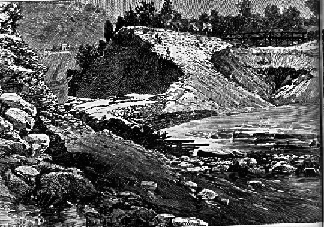
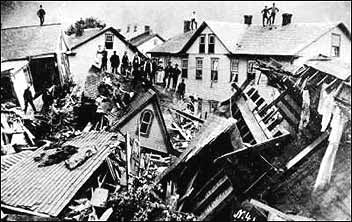
 As
the flood waters neared Johnstown the survivors related how the
"sound" of the oncoming water gave off what many termed a
"death mist." (Pg. 146) The complete drowning and devastation of
Johnstown took less than ten minutes. The following morning the survivors
began collecting along the hillsides looking down on the death and
destruction. In the official death count nearly 2,200 people had been
killed or presumed lost in the flood waters. Of every three bodies
recovered one would never be identified. Among the dead were over
ninety-nine
As
the flood waters neared Johnstown the survivors related how the
"sound" of the oncoming water gave off what many termed a
"death mist." (Pg. 146) The complete drowning and devastation of
Johnstown took less than ten minutes. The following morning the survivors
began collecting along the hillsides looking down on the death and
destruction. In the official death count nearly 2,200 people had been
killed or presumed lost in the flood waters. Of every three bodies
recovered one would never be identified. Among the dead were over
ninety-nine 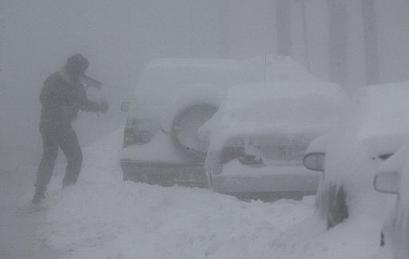


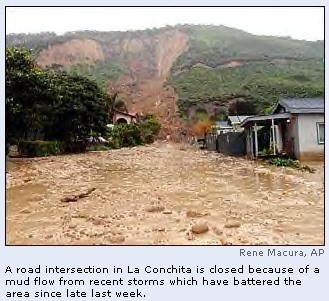
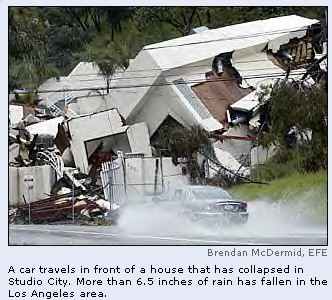
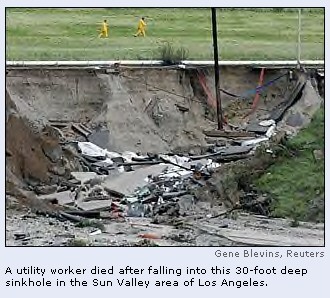
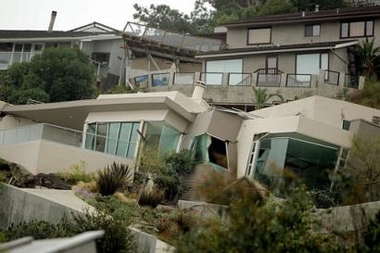
Floods hit much of Europe, 42 die
LONDON, Aug. 26 (UPI) -- Much of Europe faced a massive cleanup Friday after widespread, devastating floods killed at least 42 people.
Many persons were reported still missing in the aftermath of the storms that affected thousands of Europeans, the BBC said. Forecasters warned of more rain but said it has eased in many places.
Romania was one of the countries most affected. Seven people were killed on Wednesday, bringing the death toll to 31.
At least 11 people were also reported dead or missing in Switzerland, Austria and Germany, where the authorities were struggling to restore basic services.
Croatian authorities have declared a state of emergency in two regions. In the Swiss capital, Bern, helicopters have been used to pluck people from rooftops and residents are braced for more rescues amid rising water levels.
Elsewhere in Europe, people face a massive clean-up task as they return to flood-damaged homes.
Copyright 2005 by United Press International. All Rights Reserved.
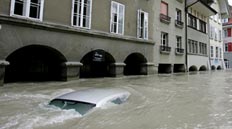

Rescue helicopters plucked stranded Swiss from roofs and balconies on Wednesday as rising water and strong currents prevented boats reaching homes in parts of Switzerland and more rain was forecast in coming days.
Lakes and rivers burst their banks after days of fierce downpours across Switzerland, Austria and Germany, cutting off roads, power and communications from hundreds of communities.
Mudslides blocked roads and railway tracks while some bridges were swept away by the force of floodwaters.
"We have had to carry out rescue activities since last night by helicopter because we just can't get through (with boats) anymore. The current is just too strong," police spokesman Thomas Jeuch said in the Swiss capital, Berne.
Part of Berne old town was flooded and without power after the swollen Aare river burst its banks. Police said water levels continued to rise.
"It will get worse before it gets better," spokesman Franz Maerki said.
Some residents waved for help from balconies while others used their mobile phones to call rescuers.
Forecasters said the weather could get worse with more rain expected in the coming days.
"There is the risk that there could be another worsening of the situation," Thomas Buechli, a weather forecaster said on Swiss television.
Seven people have died and thousands evacuated from their homes in Switzerland as floods spread from the Alps in central Switzerland to the eastern region bordering Austria.
In Austria, the death toll rose to three on Wednesday and a fourth person was missing, feared drowned, in the Vorarlberg region near the Swiss border, police said.
Austrian Chancellor Wolfgang Schuessel called an emergency cabinet meeting for Wednesday afternoon to discuss relief efforts and ministers promised aid for the millions of euros lost by farmers and homeowners.
As rain eased in Austria's far western regions and in the Tyrol, hundreds of people were still cut off in valley villages. Around 17,000 firefighters helped by soldiers began repairing roads, pumping out basements and clearing mud from highways, bridges and railway lines.
In Germany, large tracts of land around Kochelsee and Bad Toelz in Bavaria were still under water though officials in the southern region said flood dangers had eased.
Thousands of sandbags were protecting the town of Neu-Ulm, which lies between the Danube and Iller rivers, to prevent floodwater reaching houses and other buildings.
Goods transit blocked
Swiss railway said services remained disrupted in central partsof the country and the Bernese Alps. Goods transits through the Gotthard tunnel, part of Switzerland's major north-south transport route, was stopped.
Water levels in Lake Lucerne, at the foot of some of Switzerland's tallest mountains, also rose on Wednesday, albeit more slowly, local police said.
In parts of central Switzerland, more rain had fallen in three days than normally in the whole of August, weateher forecasters said.
Roads in the centre of Switzerland's most popular tourist destination of Lucerne were awash and drinking water supplies in nearby villages contaminated. Electricity and telephone lines in parts of country remained cut off.
In the mountainous eastern region of Switzerland, parts of the village of Klosters - which hosts Britain's Prince Charles for ski vacations each winter - were submerged and householders were taken to a local community centre.

Storm floods roads, blamed for highway deaths
Rain that flooded roads and some buildings while swelling Maine rivers and streams was blamed at least in part for three highway fatalities in the southern part of the state during the weekend.
The steady, pounding rain flooded numerous roads in the state, prompting Maine Emergency Management Agency warnings to motorists not to attempt to drive across water-covered roads. Thousands of power outages were also reported.
Lincoln County appeared to be the hardest-hit area in the state, with dozens of roads closed. The flooding also forced the closing of a condominium complex in Bath, and some residents of an Augusta apartment complex were forced from their homes when water from a flooded parking lot spilled into their homes.
Early Sunday, a 21-year-old man Scarborough was killed when his car went off the northbound lane of Interstate 95. Police said a combination of speed and heavy rain led to the accident that claimed the life of Thyrak Ann. A passenger, Richard Waltz, 23, of Arundel, sustained internal injuries and was taken to Portsmouth Regional Hospital in New Hampshire.
On Saturday, Norman White, 31, of Biddeford, and 56-year-old Anthony Mazza of Burlington, Vt., died when the car they were riding in was hit by a tow truck on Route 5 in Dayton.
The midday accident occurred when a tow truck glanced off a sport utility vehicle and hit a sedan, carrying Mazza and White, which then spun off and hit a pickup truck. Elizabeth Mazza, 54, of Burlington, Vt., who was in the sedan, was seriously hurt and taken to Maine Medical Center in Portland, where she was listed in critical condition Sunday.
The National Weather Service said rainfall totals exceeded 8 inches in some Maine towns, making the weekend one of the rainiest on record in the state. As of Sunday night, Portland had received 6.7 inches of rain, New Gloucester had 7.7, and Augusta had 8.1 inches.
Small rivers and streams in the state began to recede on Monday, but larger rivers continued to swell as they collected runoff from the smaller waterways.
More than 5,000 residential and commercial electric
customers were without service during peak outages caused by the storm
Sunday,
Forecasters said Monday would remain damp, with
drizzle early and steady rain later. More rain is expected later this
week.
© Copyright 2005 Associated Press. All rights reserved. This material may not be published, broadcast, rewritten, or redistributed.
Heavy Rain Causes Floods in Eastern U.S.
Heavy Rains in Eastern U.S. Force Evacuations and Leave at Least Four Dead
By DAVID TIRRELL-WYSOCKI Associated Press Writer
ALSTEAD, N.H. Oct 10, 2005 — Prolonged, heavy rain caused flooding from North Carolina to New Hampshire over the weekend, forcing hundreds of people to evacuate, knocking out electricity, weakening dams and making roads impassable.
At least four people died, including two people killed in New Hampshire when a car apparently drove off a washed-out bridge into flood waters, officials said Sunday. A fifth person was missing and feared dead.
Gov. John Lynch returned from Europe to take charge of relief efforts in New Hampshire. He declared a state of emergency and called in 500 National Guard members for assistance.
"This is the worst damage they've seen from flooding in 25 years in New Hampshire," the governor said Sunday night.
By Monday, the floodwaters were receding in some areas. But with rain in the forecast for the next several days, the National Weather Service warned that dams in Stoddard, Alstead and Bradford could fail.
The two New Hampshire residents who died in the car were identified as Steven Day, of Unity, and Ashley Gate, of Claremont, both 20, state police said. A kayaker on New Hampshire's North Branch River was feared dead after he was washed away while clinging to a tree as rescue workers tried to reach him.
In Pennsylvania, state police said Tiffany Wieand, 19, of Milford Township died Saturday when she tried to drive through a flooded roadway and lost control of her car. The vehicle slid into a guardrail, flipped onto its side and was submerged under the bridge, trapping her inside, police said.
In Allentown, two boys were rescued from Cedar Creek on Saturday after their inflatable raft overturned. Firefighters tossed the boys who were clinging to a small tree a pair of life jackets, and then pulled them to safety with a rope.
In New Jersey, 2-year-old Shane Belluardo of Tobyhanna, Pa., died from head injuries Saturday after his parents' car lost control on eastbound Interstate 80 in Knowlton, and he slid beneath the wheels of a passing dump truck, according to state Police Sgt. Steven Jones.
Vietnam
| Heavy
rain and floods claim ten lives in central provinces 10/10/2005 -- 17:31(GMT+7) |
|
|
Thua
Thien - Hue (VNA) -- Heavy rain and floods,
caused by a tropical depression and cold air, claimed ten lives in
central provinces from Quang Binh to Thua Thien-Hue in the past
two days. Rainfalls
of between 250-450 mm and 476 mm were recorded in the region,
causing water levels in all major rivers to rise above the highest
warning level of three. In
Quang Tri province, two pupils were swept away. The Ben Tat
suspension bridge across Ben Hai river on the Ho Chi Minh Trail
was also swept away by flood water. A
two-km section of the trans-Viet Nam national highway 1A, from
Dong Ha to Cam Lo, was submerged, causing a traffic jam of
hundreds of vehicles. One
person died in Thua Thien-Hue province, while in Quang Binh
province, floodings killed seven peoples. An
estimated 5,000 houses and nearly 1,000 ha under rice and
subsidiary crops were submerged. A total of 13,000 local people
had to leave for safe shelter. Total losses are estimated at
nearly 30 billion VND. Provincial
leaders are coordinating with the army to evacuate people from
areas threatened by landslides and provide emergency aid to flood
victims.-Enditem |
|
GUATEMALA
DEADLY FLOODS Oct 10, 2005
IN GUATEMALA, ENTIRE COMMUNITIES BURIED BY MUDSLIDES ARE BEING
DECLARED MASS GRAVEYARDS.
VILLAGERS WHO HAD BEEN DIGGING FOR HUNDREDS OF MISSING GAVE UP THE EFFORT
SUNDAY, FIVE DAYS AFTER HURRICANE STAN MADE LANDFALL ON THE GULF OF MEXICO
COAST. THE STORM BROUGHT TORRENTIAL RAINS BEFORE WEAKENING TO A TROPICAL
DEPRESSION.
MORE THAN 640 PEOPLE DIED AND HUNDREDS MORE ARE MISSING ACROSS CENTRAL
AMERICA AND SOUTHERN MEXICO AFTER A WEEK OF RAINS.
IN HARDEST-HIT GUATEMALA, 519 BODIES HAVE BEEN RECOVERED AND REBURIED.
SOME 338 ARE LISTED AS MISSING.
See: Hurricane Stan
Guatemala: Floods and Mudslides OCHA Situation Report No. 2
Ref: 2005/0157
OCHA Situation Report No. 2
Floods and Mudslides - Guatemala
09 October 2005
Situation
1. In the last seven days, tropical storm “STAN” has caused intermittent rains – intense rains in some zones of the country – causing flooding, slides, collapses, and overflowing of rivers. Mudslides and floods sparked by this storm have killed at least 508 people in Guatemala according to the official figures. According to the CONRED (Executive Secretariat for the National Coordination for Disaster Reduction) informative bulletin issued during the last night there were:
- Missing persons: 337
- Affected persons: 97,872
- Sheltered persons: 84,949
- Affected communities: 421
- Affected houses: 5,118
- Shelters for affected: 255
2. The affected area has increased reaching now 15 departments of Guatemala. There was a continuous increase in the number of affected communities, dwellings, families, and individuals in the country. Because of the significant increase of the quantity of affected and sheltered persons, as well as the number of the basic community services damaged, authorities expect a considerable grow of the support needs.
3. Preliminary estimates of agricultural damages indicate a direct loss of USD 207 million with extremely serious blow to livestock, coffee production and banana plantations. The huge extension of cultivated areas damaged (30,000 km2) will affect negatively the availability of food in a short time, mainly in basic grains as well as commercial crops.
4. Main emergency needs are tents, blankets, mattresses, plastic bedspreads, water, food, medicines, clinic laboratories, latrines, electric generators, gas cylinders, heavy machinery for rehabilitation of affected areas, devices for stocking and final disposition of solid rubbish.
National Response
5. The national Government in cooperation with the UN system prepares a Flash Appeal to request international assistance. Authorities have distributed among the affected populations 43,099 litres of purified water, 6,110 individual food rations, 5,948 family food rations 14,184 blankets.
6. CONRED and other state authorities continue their relief/search and rescue efforts, intense communication and coordination with local authorities and cooperation with various state and non-state organizations. Regional emergency operations centers have been activated.
7. The Ministry of Health has opened an office for emergency aid that should, among others, take care of the minimum health and sanitation requirements for sheltered people.
8. CONRED has established donation points for donations to the sheltered persons providing mainly purified water, clothes in good condition and food. The operation and information center has been established in CONRED headquarters.
9. Given the ongoing emergency situation and focus on search and rescue operations, a detailed assessment of needs has not yet taken place. In addition to safe water, food and medicines, there will be a need for financing the reconstruction of destroyed houses, water and sanitation systems, kitchen items and disinfectants for water.
International Response
10. The UN OCHA mobilized the UN Disaster Coordination and Assessment Team, which is already in the country. In addition UN OCHA has approved a cash grant from its emergency account to alleviate the suffering of the victims.
11. Multidisciplinary UN interagency teams (WFP, UNICEF, FAO y WHO/PAHO) came back from the preliminary field evaluation mission, finding a desolating situation in terms of roads locked, isolated populations and losses of crops and livestock. On the other side it could be observed in the visited areas the assistance of food, medicines and health services were arriving.
12. Additionally to what it was reported in the previous situation report, the UN System in Guatemala has mobilized the following cooperation and assistance resources:
UNICEF
Delivered 40,000 additional re-moisturize salts portions, coming from TACRO (Regional Office) to the Ministry of Health, and pledged to provide the rest to complete the total request for 400,000. Also delivered 78,000 additional tablets of trimetropinsulfa, 91,000 units of acetaminofén, 59,000 flasks of amoxicilina, 30,000 flasks of salbutamol and 80,000 flasks of trimetropin sulfametoxazol. UNICEF has reoriented resources to the emergency for an amount of USD 315,000 and has established arrangements with the Procuraduría de los Derechos Humanos (PDH) and the Secretaría de Bienestar Social de la Presidencia in order to initiate actions to safeguard children in the temporary shelters. UNICEF has provided at the disposal of the emergency services four pediatric doctors, one nutritionist, one water and sanitation technical, one UNV expert in planning, two experts in social protection, one in education and human resources. It has also delivered one mobile plant of water treatment to CONRED.
WFP
Distributed 870 metric tons of food including a fortification mix of corn and soybean to 32,800 families in shelters and communities for initial periods of 7 and 15 days respectively.
UNDP
Is supporting through the Resident Coordinator the mobilization and work of the UNDAC team from OCHA Geneva.
WHO/PAHO
Continues close coordination with the Ministry of Health resulting in a joint definition of the needs and cooperation mechanisms. Made donation of sanitation material and medicines and supported mobilization of the medical brigades, promotion of health, basic sanity and epidemiological surveillance.
Two specialists arrived from the regional office of OPS/OMS to implement the SUMA system in the CONRED and Ministry of Health central storerooms. In addition provided specialist in evaluation of damages and health needs specialist.
Provided USD 125,000 for emergency project and medical brigades allowances, fuel and rent of vehicles for their transportation.
UNFPA
Provided USD 20,000 for different emergency supplies
FAO
Provided the Government with the services of two technicians to initiate the damages evaluation process in the agriculture, fishing and livestock.
UNV
The UNDP/UNV specialists who are in the departments of Huehuetenango, San Marcos, Sololá, El Quiché, Totonicapán y Quetzaltenango, which are part of the main affected areas have established centers and information bridges with the Departmental Government, CONRED, SEGEPLAN, the Executive Secretariat of the Presidency and other state institutions.
IOM
Has all his technical and administrative staff in alert to execute the counting of persons affected by the natural phenomena and offered several vehicles for emergency operations.

Floods take toll on the poorest
Many of those left homeless by Hurricane Stan in El Salvador have moved to shelters, just like they did during past mudslides and hurricanes.
Special to The Herald
SAN MARCOS LEMPA, El Salvador - Blanca Imelda Tévez was still praying for the victims of Hurricane Katrina when Hurricane Stan's waters hit her home.
The Lempa River overflowed its banks late Sunday and flooded every single house along its banks. It took her TV set -- where she had been watching the devastating images from New Orleans -- her bed, clothes and the family cornfield.
Stan's floods and mudslides took 65 lives, left 65,000 refugees and destroyed 12 rural communities in El Salvador, still recovering from the devastating earthquakes of 2001. In neighboring Guatemala, they left nearly 200 dead.
But above all Stan highlighted the vulnerability of people like Tévez, who are left homeless because they are so poor that they can only afford land on the edges of flood-prone rivers.
SIMILAR PROBLEM
As U.S. federal, state and municipal officials consider whether it's worth rebuilding those parts of New Orleans most at risk from flooding, El Salvador faces a similar predicament: what to do with uncounted thousands living in flood-prone areas.
On Friday, the government declared 75 percent of the Salvadoran territory at risk, and emergency agencies were trying to get supplies to the 371 shelters in the country for victims of the flooding.
Tévez is now living in one of those shelters, a place she knows better than her lost house. She was there in 1998, in 2001 and again a year ago, each time chased from home by rising waters.
But she knows that when the floods subside, she will go back to her small house on the banks of the Lempa.
''We lost the harvest, we lost the whole year. But we will have to go back to the same land,'' she said. ``Where else can we go?''
More than 1,700 people are now living in six shelters along the Lempa. Like Tévez, all of them know they will return. They have nowhere else to go.
''I know them all,'' says Ramón Monterrosa, dean of one school temporarily adapted as a shelter. ``They come here every year.''
During the last years, several international organizations have tried to minimize the flood risks, but it hasn't worked. People go back and rebuild. And then the waters return.
''There is a paradox here,'' says Luis Romano, an expert on disaster mitigation who has worked for years in the region. ``The lower Lempa is flooded every year, but it has some of the most fertile lands of the country, so people don't want to leave.''
MINIMIZING RISKS
René Figueroa, El Salvador's Secretary of Government, says the government also has tried to minimize the risks.
``We have offered to relocate them, but they don't want to leave their lands. They have adapted from generation to generation, I think they have enough to live there.''
About 15,000 people live on the left bank of the Lempa, most of them former leftist guerrillas who were given the lands as part of the peace agreements that put an end to the civil war in 1992. The right bank is occupied mostly by former Army soldiers.
It's the same story in the capital city of San Salvador, where most of the squatter families that built small houses on the edges of flood-prone creeks are back in the shelters. Hundreds of them are newly homeless, but lucky enough to survive mudslides.
''God gives more to those who have more, and takes away from those who have nothing,'' said Antonio Jiménez, 53, who is living in the same shelter for the fourth time in 10 years, and spent the latter part of the 80s as a war refugee in Panama. ``I've had to start over again so many times I can't even remember.''
''This is the right moment to think seriously about the future of these people,'' says Carlos Rivas Zamora, the mayor of San Salvador and until recently a member of the opposition party FMLN. ``I hope we can finally find some political will inside the government to do something. We can't go on like this. No one can stop the next rainy season.''
Figueroa agrees that long term solutions are needed, but he is not very optimistic: 75 percent of the nation is facing landslides.
Alberto Soriano, 28, is an unemployed father of three who was left homeless by the 1986 earthquake that hit San Salvador. He moved then with his mother to a lot next to a creek, and he has stayed there all these years. But last week he lost his house, and he is a refugee again.
''I couldn't save anything, the water was up to my chest,'' he said. ``I have been thinking, and I need to change this way of living. I will go to the United States.''
Floods kill 19, leave thousands homeless in Bangladesh
10-10-05
Dhaka (dpa) - Rescue workers on Friday were searching for victims of a boating accident in northern Bangladesh, as the death toll from flooding triggered by heavy rains rose to 19, officials said.
At least eight people were drowned in Rangput district and several others were reported missing after a boat ferrying flood refugees to safety sank in driving rain and strong winds, civil defence rescuers said.
The death toll from the flooding, which includes fatalities in related incidents such as snake bites, was expected to rise further, police said.
"The number of flood deaths is expected to go up because some have been missing for more than three days,'' a local police officer in the worst affected Gaibandha district said.
The torrential rains which have battered much of the norths rice-growing areas since Tuesday, continued to fall intermittently on Friday.
Residents in low-lying regions have been carried away by floodwaters and their homes have been destroyed as rivers burst their banks.
Flood forecasters at the Flood Warning and Monitoring Centre in the capital Dhaka said they expected the downpour to continue over the coming days.
The bad post-monsoon weather has been attributed to bands of low pressure over the Bay of Bengal which have also caused heavy showers over the northeastern Indian states of Assam and Meghalaya.
More than 10,000 mud and straw dwellings were reportedly destroyed in flooding in at least a dozen districts in the north of the country.
Overflowing rivers have also devastated tens of thousands of hectares of rice paddies.
Drought and famine in China in 1907, toll estimated at 24 million. Millions dead in other drought-related famines in 1928-30, 1936 and 1941-42.
Drought in the Ukraine and Volga region of the Soviet Union in 1921-22, deaths estimated at 250,000 to 5 million.
Indian drought of 1965-67, estimates of dead at 1.5 million. In 1900, drought in India blamed for 250,000 to 3 million deaths.
Sahel drought in Africa in 1972-75, with estimates of dead at 600,000.
| FEMA
DISASTER RECORDS FOR ALASKA, OREGON, IDAHO, WASHINGTON,
Illinois
Severe Weather Links by Illiniweather.com The
Great Flood of 1993: Impacts on Waterborne Commodity Flow ... Story
of the Great Flood and Cyclone Disasters Significant
Wx Events of the Century for Missouri
|
||
|
HURRICAN ISADORE AND OTHER HURRICANES IN HISTORY HURRICANE/TYPHOON SEASON OF 2001/2002 THE ARKANSAS ICE STORM - DECEMBER 2000 THE INCREDIBLE SHRINKING OZONE HOLE - DECEMBER 2000 ARCTIC SEA THINS BY HALF - DECEMBER 2000 A DISINTEGRATING GLACIER - DECEMBER 2000
|