DREAMS AND VISIONS OF
THE GARDEN
AND
HARVEST TO COME
11-15-89 - DREAM - I was riding in a caravan of
white cars back towards home
in New Berlin. I had my hands on both the car in front and in back of
us. We went over a bumpy stretch of road and I said, "That'll get rid of
the cholesterol." We continued on and I saw police cars behind us. I
looked at the speedometer. We were doing 50 on a 35 mph stretch of road.
We neared home, going uphill quite fast on a narrow road. We were just
going to make a left turn into the driveway when a blue car came out of
nowhere towards us...head on. We managed to stop and the blue car
careened off the road on the right of us. The driver was okay and said
that the farmer took the blame for it.
Then I had to push the cars
uphill into the driveway. I walked into the kitchen, noting that it was
all brown and everything was dented and marked up from raising the kids,
but it was very clean.
A woman friend of mine came
in behind me and said her son would be mad at her because she had just
made a bad purchase. She had two Lincoln pennies. One was heads and one
was tails. The one that was heads said on it, "1919 keepsake."
I then went outside to see what chores had to be done yet. The crop
we were supposed to harvest, had already been harvested, and left in a
big pile in the field to dry and the land had already been replowed and
reseeded. The land was very black and fertile.
I decided to take a nap in the car
in the sun and inside the car I had a dream. In that dream I was told
that all the countries of Europe in the 2nd row were to be changed to
purple from yellow.
I woke up and went into the house. The phone was ringing. I said,
"Hello!" realizing that I'd never have to say, "Garden
Terrace" anymore. My boss then came in and said that he needed to
have his coat changed. The one he had on was black and he showed me a
map of France and it was purple.
I was then looking at an Atlas to see what countries were to be
changed to purple and found myself staring at a map of the U.S.,
Illinois, Indiana, and Iowa were clearly delineated, but below that was
one big white spot and no states were outlined at all. It was as though
there was nothing there.
****************
12-19-89 - DREAM - I came home from work to find my husband talking
to a priest dressed in blue. The priest was relating a dream to my
husband that showed that when he went past a church with concave
windows, each window had an outline of a woman's face with a light that
shown where each cheekbone was and a light where the corners of her
mouth would be and a hint of a line where the mouth was smiling and as
he saw each window like that, we would hear a single bell ring.
I overheard him tell the dream, but he didn't know that I had. I
walked in and told the two men about a dream that my Father had. It was
identical to the priest's dream and then I added that the dream meant
that the woman in the window meant that he belonged to Christ.
The priest was so pleased that he beamed me a smile that made me fall
instantly in love with him.
I needed to change clothes and as I went upstairs, I asked my son to
straighten up the livingroom which had gotten messed up from playing in
it. My son grumbled but the priest reminded him that it was
his duty as a son to be
helpful and the priest set about to help also.
I thought to myself, "Oh my God! what a catch for a husband he would
make. He would be perfect." And I fell more in love with him.
I went upstairs to change into a two piece dress that was both demure
and sexy at the same time.
There was a woman upstairs who was composite ... my daughter, my
sister, my friend Sandy, and my reflection in the mirror it seemed. She
had wild two toned hair, black and white and when I brushed my hair, she
was my reflection in the mirror and her hair became like a ship at sea
on top. I decided I would dye my hair to a pale brown because it wasn't
fitting for a priest to be with a woman with wild looking hair.
Then I went downstairs to cook supper, deciding to make spaghetti,
corn on the cob, and sliced tomatoes with sugar. My husband assured me
that the corn in our own garden was perfect for harvest right at that
moment.
I went out into the backyard and the priest was laying face down on
our hammock resting. He was naked from the waist up and had on a long
blue skirt. He had a birthmark on his right side so I knew he wasn't
perfect and I fell more in love with him.
I watched the men play badminton and cook together and play with the
kids and I fell more in love with the priest.
I stood on the sidelines, watching the priest at play and fell more
in love. I said to my sister/daughter/friend with a secret smile on my
face, "things are going exactly as they should."
She agreed and smiled too.
************* /p>
2-25-90 - DREAM - I dreamed that my husband was in the
white house and that men were outside trying to shoot at him. I then
became him and was trying to find a way out, by slipping into the
attached garage and then by going into the attached garden house, but
the back door was no good because all the little animals we owned were
hiding back there and made a huge racket when I opened the door. I saw a
rifle to defend myself with high up on the wall, but I couldn't get to
it. There was no way out.
***************
10-2-93 - DREAM - I was renting out apartments and came to put the
final touches on one. The walls were to be painted two tone ... pink and
yellow with a thin stripe of white between them. I put one item of
housekeeping equipment in each closet as a free gift for the new tenant.
I then opened the closet in the bedroom which was going to be for a
little girl. I realized that I was in my 16th St. house and this was the
room I had spent my own childhood in.
T.M. came in to do some rewiring in the apartment. I discovered that
he person who had moved out hadn't removed any of the closet contents.
It would be my job to sort it all out and dump it.
I started with the books. On one shelf were all children's books,
"The Bobbsey Twins" and other child's books. I decided to leave those in
place as a gift to the new little girl.
I pulled out a lot of men's things. I saw some envelopes that were
pre-addressed. I cannot remember the name. It was Russian or foreign I
didn't recognize. I kept the 1993 diaries which were nearly empty and a
ledger of finance that was so lightly and sparsely written, I thought I
could use it by writing in darker pen over the man's writing. There were
some boy's toys like long steel carrier that was empty that I removed
and all the rest of the men's and boy's things.
When the shelves were empty I saw that if I walked to the back of the
closet, I was out in the country on a farm. It was harvest time and the
mountains were on the horizon. I said to myself, "If the little girl
uses her imagination, all this could be hers."
I went back to the closet proper. There was one last book way up in
the air on a shelf of its own. On the shelf in a wire basket was a book
titled, "DIAMONDS IN THE BIBLE".
I had to reach and stretch as far as I could to bring that book down
as I knew it was the best treasure of the closet and I wanted it. At my
highest reach, I finally managed to get my hands on the book and as I
did, a woman began speaking and at the same time I saw quotations come
down printed like a 'crawl' on a TV screen. They were rules of conduct
for people. They were not the 10 Commandments but still on that order
about things people shouldn't do towards each other.
I came out of the closet with the book and looked at the clock. It
was 6:30 a.m. I knew I had to get home and go to work. I looked at the
man's desk and saw that he had worked for Allis-Chalmers when t was
merged with another company and was located in the city on the south
side (Not 70th St.)
Two huge men who worked at A-C came in. The were both about 8 feet
tall. They did maintenance and clean up. I was used to seeing them
around but didn't work with them. The one in bib overalls came over to
me, put his arm around my shoulder and hugged me. He said, "I see you've
dyed your hair white." I grinned and said, "Yes! I did." knowing that
the color was more natural than dyed.
I then left to go home and woke up.
***************
5-29-94 - DREAM - I was given some information at the
place I worked that two cities had been completed and the third city
would be begun. I didn't know enough information.
NOTE: I woke up, went down to the basement, watered my
plants, came back up, ate breakfast, and read some, all the while
thinking about the dream. I finally went back to sleep and went back to
the same place to get an explanation of the dream.
DREAM - I went back to work to find out what the three
cities were. The 1st one was Cuba City, the second was Jerusalem. Those
are done. The next city to be worked on is ROME.
Lee another maintenance man and I went on a tour of a
building. There was a young girl there in a pink dress who had been
asleep so long that her parents went home and left her behind.
I asked her if we could help her, so we took her to
McDonalds and she wanted a hamburger with pickles. I asked her where she
was from. She said, "Milwaukee - from Gerden Garden City apartments"
I asked her if she would like to come home with us. She
said, "Yes!" so Lee and I planned to do that.
While Lee and I were touring the building, a woman who
worked there said that part of the problem with people, including us,
was that we were too intense and we should learn to relax.
****************
8-26-96 - DREAM I was a boy (in this dream). My house is
haunted, and I braved entering the dark house one night, only to be
jostled out by poltergeists. Once outside, I find some sort of sprite is
still clinging to my clothes. I catch it in a cardboard box, but it
burns a circular hole in the box where it is sitting, squeezes down like
an accordion and springs out back into the house.
I do some gardening in the yard, by moonlight. I hear a
man offer to help, and I accept without looking at him. When we are
finished gathering the harvest, I see that he has transformed into a
kind of spaceman: silvery jumpsuit and a blue lampshade for a head. It's
lit up from within, and the intense colour itself seems to be enough to
pin me to the spot.
*************** /p>
112-11-96 - MEDITATION - I called Harold Klemp (the head
of Eckankar) and instantly saw him walking by a lake, wearing a brown
jacket and blue jeans.
I saw a cartoonish scene of an oriental type porch on a
second floor. A man came out and jumped off to commit suicide. a chubby
guy in a funny oriental suit came out the curtain, reached over and
grabbed the guy and hauled him back.
The guy tried to commit suicide again, and the chubby
guy came out and grabbed him faster. The third time the guy tried to
jump off the porch, the chubby guy was there to save him instantly.
I called Harold Klemp's name again and instantly saw him
again.
I slipped into a dream. I was kneeling on a pillow in
front of a bright sunny window meditating. I felt dizzy doing that, so I
got off the pillow and got down on the floor and faced the window on my
knees to meditate. I still didn't feel stable, so I bent over and put my
head on the floor. I could see the varicolored triangles on the linoleum
on the floor right beneath me so there was no padding whatsoever.
I knew my mother wouldn't like me doing this so I
pretended I was talking on the phone. So, I held a white phone in my
hand. I heard my mother coming and I couldn't get up fast enough so my
mother came into the room and took the phone away from me. My mother
talked on the phone herself then. She said, "I caught her trying to talk
on the phone."
I slipped into another dream where I was walking through
a hallway. I saw at least a dozen moths sitting on the wall. I ran back
into the kitchen to grab a broom and ran back and started to swat at the
moths but most of them moved before I could hit them. I noticed I was
too slow and the broom felt extraordinarily heavy. Then I noticed I was
using a heavy sponge mop instead of the broom. I saw the broom standing
there then and went back to hitting the bugs with the broom.
Some of the bugs were so large they wore jeweled crown
hats like kings. I beat on them even harder, when I hit the last one to
death, the wall fell away and I saw my flower garden. The roses had
bloomed and the petals had already fallen off and I missed all the
beauty because I had been so busy killing bugs inside the house.
******************** /p>
1-23-97 - DREAM - I was in my nightgown, working in the
garden, planting flowers in front of my New Berlin house. It came to 10
a.m. and I decided to take a break. I went into the house. I saw my
husband in the kitchen and wondered why he hadn't gone to work yet. I
came around the corner and saw a tall man standing there so I didn't
want to embarrass him by saying anything. My husband chose that moment
to ask me about some other people's anniversary pictures and questioned
me about whether they would stay together. Not wanting to discuss it in
front of the other man, I told him I hadn't looked at it yet. I decided
to go back out to the garden and I went upstairs where I saw some flies
and moths. I grabbed a can of spray and sprayed them all. I went outside
through a door that had been freshly painted or stained. I got my
fingerprint on one part and brushed against another part. Not having
known it was wet, I regretted going that way. As I exited the door, I
had to jump down onto some large rocks and avoid a sprinkler that was
running. I saw a worn trail in the lawn going towards the garden I was
working in and knew that the neighbors were visiting and watching what I
was doing.
****************
10-18-97 - DREAM - I was seeing many squares. I knew
they were book pages. Finally, I saw a white horse standing
on his hind legs pawing at the air with his front feet. He
was in the center of a white bordered square and there was a
white archway over him and I knew that was the final page.
TThen again I saw the white horse standing on his hind
legs under the white archway and I knew I had been blessed.
by Dee
10-19-97 - DREAM - I was in the same place it seemed as
the night before. I effortlessly put into place a garden meditation site
and the voice told me it was dedicated to Vishnu.
DREAMS
AND VISIONS OF THE WHITE HORSE/b>
DR.
DEUS - MY OWN DREAM - THE START OF IT ALL
THE MYTHOLOGY OF THE WHITE HORSE
THE
ART OF THE AIRY HORSE - THE ANGEL COLLECTION
*******************
11-5-97 Dream
&
I have recurring dreams (since childhood) about an
organized and vast metropolis where there is much activity. Many huge
buildings (not just tall but wide) with hundreds..maybe more..of floors
. It is a central place where I have returned to often...each time
exploring different aspects of it. There is also a vast arrangement of
bridges, roads and highways around this area..
When I dream of the future, I mostly see a verdant and
largely depopulated world, as if most of the humans have died off or
left and nature has reclaimed the cities. There are some people left,
obviously, for there are high-tension lines stretching through hundreds
of miles of wilderness and clearings that look like pastures.
Here and there are circular lakes, which I usually take
to be craters --- not from nuclear explosions, which are usually
airbursts and which don't actually leave craters, usually --- that look
like they were gouged by relatively small meteor impacts.
The cities, when I find them, are small and largely in
ruins. There is no sign of war damage; instead, it seems like they were
abandoned.
by eric@gadgetguru.com (Eric O'Dell)
*****************
VISIONS OF JUDAH
7-11-97 Here is what happened: I lay down to take a
short nap this afternoon, and in the twilight place between awake and
sleep I had a vision: "Read the book of Judah - Chapters 13 and 16"
After I got up I went to get my Bible and found that
there is no book of Judah. So, I went on the web to look up references
about the man named Judah. This is what I found:
ISAIAH CHAPTER 13 AND 16
A PROPHECY AGAINST BABYLON
13: 1: An oracle concerning Babylon
that Isaiah son of Amoz saw:
2: Raise a banner on a bare
hilltop;shout to them, beckon to them to enter the gates of the nobles.
3: I have commanded my holy ones; I
have summoned my warriors to carry out my wrath---those who rejoice in m
triumph.
4: Listen, a noise on the mountains,
like that of a great multitude! Listen, an uproar among the kingdoms,
like the nations massing together! The Lord Almighty is mustering an
army for war.
5: They come from faraway lands,
from the ends of the heavens - the Lord and the weapons of his wrath -
to destroy the whole country.
6: Wail, for the day of the Lord is
near, it will come like destruction from the Almighty.
7: Because of this, all hands will
go limp, every man's heart will melt.
8: Terror will seize them, pain and
anguish will grip them, they will writhe like a woman in labor. They
will look aghast at each other, their faces aflame.
9: See, the day of the Lord is
coming - a cruel day, with wrath and fierce anger - to make the land
desolate and destroy the sinners within it.
10: The stars of heaven and their
constellations will not show their light. The rising sun will be
darkened and the moon will not give it's light.
11: I will punish the world for its
evil, the wicked for their sins. I will put an end to the arrogance of
the haughty and will humble the pride of the ruthless.
12: I will make man scarcer than
pure gold, more rare than the gold of Ophir.
13: Therefore I will make the
heavens tremble; and the earth will shake from it's place at the wrath
of the Lord Almighty, in the day of his burning anger.
14: Like a hunted gazelle, like
sheep without a shepherd, each will return to his own people, each will
flee to his native land.
15: Whoever is captured will be
thrust through, all who are caught will fall by the sword.
16: Their infants will be dashed to
pieces before their eyes; their houses will be looted and their wives
ravished.
17: See, I will stir up gainst them
the Medes, who do not care for silver and have no delight in gold.
18. Their bows will strike down the
young men; they will have no mercy on infants nor will they look with
compassion on children.
19: Babylon, the jewel of kingdoms,
the glory of the Babylonians' pride, will be overthrown by God like
Sodom and Gomorrah.
20: She will never be inhabited or
lived in through all generations, no Arab will pitch his tent there, no
shepherd will rest his flocks there.
21: But desert creatures will be
there, jackals will fill her houses; there the owls will dwell, and
there the wild goats will leap about.
22: Hyenas will howl in her
strongholds, jackals in her luxurious palaces. Her time is at hand, and
her days will not be prolonged.
CHAPTER 16
1: Send lambs as tribute to the
ruler of the land, from Sela, across the desert, to the mount of the
Daughter of Zion.
2: Like fluttering birds pushed from
the nest, so are the women of Moab at the fords of the Arnon.
3: Give us counsel, render a
decision. Make your shadow like night - at high noon. Hide the
fugitives, do not betray the refugees.
4: let the Moabite fugitives stay
with you, be their shelter from the destroyer. The oppressor will come
to an end, and destruction will cease; the aggressor will vanish from
the land.
5: In love a throne will be
established, in faithfulness a man will sit on it - one from the house
of David - one who in judging seeks justice and speeds the cause of
righteousness.
6: We have heard of Moab's pride-
her overweening pride and conceit, her pride and her insolence - but her
boasts are empty.
7: Therefore the Moabites wail, they
wail together for Moab. Lament and grieve for the men of Kir Haneseth.
8: The fields of Heshbon wither, the
vines of Sibmah also. The rulers of the nations have trampled down the
choiced vines, which once reached Jazer and spread toward the desert.
Their shoots spread out and went as far as the sea.
9: So I weep, as Jazer weeps, for
the vines of Sibmah. O Heshbon, O Elealeh, I drench you with tears! The
shouts of joy over your ripened fruit and over your harvests have been
stilled.
10: Joy and gladness are taken away
from the orchards, no one sings or shouts in the vineyards; no one
treads out wine at the presses, for I have put an end to the shouting.
11: My heart laments for Moab like a
harp, my inmost being for Kir Hareseth.
12: When Moab appears at her high
place, she only wears herself out; when she goes to her shrine to pray,
it is to no avail.
13: This is the word the Lord has
already spoken concerning Moab.
14: But now the Lord says: "Within
three years, as a servant bound by contract would count them, Moab's
splendor and all her many people will be despised, and her survivors
will be very few and feeble."
**************
11-15-97
LUCID DREAM #1 - THE REPLANTED EARTH
I was fully there, knew where I was, knew who I was, also had tactile
sensations, smelling, hearing, touch, felt my feet on the ground, and
knew I was thinking and interacting in this so-called dream. I was as
conscious in the dream as when I'm awake.
I was taken out into the open and I'm observing humans walking
through fields. I'm absolutely thrilled with what I see. I'm seeing
green crops; the whole earth has been replanted, so that makes me know
that previous to this new growth there had been a total decimation of
the green planting of the earth. I don't know what caused it.
I looked up into the sky. I didn't see any clouds but it's the same
color blue that I'm used to seeing. The green tones and the lighting are
the same as I would recognize as being a late June day. The temperature
I'm feeling would be about the middle 70's. The humidity would be about
80% moisture content. I'm wearing white clothing made of all one piece.
I'm with somebody who is much taller than I am. I looked at him and I
don't that person is human. It is humanoid, however, someone who I know
as one of the "Beloved Ones." I'm very familiar with them.
I look out into the front of me from a slightly elevated position. I
look out into the crops. The people I see who I think are humans are
also all wearing white garments. I can't immediately think why they seem
so small, but it is because the plants tower above their heads. The
plants would be on the order of like seeing a field of sunflowers except
these plants also have other varieties of crops that are a gigantic type
of a form. I'm told by the person who is taking me to see it that the
whole planet has been replanted like this. This whole process from the
planting to harvesting will take us one season which I take to be about
90 days. The plants themselves will also nourish and replenish the soil
and the harvesting will provide the food crops. The people really aren't
tiny, it's just that the plants are so gigantic. Apparently there aren't
any trees or long term plants. Short growth plants are the only ones
which are growing right now.
I was told in detail all the particulars about the nourishment values
and how the were planted and tended and how they were developed from
pre-existing crops but these were a variation that maybe had not yet
developed in that certain way. I don't know more about that.
EOD #1
LUCID DREAM #2 - I was taken again to see a crop field and it's
pretty much the same as the first dream. This dream is later in the
year toward harvest, more like late August or early September. It's a
little chillier. I'm in the center of what looks like as far as I can
see in any direction of this particular type of crop. The crop is
approximately 30" high. What it looks like would be one main stalk as
thick as your thumb would be and reminds me of like hard bamboo and then
the top 7 or 8 inches would fan out into a fan shape of branches. Each
branch is filled out with seed heads, and it looks a little bit like
wheat, so that if you were to take your hands and make a draw a circle
with your index finger and thumb it would make a circle, and go all up
and down that column it would make that much of a mass of grain on
there. The grain is smaller than wheat and smaller than millet, more the
size of millet. I'm told that it has 18 to 20 percent protein. It's a
very short term crop, about 35 days from planting to fruition. I'm told
that this plant is also taken from a current earth plant but has not yet
currently been developed. I don't get the feeling they are hybrids
exactly, they are inspired and are from earth plants and they also are
for replanting.
LUCID DREAM #3 - A compound dream. That means it is a huge compound
or complex and I've been here many times in the past. I feel as though I
actually work here, either at this current time or in a timeless time
that is not yet or is now. It was clear to me that there has been some
change in the earth that makes the population of the earth very, very
tiny, I didn't have numbers for it, but it would run about perhaps a
portion of one percent of the present population was alive and well.
Otherwise, I don't know what kind of devastation there was, but that
this has happened. We all work at a giant, well stocked, well organized
complex. It's not a sad place, but it very low technology; there is no
apparent electricity or machinery or anything more complex than we would
have found in the year 1860 in the past. I know that.
I worked in the kitchens and I have memories of teaching people how
to dip a ladle into a pot of soup and pour it into a cup in order to
serve it to the people. The work day is so full of joyousness. I
remember teaching them how to do the dipping and the pouring and the
handing it over and doing it almost like a graceful dance. Everything we
do and everything we participate in is filled with ecstasy. The thing
that's really interesting about it is unique. No matter how humble their
job is, we all are aware of how few of us there are and how precious we
are. Each one of us have this deep into our soul, our preciousness and
when we see somebody else, we are overwhelmed with this feeling of
preciousness that just motivates everything you do. You don't even
conceive of being bored with menial tasks or anything like that.
I remember one episode recently to take Jim, my husband around. He
was going to be taken into a wood shop of some sort that he was going to
be working in. As I was showing him past what was going to be the
warehouse full of herbs and dried foods, the woman who came to greet us
and Jim saw that there was everything there that you need. Everything is
available to you. He was offered an herb drink It was burdock tea,
which I have only recently learned is a perfectly lovely tea that you
can drink as a medicinal tea. That was the tea that was being offered
and he asked, "Can I please have something with caffeine?" They looked
at each other and I knew that this was going to take them out of their
way and that this caffeine product was very precious to them. But
without a moments hesitation they went and brought it to him. It was
some sort of a tea. It was not coffee, but it had caffeine. He did not
know at the time how rare that was but I picked up on how gracious and
loving it was for them to just simply give away something that was so
rare They just wanted him to have it because they loved him
so much.
Even in the dreams where I've been shown the destruction, it is an
glorious opportunity to show our inventiveness and the true power of our
humanness and so even where there were terrifying earth changes, it
turned out to be an opportunity for me to show what a grand species we
are or could potentially become. And often, I've asked when I've been
shown different techniques for drying food or for storing things or
doing medicine I've come against this whole idea of persons who have
said they weren't the kind of person who would want to survive that kind
of nightmares.
We've discussed how this whole thing is going to come about and come
to the conclusions that: A - We're not going to be expected to see this
nightmare of death and destruction, or B: - We're going to be of such
mindset that we wouldn't be able to perceive hopelessness because we
will be so involved in our work and so involved in the opportunity to
serve that we also wouldn't be able to feel or sense the horror of what
was going on. I personally believe I would shut down and I think most
of us would shut down. I think there is something about our nature that
makes us the people that were sent that could endure this.
My daughter has had dreams of a resettlement planet which included
housing scenes, school systems, also she saw trees with little blue
apples on them My other daughter has had a whole series of dreams which
told her about all types of weather phenomena to expect like tornadoes
and floods, etc. and a recurring theme that seems to be real obvious in
the sense that she has three children who live with her who are her
nieces and nephews and she is constantly trying to make her brothers and
sisters, the children's parents aware of the real dangers. Both of these
people are in her real life, and apparently in her dream life she cannot
persuade anyone to take cover or make plans or in any way protect
themselves and so again and again in her dreams, she has to grab the
children, leave the adults behind. There is nothing else she can do.
She takes the children and takes them to safety.
by Bonnie F.
>>>>>>>>>>>>>>>>.
From: starzwish
I have two visions that I will share with you today. Understand that
I do not claim to be of any religion in the world today, when it comes
to an inner teacher I have always seen this as being Jesus Christ. Just
of no religion in the world today. I see inside myself as no one knows
the real true religion and when the day come for us to see this then we
must be able to discard all things in which we think are true.
First---
Jesus Christ took out a map to show me. As he unrolled it he showed
me a line in which ran from 1/4 from left hand top to about 3/4 bottom
right hand. About 1/2 to 3/4 of the way down he pointed to a particular
place. That in which I perceived as being a river. At this point I
perceived him showing me that the fish in this place would become ill.
Spreading illness among all the fish in all the waters. For anyone that
partakes of this fish will become ill.
Second--
The Day becomes night. I then see what this is. I then see a large
volcano. After this I see a bridge , a giant wave is about to flood
through it. Then I am taken somewhere above our earth. There are two
beings, made of pure white light. They both turn to look at me, then
they turn back to what is in front of them. A big round circle. In which
I perceive as being our earth and everything connected to it. At the
very top center something like white glowing fire spreads evenly around
covering the whole earth leaving a clean clear pure earth.
With all the love
***************
11-19-97 - DREAM - I was on 16th St. working with some
people down the street. I had planted a large garden. This was the
middle of summer and it needed watering. I went to turn on the water and
there was none. I went into a building where the house was and there
were some black and white valves way up high on the wall like in the 2nd
story level. I heard a girl say that the 12th lead valve could be
unlocked by rebending the #5 key into a #7 key. She didn't know I heard
her. I went to open the water valve and saw that someone had flung a
large amount of dirt way high up o the wall. So, I needed to wash the
dirt off the white wall before I watered the garden.
I opened the valve and turned on the water, but when the
water came out of the hose, it didn't immediately fall, it was held up
on the second level by a filmy gauze mesh that held the water up and
wouldn't let it go down to earth. The hidden veil was holding it up.
Suddenly, it let loose all at once and caused a huge
deluge. It went down and hit the earth all at once. All the after went
into the street and filled it up about 7" deep. There was no way to
cross the street because it was so deep.
I felt very guilty for causing the deluge, but the girl
said I had no way of knowing the hidden veil was there.
I then went back down the street to a place where people
were gathering. A girl came in whom I knew well. Her name was Audrey.
(means noble strength) We were asked to sing a duet together. I said she
could sing the melody and I'd sing the harmony. She said that was fine
with her. She brought out a huge book and opened it to a page that had a
song named LAURA (means "laurel" on the left which was all melody and no
harmony and another one with the harmony printed on the page on the
right.
She insisted on singing LAURA that had no harmony. The
longer we looked at it the less music it had and finally it had nothing
but a picture of shoes on it and girl left in a huff.
DREAMS
AND VISIONS OF EARTHCHANGES
*****************
12-10-97 - VISION - I saw a symbol like a crop circle with a circle
with 3 arms. They told me I was part of a trinity which made me part of
the spiritual, dream, physical connection.
NOTE: On 2-21-98, we received a crop circle magazine in the mail, and
lo and behold we saw this pattern which so resembled by dream. I had NOT
known of it's existence prior to this. It had been discovered on Aug. 5,
1997. Here are the details of it:
DETAILS: This circle with three arms appeared in a field of ripe
wheat in the field next to the 1995 double ringed circle in rape (Sx
1995/001) All crop was laid clockwise or away from the centre. Some
stalks noticeably around the edge, were laid in the opposite direction,
much like the Newhaven formation. A bowl-like depression was observed in
the centre of rotation, a common occurrence often noticed in Sussex
formations and not indicative of being man-made.
Short, green barley stems growing within the formation were still
standing upright. Although the pattern had been present for several days
and was clearly visible from the road, it wasn't reported until one day
before harvest. The full survey was carried out on what remained two
days later.
****************
12-17-97 - VISION - As I was going to sleep, I saw a young girl
dressed in white on my right going into the light and I followed her.
Then I was looking out a window at a beautiful garden landscape beyond.
************
12-13-97 - DREAM - (Ref. Gen: 37:;12) I went to a bar and asked for a
brandy sour/sweet. The bartender gave me a small maroon bottle with just
one drink in it. He put it into a vine-like thing with a tube with a
tassel on the end to suck it through. I promptly broke it off. While I
sat there, three vines grew and came near me and I broke them off I felt
guilty about it so tied the ends back on so nobody else would notice.
When I woke up the dream dropped out of my mind and I forgot it.
While I lay there with my eyes closed, the corner of my dresser cracked.
I said, "Oh! Hello! I'm ready for a message if you have one. The dream
popped back into my head with a square-like a picture frame in the
middle. In the square were these words.
I LOVE YOU /p>
YOU LOVE ME
SAY IT WITH A PROJECT
SAY IT WITH A THEME
JESUS CHRIST!
DREAM
AND STORY OF THE SACRED VINE AND THE HOLY GRAIL
*************
12-16-97 - DREAM - My son. In the first, he is being put to death by
lethal injection. I can't attend the "execution" and am besieged with
guilt. In the dream, I see the number 35.7
I am in a house with my father and the house catches fire. I tell my
dad to hurry and get his things and we go to another house which also
catches fire. This happens over and over again.
I saw a man, a woman and two children on a sloping roof about 6
stories above the ground. The children started fighting and they
slipped, I screamed, oh no, and rushed out of the restaurant yelling,
call an ambulance now, quickly. I ran to the little girl, laying on the
ground when I got up to her I saw she was a wooden doll and had lost her
legs. Her eyes kept closing I felt it was important to keep them open. I
held her hand and told her to try to keep awake and help would be here
soon. The man was still on the roof he was going to commit suicide.
I know this is a little hard to understand, but it is exactly how I
wrote it when I woke up. It is a dream in sections: I placed a poem I
wrote by the step underneath my door. I knew the grandfather walking by
misunderstood me. I had a garden. It wasn't really on my property, but
that's okay, they planted on mine. At least they asked this time. My
garden was only made of a few weeds, while theirs was made of beautiful
flowers, but my weeds were beautiful and they were mine.
We, strangers, played piano to their brilliance in the house of a
stranger. We shouted out the words. The woman who owned the house came
in. She shrieked. Her baby fell out of her womb and landed on its head.
They fled. She's decided to sue. Her baby with the swelled head sits and
stares into space. The scar stands out on its forehead.
I tried to follow my double down a winding road, but the police
stopped me. I said, "Why are you trying to Do you really think you can
handcuff me?" I continued to follow the girl. She turned me back and
showed me the error of my ways. And kept walking. The policeman quietly
slipped the handcuffs around my sprouting purple wings. I stepped away
unscathed and flew up into the blue sky while a barbershop/saxophone
tune played in the background.
As I said, it's rather confusing - more what I was thinking during
the dream rather than the actual dream. But then, isn't that more
important?
by anonymous
*************
12-20-97 - DREAM - I had another dream about a circle of messages. It
had to do with birth and death of one species of birds and the cycles of
life and the tree or vines it lived in. I knew in the dream that this
referred to a previous dream, trying to explain it.
At the end, an old woman called on the phone and said she still had a
plant from 1933 that she would donate so we could compare the changes. I
still felt confused as to how to set up the computer to do this, whether
to set it up like a regular clock or like a ferris wheel.
I was shown a transparent screen then that showed a sprocketed chains
on the back side of the screen that would click around. There were
several of them. I was still confused and then I was shown that if you
clicked in the center, you could get to any position on the wheel and
from any point on the 12, 3, 6, 9 points you could click over to another
wheel to experience another wheel as well. That made sense to me.
*************
12-1-98 - DREAM - I was sitting in a large room at a table that was
covered with a pure purple table top that was round. A man sat to my
right and I saw that he had written a math equation on the table top. I
got so distressed that he had marred the table top and that he was gong
to write more that I offered to loan him some paper. I had my dream
journal with me so I grabbed two pages to give to him but they had
already been written on completely so I couldn't give him those.
So, then I wanted to know if he really ended MY paper instead of
providing his own, so I looked in HIS box of writing materials and all
he had left in it was one single sheet of formal typing paper and I knew
that was too good to be used for scribbling math equations so, feeling
sorry for him, I went to get him two sheets of paper he could use and of
those two, one was already written on and the other one was not a
complete sheet. It looked like the end of a roll where it hadn't been
finished. I didn't want to give him imperfect paper ether, so I had to
sacrifice two good sheets of my journal book so he could write his math
equations.
I then went outside and found that there was talk of this whole place
being moved elsewhere. I looked on the ground and saw all my plants,
flowers and vines growing so well, I didn't want to move and go through
the distress of moving all my plants and risk losing some.
I got inside a yellow car a sat there with my head down,
eavesdropping on other conversations about the moving and while I sat
there, a huge yellow bulldozer came whizzing by the car and I wondered
if he'd push my car right over if I didn't move it.
I went back into the building then to go to work. It would appear to
others that I was late, because I was just coming in the building, but I
knew I had been there long before anyone else and had gone outside to
see what was going on.
I had two offices separated by a high wall, a new inner one and an
old outer one. I went first to the new one thinking and hoping that no
one would be there and I could slip in unnoticed.
I was hoping that the boss wouldn't see me coming in late. I had
caught a glimpse of him out of the corner o for my eye so I knew he was
there. I walked into my office which was set up more like the livingroom
of a house and all the furniture was purple colored. To my dismay, there
was another man there, a medium sized chubby guy and he was repairing a
golden colored fishing rod. The only thing he had left to do was wind up
the line on the reel. I decided I'd better go to my outer office for
awhile so I wouldn't tangle the line by tripping over it.
************
3-3-98 - DREAM - I was in a drug store and wanted to buy some candy
for a snack. I didn't see any, so I was just looking for something I
could spend my money on. I saw some huge crayon and paint sets I admired
but I had nothing at home to color or paint on, so I saw that they had
coloring books. But they only had two and they were both about
Christmas. I really didn't want a Christmas coloring book but they
didn't have anything else to choose from.
So, I picked up a big fat one thinking I could do a page a day and I
opened it up and discovered it was a catalog for ordering Christmas
cards and was full of beautiful sample cards one could pick and order
from but that were already done but no place where you could design or
color your own, so I put it back on the shelf.
Over by the makeup counter a whole bunch of young black girls were
clambering over some red maroon nail polish. Each bottle was the same
color and the girls were all excitedly trying to decide which one to
buy, but they were all the same. Then the black clerk opened a little
drawer where she kept a special bottle of nail polish. I looked at it
and she offered it to me. It was the exact same color everyone else was
wearing and clamoring over except the bottle was a little fatter. The
black clerk showed me her nails. They were the same as the others and I
looked at mine. Mine had no polish on at all, in fact a couple still had
marks on from yesterday when I was pulling weeds and digging dirt in the
garden.
So I thanked her and said, "No thanks!" and picked up my mail off a
bench and left the store without buying anything.
I went outside and saw T.M. by my car. We got in. He sat on the
passenger side and I sat on the driver's side. I told him about my
experience in the store and how things were going in general and that I
thought things were going well and told him about the meditation and how
I had been told to worry more about myself and less about others. He
remembered that he thought I was doing fine. He leaned over to kiss me
goodbye, but I pulled back knowing that if he kissed me it meant a final
goodbye. So, I kissed my fingers and then blew the kiss towards him and
said, "We'll be seeing each other again."
I then sent to my apartment building and met a woman and a child who
turned out to be my son Bill. He was going to come live with me. I had
two apartments side by side and we were going to allow bill to choose
which apartment he wanted to live in. The one on the left had noisy
music coming out of it, and the right was very quiet. The woman who had
brought him was all excited that he had made the wise choice. I was
rejoicing, but for another reason. Because he had chosen the door on the
right, the large gold key chain medallion for that door matched the
large gold key chain medallion that I had. Each one had a square hole
about 1/3 up from the bottom which made them a matched set, but where
you reversed the medallion and looked at the picture engraved on the
back and lined up the holes, the picture on mine was of a family where
the male was tall...on the right with his wife to his left and a son and
daughter in front of them, but when the other medallion was lined up
against mine, it showed a tall blonde woman with her slightly shorter
husband to her let with a daughter and son in front of them.
I was overjoyed because it showed the duality in action from the
right brain to the left brain.
**************
DREAM OF AWAKENING
3-9-98 - DREAM - Joe and I were in the kitchen. Joe had made coffee
and we had both drunk some. Then Joe went out to the livingroom to work
on the computer. I made more coffee then went out to the livingroom to
tell Joe the coffee was ready. He was asleep on the couch. I had a hard
time seeing at first on the left side of the room, but there was another
man living with us. I thought he was asleep in bed but I saw an artists'
easel set up with a light on it turned on. The man himself was in the
shower in the bathroom. I kept hollering, "The coffee is ready, the
coffee is ready" so he would hear me and a woman's voice answered from
the bathroom so I knew the artists' girlfriend had spent the night with
us too.
I went back to the kitchen which had a white folding door on it and
the handle was like a small silver rod to pull on. I got the door open
and went into the kitchen only to see that I was wearing brown winter
gloves to use for gardening. I began to take the gloves off and put them
on top of the refrigerator for safe keeping. I began to notice that the
coffee pot was boiling down and I would probably have to make more
coffee. The coffee pot then spit some coffee out and it left a trail of
spots from my left shoulder all the way down my arm I thought that was
kind of strange. I had never seen a coffee pot do that before. It was
like the coffee pot was trying to get my attention.
There was a young girl in the kitchen, a relative of Joe's of some
kind. She seemed very familiar with the house though we had just moved
into it. She went into a room I hadn't seen before. It was up about 3
feet above the normal floor. I peeked in the door and saw her over to
the left where a lot of empty boxes were stored. I asked her why this
room was higher than the others. She said it was to keep the children
out. I saw that the room was huge, at least as big as the whole house
was in the other direction. There were many things stored over in the
dark corners. I would need to turn on the light and explore it to see
what we could use it for.
by Dee
************
4-18-98 - DREAM - I was living in the country with some people and my
children. There was a long table outside with a white cloth on it. I
could hear a little noise under the table and saw some almonds on the
ground. I lifted the cloth and saw that hundreds of almonds were falling
down and ready to be harvested. Then I noticed that squirrels were also
under the table and eating the almonds as fast as they could. I ran to
get my kids and the other people so we could harvest the almonds as fast
as possible.
Each person had a project they were working on by themselves and each
one needed something for their project so they could finish it before
they could help with the harvest.
My son Tom was helping remove some boards from the building. If
things were a certain length they could go down the elevator, if not
they had to go down the stairs. There was a man at the door who said,
"If you can fall,you're too tall." Tom and I went back up the elevator
and the door wouldn't open so I told him to push the door open. Tom
pushed open the door and we stayed upstairs.
In one of the rooms upstairs were many kinds of birds. They were all
making various wild noises. Each one was a different color. In order to
remove the birds and take them out of the building they had to be put
into "baby" suits which were zippered up so they looked like a "child"
of the color bird they were.
A couple birds escaped from the room and flew into another room so I
needed help to get these birds into their "baby suits" so they could be
reborn and removed from the building.
Two white birds protested loudly even after they were in their 'baby'
suits. They wouldn't stop squawking way past when the others were quiet
and uncomplaining.
***************
7-12-98 - DREAM SCENES - (cannot remember a whole story) There was
danger from flooding from a plumbing pipe. We were able to cap if off
sufficiently and prevent the flood.
I had been doing laundry for other people. All I had left to do was
to iron two shirts, but there was so much interference from other
people, I was trying to decide whether to iron these two multicolor
plaid shirts on the 1st floor where I was, or to take the ironing board
and the iron to the 3rd floor where the man's HOME was. I decided I
could finish the ironing on the 1st floor. I held up a shirt I had
finished ironing. This one too was multicolored man't shirt. It was all
water-stained below the chest level.
I was in an apartment with a woman and we were going to look at
another apartment for rent. she said, "It seems awfully dark". I knew
one wall was all glass windows. I told her, "That's because it's a
garden apartment on the lower level." While I was waiting for her, she
was in the bathroom which was down 7 steps on a lower level.
Following seeing the water stained shirt, we were standing there and
a huge, horrific wind came out of the furnace grid which was on the
baseboard by the floor. the grid which was brown began to shudder and
flap violently and made a horrific noise and finally blew off. As it
did, eons worth of dirt fell on the floor - all brown crud dust. We knew
we could clean it up and everything would be fine.
I went to the store and bought myself a makeup kit. I opened it up
and it was full of hundreds of colors of eyeshadow and rouge and
multitudes of brushes. I was thrilled with it.
I went out on the street and met a woman on the corner whom I knew
well. Instead of giving her a Christmas present, I gave her $25 in cash.
She was perfectly content with that. She was waiting to catch a bus, so
I crossed the street and continued on my way.
I came to a set of shelves on which Christmas presents were being
stored for people until they were picked up. There was one there for me
from my brother. It was wrapped in green tissue paper. When I first
opened it, I thought all it contained was 3 oval bars of soap, yellow,
green, and white/pink. I was very disappointed at first, but as I opened
it further, I saw a makeup case and it contained hundreds of colors of
eye shadow and rouge and a multitude of brushes just like I had just
bought. I was thrilled to received it.
I was sitting in the house waiting for the right time to do
something, thinking I needed my husband and family to do it with.
A young girl was there who had become motherless. I took her in my
arms and cuddled her and comforted her.
While I sat there, my husband and two sons came home. I was dismayed
to see that all three of them were injured in one way or another. My
husband had a cast on his right foot, one son had no apparent injury,
but I knew there was something wrong in his heart area, and the second
son had a cast on the left foot. I knew then that I would have to do
project myself anyway, that they would be of no help.
I was outside the house, standing in the driveway with plans to go to
another state. I knew how to get there and that if I waited, a car would
pick me up and take me there, and that if I went now, I would have to
walk. There was a dark forest between me and main highway and there was
like a red warning flag hanging on one tree, so I decided to stay where
I was until a car was provided.
I was VERY disappointed.
***************
7-25-98 - DREAM - I went right back to sleep and found myself in the
same place I had woke up from. I was in _____'s apartment ( I still
can't remember his name) and he wanted to make love to me, but he said
his Father was coming right back and he had made a mess of things and
needed to straighten it out.
So he started cleaning his house and I climbed across his couch which
was the only place to walk. It was soft and brown with a fleur de lis
pattern on it.
I went out into the hall and was going to take the elevator up but
everyone was scurrying around and the elevator was jam packed so I
didn't want to crowd in there and let it go.
I went over to the stairway to walk up, but the stairway mostly went
down into a dark pit-like place. There was a stairs going up also but it
was dimly lit with the only light at the top of a very narrow stairway.
So, I decided I would wait for the next elevator.
I went outside where there were a lot of children playing including
my own daughter. These kids were all around 7 or 8 years old. I saw a
station wagon coming, driven by our old friend/maintenance man. I said
to the kids, "Here comes the book man."
The car was full of books like a library on wheels. I encouraged all
the kids to get books. The man came over to me with a stack of books and
handed them to me.
When I opened the books, they morphed into sheets of leather, each
one cut out in a big circle and a design embossed on them. Each one was
a picture of myself smiling. Each one had holes in strategic places for
hanging up. I believe there were 7 of them. There were also two pieces
of cloth with designs on with which I could make sundress tops. I cannot
remember the designs now, one was red and one was yellow, but I had seen
women earlier I had admired and now I could be like them.
I went briefly into the building where all the men I had loved and
once thought of marrying were there and they all walked by. Each one was
wearing a medium blue uniform and wearing a tool belt like a maintenance
man and they were hurrying along with urgent things to do. None of them
said even so much as "Hello!" and just hurried along.
I was disappointed but understood they all had urgent work to do.
I went back outside where a large rectangle field was being harrowed
flat and being readied for the fall. All the crops were done.
I was presented with 4 different round fruit rinds upsidedown, each
nested inside the other, and I knew the harvest was over. All that was
past was past.
***************
2-15-98 - VISION - I saw a little garden area with a small picket
fence.There were colorful balloons tied to the fence and people were
bring their little children there. One man put his two year old child
across the fence into the garden with the flowers. Across from me was a
large expanse of lawn and the street beyond.
A very studious young priest wearing plain glasses came and stood by
me and then I saw many other old priests arriving, greeting each other
warmly, some were getting out of long black limousines. Over to the
right was a huge building, very old, and it had steps going up the hill
to the building where there were more steps leading up to a terrace or
porch of the building with big concrete pillars. We were all going to go
up there and into the building. That had a very somber feeling to it.
************* /p>
TTHE GREATEST PROPHECY
3-21-98 DREAM:
I was at my 16th St. house. In the backyard were a lot of foreign
religious leaders in army uniforms and every one had a gun. I saw some
Christian ministers coming from the south. None of them had guns, but
they all had silver bullets. The Christian ministers threw the silver
bullets to the foreign religious leaders so they would have something to
shoot with but by the time they came together, there was no one to shoot
at.
I went out into the yard where some cats had been fighting over some
scrambled eggs on the ground, and I cracked open this egg onto a white
plate on the ground and it became a perfect white circle with a perfect
central golden globe in the center.
I then went to 15th and Garfield, a black neighborhood. I entered a
church there where they were having a jazz concert. I was observing them
from the balcony. There was an equal number of black and white people
there and they were in perfect harmony.
I then went downtown where heaters and air conditioners were being
sold. Finally, the last one of each kind was sold. The husband business
owner asked the female business owner if she was going to stockpile more
as the warehouse was now empty. She said, "No! Not until there is a need
and there isn't now, there's a perfect balance of heat and cold.
EOD
(Interpretation) This dream seems to imply that
there will be an end to all religious wars when we realize there is but
one perfect God, and all things are brought into harmony and balance.
3-21-98 - DREAM - I was working at the court house. The last letter I
had written was by hand 15 years earlier, so when I sat down to type the
new letter on the word processor, it was new to me. I was going to write
about the heat, but there wasn't any word for that. I was going to write
about the cold, but there wasn't any word for that.
I then went over to a huge shiny brown table. There was a little
three year old boy sitting there, dressed in a black and white suit, all
by himself. He looked very sad because there were charges brought up
against him.
The attorney came in then. It was a Jewish female attorney, dressed
in a beautiful bright blue suit. She looked over the charges against the
boy and then left.
The little boys mother came in then and asked about the little boy's
case. I said, "You can take him home. His attorney is the best in the
world, and there will be no trial."
I went home then and was going to go to the library to get some
books, but I had forgotten to put on my beige slacks. (I was dressed all
in beige clothing, including beige high heeled shoes). By the time I got
my slacks on, the books I wanted had already been delivered to me.
I was also going to stop in at the dry cleaners to pick up the little
boy's suits for the trial and when I turned around, his three little
brown suits were handed to me. They had already been cleaned and were
stain free.
EOD
(Interpretation): There will no longer be
extremes of any kind, thus no word is necessary to explain them./font>
The child could represent the 3 years of Jesus
Christ's teachings. The Jewish attorney could find no error in them, she
was wearing a suit the color of truth, thus the charges against him were
dropped, and there was no trial necessary.
The knowledge I wanted and needed was already
at hand, in my dreams and visions, all within, available from spirit and
my higher self.
The stain free suits also show that no sin was
committed during the three years and thus no trial was necessary.
~~~~~~~~~~~~~
Interpretation by Joe Mason
3-21-98
DDear Dee honey,
As you said, it seems obvious that the dreams are speaking about
changing religious concepts. The "duality" symbolism is very strong in
the dreams.
The "silver bullets" may be related to the duality symbolism of
gold/silver, sun/moon, male/female, which are very big symbols now,
including various crop formations. (1) For example, the 1991 Barbury
Castle crop formation had glyphs at the corners that correspond to sun,
moon, and Mercury, which are alchemical symbols. (2)
Guns and bullets have appeared in other dreams. Some say they are
"phallic" symbols, which seems right for obvious reasons. :-) And, of
course, the phallus, or lingham, is a very ancient male symbol. In terms
of the human brain, the left side seems to be symbolically "male," and
related to rational, analytical thinking.
Bullets usually travel through the air to reach the target, which
could be related to Jung's four psychological functions, symbolized by
fire, air, water, and earth. In his theory, these correspond, in order
of descent, to inspiration, thinking, emotions, and sensations. So,
perhaps, bullets sent through the "air," indicate that they symbolize
"thinking," or ideas and beliefs. We all know this, of course, as we use
expressions like "The smoking gun."
I'll paste in a part of my on-line book (3) here:
-----------
In late August, 1990, my coworker, Jeff, told me that he had a dream:
"I was with Joe (Mason) and Glen (another coworker) working on a
machine that handled metal rods. (in reality, we had such a machine at
work for cutting rods to make mortar shells in our ammunition plant) We
were in the parking lot of Candlestick Park, where the San Francisco
Giants baseball team plays.
Some bullets landed around us, but they fell spent, as if they
had no power. I looked up and saw a soldier dressed in a white uniform,
parachuting down in the sky. He had a very modern rifle, with scopes and
a laser on it. But it was not him shooting. Some other soldiers, in
regular uniforms, were parachuting down above and behind him, and they
were shooting at the white paratrooper with regular rifles. I knew that
the white paratrooper was going to take me hostage. I was very
frightened, so I laid down on the ground, with my feet pointing toward
him. He landed on the ground, came to me, and made me stand up, taking
me hostage."
I speculated that the dream might be related to the events in the
Persian Gulf at the time. Iraq had invaded Kuwait about three weeks
prior. The U.S. forces were outnumbered, but had more modern weapons,
such as laser-guided bombs. Jeff pointed to his chest and said, "Yeah,
the white soldier had a new weapon that could put a laser light on you."
An air war seemed to be likely. And there were thousands of hostages
being held in Iraq.
But, the dream could be interpreted in another way. White represents
purity and truth. Things from the sky are from "heaven," or higher
levels, representing messages from the Divine. The soldiers could
represent the battle of new and old ideas and beliefs. The new ones are
outnumbered in terms of earthly believers, but they are of a more pure
"light," and relatively invulnerable to old beliefs. The light forms a
red cross over your heart, indicating emotions. Jeff is taken hostage,
meaning that he is captivated by the new ideas. This forces him to stand
up, or support the new ideas.
In the following months, as the Gulf War unfolded, I found it very
interesting that the Iraqi weapons, such as the scuds, were ineffective,
they fell down spent.
[end of paste]
-----------
The cats fighting over the scrambled eggs may be related to ancient
symbols. The Egyptians regarded cats highly, even mummifying them. The
feline species, such as lions and tigers, are major symbols from the
past. The Sphinx, of course, is the man/cat. One possible meaning is the
idea of "hunting," as a metaphor of the quest for spiritual knowledge.
Interesting too, "Garfield" is another kind of cat.
As you well know, you and others have dreamed about eggs in various
forms before. Considering the overall context of the dreams, I would
think the perfect egg you displayed represents the new views about
creation and spirituality that will come into being, as the old views
fall apart. The geometry of your egg is much like depictions I saw in
"The Sacred symbols of Mu," which are said to represent the Monotheistic
Deity. The design has often appeared as a crop formation, or a part of a
crop formation. This part of the dream may mean that people will come to
realize that there is only One God, even though we have "scrambled" the
idea.
Eggs, I think, are similar in symbolism to birthing a child. Such
symbols can represent the birth of new ideas and ways. The cats fighting
over the scrambled eggs seems similar to the South American myth of
Yaheh Woman, which I read about in "Shamanic Voices," by Joan Halifax.
Yaheh Woman gives birth to a baby, then goes into the hut where the men
are gathered, and asks, "Who is the father of this child?" The men all
claim to be the father, and start pulling at the baby, tearing it into
pieces.
The black and white people seem to represent another duality, among
other things. Sometimes "black" or black people seem to indicate
"invisible," indicating the spiritual realm or beings, rather than
anything negative. This may also suggest tolerance and unity of the
races in the future, or perhaps tolerance of all those who are
"different" from us in appearance or viewpoint. I believe this is
expressed in Revelation, as Babylon being thrown down by violence.
I believe most Christian people want this balance and harmony too,
but perhaps they need to be more tolerant of other views. I found a part
of the Bible that may suggest this also, in Isaiah 65:17-25:
----------
17 For, behold, I create new heavens and a new
earth: and the former shall not be remembered, nor come into mind.
18 But be ye glad and rejoice for ever in that
which I create: for, behold, I create Jerusalem a rejoicing, and her
people a joy.
19 And I will rejoice in Jerusalem, and joy in
my people: and the voice of weeping shall be no more heard in her, nor
the voice of crying.
20 There shall be no more thence an infant of
days, nor an old man that hath not filled his days: for the child shall
die an hundred years old; but the sinner being an hundred years old
shall be accursed.
21 And they shall build houses, and inhabit them;
and they shall plant vineyards, and eat the fruit of them.
22 They shall not build, and another inhabit;
they shall not plant, and another eat: for as the days of a tree are the
days of my people, and mine elect shall long enjoy the work of their
hands.
23 They shall not labour in vain, nor bring forth
for trouble; for they are the seed of the blessed of the LORD, and their
offspring with them.
24 And it shall come to pass, that before they
call, I will answer; and while they are yet speaking, I will hear.
25 The wolf and the lamb shall feed together, and
the lion shall eat straw like the bullock: and dust shall be the
serpent's meat. They shall not hurt nor destroy in all my holy mountain,
saith the LORD.
----------
Since it was a "jazz" concert, it may refer more specifically to the
United States, because jazz was born here from the black race. My dreams
and experiences have suggested that America has a special role to play
in the changes. We are like the "baby" nation birthed by the rest of the
world. We came here to live as one, and lead the world to unity. We are
the new Babylon, but will become The New JerUSAlem. I spelled the word
with the capital "USA," because I saw it that way in "The Book of
Knowledge:The Keys of Enoch." (4) Dr. Hurtak was told in his vision that
America will become The New JerUSAlem.
Our "Babylon" condition has been a theme in our history, perhaps
reaching a key point in the Civil War, with freedom from slavery of the
black race, and unity of the North and South, another duality symbol. Of
course, we are not there yet, but I do think it will continue in that
direction, and "we shall overcome some day," as we sing.
The heaters and air conditioners and the perfect balance of heat and
cold (more duality symbolism) may be related to an idea I got from
Pablo's dreams in January 1992. He had them all recorded on a single
page. In the first dream, Gorbachev spoke to the inmates at a prison
(Pablo is a Cuban prisoner at Fort Leavenworth).
Gorbachev spoke of capitalism and communism (another duality). I felt
this was related to "The Cold War." In another dream, a big bird came
down, who's eyes were turned to the infrared, to help a sick man. They
hugged one another, loved one another. Infrared is an indication of the
amount of heat. He also dreamed of a Russian woman discussing whether
the winters were more severe in Russia or the U.S. He dreamed of
children riding on a tractor driven by a farmer. A little child asked
for ice cream. The farmer said, "No more ice cream today."
I felt that the cold/warm symbols were being used as metaphors about
the relative amount of love, or lack thereof. I later found myths, such
as the story of Persephone, that may carry this symbolism. She was the
daughter of Demeter (or Ceres), the Goddess of the Harvest. She was very
beautiful, and the gods we attracted to her. Wherever she danced on her
light feet, flowers sprang up. Hades (or Pluto) opened up a hole in the
ground and took Persephone down into Hades.
It was dark and she was very unhappy there. She ate nothing, except a
few seeds of the pomegranate, which is The Food of the Dead. Later,
Demeter bargained with Zeus for the return of her daughter. Zeus ruled
that she could return, but she had to go back down to Hades for a period
of months each year, one month for each of the seeds she had eaten. This
is what causes the winter season.
The pomegranate is also mentioned in the Bible a number of times. My
friend, John, came up with a brilliant interpretation a few years ago -
"seeds divided by partitions." To me, this fit with part of my theories
concerning Revelation 11:11.
The two olive trees in the Rev. 11 verses seem to be related to
Zechariah 3 and 4. In verse 4, right in the middle of the part about the
two olive trees, it speaks of Zerubbabel making the great mountain into
a plane and bringing the top stone forward. I had a dream where a great
mountain was the "beasts" of fears. Later, I happened to watch a TV
program about ancient times, which gave me an important clue. The name
"Zerubbabel" was a name taken by the Jews when they returned from
Babylon, and means "seed of Babylon." After hearing John's
interpretation of the pomegranate, I felt it fit well with Zerubbabel.
In Haggai 2:5, Joshua and Zerubbabel are told to "fear not." In
Haggai 2:19, the seed, the pomegranate, and the olive tree are
mentioned. Then, in verse 2:20-23, it tells of when the Lord will shake
the heavens and the earth. The final verse, 2:23, says that Zerubbabel
will be made like the Lord's signet ring on that day.
When I was reading this several years ago, I had some related
synchronicities with Blavatsky's, "Isis Unveiled." I happened to open
the book to a page that spoke of God's Signet Ring. She said it was a
Tetragrammaton, the four letters of the Divine Name, and symbolized by
the Tau Cross. It is the mark on the forehead given to the 144,000
thousand in Revelation 7. Rev. 14:1 says they have "his FATHER'S NAME
written on their foreheads."
From this and other hints, I believe that mankind is not guilty or
condemned, as they say, and will be the hero when the truth finally
comes. Babylon, or the seed of Babylon, seems quite negative, suggesting
intolerance, division, conflict, and violence, yet these verses suggest
the seed of Babylon leads to a very positive outcome.
The "cold" or "winter" season and a change in it are also suggested
in the Song of Solomon, verses 2:11, 12 - "for lo, the winter is past,
the rain is over and gone. The flowers appear on the earth, the time of
singing has come, and the voice of the turtledove is heard in our land."
Your dream suggests that it can also be "too hot." I doubt that this
means "too much love," as in my interpretation above. My guess is that
it refers to too much "passion," in the sense of feeling so strongly
about something you would kill for it. I see a similar symbolism and
meaning in many ways. Human beings tend to have a strong desire for
justice and righteousness on the one hand, and a loving, forgiving side
on the other. I see it in such things as - Old Testament/New Testament,
Conservative/Liberal, Republican/Democrat, prosecuting attorney/defense
attorney, Capitalism/Communism, etc. It is also part of the meaning of
The Tree of Life, in regard to the left and right columns. (5) The
middle column shows a balanced condition.
There are many indications that mankind has been out of balance, and
that the "male-rational" side has been dominant in the time cycle. There
are many signs that the "feminine-intuitive" side will increase, so that
mankind will become "balanced." One example is the crop formation that
appeared at Tewksbury in 1992. It had the male/female signs of Mars and
Venus joined together.
The little boy in the court house, I would say, represents mankind at
this point in time. He is three years old, perhaps suggestive of the
first three chakra levels, in our evolutionary childhood. I have written
about the crop circles as chakras and the leap to the heart chakra,
indicated in Revelation 11:11. (6) You have told me that the color brown
in your symbols represents the earth plane, so this may fit.
The black and white suit worn by the boy, is again the black/white
duality symbolism. The court house, I think, may be related to the
"final judgment" symbolism at the end of the cycle of time. In the
Egyptian myths, the heart is weighed against the feather (truth) in the
Judgment Hall. If one has not reached the fourth (heart) level, he or
she does not advance, but rather, returns in another earth incarnation.
The hand-written letter of 15 years earlier seems to suggest
something from the past, perhaps old ideas and beliefs, that will be
changing, as indicated by the "new letter on the word processor." The
Hopi say that the Sacred Symbols will be newly understood as the time of
Purification comes. I believe that process is already underway, and it
could be suggested by this part of your dream.
The part of the dream where the boy looks very sad because charges
were brought up against him, could refer to how we have been taught to
feel. We have been taught in the western world that we are tainted by
original sin, and other such teachings.
The Jewish female attorney fits very well into my feelings about the
dream. The Christian beliefs, of course, include the old Jewish ones.
Some of the early Christians wanted to have a Bible with only a New
Testament with the teachings of Jesus. The old way was "The Law," the
new way would be "Love." The circles on The Tree of Life, have the
female symbols on the left when viewing it. It is said to reverse, when
one pictures being inside the Tree. The female circles symbolize
severity and judgment in this case.
Also, in the Egyptian beliefs, the Goddess Maat, has the feather
(truth) as her symbol. She governs over the moral order of the universe.
The charges against the boy being dropped, seems to fit with my idea
about Zerubbabel above. Mankind is not "guilty" of original sin, or
whatever. The beliefs in this were just part of the "script" in this
stage play of life.
The "library," I have speculated, can be a symbol of the collective
unconscious, or information in the spiritual realm, such as the Akashic
Records. The information can be accessed in dreams, visions,
inspirations, or meditations. This may be hinted in your dream, by the
books you wanted being delivered.
The boy's three little brown suits being clean and stain free, may
hint at the Trinity and seem to reinforce the idea that he is "not
guilty" or sinful. As I was composing the above part of this writing, I
realized that Zechariah 3 fits well with this last part of the second
dream.
In that verse, Joshua is accused by Satan, who is standing next to
the Angel. Joshua is clothed in filthy garments. The Angel commands that
the filthy garments be removed. His "iniquity" is taken away, and he is
then clothed in clean apparel. He is called, "a brand plucked from the
fire."
According to Blavatsky, the concept of Satan was taken from the
Egyptian story of Typhon-Set, who killed his brother, Osiris. To the
Egyptians, this was not evil, but represented the "opponent" force. The
ancient word, "satin," meant "opponent." This is suggested in Zechariah
3, I do think, and it seems to be a purification process.
Revelation 3:4 speaks about those who have not soiled their garments,
so this symbolism is quite important. Joshua and Zerubbabel, I feel, are
related to the two olive trees of Revelation 11. My guess is that this
is yet another duality symbolism. Joshua is the priest, and Zerubbabel
is the governor. This can refer to church/state, or inside/outside or
dreaming-spiritual self/waking self symbolism.
The two olive trees could also be related to the left and right
columns of The Tree of Life. I believe we are headed toward a balanced
condition when the two trees stand up.
Turning my eyes to the infrared,
Joe




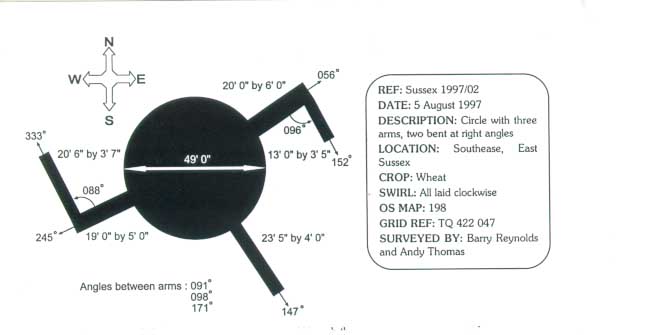


 Tungurahua
Volcano (EcuaVolcán Tungurahuador):
constant ash emissions and ash fall
Tungurahua
Volcano (EcuaVolcán Tungurahuador):
constant ash emissions and ash fall