 On Halloween, 2001, following the
 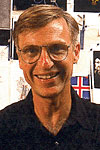 On Nov. 16, 2001, Don C. Wiley, 57, vanished, and his abandoned rental car was found on
the
On Nov. 16, 2001, Don C. Wiley, 57, vanished, and his abandoned rental car was found on
the 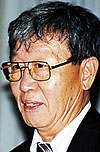
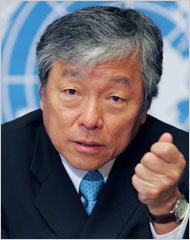
Dr. Lee Jong Wook, who led the World Health Organization as its director general as it struggled to cope with the spread of SARS, avian flu and other public health menaces, died yesterday in Geneva, where he was to attend the organization's annual meeting. He was 61.
|
A Career In
Microbiology Can Be Harmful To Your Health It doesn't pay to be a
scientist either if you are against gasoline!
| ||||||||
|
6-11-03 - DREAM - I was working on a computer, trying to track 3 different germs as they moved from East to West across the country. There was some data on the program that seemed not to need to be there, so I tried deleting it, but it couldn't be done because the government had put it in place and I couldn't change it. NOTE: ANTHRAX, SARS, WEST NILE VIRUS, AIDS,
CHICKEN VIRUS, BIRD VIRUS, THE LIST JUST KEEPS GETTING LONGER!!!
| ||||||||
|
A Career In
Microbiology Can Be Harmful To Your Health Several major researchers have begun to investigate serious discussions by legitimate scientists and academics on the possible necessity of reducing the world's population by more than four billion people, no stranger set of circumstances since Sept. 11 adds credibility to this possibility than the suspicious deaths of world-class microbiologists. The newest connections to DynCorp, Hadron and PROMIS software are leads an amateur would not miss. How else would any microbiologists threatening an ultra secret government biological weapons program be identified than by secretly scanning their databases to see what they were working on? --
The original research noticed the mysterious string of deaths starting in 2002, but since then, other earlier deaths have been reported by readers. The mystery grows with every passing day. 1953 - This is really strange - Frank Olson 1953 - a chemist for the CIA, fell out a window. His son investigated this case for 49 years and finally had his father's body exumed and re-autopsied. At that time, it was discovered that Frank Olson had been hit over the head with a blunt instrument BEFORE he fell out the window: He was killed by the CIA, and guess who was high up in the government during that administration ? The same two guys who just left office in 2008. Coincidental? See: http://www.serendipity.li/cia/olson2.htm March 1982: Professor Keith Bowden, 46 --Expertise: Computer programmer and scientist at Essex University engaged in work for Marconi, who was hailed as an expert on super computers and computer-controlled aircraft. --Circumstance of Death: Fatal car crash when his vehicle went out of control across a dual carriageway and plunged onto a disused railway line. Police maintained he had been drinking but family and friends all denied the allegation. --Coroner's verdict: Accident. April 1983: Lt-Colonel
Anthony Godley, 49 --Expertise: Head of the Work Study Unit at
the Royal College of Military Science. --Circumstance of Death:
Disappeared mysteriously in April 1983 without explanation. Presumed
dead. March 1985: Roger
Hill, 49 --Expertise: Radar designer and draughtsman with
Marconi. --Circumstance of Death: Died by a shotgun blast at home.
--Coroner's verdict: Suicide. November 19, 1985: Jonathan
Wash, 29 --Expertise: Digital communications expert who had
worked at GEC and at British Telecom's secret research centre at
Martlesham Heath, Suffolk. --Circumstance of Death: Died as a result
of falling from a hotel room in Abidjan, West Africa, while working
for British Telecom. He had expressed fears that his life was in
danger. --Coroner's verdict: Open. August 4, 1986: Vimal
Dajibhai, 24 --Expertise: Computer software engineer with
Marconi, responsible for testing computer control systems of Tigerfish
and Stingray torpedoes at Marconi Underwater Systems at Croxley Green,
Hertfordshire. --Circumstance of Death: Death by 74m (240ft.) fall
from Clifton Suspension Bridge, Bristol. Police report on the body
mentioned a needle-sized puncture wound on the left buttock, but this
was later dismissed as being a result of the fall. Dajibhai had been
looking forward to starting a new job in the City of London and
friends had confirmed that there was no reason for him to commit
suicide. At the time of his death he was in the last week of his work
with Marconi. --Coroner's verdict: Open. October 1986: Arshad Sharif, 26 --Expertise: Reported to have been working on systems for the detection of submarines by satellite. --Circumstance of Death: Died as a result of placing a ligature around his neck, tying the other end to a tree and then driving off in his car with the accelerator pedal jammed down. His unusual death was complicated by several issues: Sharif lived near Vimal Dajibhai in Stanmore, Middlesex, he committed suicide in Bristol and, inexplicably, had spent the last night of his life in a rooming house. He had paid for his accommodation in cash and was seen to have a bundle of high-denomination banknotes in his possession. While the police were told of the banknotes, no mention was made of them at the inquest and they were never found. In addition, most of the other guests at the rooming house worked at British Aerospace prior to working for Marconi, Sharif had also worked at British Aerospace on guided weapons technology. --Coroner's verdict: Suicide. January 1987: Richard
Pugh, 37 --Expertise: MOD computer consultant and digital
communications expert. --Circumstance of Death: Found dead in his flat
in with his feet bound and a plastic bag over his head. Rope was tied
around his body, coiling four times around his neck. --Coroner's
verdict: Accident. January 12, 1987: Dr.
John Brittan, 52 --Expertise: Scientist formerly engaged in top
secret work at the Royal College of Military Science at Shrivenham,
Oxfordshire, and later deployed in a research department at the MOD.
--Circumstance of Death: Death by carbon monoxide poisoning in his own
garage, shortly after returning from a trip to the US in connection
with his work. --Coroner's verdict: Accident. February 1987: David
Skeels, 43 --Expertise: Engineer with Marconi. --Circumstance
of Death: Found dead in his car with a hosepipe connected to the
exhaust. --Coroner's verdict: Open. February 1987: Victor
Moore, 46 --Expertise: Design Engineer with Marconi Space and
Defence Systems. --Circumstance of Death: Died from an overdose.
--Coroner's verdict: Suicide. February 22, 1987: Peter Peapell, 46 --Expertise: Scientist at the Royal College of Military Science. He had been working on testing titanium for it's resistance to explosives and the use of computer analysis of signals from metals. --Circumstance of Death: Found dead allegedly from carbon monoxide poisoning, in his Oxfordshire garage. The circumstances of his death raised some elements of doubt. His wife had found him on his back with his head parallel to the rear car bumper and his mouth in line with the exhaust pipe, with the car engine running. Police were apparently baffled as to how he could have manoeuvred into the position in which he was found. --Coroner's verdict: Open. March 30, 1987: David
Sands, 37 --Expertise: Senior scientist working for Easams of
Camberley, Surrey, a sister company to Marconi. Dr. John Brittan had
also worked at Camberley. --Circumstance of Death: Fatal car crash
when he allegedly made a sudden U-turn on a dual carriageway while on
his way to work, crashing at high speed into a disused cafeteria. He
was found still wearing his seat belt and it was discovered that the
car had been carrying additional petrol cans. None of the 'normal'
reasons for a possible suicide could be found. --Coroner's verdict:
Open. April 1987: George
Kountis (age unknown) --Expertise: Systems Analyst at Bristol
Polytechnic. --Circumstance of Death: Drowned the same day as Shani
Warren (see below) - as the result of a car accident, his upturned car
being found in the River Mersey, Liverpool. --Coroner's verdict:
Misadventure. (Kountis' sister called for a fresh inquest as she
thought 'things didn't add up.') April 10, 1987: Shani
Warren, 26 --Expertise: Personal assistant in a company called
Micro Scope, which was taken over by GEC Marconi less than four weeks
after her death. --Circumstance of Death: Found drowned in 45cm.
(18in) of water, not far from the site of David Greenhalgh's death
fall. Warren died exactly one week after the death of Stuart Gooding
and serious injury to Greenhalgh. She was found gagged with a noose
around her neck. Her feet were also bound and her hands tied behind
her back. --Coroner's verdict: Open. (It was said that Warren had
gagged herself, tied her feet with rope, then tied her hands behind
her back and hobbled to the lake on stiletto heels to drown herself.) April 10, 1987: Stuart Gooding, 23 --Expertise: Postgraduate research student at the Royal College of Military Science. --Circumstance of Death: Fatal car crash while on holiday in Cyprus. The death occurred at the same time as college personnel were carrying out exercises on Cyprus. --Coroner's verdict: Accident. April 24, 1987: Mark
Wisner, 24 --Expertise: Software engineer at the MOD.
--Circumstance of Death: Found dead on in a house shared with two
colleagues. He was found with a plastic sack around his head and
several feet of cling film around his face. The method of death was
almost identical to that of Richard Pugh some three months earlier.
--Coroner's verdict: Accident. May 3, 1987: Michael
Baker, 22 --Expertise: Digital communications expert working on
a defence project at Plessey; part-time member of Signals Corps SAS.
--Circumstance of Death: Fatal accident owhen his car crashed through
a barrier near Poole in Dorset. --Coroner's verdict: Misadventure.
June 1987: Jennings, Frank, 60 --Expertise: Electronic Weapons
Engineer with Plessey. --Circumstance of Death: Found dead from a
heart attack. --No inquest. January 1988: Russell
Smith, 23 --Expertise: Laboratory technician with the Atomic
Energy Research Establishment at Harwell, Oxfordshire. --Circumstance
of Death: Died as a result of a cliff fall at Boscastle in Cornwall.
--Coroner's verdict: Suicide. March 25, 1988: Trevor
Knight, 52 --Expertise: Computer engineer with Marconi Space
and Defence Systems in Stanmore, Middlesex. --Circumstance of Death:
Found dead at his home in Harpenden, Hertfordshire at the wheel of his
car with a hosepipe connected to the exhaust. A St.Alban's coroner
said that Knight's woman friend, Miss Narmada Thanki (who also worked
with him at Marconi) had found three suicide notes left by him which
made clear his intentions. Miss Thanki had mentioned that Knight
disliked his work but she did not detect any depression that would
have driven him to suicide. --Coroner's verdict: Suicide. August 1988: Alistair Beckham, 50 --Expertise: Software engineer with Plessey Defence Systems. --Circumstance of Death: Found dead after being electrocuted in his garden shed with wires connected to his body. --Coroner's verdict: Open. August 22, 1988: Peter Ferry, 60
--Expertise: Retired Army Brigadier and an Assistant Marketing
Director with Marconi. --Circumstance of Death: Found on 22nd or 23rd
August 1988 electrocuted in his company flat with electrical leads in
his mouth. --Coroner's verdict: Open September 1988: Andrew Hall,
33 --Expertise: Engineering Manager with British Aerospace.
--Circumstance of Death: Carbon monoxide poisoning in a car with a
hosepipe connected to the exhaust. --Coroner's verdict: Suicide. Above
list compiled by Raymond A. Robinson in 'The Alien Intent' (A Dire
Warning) http://www.geocities.com/orgonegal/marconi-scientists.html
(Note: link above is dead) http://web.archive.org/web/20030208080844/...scientists.html
1988: Stanley Irving Sigal, 35
--Expertise: Top AIDS researcher at Merck's. --Circumstance of Death:
In seat number 13B on Pan American Flight that was shot down over
Lockerbee Scotland. http://web.syr.edu/~vpaf103/victims.htm A RUSSIAN, BRITISH INTELLIGENCE AND OLD
CORPSES Date?: Dr. C. Bruton
--Expertise: He had just produced a paper on a new strain of CJD. He
was a CJD specialist who was killed before his work was announced to
the public. --Circumstance of Death: died in a car crash. 1994/95?: Dr. Jawad Al Aubaidi --Expertise: Veterinary mycoplasma and had worked with various mycoplasmas in the 1980s at Plum Island. --Circumstance of Death: He was killed in his native Iraq while he was changing a flat tire and hit by a truck. Source: Patricia A. Doyle, PhD In 1994, Jose Trias met with a friend in Houston, Texas and was planning to go public with his personal knowledge of HHMI "front door" grants being diverted to "back door" black ops bioresearch. The next day, Trias and his wife were found dead in their Chevy Chase, Md. home. Chevy Chase is where HHMI is headquartered. Police described the killings as a professional hit. Tsunao Saitoh, age 46 - who formerly worked at an HHMI-funded lab at Columbia University, was shot to death on May 7, 1996 while sitting in his car outside his home in La Jolla, Calif. Police also described this as a professional hit. --Expertise: A leading Alzheimer's researcher --Circumstance of Death: He and his 13 year-old daughter were killed in La Jolla, California, in what a Reuters report described as a "very professionally done" shooting. He was dead behind the wheel of the car, the side window had been shot out, and the door was open. His daughter appeared to have tried to run away and she was shot dead, also. Dec 25, 1997: Sidney Harshman, 67 --Expertise: Professor of microbiology and immunology. "He was the world's leading expert on staphylococcal alpha toxins," according to Conrad Wagner, professor of biochemistry at Vanderbilt and a close friend of Professor Harshman. "He also deeply cared for other people and was always eager to help his students and colleagues." --Circumstance of Death: Complications of diabetes July 10, 1998: Elizabeth A. Rich, M.D., 46 --Expertise: An associate professor with tenure in the pulmonary division of the Department of Medicine at CWRU and University Hospitals of Cleveland. She was also a member of the executive committee for the Center for AIDS Research and directed the biosafety level 3 facility, a specialized laboratory for the handling of HIV, virulent TB bacteria, and other infectious agents. --Circumstance of Death: Killed in a traffic accident while visiting family in Tennessee September 1998: Jonathan Mann, 51 --Expertise: Founding director of the World Health Organisation's global Aids programme and founded Project SIDA in Zaire, the most comprehensive Aids research effort in Africa at the time, and in 1986 he joined the WHO to lead the global response against Aids. He became director of WHO's global programme on Aids which later became the UNAids programme. He then became director of the Francois-Xavier Bagnoud Center for Health and Human Rights, which was set up at Harvard School of Public Health in 1993. He caused controversy earlier this year in the post when he accused the US National Institutes of Health of violating human rights by failing to act quickly on developing Aids vaccines. --Circumstance of Death: Died in the Swissair Flight 111 crash in Canada. March 2000: Larry C. Ford --Expertise: Served as a consultant to both the CIA and the chemical and biological-weapons program of the South African Defense Forces, headed by Wouter Basson. His contributions to Basson's program included lectures on converting ordinary items into lethal biological weapons. He provided samples of virulent, designer strains of cholera, anthrax, botulism, plague, and malaria, as well as a bacteria he claimed had been mutated to be "pigment specific" for the white minority government of South Africa. http://www.edwardhumes.com/articles/medicine.shtml --Circumstance of Death: Died of a shotgun blast at his home in Irvine, Orange County, California. His death was later ruled a suicide. http://www.visioncircle.org/archive/000055.html
July 16, 2000: Mike
Thomas, 35 --Expertise: A microbiologist at the Crestwood
Medical Center in Huntsville. --Circumstance of Death: Died a few days
after examining a sample taken from a 12-year-old girl who was
diagnosed with meningitis and survived. December 25, 2000: Linda Reese, 52 --Expertise: Microbiologist working with victims of meningitis. --Circumstance of Death: Died three days after she studied a sample from Tricia Zailo, 19, a Fairfield, N.J., resident who was a sophomore at Michigan State University. Tricia Zailo died Dec. 18, a few days after she returned home for the holidays. May 7 2001: Professor Janusz Jeljaszewicz --Expertise: Expert in Staphylococci and Staphylococcal Infections. His main scientific interests and achievements were in the mechanism of action and biological properties of staphylococcal toxins, and included the immunomodulatory properties and experimental treatment of tumours by Propionibacterium. November 2001: Yaacov
Matzner, 54 --Expertise: Dean of the Hebrew University-Hadassah
Medical School in Jerusalem and chairman of the Israel Society of
Hematology and Blood Transfusions, was the son of Holocaust survivors.
One of the world's experts on blood diseases including familiar
Mediterranean fever (FMF), Matzner conducted research that led to a
genetic test for FMF. He was working on cloning the gene connected to
FMF and investigating the normal physiological function of amyloid A,
a protein often found in high levels in people with blood cancer.
--Circumstance of Death: Professors Yaacov Matzner and Amiram Eldor
were on their way back to Israel via Switzerland when their plane came
down in dense forest three kilometres short of the landing field. November 2001: Professor
Amiram Eldor, 59 --Expertise: Head of the haematology
institute, Tel Aviv's Ichilov Hospital and worked for years at
Hadassah-University Hospital's haematology department but left for his
native Tel Aviv in 1993 to head the haematology institute at Ichilov
Hospital. He was an internationally known expert on blood clotting
especially in women who had repeated miscarriages and was a member of
a team that identified eight new anti-clotting agents in the saliva of
leeches. --Circumstance of Death: Professors Yaacov Matzner and Amiram
Eldor were on their way back to Israel via Switzerland when their
plane came down in dense forest three kilometres short of the landing
field. November 6, 2001: Jeffrey Paris Wall, 41 --Expertise: He was a biomedical expert who held a medical degree, and he also specialized in patent and intellectual property. --Circumstance of Death: Mr. Walls body was found sprawled next to a three-story parking structure near his office. He had studied at the University of California, Los Angeles.
OOPS!
November 16, 2001: Dr. Don Wiley, 57, disappears during a business trip to Memphis, Tennessee. He had just bought tickets to take his son to Graceland the following day. Police found his rental car on a bridge outside Memphis. His body was later found in the Mississippi River. Wiley was one of the world's leading researchers of deadly viruses, including HIV and the Ebola virus. He was an expert on the immune system's response to viral attacks. A MEMPHIS
MYSTERY He, played a huge role in Russian biowarfare and helped to figure out how to modify cruise missiles to deliver the agents of mass biological destruction. --Background: founded Regma Biotechnologies company in Britain, a laboratory at Porton Down, the country´s chem-bio warfare defense establishment. Regma currently has a contract with the U.S. Navy for "the diagnostic and therapeutic treatment of anthrax". --Circumstance of Death: The pathologist who did the autopsy, and who also happened to be associated with Britain´s spy agency, concluded he died of a stroke. Details of the postmortem were not revealed at an inquest, in which the press was given no prior notice. Colleagues who had worked with Pasechnik said he was in good health. On Dec. 10, 2001, Robert Schwartz, 57, was found murdered in his rural home in Loudoun County, Va. Dead
microbiologist: "Dr. Robert Schwartz, 57, was stabbed and
slashed with what police believe was a sword in his farmhouse
in Leesberg, Va. His daughter, who identifies herself as a
pagan high priestess, and three of her fellow pagans have been
charged." [Globe and Mail, 5/4/02] All were part of what
they called a coven, and interested in magic, fantasy and
self-mutilation. The police have no motive as to why they
would have wanted to kill Schwartz, who was a single parent
and said to be very close to his children.
--Expertise: Schwartz was an expert in DNA sequencing and
pathogenic micro-organisms, founding member of the Virginia
Biotechnology Association, and the Executive Director of
Research and Development at Virginia´s Center for Innovative
Technology in Herndon. · On Dec, 11, 2001 - Set Van Nguyen, 44, was found dead in the airlock entrance to a walk-in refrigerator in the laboratory where he worked in Victoria State, Australia.
Expertise: animal diseases facility of the Commonwealth Scientific and Industrial Research Organization had just come to fame for discovering a virulent strain of mousepox, which could be modified to affect smallpox. --Circumstance of Death: died at work in Geelong, Australia, in a laboratory accident. He entered an airlocked storage lab and died from exposure to nitrogen. BREATHE DEEPLY, AND
CARRY A BIG STICK January 2002: Two dead microbiologists: Ivan Glebov and Alexi Brushlinski Ivan Glebov and Alexi Brushlinski. Glebov died as the result of a bandit attack and Brushlinski was killed in Moscow. Both were well known around the world and members of the Russian Academy of Science. January 28, 2002: David W. Barry, 58 --Expertise: Scientist who co-discovered AZT, the antiviral drug that is considered the first effective treatment for AIDS. --Circumstance of Death: unknown On Feb. 9, 2002 Vladimir Korshunov, 56, was found dead on a
And on Feb. 11, 2002 Ian Langford,
40, was found dead
in his home in
Expertise: a Russian who moved to the U.S. in 1989, focused on the part of the human molecular structure that could be affected best by medicine. --Circumstance of Death: killed by fellow microbiologist Guyang (Matthew) Huang, who shot her seven times when she opened the door to a pizza delivery. Then he shot himself. Feb.
28, 2002 -- In the four-month period from Nov. 12
through Feb. 11, seven world-class microbiologists in
different parts of the world were reported dead. Six died of
"unnatural" causes, while the cause of the seventh's death is
questionable. Also on Nov. 12, DynCorp, a major government
contractor for data processing, military operations and
intelligence work, was awarded a $322 million contract to
develop, produce and store vaccines for the Department of
Defense. DynCorp and Hadron, both defense contractors
connected to classified research programs on communicable
diseases, have also been linked to a software program known as
PROMIS, which may have helped identify and target the
victims.
August 05, 2002: David R. Knibbs, PhD., 49 --Expertise: Director of Electron Microscopy at Hartford Hospital and had a doctorate in pathobiology from the University of Connecticut. He also served as an adjunct faculty member at the University of Hartford. --Circumstance of Death: He collapsed and died after an evening run (one of his joys in life). Nov. 12, 2002: Benito Que, 52 --Expertise: Expert in infectious diseases and cellular biology at the Miami Medical School --Circumstance of Death: Que left his laboratory after receiving a telephone call. Shortly afterward he was found comatose in the parking lot of the Miami Medical School. He died without regaining consciousness on December 6th. Police said he had suffered a heart attack. His family insisted he had been in perfect health and claimed four men attacked him. But, later, oddly, the family inquest returned a verdict of death by natural causes. Dr. Benito Que, 52, was "an expert in infectious diseases and cellular biology at the Miami Medical School. Police originally suspected that he had been beaten on in a carjacking in the medical school's parking lot. Strangely enough, though, his body showed no signs of a beating. The public relations office at the
University of Miami Medical School said only that Benito Que
was a cell biologist, involved in oncology research in the
hematology department. This research relies heavily on DNA
sequencing studies. The circumstances of his death raise more
questions than they answer. Benito Que, 52, and Don Wiley, 57. Both microbiologists had been engaged in DNA sequencing that could provide "a genetic marker based on genetic profiling." The research could play an important role in developing weaponized pathogens to hit selected groups of humans" identifying them by race. April 2003: Carlo Urbani, 46 --Expertise: A dedicated and internationally respected Italian epidemiologist, who did work of enduring value combating infectious illness around the world. --Circumstance of Death: Died in Bangkok from SARS (severe acute respiratory syndrome) - the new disease that he had helped to identify. Thanks to his prompt action, the epidemic was contained in Vietnam. However, because of close daily contact with SARS patients, he contracted the infection. On March 11, he was admitted to a hospital in Bangkok and isolated. Less than three weeks later he died. June 24, 2003: Dr. Leland Rickman of UCSD, 47 --Expertise: An expert in infectious disease who helped the county prepare to fight bioterrorism after Sept. 11. --Circumstance of Death: He was in the African nation of Lesotho with Dr. Chris Mathews of UCSD, the director of the university's Owen Clinic for AIDS patients. Dr. Rickman had complained of a headache and had gone to lie down. When he didn't appear for dinner, Mathews checked on him and found him dead. A cause has not yet been determined. July 18, 2003: Dr. David Kelly, age 49 - a British biological weapons expert - Expertise: Biological warfare weapons specialist, senior post at the Ministry of Defense, an expert on DNA sequencing when he was head of microbiology at Porton Down and worked with two American scientists, Benito Que, 52, and Don Wiley, 57. --Helped Vladimir Pasechnik found Regma Biotechnologies, which has a contract with the U.S. Navy for "the diagnostic and therapeutic treatment of anthrax" --Circumstance of Death: He was found dead after seemingly slashing his wrist in a wooded area near his home at Southmoor, Oxfordshire.
Exclusive
to American Free Press By
Gordon Thomas Dr.
David Kelly—the biological
warfare weapons specialist at the heart of the continuing political
crisis for the British government—had links to three other top
microbiologists whose deaths have left unanswered questions. The 59-year-old British scientist was
involved with ultra secret work at Israel’s Institute for Biological
Re search. Israeli sources claim Kelly met institute scientists
several times in London in the past two years. Israel has not signed the Biological
Weapons and Toxins Convention, an international treaty ratified by
more than 140 countries. It forbids the development, possession and
use of offensive biological and chemical weapons. The CIA, FBI and MI5 are now examining
Kelly’s connections. Their findings could form part of the British
government’s inquiry into the background of Kelly’s death, which
opened last week. The intelligence investigation is
believed to have originated in Washington, where it emerged that Kelly
had contacts with two companies in the U.S. bio-defense industry. One of the men he was in touch with was
a former Russian defector, Kamovtjan Alibekov. When he arrived in
America, he changed his name to Ken Alibek. He is now president of
Hadron Advanced Biosystems—a company specializing in medicines
against biological terrorist attacks. Kelly was himself considering
resigning from his senior post at the Ministry of Defense to work in
America. Before his death, he had been discreetly headhunted by two
companies. One was Hadron Advanced Biosystems, which has close ties to
the Pentagon. Hadron describes itself as “a company
specializing in the development of technical solutions for the U.S.
intelligence community.” Hadron also has links to William Patrick,
who has five classified patents on the process of developing
weaponized anthrax. He is a biowarfare consultant to both the Pentagon
and the CIA. The other company is Regma
Biotechnologies—one that Kelly helped its founder, Vladimir
Pasechnik, to set up in Britain, arranging for it to have a laboratory
at Porton Down, the country’s chem-bio warfare defense
establishment. Regma currently has a contract with the
U.S. Navy for “the diagnostic and therapeutic treatment of
anthrax.” Kelly had told family friends he wanted
to go to America so that he could obtain the specialized treatment his
wife, Janice, requires. “He also felt that working in the U.S.
private sector would relieve him of the intense pressures which came
with his government work,” said a colleague in the Ministry of
Defense. The two American scientists he had
worked with were Benito Que, 52, and Don Wiley, 57. Both
microbiologists had been engaged in DNA sequencing that could provide
“a genetic marker based on genetic profiling.” The research could
play an important role in developing weaponized pathogens to hit
selected groups of humans—identifying them by race. Two years ago,
both men were found dead, in circumstances never fully explained. In November 2001, Que left his
laboratory after receiving a telephone call. Shortly afterward he was
found comatose in the parking lot of the Miami Medical School. He died
without regaining consciousness. Police said he had suffered a heart
attack. His family insisted he had been in perfect health and claimed
four men attacked him. But, later, oddly, the family inquest returned
a verdict of death by natural causes. Many questions remain about Que’s
death: Who was the mystery caller who sent Que
hurrying from his lab hours before he was scheduled to leave? What
attempts did the police make to track the four mystery men—after
admitting Que was the “probable” victim of an attempt to steal his
car? What were his links to the U.S. Department of Defense? What
happened to his sensitive research into DNA sequencing? How close were
his connections to Kelly? A few days after Que died, Wiley
disappeared off a bridge spanning the Mississippi River. He had just
left a banquet for fellow researchers in Memphis. Weeks later, Wiley’s body was found
300 miles down river. As with Que, his family said he was in perfect
health. There was no autopsy. The local medical examiner returned a
verdict of accidental death. It was suggested he had a dizzy spell and
fell off the bridge. Again, there remain many unanswered
questions concerning Wiley’s demise: Why did Wiley park his car on the
bridge? Why did he leave the keys in the ignition and his lights on?
Why was Wiley’s car facing in the opposite direction from his
father’s house, which was only a short distance away? What happened
to his research into DNA sequencing? How close were his connections to
Kelly? Kelly, himself an expert on DNA
sequencing when he was head of microbiology at Porton Down, had been
kept fully abreast of the two men’s research. The death of a third
microbiologist—Vladimir Pasechnik, 64—has left even more
questions. Kelly had played a key role in
debriefing Pasechnik when he fled to Britain in 1989, bringing with
him details of Russian plans to use cruise missiles to spread smallpox
and plague, the Black Death of medieval times, which killed a third of
Europe’s population. Before the plans could be brought to
completion, the Soviet Union had collapsed. Pasechnik had warned Kelly
and his MI6 debriefers that the weapons could be used by terror
groups—using missiles obtained from China or North Korea. Kelly, with government approval, had
helped Pasechnik create Regma Biotechnologies. Regma was allowed to
set up a laboratory in Porton Down. Research there is classified as top
secret. However, in August 2002, the company obtained a contract with
the U.S. Navy for “the diagnostic and therapeutic treatment of
anthrax.” On Nov. 16, 2001, Pasechnik was found
dead in bed—10 days after he and Wiley had met in Boston to discuss
the latest developments in DNA sequencing. It was only a month later that
Christopher Davis, a former MI6 officer and a specialist in DNA
sequencing as a potential weapon, announced Pasechnik’s death. Davis had retired from MI6 and settled
in Great Falls, Va. He confirmed to a reporter that Pasechnik was
dead—from a stroke—a month after the microbiologist had been
buried. Details of the postmortem were not
revealed at an inquest, in which the press was given no prior notice.
Colleagues who had worked with Pasechnik said he was in good health. Why was it left to Davis to announce
Pasechnik’s death? Who authorized the announcement? Did an MI6
pathologist conduct the autopsy, as one source close to the service
claims? Why did Pasechnik continue to visit Porton Down up to a week
before his death? Who authorized his security clearance to enter one
of the most restricted establishments in Britain? Kelly’s links to the Institute of
Biological Research in the Tel Aviv suburb of Nes Zions are also
intriguing. His connection to the secret biological
plant began in October 2001, shortly after a commercial flight en
route from Israel to Novosibirsk in Siberia was blown up over the
Black Sea by a Ukrainian surface-to-air missile. All on board the flight were killed,
including five Russian microbiologists returning to their research
institute in Novosibirsk—a city known as the scientific capital of
Siberia. It has 50 facilities and 13 universities. Many questions remain about the death of
these five scientists. Why did Mossad send a team to Ukraine to
investigate the crash? What became of their report after it was
submitted to the Israeli government? Why do the Ukrainian authorities
still insist they cannot reveal the name of the dead microbiologists?
Did Pasechnik know them—or, more importantly, did Kelly? The Institute for Biological Research is
one of the most secret places in Israel. Only Dimona, the country’s
nuclear facility in the Negev desert, is surrounded by more secrecy.
Most of the institute’s 12 acres of facilities are underground.
Laboratories are only reached through airlocks. There have been persistent reports that the institute is also engaged in DNA sequencing research. One former member of the Knesset, Dedi Zucker, caused a storm in the Israeli Parliament when he claimed that the institute was “trying to create an ethnic specific weapon” in which Arabs could be targeted by Israeli weapons. FROM: http://www.americanfreepress.net/08_09_03/Microbiologists_With/microbiologists_with.html MOSSAD (Israels Secret Service) Liquidates 310 Iraqi Scientists Mathaba.net 10-31-4 More than 310 Iraqi scientists are thought to have perished at the hands of Israeli secret agents in Iraq since fall of Baghdad to US troops in April 2003, a seminar has found. The Iraqi ambassador in Cairo, Ahmad al-Iraqi, accused Israel of sending to Iraq immediately after the US invasion 'a commando unit' charged with the killing of Iraqi scientists. "Israel has played a prominent role in liquidating Iraqi scientists. The campaign is part of a Zionist plan to kill Arab and Muslim scientists working in applied research which Israel sees as threatening its interests," al-Iraqi said. http://mathaba.net/x.htm?http://mathaba.ne...x.shtml?x=80029 Oct 11, 2003: Michael Perich, 46 --Expertise: LSU professor who helped fight the spread of the West Nile virus. Perich worked with the East Baton Rouge Parish Mosquito Control and Rodent Abatement District to determine whether mosquitoes in the area carried West Nile. --Circumstance of Death: Walker Police Chief Elton Burns said Sunday that Perich of 5227 River Bend Blvd., Baton Rouge, crashed his Ford pickup truck about 4:30 a.m. Saturday, while heading west on Interstate 12 in Livingston Parish. Perich's truck veered right off the highway about 3 miles east of Walker, flipped and landed in rainwater, Burns said. Perich, who was wearing his seat belt, drowned. The cause of the crash is under investigation, Burns said. "Mike is one of the few entomologists with the experience to go out and save lives today." ~ Robert A. Wirtz, chief of entomology at the federal Centers for Disease Control and Prevention
November 20, 2003: Scientist Robert Leslie Burghoff, 45 was killed by a hit and run driver that jumped the curb and ploughed into him in the 1600 block of South Braeswood, Texas. He was studying the virus plaguing cruise ships. April 2004: Mohammed Munim al-Izmerly, a distinguished Iraqi chemistry professor dies in American custody from a sudden hit to the back of his head caused by blunt trauma. He was killed by a mysterious white van in November of 2003 --Circumstance of Death: Burghoff was walking on a sidewalk along the 1600 block of South Braeswood when a white van jumped the curb and hit him at 1:35 p.m. Thursday, police said. The van then sped away. Burghoff died an hour later at Memorial Hermann Hospital. December 18, 2003: Robert Aranosia, 61 --Expertise: Oakland County deputy medical examiner --Circumstance of Death: He was driving south on I-75 when his pickup truck went off the freeway near a bridge over the Kawkawlin River. The vehicle rolled over several times before landing in the median. Aranosia was thrown from the vehicle and ended up on the shoulder of the northbound lanes. January 6, 2004: Dr Richard Stevens, 54 --Expertise: A haematologist. (Haematologists analyse the cellular composition of blood and blood producing tissues eg bone marrow) --Circumstance of Death: Disappeared after arriving for work on 21 July, 2003. A doctor whose disappearance sparked a national manhunt, killed himself because he could not cope with the stress of a secret affair, a coroner has ruled.
--Expertise: One of the world's top experts on viruses and infectious illnesses
who was the principal author of a highly publicized 1992 report by the National
Academy of Sciences warning of the possible emergence of new and unsettling
infectious illnesses. He had accumulated his own collection of virus samples
gathered from all over the world and worked on a Defense Department project to
develop antidotes to viral agents that terrorists might use. --Circumstance of
Death: The cause was complications of a lung transplant he received in December,
said his daughter Deborah Shope of Galveston. Dr. Shope had pulmonary fibrosis,
a disease of unknown origin that scars the lungs. Dr. Michael Patrick Kiley died Jan. 24. 2004 He was 62. He was reported to have died from a heart attack. He was the Chief Biosafety Officer for the U.S. Dept. Of Agriculture. Expertise: One of the world's leading microbiologists and an expert in
developing and overseeing multiple levels of biocontainment facilities. He was
at the forefront in the early studies of Lassa fever, the Ebola virus and mad
cow disease while at the Centers for Disease Control in Atlanta, Ga.
--Circumstance of Death: Died of massive heart attack. Coincidently, both Dr.
Shope and Dr. Kiley were working on the lab upgrade to BSL 4 at the UTMB
Galvaston lab for Homeland Security. The lab would have to be secure to house
some of the deadliest pathogens of tropical and emerging infectious disease as
well as bioweaponized ones. March 13, 2004: Vadake Srinivasan --Expertise: Was one of the most-accomplished and respected industrial biologists in academia, and held two doctorate degrees. --Circumstance of Death: He died in a mysterious single car accident in Baton Rouge, La. Crashed car into a guard rail and ruled a stroke. April 12, 2004: Ilsley Ingram, 84 --Expertise: Director of the Supraregional Haemophilia Reference Centre and the Supraregional Centre for the Diagnosis of Bleeding Disorders at the St. Thomas Hospital in London. --Circumstance of Death: unknown May 5, 2004: William T. McGuire, 39 --Expertise: NJ University Professor and Senior programmer analyst and adjunct professor at the New Jersey Institute of Technology in Newark. --Circumstance of Death: His dismembered body was found floating in three suitcases in the Chesapeake Bay. May 14, 2004: Dr.
Eugene Mallove See: THE BIGGER PICTURE May 25, 2004: Antonina Presnyakova --Expertise: Former Soviet biological weapons laboratory in Siberia --Circumstance of Death: Died after accidentally sticking herself with a needle laced with Ebola. Scientists and officials said the accident had raised concerns about safety and secrecy at the State Research Center of Virology and Biotechnology, known as Vector, which in Soviet times specialized in turning deadly viruses into biological weapons. Vector has been a leading recipient of aid in an American programme. June 22, 2004: Astronomer and physicist, Austrian born Thomas Gold , age 84 - famous over the years for a variety of bold theories that flout conventional wisdom died of heart failure. Golds theory of the deep hot biosphere holds important ramifications for the possibility of life on other planets, including seemingly inhospitable planets within our own solar system. He was Professor Emeritus of Astronomy at Cornell University and was the founder (and for 20 years director) of Cornell Center for Radiophysics and Space Research. He was also involved in air accident investigation. He was a close colleague of Planetary
Society co-founder Carl Sagan. Gold was famous for his provocative,
controversial, and sometimes outrageous theories. Gold's theory of the deep hot
biosphere holds important ramifications for the possibility of life on other
planets, including seemingly inhospitable planets within our own solar system.
Gold sparked controversy in 1955 when he suggested that the Moon's surface is
covered with a fine rock powder. --Circumstance of Death: Died of heart failure.
June 24, 2004: Dr. Assefa Tulu, 45 --Expertise: Dr. Tulu joined the health department in 1997 and served for five years as the county's lone epidemiologist. He was charged with tracking the health of the county, including the spread of diseases, such as syphilis, AIDS and measles. He also designed a system for detecting a bioterrorism attack involving viruses or bacterial agents. Tulu often coordinated efforts to address major health concerns in Dallas County, such as the West Nile virus outbreaks of the past few years, and worked with the media to inform the public. --Circumstance of Death: Dallas County's chief epidemiologist, was found at his desk, died of a stroke. June 29, 2004: John Mullen, 67 --Expertise: A nuclear research scientist with McDonnell Douglas. --Circumstance of Death: Died from a huge dose of poisonous arsenic. (Note: McDonnell Douglas did not exist in 2004. It merged with Boeing in 1997.) July 1, 2004: Edward Hoffman, 62 --Expertise: Aside from his role as a professor, Hoffman held leadership positions within the UCLA medical community. Worked to develop the first human PET scanner in 1973 at Washington University in St. Louis. --Circumstance of Death: unknown July 2, 2004: Larry Bustard, 53 --Expertise: A Sandia scientist who helped develop a foam spray to clean up congressional buildings and media sites during the anthrax scare in 2001. Worked at Sandia National Laboratories in Albuquerque. His team came up with a new technology used against biological and chemical agents. --Circumstance of Death: unknown
July 3, 2004: Dr Paul
Norman, 52, of Salisbury, Wiltshire, was killed when the
single-engine Cessna 206 he was piloting crashed in Devon. He
was married with a 14-year-old son and a 20-year-old daughter.
He was the chief scientist for chemical and biological defence
at the Ministry of Defences laboratory at Porton Down,
Wiltshire. He traveled the world lecturing on the subject of weapons of mass
destruction. --Circumstance of Death: Died when the Cessna 206 crashed shortly
after taking off from Dunkeswell Airfield on Sunday. A father and daughter also
died at the scene, and 44-year-old parachute instructor and Royal Marine Major
Mike Wills later died in the hospital. http://news.bbc.co.uk/1/hi/england/wiltshire/3860995.stm July 6, 2004: Stephen Tabet, 42 --Expertise: An associate professor and epidemiologist at the University of Washington. A world-renowned HIV doctor and researcher who worked with HIV patients in a vaccine clinical trial for the HIV Vaccine Trials Network. --Circumstance of Death: Died of an unknown illness July 21, 2004: Dr Bassem al-Mudares' mutilated body was found in the city of Samarra, Iraq*. He was a phD chemist and had been tortured before being killed. July 21, 2004: Dr. John Badwey 54 --Expertise: Scientist and accidental politician when he opposed disposal of sewage waste program of exposing humans to sludge. Biochemist at Harvard Medical School specializing in infectious diseases. --Circumstance of Death: Suddenly developed pneumonia like symptoms then died in two weeks.
July 29, 2004: 67-year-old John
Mullen, a nuclear research scientist with McDonnell
Douglas dies from a huge dose of poisonous arsenic. Police
investigating will not say how Mullen was exposed to the arsenic
or where it came from. At the time of his death he was doing
contract work for Boeing. August 12, 2004: Professor John Clark, head of the science lab which created Dolly the sheep, was found hanging in his holiday home. Prof Clark led the Roslin Institute in Midlothian, one of the worlds leading animal biotechnology research centres. He played a crucial role in creating the transgenic sheep that earned the institute worldwide fame. Prof Clark also founded three spin-out firms from Roslin - PPL Therapeutics, Rosgen and Roslin BioMed. -Circumstance of Death: He was found hanging in his holiday home. September 5, 2004: Mohammed Toki Hussein al-Talakani Iraqi nuclear scientist* was shot dead in Mahmudiya, south of Baghdad. He was a practising nuclear physicist since 1984. --Circumstance of Death: He was shot dead in Mahmudiya, south of Baghdad.. October 13, 2004: Matthew Allison, 32 --Expertise: (please help provide information - thank you MJH) Fatal explosion of a car parked at an Osceola County, Fla., Wal-Mart store was no accident, Local 6 News has learned. Found inside a burned car. Witnesses said the man left the store at about 11 p.m. and entered his Ford Taurus car when it exploded. Investigators said they found a Duraflame log and propane canisters on the front passenger's seat. November 2, 2004: John R. La Montagne --Expertise: Head of US Infectious Diseases unit under Tommie Thompson. Was NIAID Deputy Director. --Circumstance of Death: Died while in Mexico, no cause stated. December 21, 2004: Taleb Ibrahim al-Daher Iraqi nuclear scientist was shot dead north of Baghdad by unknown gunmen. He was on his way to work at Diyala University when armed men opened fire on his car as it was crossing a bridge in Baqouba, 57 km northeast of Baghdad. The vehicle swerved off the bridge and fell into the Khrisan river. Al-Daher, who was a professor at the local university, was removed from the submerged car and rushed to Baqouba hospital where he was pronounced dead. December 29, 2004: Tom Thorne and Beth Williams --Expertise: Two wild life scientists, Husband-and-wife wildlife veterinarians who were nationally prominent experts on chronic wasting disease and brucellosis --Circumstance of Death: They were killed in a snowy-weather crash on U.S. 287 in northern Colorado. Squad seeks tips in death of researcher By MIKE WELLS of the Tribune’s staff Published Sunday, January 9, 2005 A retired research assistant professor at the University of Missouri-Columbia died of multiple stab wounds before firefighters found in his body in the trunk of a burning car Friday.
Boone County Medical Examiner Valerie Rao said after an autopsy that Jeong H. Im, 72, of Columbia was stabbed several times, but she declined to elaborate. MU police yesterday named Im as the victim. His body was found in the trunk of his burning white, 1995 Honda inside the Maryland Avenue parking garage, MU police Capt. Brian Weimer said. The case was under investigation by the Mid-Missouri Major Case Squad. No arrests had been made by last night. Weimer spoke to reporters at a news conference yesterday in Jesse Hall but declined to discuss details such as whether a murder weapon was recovered or the cause of the fire. Rao also was cautious about discussing the investigation. Regarding questions on the estimated time of death, the number of wounds, the type of weapon or the fire, she said, "We don’t want to release any of that information because it’s so crucial to what the police are doing." Police yesterday hadn’t ruled out robbery as a motive. "All possibilities are being looked at right now," Weimer said. Im was primarily a protein chemist. Mark McIntosh, chairman of the MU department of molecular microbiology and immunology, said he doubted the crime could have been the act of an angry student. "He’s a 72-year-old and pretty much keeps to himself, and so I can’t imagine that it was anything more than some random act," he said. Police were trying to find an unknown person who used a campus emergency phone to report the fire, Weimer said. Police want that person to contact them again. Weimer also asked the public for help in identifying a man - 6 feet to 6 feet, 2 inches tall - who was seen in the garage area wearing some type of mask, possibly a drywall or painter’s mask. That individual is a "person of interest," Weimer said, and not a suspect. "There could be a valid reason for someone like this to be in the garage," he said. At about 6 p.m. Friday, MU Police Chief Jack Watring activated the major case squad. It’s the first homicide investigation on the campus in nearly 16 years. The request drew in 28 squad members from various law enforcement agencies, including the Columbia Police Department and the Missouri State Highway Patrol. Im’s wife, Tesuk Im, declined comment yesterday when contacted at her Columbia home. The parking garage serves employees of MU and University of Missouri Health Care as well as employees of and visitors to the Mid-Missouri Mental Health Center. Weimer said investigators were still trying to determine the timeframe for the crime. Anyone who was in or near the garage from early morning to afternoon Friday has been asked to call MU police at 882-7203 or CrimeStoppers at 875-8477. "By all means, let us sort it out," he said. "Please, give us a call and let us know what you saw." Tribune reporter Megan Means contributed to this report. January 24, 2005: Roger L. Blair, 54 --Expertise: He worked for the Kennedy Space center as a micro-biologist and most recently for Wuesthoff Medical Center as a Medical Laboratory Technician. --Circumstance of Death: Died suddenly April 5, 2005: Barbara Kalow, 45 --Expertise: A FEDERAL government veterinary scientist and was a researcher before being hired by the feds in 1992 as a meat inspector. She then moved to veterinary biologics and was promoted to the science branch to advise on animal health issues. --Circumstance of Death: She died of asphyxiation after being smothered by a pillow in her hotel room while on vacation in Arizona. May 5, 2004: William T. McGuire, 39 --Expertise: NJ University Professor and Senior programmer analyst and adjunct professor at the New Jersey Institute of Technology in Newark. --Circumstance of Death: His dismembered body was found floating in three suitcases in the Chesapeake Bay. April 18, 2005: Douglas Passaro, 43 --Expertise: He was an associate professor of epidemiology at the University of Illinois at Chicago School of Public Health and had been an outbreak investigator with the Epidemic Intelligence Service for the Centers for Disease Control and Prevention before completing an Infectious Diseases Fellowship at Stanford University in 2001. --Circumstance of Death: Died suddenly at his Oak Park home. May 8, 2005: David Banks, 55 --Expertise: He was the principal scientist with Biosecurity Australia and was involved in containing pest and disease threats. His primary mission was protecting livestock and plants in the country, and keeping diseases from crossing into Australia. He was an expert in the propagation of diseases by insect vectors, among other things. --Circumstance of Death: He died along with 15 other people when the commuter plane he was traveling in went down in Queensland, Australia. May 20, 2005: Robert J. Lull, 64 --Expertise: A prominent physician at San Francisco General Hospital who once headed the San Francisco Medical Society. Lull focused on improvements in diagnosis and treatment of thyroid cancer. Lull was a highly revered expert in the field of nuclear medicine, a specialty that performs diagnostic screens such as bone scans for cancer patients. Last year, Lull lectured in San Francisco about the threat of nuclear terrorism. --Circumstance of Death: He was found stabbed to death inside the doorway of his Diamond Heights home. June 7, 2005: Leonid Strachunsky (age unknown) --Expertise: World Health Organization expert and director of the Anti-Microbe Therapy Research Institute who specialized in creating microbes resistant to biological weapons, to the hepatitis outbreak. --Circumstance of Death: He was found dead in his hotel room in Moscow, where he came from Smolensk en route to the United States. He had been hit on the head with a champagne bottle, and some of his possessions were missing. May 22, 2006 Dr. Lee Jong Wook - age 61 -
Dr. Lee Jong Wook, 61, World Public Health Leader, DiesSpain's minister of health, Elena Salgado, announced Dr. Lee's death minutes before he was to have spoken to representatives of the agency's 192 member countries at the opening session of its weeklong meeting, known as the World Health Assembly. The organization, based in Geneva, is overseen by the United Nations. Dr. Lee suddenly fell ill on Saturday at a luncheon sponsored by the Chinese delegation, an official who was present said. He suffered a stroke and doctors performed emergency surgery to remove a blood clot in his brain, the organization said. Over the last 23 years, Dr. Lee had worked his way up the organization's ladder to become director general, its sixth, in July 2003, and the first South Korean to head a major international agency. His term was to expire in 2008. Dr. Anders Nordstrom, an assistant director, will serve as interim director general. The United Nations secretary general, Kofi Annan, said Dr. Lee had been "a strong voice for the right of every man, woman and child to health prevention and care, and advocated on behalf of the very poorest people." Dr. Barry Bloom, dean of the Harvard School of Public Health, who worked with Dr. Lee on tuberculosis, said that Dr. Lee "may not have been smooth or highly articulate, but he was enormously effective in getting his goals accomplished." A number of other public health experts, however, said yesterday that Dr. Lee's tenure had not been as successful as they had hoped. On taking office, he championed an AIDS treatment program known as "3 by 5." It promised to make antiretroviral therapy accessible to three million people by the end of 2005, most of them in poor countries. The effort fell short of its goal by about a third. But Dr. William H. Foege, an international expert in public health, said the failure to achieve the "3 by 5" goal was "insignificant compared to the courage of promoting a vision of what the world should be doing." Dr. Lee later urged governments and private organizations to make anti-H.I.V. drugs universally accessible by 2010. He also encouraged health ministers to explore the role of social factors like illiteracy, poverty, and unemployment in engendering poor health, Dr. Foege said. Dr. Lee directed programs to rid many countries of polio and had hoped to eradicate it. That goal, too, has proved elusive, largely because the disease spread from Nigeria to 23 other countries after officials in the northern province of Kano temporarily banned polio immunizations. The World Health Organization was also saddled with low morale during Dr. Lee's term. Many of its 8,000 staff members participated in a one-day strike earlier this year, the first in the organization's 53-year history. But on Monday more than 1,000 staff members jammed a hall in Geneva to pay tribute to him, an organization spokeswoman said. Dr. Lee had strenuously campaigned to become director general, defeating Dr. Peter Piot, the executive director of the United Nations AIDS program, on a seventh ballot by the organization's executive board. A number of health experts had complained that Dr. Lee acted more like a politician than a scientist. But he said in an interview in 2003 that "you can't make it to this position without being a politician." Dr. Lee took over in the wake of the SARS epidemic and moved into the forefront of efforts to thwart the spread of the A(H5N1) avian influenza virus, pressing governments to develop emergency plans should national pandemics ensue. Born in Seoul, Korea, Dr. Lee was 5 years old when he, his mother and two brothers had to march 250 miles in 60 days through a bitterly cold winter to be reunited with his father during the Korean War. "The first thing he did was take us to a bakery for cookies," Dr. Lee said in an interview in 2003. "I cried." His father and one brother went into politics, but Dr. Lee said that his mother pushed him toward medicine as a way to earn a steady living. After receiving a medical degree from Seoul National University, he dropped out and enrolled at the University of Hawaii to study public health, out of a belief, he said, that he could do more good that way. He earned a master's degree in public health but never finished his preventive medicine residency, choosing instead to take his first job with W.H.O. in 1983 working in the field on leprosy in Fiji. Dr. Lee is survived by his wife, Reiko, and one son, Tad. 5-22-06 Dennis Lee and Stanley Meyers drove together in Stanley's water powered car from California to New York using about 28 gallons of Water. Stan was subsequently conscripted to work for the Pentagon and then was murdered by poison when he hoisted a toast to success powering Army Tanks with the hydrogen in water.
8-1-08 - Bruce E. Ivins - Dead Army vaccine scientist eyed in anthrax probe (They say that he committed suicide?) WASHINGTON - An Army scientist committed suicide before federal prosecutors could charge him with mailing anthrax-laced letters in the weeks following the Sept. 11 terror attacks. Authorities said Friday the letters may have been part of a warped plan to test his vaccine for the deadly poison.
The scientist, Bruce E. Ivins, worked at the
Army's biological warfare labs at Ft. Detrick, Md.,
for 18 years until his death on Tuesday. He had a
long history of homicidal threats, according to
papers recently filed in local court by a social
worker.
The developments marked an unexpected turn in an episode that rattled a nation shaken only a few weeks earlier by the terror attacks of Sept. 11, 2001. Letters containing anthrax powder turned up at congressional offices, newsrooms and elsewhere, killing five and sending numerous victims to hospitals with anthrax poisoning. Ivins' attorney asserted the scientist's innocence and said he had been cooperating with investigators for more than a year. "We are saddened by his death, and disappointed that we will not have the opportunity to defend his good name and reputation in a court of law," said Paul F. Kemp. For years, the only known suspect in the investigation dubbed "Amerithrax" had been Steven Hatfill, a colleague of Ivins, who has since been exonerated. Ivins had worked for more than a decade to develop an anthrax vaccine that was effective even in cases where different strains of anthrax were mixed, which made vaccines ineffective, according to federal documents reviewed by the AP. In his research, he complained about the limitations of testing anthrax drugs on animals. Several U.S. officials, all of whom discussed the ongoing investigation on condition of anonymity because they were not authorized to speak to the media, said prosecutors were closing in on the 62-year-old Ivins for the 2001 anthrax attacks. Authorities had been investigating whether the anthrax was released to test new drugs. They were planning an indictment that would have sought the death penalty for the attacks, officials said. The Justice Department released a brief statement Friday afternoon saying, "substantial progress has been made in the investigation by bringing to bear new and sophisticated scientific tools." The statement did not identify Ivins. It said investigative documents remain sealed but the department expects to release more information soon. Prosecutors have not yet decided whether to close the investigation, officials said, meaning authorities are still not certain whether Ivins acted alone or had help. One official close to the case said that decision was expected within days. If the case is closed soon, one official said, that will indicate that Ivins was the lone suspect. White House press secretary Dana Perino said President Bush was aware there were "about to be developments" in the case but did not elaborate. Ivins died Tuesday at Frederick Memorial Hospital in Maryland. Tom Ivins, a brother of the scientist, told The Associated Press that his other brother, Charles, had told him that Bruce committed suicide and Tylenol might have been involved. The Los Angeles Times, which first reported that Ivins was under suspicion, said the scientist had taken a massive dose of a prescription Tylenol mixed with codeine. Kemp said his client's death was the result of the government's "relentless pressure of accusation and innuendo" Friends, colleagues and court documents paint a picture of a brilliant scientist with a troubled side. Maryland court documents show he recently received psychiatric treatment and he was ordered to stay away from a woman he was accused of stalking and threatening to kill. Social worker Jean C. Duley filed handwritten court documents last week saying she was preparing to testify before a grand jury. She said the FBI was involved and that Ivins would be charged with five capital murders. "Client has a history dating to his graduate days of homicidal threats, plans and actions towards therapists," Duley said, adding that his psychiatrist had described him as homicidal and sociopathic. Police said they removed Ivins from his job recently because of fears he had become a danger to himself or others. Ivins, who received three degrees including a Ph.D. from the University of Cincinnati, co-authored numerous anthrax studies, including one published in July that described efforts to treat mice deliberately exposed to anthrax. The scientists complained of the limited supply of monkeys available for testing and said testing on animals is insufficient to demonstrate how humans would respond to treatment. The Fort Detrick laboratory and its specialized scientists for years have been at the center of the FBI's investigation of the anthrax mailings. In late June, the government exonerated Hatfill, whose name has for years had been associated with the attacks. Then-Attorney General John Ashcroft called him a "person of interest" in 2002. The government recently paid Hatfill $5.82 million to settle a lawsuit contending he was falsely accused. Hatfill's lawyer, Tom Connolly, said he would not discuss the case until the FBI has time to speak with the family members of victims of the anthrax attacks. Unusual behavior by Ivins was noted at Fort Detrick in the six months following the anthrax mailings, when he conducted unauthorized testing for anthrax spores outside containment areas at the infectious disease research unit where he worked, according to an internal report. But the focus long stayed on Hatfill. Investigators had been watching Ivins for some time. His brother, Tom Ivins, said federal agents questioned the scientist about a year and a half ago. Neighbors said FBI agents in cars with tinted windows conducted surveillance on his home. A colleague, Henry S. Heine, said that over the past year, he and others on their team have testified before a federal grand jury in Washington that has been investigating the anthrax mailings. In occasional letters to the local newspaper, Ivins discussed his strong religious faith. He played keyboard and helped clean up after masses at St. John the Evangelist Roman Catholic Church in Frederick, where a dozen parishioners gathered after morning Mass to pray for him Friday. The Rev. Richard Murphy called Ivins "a quiet man. He was always very helpful and pleasant." Five people died and 17 were sickened by anthrax powder in letters that were mailed to lawmakers' Capitol Hill offices, TV networks in New York, and tabloid newspaper offices in Florida. Two postal workers in a Washington mail facility, a New York hospital worker, a Florida photo editor and an elderly Connecticut woman were killed. Associated Press writers Dave Dishneau and Chrissie Thompson from Frederick, Md. and AP researchers Susan James and Jennifer Farrar in New York contributed to this story.
BEYOND THE
BIZARRE HELP WANTED, SPIES, AND A LINK TO
PROMIS | ||||||||
| From The Wilderness P.O. Box 6061-350 Sherman Oaks, CA 91413 Phone: (818) 788-8791 E-mail: service@copvcia.com
|
||||||||
|
GARY WEBB - PULITZER PRIZE WINNER, AUTHOR OF DARK ALLIANCE CIA-DRUG SERIES DEAD OF REPORTED SUICIDE HOW DOES ONE SHOOT THEMSELVES IN THE HEAD TWICE?????
by Michael C. Ruppert © Copyright 2004, From The Wilderness Publications, www.fromthewilderness.com. All Rights Reserved. May be reprinted, distributed or posted on an Internet web site for non-profit purposes only. December 13, 2004 1400 PDT (FTW) - Gary Webb, 49, the Pulitzer Prize winning reporter from the San Jose Mercury News made America hold its breath in 1996 when he showed us proof of direct CIA involvement in drug trafficking. For a few months many of us had hope.
He reportedly died from a self-inflicted gunshot wound to the head two days ago. His body was discovered at 8:20 AM Saturday as movers reportedly found a note on the door of his residence asking them not to enter but to call for paramedics. Webb's August 1996 series Dark Alliance for the San Jose Mercury News pulled deep covers away from US covert operations and American denial about connections between the CIA and drugs. Gary left a bigger historical footprint than anyone who has ever touched the subject including among others, Peter Dale Scott, Alfred McCoy, Jonathan Kwitny and me. His footprint was made possible in large part for two reasons. First, his reporting was meticulous and produced hard records that could not be effectively denied. Second, prominent African-American leaders like Jesse Jackson and representatives Maxine Waters and Juanita Millender-McDonald of Los Angeles and Compton respectively took up the torch lit by Gary and ran with it just before the 1996 presidential election which saw Bill Clinton win his second term just eight weeks after the stories broke. I was there at that time and it is not an understatement to say that much of this country was "up in arms". Waters at one point vowed to make the CIA-drug
connections, fully documented by Webb, her "life's work" if
necessary. Please see: http://www.fromthewilderness.com/free/pandora/RendGW.html,
and For more FTW coverage of Gary Webb's life please use the search engine at www.fromthewilderness.com. The LA Times obituary, in all of its meanness and inaccuracy is here. Of the six obituaries I have seen on him, the one from the L.A. Times was the most brutally Soviet in its attempt to crush out his memory as thoroughly as his work. Of course the Times would have to do that. It was in Los Angeles where Webb dug up and documented the direct connection between the CIA and cocaine smuggling/trafficking as crack cocaine ravaged this city in the 1980s and the Contra war decimated Central America. The Times already had known of this for decades. Starting in 1979 I dealt extensively with the Times trying to report the same connections with regard to heroin smuggling by the CIA. Cocaine did not become a national epidemic until around 1980. By 1996 I had 17 bitter years of funneling hard evidence to the Times and watching as staff writer David Rosenzweig -- among others including Ron Soble and David Johnston (now of the New York Times) - kept taking the information, promising to do something, and then spiking the stories in exchange for promotions. When Gary autographed his 1998 best-seller Dark Alliance to me he wrote: "To Mike. You were there before I was." Richard Heinberg, author of The Party's Over and Powerdown observed after reading the Times' obituary, "The LA Times obit is disgusting. 'What's our attitude toward investigative journalism? Well, of course we try to discourage it wherever we can, but sometimes it happens anyway. Then we get especially nasty--we have to, naturally, to protect our reputation.'" I always knew it was a fight to the death. I don't think he ever fully understood that. Retired DEA agent Cele Castillo who had reported on direct CIA drug involvement from Honduras and El Salvador in the 1980s and I both told him in 1996 what he was up against and what it might cost him. GRATITUDE I rediscovered my purpose and maybe Gary lost his. This is a tragedy of Shakespearean proportions. KNOWN DETAILS This led me to suspect that the weapon used was a
shotgun. I am going to the funeral and I will be asking questions in Sacramento. Given the disproportionate number of "suicides" of authors and journalists who have covered such stories, and the mainstream's horrendously dishonest coverage of such events, it is right to see if there are grounds to be cautiously suspicious of these accounts. But it is also right to avoid hysteria and unsupported conclusions until there are solid reasons to suspect foul play. Gary would have wanted us all to do this by the numbers, patiently and thoroughly. That was his style. That was why he was so good. When funeral arrangements are announced FTW will publish them and we encourage all of our subscribers to send flowers, write letters and show their thanks to this man who changed all of our lives forever. It wouldn't hurt if you wanted to let the L.A. Times know what you think of their obituary. Sleep well, Gary. Wherever men and women of honor
gather together from now on, your name will be spoken with reverence,
respect and gratitude.
|
||||||||
|
THE
TRUTH ABOUT "SARS"
REVELATION
- THE EIGHTH GATE AND THE BOWLS OF PLAGUE TERRORISM
- WORLD TRADE CENTER - DREAM PAGE NATIONAL
SECURITY - HOLIDAY TERRORISM A
SPIRIT MESSAGE ABOUT THE COMING CHANGES SMALL
POX - THE DREAM AND THE REALITY DIRE
MESSAGES FROM JESUS AND HIS MOTHER MARY - PAGE 9 TERRORISM
- WORLD TRADE CENTER - 9-11-2001 - PAGE 9
|
||||||||