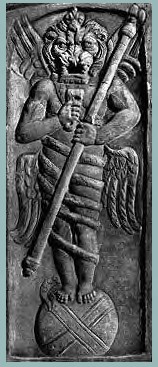
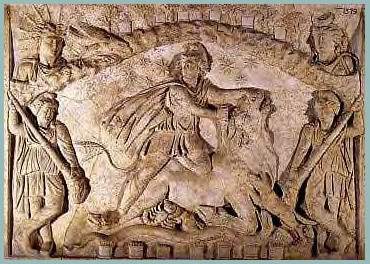
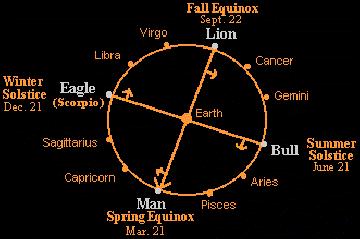
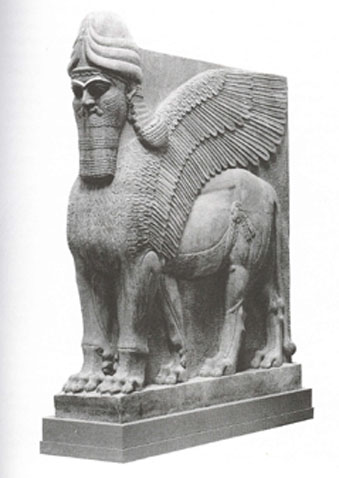
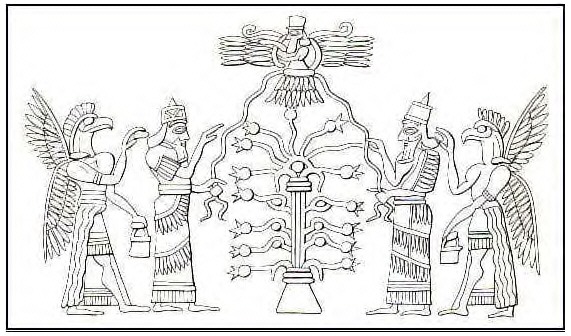
Lion-headed figure standing on cosmic sphere and
holding key in right hand
This morning I woke up and had a series of visions which were
so unusual, because they were flashing with energy and made themselves known
exactly what they meant. I didn't have to guess at their meaning -
even that was given to me.
3-15-03 - VISION - I saw 6 flashing stars with outgoing energy
around them.
3-15-03 - VISION - I saw 6 mice-like creatures of varying
sizes with outgoing energy around them.
3-15-03 - VISION - I saw 6 men facing left and dancing. I was told
that "humanity's dance has begun."
3-15-03 - VISION - I saw a dark blue starry sky with numerous
vermin and above them were many light blue symbols flashing behind them like
a language. The symbols were not familiar to me, and it seems from afterthought
that they were extraterrestrial and might represent crop circles and their
messages.
3-15-03 - VISION - I saw a chartreuse background with 6 white mice
all facing left.
3-15-03 - VISION - I saw a light bluish background with 6 white
mice all facing left.
I knew when the visions were over because a flash of lightning occurred
and a tremendous crash of thunder, followed by a tremendous pouring
of rain. Strangely enough, an hour later, the whole sky was blue and the
sun was shining.
8-27-04 - DREAM VISION - I had this same dream/vision at
least 12 times during the night. In the scene, a man was holding up
a newspaper with a headline that said: 16,000 to 180,000 DEATHS!
The scenes were in various shades of grey until they became almost
black.
It wasn't until Joe told me in the morning that it was an awfully
large number spread that I realized this anomaly. I also didn't see what
the subject matter was - but the newspaper headlines in the morning told
the story: See below:
The Black Death began in Asia and soon spread to Europe where it killed
well over 25 million people (about one third of Europe's total population)
in less than four years. Some historians put the casualty figure closer to
35 to 40 million people, or about half of all Europeans............
Two types of plague are believed to have caused the Black Death. The first
is the "bubonic" type, which was the most common. The bubonic form of plague
is characterized by swellings of the lymph nodes: the swellings are called
"buboes," The buboes are accompanied by vomiting, fever and death............
This form of plague is not contagious between human beings; it requires an
active carrier, such as a flea. For this reason, many historians believe
that flea-infested rodents caused the Bubonic Plague...........
The second form of plague contributing to the Black Death is a highly
contagious type known as "pneumonic" plague. It is marked by shivering, rapid
breathing and the coughing up of blood............... This second type of
plague is nearly always fatal and transmits best in cold weather and in poor
ventilation. Some physicians today believe it was this second form, the
"pneumonic" plague, which was responsible for most of the casualties of the
Black Death because of the crowding and poor hygienic conditions then prevalent
in Europe.
We would normally shake our heads at this tragic period of human history
and be thankful that modern medicine has developed cures for these dread
diseases. However, troubling enigmas about the Black Death still linger.
Many outbreaks occurred in summer during warm weather in uncrowded regions.
Not all outbreaks of bubonic plague were preceded by rodent infestation;
in fact, only a minority of cases seemed to be related to an increase in
the presence of vermin. The greatest puzzle about the Black Death is how
it was able to strike isolated human populations which had no contact with
earlier infected areas. The epidemics also tended to end
abruptly...........
A great many people throughout Europe and other Plague stricken regions
of the world were reporting that outbreaks of the Plague were caused by
foul-smelling "mists". Those mists frequently appeared after unusually bright
lights in the sky. The historian quickly discovers that "mists" were reported
far more frequently and in many more locations than were rodent infestations.
What, then, were the mysterious mists? There is another very important
way in which plague germs can be transmitted; through germ weapons. The US
and the Soviet Union today have stockpiles of biological weapons containing
bubonic plague and other epidemic diseases. The germs are kept alive in canisters
which spray the diseases into the air on thick, often visible, artificial
mists. Anyone breathing in the mist will inhale the disease. There are enough
such germ weapons today to wipe out a good portion of humanity. Reports of
identical disease-inducing mists from the Plague years strongly suggest that
the Black Death was caused by germ warfare. Let us take a look at the incredible
reports which lead to that conclusion.
The first outbreak of the Plague in Europe followed an unusual series
of events. Between 1298 and 1314, seven large "comets" were seem over Europe;
one was of "awe-inspiring blackness." .................. To the people of
Europe, these sightings were considered omens of the Plague which soon
followed.
It is true that some reported "comets" were probably just that;
comets.......... On the other hand it is important to note that almost any
unusual object in the sky was called a "comet." .............
ED NOTE: Three comets have just passed earth in the last month.
(Jan/Feb. 2003)
The link between unusual aerial phenomena and the Black Death was established
immediately during the first outbreaks of the Plague in Asia. As one historian
tells us: The first reports (of the plague) came out of the East. They were
confused, exaggerated, frightening, as reports from that quarter of the world
so often are; descriptions of storms and earthquakes; of meteors and comets
trailing noxious gases that killed trees and destroyed the fertility of the
land.
The above passage indicates that strange flying objects were doing more
than just spreading disease; they were also apparently spraying chemical
or biological defoliants from the air. The above passage echoes the ancient
Mesopotamian tablets which described defoliation of the landscape by ancient
Custodial "gods.".........
The connection between aerial phenomena and plague had begun centuries
before the Black Death. We saw examples in our earlier discussion of Justinians's
plague. We read from another source about a large plague that had reportedly
broken out in the year 1117 -- almost 250 years before the Black Death. That
plague was also preceded by unusual celestial phenomena........
THIS IS A RUSH TRANSCRIPT. THIS COPY MAY NOT BE IN
ITS FINAL FORM AND MAY BE UPDATED.
KYRA PHILLIPS, CNN ANCHOR: We're also waiting for a
news conference out of Lubbock, Texas. City officials there, we are told,
will address reporters. We will bring us as much information as possible.
What they can tell us, we'll bring that to you live as soon as it happens.
Meanwhile, Chris Kozlow, a chemical-bio expert out of Washington, D.C.
joins us now on the phone -- Chris, does this concern you?
CHRIS KOZLOW, INNOVATIVE EMERGENCY MANAGEMENT: Sure it does, and I think
it concerns a lot of people in this industry. Bubonic plague missing, the
accountability of it, and what can be done with it. This isn't like it's a
very large device. Someone can carry this, and we don't know what form it
was in, but if the person or persons got a hold of this, a terrorist, and
they were weaponizing it, now is the time to do it. Signs and symptoms
that are covered are cold and flu, and we're in the height of the cold and
flu season right now, so we're really ramping up the medical response,
getting them ready. That's what would be going on right now, people will
be looking at, because it is sort of the silent unknown. You have to look
for a big needle in a -- or a little needle in a very large haystack.
PHILLIPS: All right. A couple questions for you. Thirty to 35 vials, let's
say it's bubonic plague, all right? And they are saying 30 to 35 vials are
missing. How much of an impact could that make? I mean, put it into
perspective for us.
KOZLOW: Well, let's go back to 1995 when a white supremacist by the name
of Larry Wayne Harris ordered three vials of Yersinia pestis, bubonic
plague, from a lab facility. He had enough there, and had the capability
to cause some serious danger.
You have to remember, a contagious disease, you need enough to get some
people sick, then the bug will take over, and if it's done correctly, it
will just keep going and going and going. It's sort of along the lines of
that smallpox, very contagious -- it's not like smallpox, but it is very
contagious. All you have to be, within 12 inches. Someone coughs on you. I
mean, think about it. How many people wash their hands every five minutes
of the day? If someone coughs on a telephone, and then I pick up that
telephone and I'm already sick a little bit now, I could start to get
sick, therefore I become a carrier. It goes off and it's spread throughout
the system. So got to catch it, if it's released. We got to find these
vials is what we have to do.
PHILLIPS: So, how would you weaponize it? Is it the type of thing where
you just go from place to place and dump a little bit in certain areas? I
mean, a big public area?
KOZLOW: Well, there's some different ways that you can do it. There's the
aerosolization. Very small, you wouldn't even see it. We are talking one
to five microns, similar to the anthrax. No one even saw the anthrax
letters coming. You could do it as an independent hit. Let's say you
wanted to, similar to what the KGB used to do with ricin. They'd find
their mark and they would attack them with a small vial of ricin, tag
them, and boom, they die. It depends on the ingenuity, or the, I guess the
word would be resourcefulness of whoever has this. Let's hope it's just a
misplacement, but we have to assume the worst.
PHILLIPS: And you say it depends on what form it was in. What do you mean
by that? Is a certain form more dangerous than another?
KOZLOW: Well, more than likely, the vials are very small. They are -- if I
was to describe them, probably about -- it depends on what it is, it is
probably about an inch. At least that's the kind that was had from -- in
past by Wayne Harris.
It's freeze dried, so once it starts to thaw out, the efficacy of it, some
of it will die. Some of the agent will die, because it's frozen right now,
if it is. If it's not, then -- so that's what I'm talking about in the
form. This is in a form right now, somebody probably used this for
research. You have to remember all these things are used for research to
try and develop new vaccines or what caused black death or other products,
so it just depends and I think we'll learn a lot from the news conference
as well.
PHILLIPS: You're talking about making a point of why Texas Tech would even
have this in its medical lab. Years ago, I worked there, I have lived in
Lubbock, Texas, and I remember it was quite a medical hub for West Texas.
I mean, we're not talking about some little teeny lab at a university
that's no big deal. I mean, a lot of medical research comes out of this
university and -- I mean, I'm sure -- have they made major breakthroughs
with this bubonic plague? What do you know about what Texas Tech has been
able to accomplish with this?
PHILLIPS: Well, you bring up a great point. These medical research
facilities that are out there -- I mean, there are hundreds of them all
over the country, if not the world. I'm sure that the FBI is going to be
looking at exactly what -- this is what we're very concerned about in the
anti-terrorism field. Why do you have it? Why do you need it? What are
your security precautions? This has been the nightmare scenario for most
of us. If I can break to a lab and get something that's unguarded.
Take a microbiology student who's doing a thesis or a research paper or is
trying to develop something and they get their hands on this stuff, they
know exactly where to go. So I think it would be too early for me to say
right now why they actually would have this, not second guessing, but you
bring up a good point. These research facilities -- Johns Hopkins, CDC,
clearly has Ebola, they clearly have smallpox. We keep those reserves to
do research. You know, we don't eradicate everything. So one of the things
that we'll be looking at is why actually they have it, and what they were
doing with it, what were the controls? Who worked on it, and issues like
that.
PHILLIPS: That's a good point, who worked on it. OK. Chris Kozlow,
chemical-bio expert, thank you so much. We're going to ask you to stay
with us, please, as we continue to work this story.
Also with us, Dr. Sanjay Gupta, also Elizabeth Cohen, our medical
correspondents here at CNN.
Sanjay, let's start with you. A number of points you've brought up with me
here. Why don't you just take it away and start talking about this
bacteria and the bubonic plague, and add to what Elizabeth has been
telling us.
DR. SANJAY GUPTA, CNN MEDICAL CORRESPONDENT: That is right. Well, we know
a lot about Yersinia pestis. That is actually the bacteria that causes
plague, and that is sort of a generic term. When we talk about bubonic
plague, when we talk about pneumonic plague, we're actually talking about
the disease that actually causes the infection. So bubonic plague is
something that actually occurs two to six days or so after someone's
actually been infected with this bacteria, this bacteria that is the
presumably stolen or missing bacteria.
Seven to ten days later is when we start talking about pneumonic plague.
That's the more dangerous kind. That's the kind that people can possibly
spread from person to person. That's the kind that's in your lungs. When
you cough, you can actually cough up some of this bacteria and spread it
to someone else, and that's what makes this concerning.
That's why the World Health Organization is actually concerned about this
as a possible weapon of bioterrorism. But that's all we sort of know about
that. It is pretty rare in this country, ten to 20 cases a year or so, a
few thousand around the world.
Certainly research institutions both in the United States and around the
world do do research on Yersinia pestis. Again, that is the bacteria that
causes plague so they can develop more appropriate and more effective
antibiotics and treatments for it, and that's a pretty good reason as to
why some research institutions would have this sort of bacteria sitting
around. There is good treatment for it. There is an antibiotic if someone
is actually suspected to have this. It is such an unusual diagnosis that
doctors may not suspect this. But if they are, there are some treatments
available.
PHILLIPS: Why is it called bubonic?
GUPTA: Bubonic plague is -- it comes from a very good reason. When someone
actually develops this infection, they get swollen lymph nodes, and these
swollen lymph nodes typically are in the groin, and those lymph nodes can
be very painful, very hard, very swollen. They're actually called bubos.
And from that term "bubos," you get the term "bubonic"
plague, and that is essentially where that term comes from. Again, that's
different from pneumonic plague, which is sort of a later consequence of
this infection. When someone gets pneumonic plague, they can start to
actually possibly spread it from person to person.
PHILLIPS: How many cases have we seen of someone being infected with
bubonic plague say, in the -- I don't know -- year, couple of years?
GUPTA: The average is about 10 to 20 cases per year in the United States.
It's a few thousand around the world. Certainly in developing countries,
it tends to be more prominent. Sort of the southwestern part of the United
States, where a lot of these rodents -- the most likely way that it's
spread is rodents actually biting human beings. We heard about a case like
this, I think, this year, Elizabeth, I think you and I talked about it,
where someone actually got bit by rodents and actually got the plague, the
bubonic plague that way. But again, a very rare thing, 10 to 20 cases a
year, maybe, on average -- Kyra.
PHILLIPS: All right. And we'll bring in our Elizabeth Cohen, right there
by your side, our other medical correspondent here at CNN. Elizabeth, what
more would you like to add as we're waiting for this news conference out
of Lubbock, Texas with city officials. What more can we add to the
discussion in addition to what Sanjay has said?
ELIZABETH COHEN, CNN MEDICAL CORRESPONDENT: You know, what I think I'd
like to add here is that I think sometimes that people have the impression
that horrible things like, for example, the bacteria that causes the
plague must be under lock and key, under very tight security.
And you know what, that is not really true. There are many, many labs, as
Sanjay said, across the country that have this because research needs to
be done. And all sorts of different kinds of bacteria and virus, and
they're shared among researchers.
They will sometimes mail them to one another. They are shared with
researchers outside the United States. In fact, at one point they were
even shared with researchers in Iraq until the government said, No, you
can't mail them to people in Iraq or North Korea, and then a list of other
countries. So these things sort of travel between researchers more than
you might think.
In fact, in 1995, an Ohio microbiologist with some suspect motives was
arrested after he acquired some by mail. So these things do -- researchers
do have them in their labs. They -- the labs that I have been in that have
horrible bugs like this, they don't have armed guards at the doors. It's
because most researchers, of course, the vast majority, are trustworthy
and they need to work with these bacteria. They need to come up with
better treatments, they need to come up with better ways to diagnose these
diseases, and that's why you see these kinds of very dangerous bacteria
and viruses in labs.
PHILLIPS: All right, Elizabeth Cohen and Sanjay Gupta. We're going to ask
you both to just kind of stand by with us here as we continue to work the
story.
If you are just tuning in, breaking news here at the CNN Center out of
Lubbock, Texas. The report is that possibly 30 to 35 vials of the deadly
bubonic plague are now missing from Texas Tech University Health Science
Center. We have not been able to confirm if, indeed, it is bubonic plague,
but it is 30 to 35 vials of some type of plague.
We have been told from various sources it's possibly bubonic plague that
was reported missing yesterday. The FBI was notified. The investigation is
underway now. We're trying to bring you as much information on this story
in addition to the effects of bubonic plague as we can.
Our Kelli Arena, Justice correspondent, now joining us with more on the
investigation that's taking place. What exactly, Kelli, is the FBI doing
right now? How does an investigation like this go down?
KELLI ARENA, CNN JUSTICE CORRESPONDENT: Well, Kyra, obviously the call
came in last night from the university, and so what the FBI is trying to
determine is exactly, A, what happened to the vials. They're missing.
There's no evidence that they were stolen. There's no evidence of foul
play at this point.
So they start from square one and move forward and try to discern what
happened to them? What is in the vials, and where they may be, obvious
sequence of events.
What we need to underscore here is that A, as I just said, there's no
indication that they were stolen or any evidence of foul play. So the
officials are still trying to determine exactly what happened to the
vials. And this could turn out to be something more innocent than it first
appears.
The second thing is that officials both at the Justice Department and at
the FBI have said that as far as they're concerned and the information
that they have, these vials cannot be used in any weapon form. This cannot
be used to contaminate a large population of people. The third thing that
officials have underscored is that they are not sure whether or not the
plague is actually in the vials. They believe that there may be bubonic
plague in the vials, and we did hear from a Texas councilman, a Lubbock
councilman saying that yes, he did believe that there was bubonic plague
in the vials, but not all of those vials are to believed to have contained
the plague itself. So just to sort of put things in perspective here.
The White House has been briefed on this matter. As a matter of fact, we
just heard from White House spokesman Ari Fleischer just moments ago.
Let's listen to what he had to say.
(BEGIN VIDEO CLIP)
ARI FLEISCHER, WHITE HOUSE PRESS SECRETARY: I am aware of the report, and
this is a matter that the FBI and the CDC have been in touch with Texas
Tech about, and anything further will come from them. That's the extent of
everything I have on this now.
QUESTION: They're saying that the White House has been briefed on this.
FLEISCHER: That's correct. QUESTION: That briefing was...
FLEISCHER: This is information that is just coming in to the White House,
and has been for just a short period of time, as well as to the FBI. I'm
not in a position to give you any additional information at this time
about it, and it is something that is being talked to with the FBI and the
CDC to ascertain what all the facts are.
(END VIDEO CLIP)
ARENA: FBI agents are working very closely with state and local partners
in Texas. As you know, Kyra, the level of cooperation has greatly
increased since the September 11 attacks, and so those contacts have long
been established, and the working relationship much more seamless than
it's ever been before, so all -- all partners in law enforcement are
working together to try to figure out, A, what happened to the vials, B,
where they may be, and C, what danger, if any, they pose -- back to you.
PHILLIPS: All right, Kelli. I was talking with this chemical- bio expert
just a few minutes ago, and now I'm hearing what you're saying from
authorities. So it's not possible, then, to weaponize what allegedly has
been taken from this lab? Is that what you were saying?
ARENA: Well, that's what officials have said to me, that after conferring
with officials from the CDC, that they have determined that it would not
be able to use this as a weapon, that it would not be -- they would not be
capable of contaminating a large number of people by using the cultures
that would exist in these vials. That is, at least, the information that
law enforcement officials got from health officials on this matter.
I have to say, Kyra, that while we were told that the FBI was aggressively
pursuing this matter, there was not a heightened sense of concern. This
was -- I have spoken to these officials, as you know, every single day,
and there is a level of urgency and there's a level of concern that has
been expressed about other matters. This is not one of them.
This is -- they are -- they say that obviously, this is serious. They are
doing what they can to pursue the matter, that they're working with their
state and local partners, but there's not this -- this -- you know,
upgraded level of anxiety and concern about the matter, and I think that
maybe that may provide a little comfort to those that are watching and
wondering if they or relatives they may have in Texas are in any danger.
PHILLIPS: So Kelli, should we not use the phrase bioterrorism then? Is
there not a threat, an imminent threat here, of bioterrorism?
ARENA: Kyra, I can only tell you that officials have suggested to me that
there is not, that they do not believe that that -- what is in those vials
can be used as a weapon. That's what I have been told by officials.
Now, if someone else comes out from a health department and says, from the
CDC and says, Well, officials were wrong, I'm waiting to hear that. But
the information that I have up to this point -- and I have not spoken to
the CDC, I have spoken, obviously, to the law enforcement, Justice side of
this equation, and they have been told, they tell me, by health officials,
that it cannot be used as a weapon.
PHILLIPS: All right. We just don't want to make a big deal out of
something if there is no need to, of course.
ARENA: I'm along with you, Kyra. Absolutely.
PHILLIPS: OK. Kelli Arena, thank you very much.
TO ORDER A VIDEO OF THIS TRANSCRIPT, PLEASE CALL 800-CNN-NEWS OR USE OUR
SECURE ONLINE ORDER FORM LOCATED AT www.fdch.com
2-16-05
NEW STRANGE DISEASE - MORGELLEN'S
DISEASE - ONLY PEOPLE WITH STRONG STOMACHS SHOULD LOOK AT THE
PHOTOS OF THIS HORROR!
WHO
urges isolation of suspected Marburg cases
www.chinaview.cn
2005-04-13 08:58:39
BEIJING, April 13 -- The U.N. health
agency says suspected cases of the Ebola-like Marburg virus in
Angola must be detected and isolated sooner if the disease is to
be brought under control.
World Health Organization spokeswoman Fadela
Chaib said the rare Marburg v
irus has already killed 194 people among the 214 infected and it
is a disease as serious as Ebola.
Like Ebola, which also has hit
Africa, Marburg is a hemorrhagic fever. It spreads through contact
with bodily fluids and can kill rapidly. There is no vaccine.
Angola's northern Uige province
remains at the center of the outbreak, accounting for more than 90
percent of the cases and deaths.
(Source: CRIENGLISH.com)
Killer virus red alert as
more die
April 11, 2005
By Own Correspondents and Sapa-AFP
Pretoria/Uige: South Africa has begun implementing
precautions against the deadly Marburg haemorrhagic fever,
which has claimed the lives of 193 of the 218 people
infected in Angola in the worst outbreak of the disease yet.
South Africa's precautions follow a World Health
Organisation (WHO) warning to countries neighbouring Angola
that they should go on the alert.
The WHO said late last night that 360 people were being
monitored in Angola, where the disease broke out in October.
A severe haemorrhagic fever akin to Ebola, the Marburg virus
is spread through contact with body fluids, such as blood,
urine, excrement, vomit and saliva.
It can, however, be contained by taking fairly simple health
precautions, experts say.
Detailed life histories are being taken down and vigilance
has been increased at all points of entry into South Africa.
These measures are South Africa's first line of defence.
"There is concern about an outbreak in South Africa as
there is a lot of travel between Angola and South
Africa," said Lucille Blumberg, of the National
Institute for Communicable Diseases.
Health officials say, however, that it would be too
time-consuming and expensive to test everyone entering South
Africa for the disease.
"We can't take blood from everyone," said Bonnie
Maloba, a doctor.
"What we need to do is exclude people and the best way
to do this is to take a detailed history."
Top South African pathogen expert Adriano Duse has been
asked to join the international team trying to contain and
overcome the deadly virus.
Duse, the National Health Laboratory Service's (NHLS) chief
specialist, has been contracted by WHO and the Global Alert
and Response Network to join the multinational team working
in Angola's Uige province - the epicentre of the outbreak.
Through the NHLS, South Africa's expertise has contributed
to research and combating infectious diseases, including
previous, smaller outbreaks of Marburg fever.
Duse said he had been selected for his expertise in
infectious diseases and infection control.
"I will be joining an international team in Luanda and
then we are in the hands of the WHO and UN to take us to
where we are needed," he said.
The WHO has warned the Congo, the Democratic Republic of
Congo, Namibia and Zambia - all bordering Angola - to be on
alert for outbreaks of the virus.
Epidemiologists in Uige are working overtime to trace new
cases of the virus, which has sparked panic in Angola.
Every morning, teams from the WHO search the town of Uige
for new cases.
"We visit our contacts and look for suspected
cases," Francois Libama, a WHO epidemiologist, said.
"If we find a suspected case, we call in the special
teams to remove the body."
At the WHO's temporary headquarters in the town, a
blackboard gives a grim account of the latest death toll.
"Two corpses in Candombe Velho. Two corpses in Candombe-Novo.
One alert in the Popular Quarter. One corpse at the
cemetery," it reads.
To: Health_and_Healing
Subject: [Health_and_Healing] Dr. Leonard Horowitz interview re.
Strange Flu
"In the contemporary warfare
arena, where experts in biological chemical warfare convene
and discuss the ways that are ideal to conduct warfare today, to
really take an enemy out,
you don't want to kill the people. You want to produce people
who are chronically ill
and become dependent on the state and totally sap the resources
of the country.
.
"And then you can move in further with your
military-medical-industrial complex,
your international medical-pharmaceutical cartel. And then you
sell these beleaguered
and defeated countries all of the pharmaceuticals and chemicals
that they need to maintain any semblance of healthy function.
.
"You create a dependence and thereby you weaken the
population,
and weakened populations are easy to control. So you've got
population control,
and you make vast fortunes doing it, versus just blowing up a
nuclear weapon
and devastating the infrastructure that you own."
---------------- article follows:
The Case Of The Strange
Cold Everybody Has Been Getting
and Chemtrails
The Nazi Flu Interview With
Dr. Leonard Horowitz
Redden: I'd like to begin this interview by asking you about the
flu. Many of my friends are sick, and I've read a number of news
stories which say that people are sick around the world. So many
people are sick that hospital emergency rooms are swamped and
doctors are postponing surgeries. But at the same time, the
mainstream media is not referring to this outbreak as an epidemic.
So let me ask you, is there a flu epidemic underway or not?
Horowitz: There has been for quite some time, but the
authorities are suppressing the news about it. It's only been
recently that the mainstream media has acknowledged that hospital
emergency rooms are filled with patients with this bizarre upper
respiratory infection that doesn't quite seem to be a virus, a flu
that the flu vaccines were ineffective against, that was a
surprise and a complete mystery to the Centers for Disease Control
authorities.
That's all hogwash, bogus nonsense. The fact of the matter is, we
have seen this type of an epidemic since the end of 1998 and the
beginning of 1999. People have been hacking and coughing with this
bizarre illness that does not seem to follow any logical viral or
bacterial onset and transition period. It was something that did
not cause a high fever.
If it was a bacterial or viral infection, it would have caused a
fever in these people. It didn't. It was something that lasted
weeks, if not months. They had sinus congestion, sinus drainage,
they had a cough, they had fatigue, general malaise, they felt
they were not quite right.
Redden: Then is it fair to call this the flu, or is it something
else?
Horowitz: I think it's only fair to call it flu-like. It is
pathognomonic of, not a bacterial or viral infection, it is
pathognomonic of a fungus or a fungus related to a flu. And that's
exactly what has been developed and patented by the Armed Forces
Research Institute of Pathology.
We've reprinted the patent report in the new book, Healing Codes
for the Biological Apocalypse. We show you the report on the
"pathogenic micoplasma." That's a quote,
"pathogenic micoplasma." And if you know anything about
micoplasmas, mico indicates fungal, but yet micoplasma is not
really a fungus, it's not really a bacteria, it's not really a
virus. It's sort of like a pseudo all of them. It has no cell
wall, it goes deep into the cell nuclei thereby making it very
difficult to mount an immune response against.
Redden: And it's man-made...
Horowitz: It's man-made. It can be used as a biological weapon.
It was developed as an AIDS vaccine-related organism. It was
extracted from AIDS patients. It is responsible for virtually all
of the symptoms which AIDS patients suffer from. The AIDS virus is
at best a co-factor, and not even such a strong co-factor as to
bring on all of the symptoms of AIDS.
This particular organism, the micoplasma, is associated with this
upper respiratory flu-like illness. And it's also associated in
its pathogenic process with a whole variety of other symptoms that
mimic AIDS.
Redden: And that's what you think is causing this epidemic?
Horowitz: That's only one of the factors. The patent report lays
it out. Like how you can use a factor like that to cause chronic
upper respiratory infections just like what is going on. I mean,
virtually identical to what's going on. It's patented by the Armed
Forces Research Institute of Pathology.
Redden: How did it get out of the lab and into the general
population?
Horowitz: There's only speculation and the most likely thesis that
I'm looking at is through contaminated vaccines, contaminated
blood supplies. I don't know any other suitable mode of
transmitting that kind of infectious agent.
Redden: What about the current controversy over chemtrails -
the theory that airplanes are spraying the population with some
kind of chemical or biological weapon. As I understand it, a
number of researchers believe that many of the contrails in the
skies these days are not the normal contrails formed by
high-flying jets, but are actually trails of chemical or
biological agents which spread out and then fall on the earth.
Could this micoplasma be transmitted to the population through
chemtrails?
Horowitz: I don't relate it to the chemtrails. I don't believe
that this particular organism could be suitably spread that way.
But I believe the chemtrails are responsible for a chemical
intoxication of the public, which would then cause a general
immune suppression, low grade to high grade, depending on
exposure. An immune dysfunction, which would then allow people to
become susceptible to opportunistic infections, such as this
micoplasma and other opportunistic infections.
Redden: So you believe that high-flying planes are, in fact,
spraying something on the population that the theory is real?
Horowitz: There's no question that it's real. There's no doubt
about that. I first began to investigate chemtrails when some were
sprayed over my home in Northern Idaho. I took pictures of them,
and then contacted the Environmental Protection Agency of the
state. When I contacted their directors, they were clueless and
referred me to the Air Force.
They then got me in touch with Centers for Disease Control
Toxicology, and after about a week I received a letter from one of
their chief toxicologists saying, indeed there was some amount of
ethylene dibromide in the jet fuel. Now, ethylene dibromide is a
known human chemical carcinogen that was removed from unleaded
gasoline because of its cancer-causing effects. Now suddenly it
has appeared in the jet fuel that apparently high-altitude
military aircraft are emitting.
Redden: Why has ethylene dibromide been added to jet fuel?
Horowitz: When you examine who owns the fuel, who are the fuel
company directors, suddenly you enter into the realm of the
Rockefeller family and the royal families, Standard Oil and
British Petroleum. And what are their other agendas? Suddenly now
you see their documents, showing that they have funded,
historically, eugenics, racial hygiene, genocide, depopulation,
family planning, maternal and child health where they make and
deliver vaccines, and contaminated blood supplies.
These are the banksters, the same people who run the blood banking
as well as the money banking industries. In both Emerging Viruses
and Healing Codes, I reference a great book by Dr. John Coleman,
who worked as a British Secret Service agent at the highest
levels. And he articulated very clearly who was running those
companies.
It all goes back, ultimately, to the highest level of the royal
family. The Bush family, Rothschild family, the Rockefeller money,
and the entire Rockefeller establishment is based on Rothschild
money and royal families. So you begin to then, at least, put
forward a possible theory, that if you can't explain it rationally
and any other way, I think you've got to begin to consider
conspiracy theories. And once you eliminate the negative label
that you've placed on conspiracy theories per se, because that's
been demonized, as has the terms holistic medicine, holistic
health.
Redden: Naturopathic
Horowitz: Naturopathy. I mean these labels get placed and as soon
as they do, you know, it begins to wave red flags and people avoid
those things. But, you know, when you really just define a
conspiracy as is defined in Websters, as two or more people
getting together behind closed doors covertly and planning
something unethical, immoral, illegal and then carrying it out,
that's a conspiracy. So that's now what you're looking at, at the
highest levels.
You're looking at decision-makers who have, for whatever
reasons, decided to put this toxic waste into jet fuels for human
exposure, what ultimately's going to be human exposure. And it
just so happens that these same people have put a lot of money
into reducing world populations. So now you ask yourself, when it
comes to testing human subjects like American citizens
unwittingly, unwillingly, who sprays toxins out of airplanes over
San Francisco, kills people that way, who sprays biologicals on
the Pennsylvania turnpike that induce death?
Who has done that historically, as clearly articulated in the
Frank Church congressional hearings of 1975, has been Central
Intelligence Agency biological weapons contracting firms, such as
Litton Bionetics, such as the Army Corp of Engineers when they
were developing and utilizing these various biologicals. And this
is all done under black operations, covert operations, where they
get funding and congressional people are never informed really
where this money is going. It's the black budget.
Redden: As I understand it, this is not just an American epidemic,
but it's gone across Europe.
Horowitz: That's right. And so have the chemtrails. I've got
colleagues over there, I've got colleagues in the Bahamas,
Bermuda, Toronto, British Columbia all reporting the same bizarre
seeding of the atmosphere. It's horrible. What is going on is just
despicable.
Redden: One reason I'm interested in this subject is, I personally
know three people who had the exact same thing happen to them.
First they came down with flu-like symptoms which didn't go away.
Then they went to the doctor, and the doctor said their flu had
developed into a bacterial infection and we can give you
antibiotics for that. Then they were all given a brand new
antibiotic they had never taken before, and they all had serious
allergic reactions.
Horowitz: Right. Isn't that fascinating?
Redden: What happened to them?
Horowitz: OK, that's a great question. I'm glad you asked that
because I should have mentioned it before. What you're looking at
with this upper respiratory infection is that it is a
multi-factorial illness. It's associated with a variety of
chemical and biological co-factors. Just like with AIDS, it's not
the AIDS virus that ultimately kills, it's co-factor microbes such
as the micoplasma. What you have could be described as an ideal
Russian biological cocktail. And I suppose it's called Russia
biological cocktail because the Americans likely invented it.
What they determined would be the best biological chemical warfare
approach was a combination of chemicals and biologicals, so that
it would be very difficult to diagnose and then treat the
illnesses. Moreover, it would be very difficult to trace where
they came from. If you've got, say, ethylene dibromide coming out
of the jet fuels that is causing immune suppression and weakening
your immune system, and then you've got a micoplasma microbe or a
fungus that causes an upper respiratory illness, suddenly you
develop a secondary bacterial infection.
Now you get hit with antibiotics, and the antibiotics cause your
body chemistry to go acidic, so now you get rashes and other
things, your liver gets full of toxins and comes out through your
skin in rashes and they get hyperallergenic reactions associated
with the other chemicals. So all of a sudden now, you realize that
you've got a human being who is completely out of balance and
infected by two, three or four microbial co-factors as well as
intoxicated by a variety of different chemicals.
Redden: A point of clarification. Are You saying that the fungus
is working with the chemtrails and the antibiotic to make people
sick?
Horowitz: Exactly. And you've got somebody who's going to be
chronically ill. And in the contemporary warfare arena, where
experts in biological chemical warfare convene and discuss the
ways that are ideal to conduct warfare today, to really take an
enemy out, you don't want to kill the people. You want to produce
people who are chronically ill and become dependent on the state
and totally sap the resources of the country.
And then you can move in further with your
military-medical-industrial complex, your international
medical-pharmaceutical cartel. And then you sell these beleaguered
and defeated countries all of the pharmaceuticals and chemicals
that they need to maintain any semblance of healthy function.
Redden: So you've got a work force that can work, but they're too
tired after they finish working to...
Horowitz: That's exactly it. They're completely depleted. They
can't put together a military; you create a dependence and thereby
you weaken the population, and weakened populations are easy to
control. So you've got population control, and you make vast
fortunes doing it, versus just blowing up a nuclear weapon and
devastating the infrastructure that you own. You and your
colleagues own that infrastructure. You want to get rid of the
people. You don't want to get rid of infrastructure.
What I'm relating to you now is not speculation. If you were to
read the top experts analysis of military warfare, such as what is
articulated in The Report From Iron Mountain, which even the
authorities, they say that this is a hoax, a satire, but, you
know, there's nothing funny about it. The propaganda, the spin
that they put on it is that the document is a satire. But when you
read it, there's nothing funny about it.
Redden: You mentioned the Rockefellers. You think the Rockefeller
family is one of the major players in this conspiracy?
Horowitz: Oh, absolutely. One of the major players in world
genocide, world population reduction. That's no mystery anymore. I
mean, you even have some mainstream publishing companies, such as
St. Martin's Press, writing the most horrific exposes of the
Rockefeller family. You have Oxford University Press, publishing,
for example, Christopher Simpson's work, called The Science of
Coercion, where he proves that virtually the entire scientific and
particularly health science agenda was laid out by the Rockefeller
family.
In the 1920's, the federal government was giving very little money
for public health. Where the huge investment in public health in
the United States came from was the Rockefeller financial coffers,
you know. They were behind it all. And so, already by the 30's,
the early 1930's, who was responsible for the primary viral
research investments, public health looking at cancer, who created
the cancer industry in the 1920's, was the Rockefellers, all the
Rockefeller money.
And if you didn't go along with that particular money making
population controlling agenda as a health scientist or health
professional you were traditionally demoted, defunded, ostracized.
And then if you kept it up, you were persecuted and then jailed. I
know many, many people who have gone through that.
###
U.S. WARNING - AVIAN FLU
Watching for the Next Pandemic
Bush Weighs Strategies to Counter Possible Outbreak of
Bird Flu
Bush suggests
military involvement in avian flu; state begins training
10-4-05
WASHINGTON As New Hampshire officials begin training on
dealing with a possible outbreak of the avian flu, President
Bush said he is considering using the military to enforce any
flu quarantines.
At a news conference today, Bush said the best way to deal with
a pandemic is to isolate it and keep it isolated. And he said he
is considering deploying the military to help.
In New Hampshire, public health officials begin training
sessions tomorrow on the roles and responsibilities of police,
the courts, the prisons and public health in handling an
outbreak, and any quarantine that might be imposed. Public
Health spokesman Greg Moore says so many jurisdictions would be
involved because public health would have to issue a quarantine
order, which could be appealed to the courts. Those who don't
comply could be jailed.
WASHINGTON, Oct. 4 - President Bush said today that he
was working to prepare the United
States for a possibly deadly outbreak of avian flu. He
said he had weighed whether to quarantine parts of the country
and also whether to employ the military for the difficult task
of enforcing such a quarantine.
"I am concerned about what an avian flu outbreak
could mean for the United States and the world," he said
at a White House news conference.
The president emphasized that he was not predicting such
an outbreak. "I'm just suggesting to you that we better
be thinking about it," he told reporters, "and we
are. And we're more than thinking about it, we're trying to
put plans in place."
In a wide-ranging news
conference, Bush said he was considering whether the U.S.
military should be used to help quarantine part of the country
in the event of a pandemic of Avian bird flu. "I'm not
predicting an outbreak," he said. "I'm just
suggesting to you that we need to be thinking about it."
Then Bush mused out loud:
"It's one thing to shut down airplanes, it's
another" to quarantine part of the U.S. "And who is
best to effect a quarantine?" the president asked. Then
he answered: "One option is to use the military."
"I think the president
should have all ... assets on the table to deal with something
this significant," Bush said.
Since 2003, the avian flu has killed about 65 people in
Southeast Asia who had been in contact with infected fowl. So
far the virus has not mutated into a strain capable of
transmission from one human to another.
If it does, scientists say that it could kill millions
of people worldwide, reminiscent of the 1918-19 Spanish-flu
pandemic, which claimed more lives than World War I. Because
the virus is new, humans have little or no defense against it.
It kills about half of those infected, and an outbreak could
spread around the world in days.
Up to now, bird flu has not received extensive public
attention in the United States. But Mr. Bush, in devoting a
long and detailed reply to the subject, appeared intent on
raising public awareness and promoting readiness, as well as
demonstrating his own.
He referred to the "H5N1 virus," said he had
read a book by John M. Barry on the 1918 pandemic, and had
been briefed by Dr. Anthony Fauci, who heads the infectious
disease unit at the National Institutes of Health.
An outbreak would pose difficult policy decisions for a
president, Mr. Bush said, including the question of imposing a
regional quarantine.
"It's one thing to shut down your airplanes, it's
another thing to prevent people from coming in to get exposed
to the avian flu," he said. Doing so, Mr. Bush said,
might even involve using "a military that's able to plan
and move."
The president had already raised, in the wake of
Hurricanes Katrina and Rita, the delicate question of giving
the military a larger role in responding to domestic
disasters. His comment today appeared to presage a concerted
push to change laws that limit military activities in domestic
affairs.
Mr. Bush said he knew that some governors, all of them
commanders of their states' National Guards, resented being
told by Washington how to use their Guard forces.
"But Congress needs to take a look at circumstances
that may need to vest the capacity of the president to move
beyond that debate," Mr. Bush said. One such
circumstance, he suggested, would be an avian flu outbreak. He
said a president needed every available tool "to be able
to deal with something this significant."
While in New York last month to address the United
Nations General Assembly, President Bush proposed an
"international partnership" to combat the disease.
He said today that he had spoken "privately to as
many leaders as I could find" at the United Nations about
raising public awareness and ensuring maximum efforts to
quickly report any instances of the disease to the World
Health Organization.
The W.H.O. and the European Union have been urging
countries for months to prepare for a possible pandemic.
The president said he had spoken to Dr. Fauci about
development of a vaccine, but added that "we're just not
that far down the manufacturing process." He said he
wanted to encourage potential vaccine manufacturers to be
poised to react urgently.
The United States last month ordered $100 million worth
of a promising vaccine from the French drug maker
Sanofi-Aventis.
When the secretary of health and human services, Tommy
Thompson, resigned in December, he was asked what health
threat worried him most. He cited the avian flu.
"This is a really huge bomb," he said,
"that could adversely impact on the health care of the
world," killing tens of millions.
As a deadly strain of bird flu continues to circulate in
Asia, public health officials are on the watch for any signs
of mutation. Three times in the past century, bird influenzas
have spread to people, causing millions of deaths. The next
global flu pandemic will probably start with birds as well.
Date:February 17, 2004 From:maybe this is it, Subject:Countdown....Deception/Look Away from West
Super Plague Coming, Intuitive Warns
Says a massively deadly disease that weakens cell linings
and flusters T-cells is about to be unleashed by
conspiratorial international elite. Carrots said to be
effective preemptive deterrent.
by Sterling D. Allan
Ephraim, UT (PRWEB) January 2 2004--An intuitive with
demonstrated credibility has issued a warning that
conspiratorial elements in the shadow government of the
U.S. and other nations are about to unleash a massive
plague in their efforts to drastically reduce the
population of the earth down to what they consider to be a
more "manageable" level.
According to the intuitive, who wishes to remain unnamed,
the attack will take the form of a genetically engineered
super bug that attacks the membranes of cells, causing
them to lose their ability to maintain a proper pH
balancing, thus leading to death. It also subverts the
T-cell immunity of the body, causing it to go into an
auto-destruct mode. The body's hyper reaction is what is
deadly.
Seventeen prominent scientists have died in the past
year under suspicious circumstances. The intuitive said
they were investigating various facets in relation to the
technology involved in this coming plague.
The bug is neither a virus nor a bacteria, but a prion,
like in Mad Cow disease. The intuitive said it is called a
"demiscel," and that the recent Mad Cow outbreak
was from earlier tests being done.
The demiscel is passed by direct contact, ingestion, as
well as airborne, making its spread versatile and rapid.
When the demiscel is unleashed, it will result in a deadly
plague of proportions not seen in recent memory, analogous
to the influenza epidemic of the early 1900s that killed
some 70 million people worldwide.
The intuitive said at first people might confuse it
with other syndromes such as SARS. The first symptoms are
flue-like.
According to the intuitive, the elitists who are behind
this scheme to unleash this apocalyptic plague have an
immunization that they have disbursed to those who they
deem fit to survive this plague.
The intuitive said that chemtrails have been used to
weaken people's immune systems so that when they are
exposed to this demiscel they will succumb. Chemtrails are
created from nozzles installed on jet liners that emit
chemicals while in flight. In 2001, in house resolution HR
2977 IH, Congressman Dennis Kucinich of Ohio listed "chemtrails"
as an "exotic weapons system" that should be
eliminated.
The intuitive also said that the emaciation of nutrients
in the food chain has also been done with the design of
weakening people' immune systems and ability to survive
this pending attack.
The intuitive said that carrots contain a combination of
substances that naturally block the propagation of this
demiscel, but that they need to be in a person's system
before exposure, not after, when it will tend to be too
late. A carrot a day is adequate to bolster a person's
immune function to enable them to survive the demiscel.
"They will get sick, but it will not be lethal."
Carrots are rich in antioxidants Beta Carotene and
Glutathione, and vitamins A, B1, B2, C, and E, which are
also considered antioxidants, which help fight free
radicals. Glutathione helps the body recycle vitamin E, as
well as replenish white blood cells. It also helps to
strengthen cell membranes as well as T-cells.
The effect of the carrots is cumulative, so the longer a
person has been eating them regularly, the better off they
will be when exposed to this demiscel.
The intuitive said the conspirators would disburse the
demiscel by breaking vials of the substance on floors in
the airports of large cities, and other human
thoroughfares such as subways and bus stations, to speed
the spread of the disease. Chicago, Salt Lake City,
Spokane, Dallas and New York were among the cities seen
where this would be disbursed.
Just prior to the Sept. 11, 2001 terrorist attack on
America, this intuitive saw the Lord and wondered why he
was so sad. He said he could not say. Then after the
attack, the intuitive asked the Lord if that is why he had
been so sad, and he confirmed this to be the case.
Recently, the intuitive again saw him with a similar
demeanor, and she asked if something awful is about to
happen again, and he said it was. The intuitive asked
permission to go through the veil and visit with the Lord
about this. Permission was granted, and she was educated
about what is about to transpire.
She was told that she should propagate this
information, especially about the carrots.
She said that infected cells resemble Swiss cheese. The
demiscel infection itself is not what kills a person, but
that the body's response to the infection is lethal. The
body releases a watery, gelatinous, pink substance that is
acidic in nature, and eats the body alive.
She said that if a healthy person has the right amino
acids in their body, their body won't over compensate.
The demiscels attack the T-cells and the lymph system
first. The demiscel resembles a potato with the
filamentous ears protruding. She said the demiscel is able
to adapt and mimic a cell's biology and gain entrance as
if it was non-foreign.
She said the demiscel would mutate and that the
protrusions would be barbed, increasing their ability to
attack a cell.
If the intuitive is correct, one has to wonder what such
conspirators would stand to gain by eliminating the weak
from society. Those who are stronger are harder to
control, not easier.
This following list of
common vaccines and their ingredients
should shock anyone.
The numbers of microbes,
antibiotics, chemicals, heavy metals and
animal byproducts is staggering. Would you
knowingly inject these materials into your
children?
* live vaccinia virus,
with "some microbial
contaminants," according to the
Working Group on Civilian Biodefense
polymyxcin B sulfate, streptomycin
sulfate, chlortetracycline hydrochloride,
and neomycin sulfate glycerin, and phenol
-a compound obtained by distillation of
coal tar vesicle fluid from calf skins
Engerix-B
Recombinant Hepatitis B
GlaxoSmithKline 800.366.8900 x5231
* genetic sequence of
the hepatitis B virus that codes for the
surface antigen (HbSAg), cloned into GMO
yeast, aluminum hydroxide, and thimerosal
Havrix - Hepatitis A
GlaxoSmithKline 800.366.8900 x5231
* hepatitis A virus,
formalin, aluminum hydroxide,
2-phenoxyethanol, and polysorbate 20
residual MRC5 proteins -human diploid
cells from aborted fetal tissue
HiB Titer - Haemophilus
Influenza B Wyeth-Ayerst 800.934.5556
* haemophilus influenza
B, polyribosylribitol phosphate, yeast,
ammonium sulfate, thimerosal, and
chemically defined yeast-based medium
Imovax Connaught
Laboratories 800.822.2463
* rabies virus adsorbed,
neomycin sulfate, phenol, red indicator
human albumin, human diploid cells from
aborted fetal tissue
IPOL Connaught
Laboratories 800.822.2463
* 3 types of polio
viruses neomycin, streptomycin, and
polymyxin B formaldehyde, and
2-phenoxyethenol continuous line of monkey
kidney cells
JE-VAX - Japanese
Ancephalitis Aventis Pasteur USA
800.VACCINE
* Nakayama-NIH strain of
Japanese encephalitis virus, inactivated
formaldehyde, polysorbate 80 (Tween-80),
and thimerosal mouse serum proteins, and
gelatin
LYMErix - Lyme
GlaxoSmithKline 888-825-5249
* recombinant protein (OspA)
from the outer surface of the spirochete
Borrelia burgdorferi kanamycin aluminum
hydroxide, 2-phenoxyethenol, phosphate
buffered saline
MMR -
Measles-Mumps-Rubella Merck & Co.,
Inc. 800.672.6372
* measles, mumps,
rubella live virus, neomycin sorbitol,
hydrolized gelatin, chick embryonic fluid,
and human diploid cells from aborted fetal
tissue
M-R-Vax -
Measles-Rubella Merck & Co., Inc.
800.672.6372
* measles, rubella live
virus neomycin sorbitol hydrolized
gelatin, chick embryonic fluid, and human
diploid cells from aborted fetal tissue
* freeze-dried
polysaccharide antigens from Neisseria
meningitidis bacteria, thimerosal, and
lactose
Meruvax I - Mumps Merck
& Co., Inc. 800.672.6372
* mumps live virus
neomycin sorbitol hydrolized gelatin
NYVAC - (new smallpox
batch, not licensed) Aventis Pasteur USA
800.VACCINE
* highly-attenuated
vaccinia virus, polymyxcin B, sulfate,
streptomycin sulfate, chlortetracycline
hydrochloride, and neomycin sulfate
glycerin, and phenol -a compound obtained
by distillation of coal tar vesicle fluid
from calf skins
Orimune - Oral Polio
Wyeth-Ayerst 800.934.5556
* 3 types of polio
viruses, attenuated neomycin, streptomycin
sorbitol monkey kidney cells and calf
serum
Pneumovax -
Streptococcus Pneumoniae Merck & Co.,
Inc. 800.672.6372
* capsular
polysaccharides from polyvalent (23
types), pneumococcal bacteria, phenol,
* saccharides from
capsular Streptococcus pneumoniae antigens
(7 serotypes) individually conjugated to
diphtheria CRM 197 protein aluminum
phosphate, ammonium sulfate, soy protein,
yeast
RabAvert - Rabies Chiron
Behring GmbH & Company 510.655.8729
* fixed-virus strain,
Flury LEP neomycin, chlortetracycline, and
amphotericin B, potassium glutamate, and
sucrose human albumin, bovine gelatin and
serum "from source countries known to
be free of bovine spongioform
encephalopathy," and chicken protein
* 1 rhesus monkey
rotavirus, 3 rhesus-human reassortant live
viruses neomycin sulfate, amphotericin B
potassium monophosphate, potassium
diphosphate, sucrose, and monosodium
glutamate (MSG) rhesus monkey fetal
diploid cells, and bovine fetal serum
smallpox (not licensed due to expiration)
40-yr old stuff
"found" in Swiftwater, PA
freezer Aventis Pasteur USA 800.VACCINE
* live vaccinia virus,
with "some microbial
contaminants," according to the
Working Group on Civilian Biodefense
polymyxcin B sulfate, streptomycin
sulfate, chlortetracycline hydrochloride,
and neomycin sulfate glycerin, and phenol
-a compound obtained by distillation of
coal tar vesicle fluid from calf skins
Smallpox (new, not
licensed) Acambis, Inc. 617.494.1339 in
partnership with Baxter BioScience
* highly-attenuated
vaccinia virus, polymyxcin B sulfate,
streptomycin sulfate, chlortetracycline
hydrochloride, and neomycin sulfate
glycerin, and phenol -a compound obtained
by distillation of coal tar vesicle fluid
from calf skins
TheraCys BCG (intravesicle
-not licensed in US for tuberculosis)
Aventis Pasteur USA 800.VACCINE
* live attenuated strain
of Mycobacterium bovis monosodium
glutamate (MSG), and polysorbate 80
(Tween-80)
Tripedia -
Diphtheria-Tetanus-Pertussis Aventis
Pasteur USA 800.VACCINE
*Corynebacterium
diphtheriae and Clostridium tetani toxoids
and acellular Bordetella pertussis
adsorbed aluminum potassium sulfate,
formaldehyde, thimerosal, and polysorbate
80 (Tween-80) gelatin, bovine extract
US-sourced Typhim Vi -
Typhoid Aventis Pasteur USA SA 800.VACCINE
* cell surface Vi
polysaccharide from Salmonella typhi Ty2
strain, aspartame, phenol, and
polydimethylsiloxane (silicone)
Varivax - Chickenpox
Merck & Co., Inc. 800.672.6372
* varicella live virus
neomycin phosphate, sucrose, and
monosodium glutamate (MSG) processed
gelatin, fetal bovine serum, guinea pig
embryo cells, albumin from human blood,
and human diploid cells from aborted fetal
tissue
YF-VAX - Yellow Fever
Aventis Pasteur USA 800.VACCINE
* 17D strain of yellow
fever virus sorbitol chick embryo, and
gelatin
Another Canadian case of atypical pneumonia confirmed; 2 dead, 9
infected
By MIKE OLIVEIRA
TORONTO (CP) - Health officials have confirmed a ninth Canadian case of
atypical pneumonia and are preparing to test hundreds of potential patients
as worries grow around the world about the highly contagious and potentially
deadly disease.
Doctors don't know what causes the illness, which is believed to spread
through close contact with an infected person.
On Saturday, Toronto officials confirmed a seventh local case, a day after
announcing that six family members had been infected, including a mother
and son who died.
The seventh patient had come in close contact with the family, but officials
wouldn't say what the connection was.
There have also been two cases in British Columbia - unrelated to the
Ontario infections - where one person remained in hospital Saturday and the
other has recovered.
The World Health Organization made the rare decision Saturday of declaring
a worldwide travel advisory, based on reports of the disease's spread around
the globe.
The organization said that in the past week it has received more than
150 reports of atypical pneumonia, which it is calling acute respiratory
syndrome (SARS).
"SARS is now a worldwide health threat," said Dr. Gro Harlem Brundtland,
WHO director general. "The world needs to work together to find its cause,
cure the sick and stop its spread."
In Toronto, a hotline has been set up for concerned citizens to find out
if their symptoms - which include high fever, headache, confusion, diarrhea,
shortness of breath and muscular stiffness - suggest they could be infected.
"It can come on quite suddenly and get bad within days," said Dr. Barbara
Yaffe, Toronto's associate Medical Officer of Health and director of communicable
disease control. "It is not a mild illness."
But she said the outbreak is not a significant risk to the general public,
and is limited to those who have been in close contact with one of the infected.
Ontario's coroner was investigating one of the deaths and testing was
being conducted at a provincial laboratory with additional specimens being
sent to a federal laboratory in Winnipeg.
Health Canada is now helping to contact individuals who could have been
infected, such as family, friends and coworkers.
Officials are also trying to determine who would have been in Toronto's
Scarborough Grace Hospital at particular times, and compiling a list of those
who shared a flight with an infected person, or attended the funeral of one
of the victims last week.
If people were not exposed in one of those scenarios, they are not at
risk, Yaffe said.
Avoiding the spread of infection requires an increased level of caution
and awareness, she said, including good hygiene and frequent hand washing.
The patients have been quarantined and family of the infected have been
told to stay at home until it can be certain they are healthy.
One of the dead and two other family members had recently returned from
Hong Kong, where atypical pneumonia has been spreading.
While health officials stopped short of directly linking travel to the
affected regions of Asia with the disease, they did caution that it was one
factor to consider.
Most of the outbreaks have been reported in China, Hong Kong and Singapore,
and unconfirmed new cases were reported in Vietnam and Taiwan on Saturday.
House approves grants to combat West Nile mosquitoes
Posted on March 13, 2003
By Dennis Camire
Gannett News Service
WASHINGTON - With mosquito larvae already swimming in some areas, the
House approved a measure Wednesday for grants to states and cities for programs
to combat the pests that carry West Nile virus.
"While we're experiencing wintry weather here in the nation's capital,
we may have rather numbed our senses to the fact that warm and wet weather
is just around the corner. And with it will come flowers, sunshine and, yes,
mosquitoes," said Rep. Billy Tauzin, R-La., a sponsor of the bill.
The bill, approved 416-9, would provide federal matching grants of up
to $10,000 to local governments for planning mosquito control programs and
to states for coordinating those programs.
Counties, parishes and other local governments also could receive other
grants of up to $100,000 to carry out their programs but would have to provide
a 50 percent match for the federal money.
The bill would authorize $100 million next year to pay for the grant program.
State and local governments could receive only one of each grant type.
Last year, the rapid spread of West Nile through 39 states and the District
of Columbia left behind 4,071 human cases, including 274 deaths, according
to the national Centers for Disease Control and Prevention. The virus,
transmitted through the bite of an infected mosquito, can cause an inflammation
of the brain that can be fatal in elderly people or others with weak immune
systems.
Illinois was the hardest hit with 873 cases and 60 deaths, followed by
Michigan with 554 cases and 50 deaths, Ohio with 444 cases and 31 deaths
and Louisiana with 330 cases and 24 deaths.
"This is a national threat to public health, especially for our seniors
who seem to be the most affected by the virus," said Rep. Chris John, D-La.,
the lead sponsor.
This is the second time the House has approved the measure. In the fall,
legislation sailed through the House only to stall in the Senate.
But Democratic Sens. John Breaux and Mary Landrieu of Louisiana and Republican
Sens. Judd Gregg of New Hampshire and Kay Bailey Hutchison of Texas are expected
to introduce similar Senate legislation within the next few weeks.
John said the financial help was especially needed now because last year's
epidemic forced counties and parishes to spend far above their budgets to
fight mosquitoes, and they don't have the money to battle it again this
year.
"The counties and parishes most in need are rural parishes that have a
lower tax base and lower ability to fund a very aggressive mosquito-abatement
program," he said.
On the Web: www.cdc.gov, Centers
for Disease Control and Prevention.
"This is a national public health threat, and the federal government should
be assisting states and localities in waging this war."
The bill also directs the National Institute of Environmental Health Sciences
to research methods of controlling insects and vermin that transmit diseases
dangerous to humans.
WHO Issues Advisory on Atypical Pneumonia
3-15-03
HANOI, Vietnam - The World Health Organization (news - web sites) warned
a mysterious form of pneumonia was becoming a "worldwide health threat" Saturday,
as a case of the illness was detected in Europe for the first time.
In a rare "emergency travel advisory," the health agency said it has received
more than 150 reports of acute respiratory syndrome in the past week.
On Saturday, a doctor believed to have the atypical form of pneumonia
was taken off a New York to Singapore flight during a stopover in Germany
and quarantined in a Frankfurt hospital. His two travel companions also were
hospitalized.
Most cases of the illness involve medical workers in east Asia but the
illness has shown signs of spreading. At least eight people have died from
it, including an American businessman.
"Until we can get a grip on it, I don't see how it will slow down," WHO
spokesman Dick Thompson said in Geneva. "People are not responding to antibiotics
or antivirals, it's a highly contagious disease and it's moving around by
jet. It's bad."
The unidentified doctor, who is from Singapore, had treated a patient
with the illness before traveling to New York to attend a conference, said
Dr. Angela Wirtz, a health official in the German state of Hessen. He began
to suffer symptoms while in New York, she said in a statement.
Two people accompanying him also were taken off the Singapore Airlines
flight and admitted to the Wolfgang Goethe University Clinic in Frankfurt,
the statement said.
There was concern the doctor may have infected others on board. Another
155 passengers who deplaned in Frankfurt were being temporarily held in
quarantine at the airport, the statement said.
Eighty-five people bound for Singapore and the plane's 20-member crew
continued their journey, but they will be quarantined on their arrival in
Singapore, health officials said.
The WHO, which sent the advisory to airlines, urged travelers who may
have come in contact with someone infected to watch for symptoms such as
high fever, coughing and shortness of breath.
The advisory did not call for restrictions on travel to any destination
but said people who suspect they may have the illness should seek medical
attention and should not travel until they recover.
The illness is a "worldwide health threat," said Dr. Gro Harlem Brundtland,
WHO's director general. "The world needs to work together to find its cause,
cure the sick, and stop its spread."
Outbreaks of the disease have been reported in southern China, Hong Kong
and Singapore. Unconfirmed new cases have been reported in Vietnam and Taiwan.
A team of epidemiologists from the U.S. Centers for Disease Control and
Prevention (news - web sites) arrived in Hanoi on Saturday to gather samples
from people who may be infected.
The Hanoi outbreak started after an American businessman traveling from
Shanghai via Hong Kong apparently infected up to 30 hospital workers, five
of them listed in critical condition. The unidentified U.S. citizen was evacuated
and died in Hong Kong.
In Canada, a woman and her son died in Toronto soon after they arrived
from Hong Kong. Four of their relatives have been hospitalized.
"What is very important is infection control, which needs to be put in
place," said Pascale Brudon, the World Health Organization's representative
in Vietnam. "We need to understand much more about what this disease is and
how patients are reacting to different treatment."
2-10-03 - DREAM - I was seemingly in a resort town in the southeast.
A woman with dark-hair and a southern accent was giving a tour of the town
in an open mini-bus.
I was on the back of the bus and she drove so fast, I felt like I
was going to fall off into the street behind the bus.
On every corner in this town was a store where one could buy goodies
to eat. The very first one was a light blue store that had a large sign painted
on the window in multi-coors: 7 FLAVORS of ice cream.
I got hired to manage an apartment building and I was checking to
see which apartments were empty because we had to repair them quickly so
new people could move in. In the first room I looked in, the plaster was
rough and looked like it had been plastered and finished with fork tines
in vertical lines. It wasn't smooth anywhere.
I met the head plaster repairman/Master Mason and he pointed out
and showed me that he was going to plaster over the wooden beam that formed
an arch in the doorway so nobody would know it was there. I didn't like that
idea because I like wooden beams in doorways to begin with and besides that
if he plastered over it like he described, there would barely be any headroom
to walk under the arch. It looked more like a cave than a room to live
in.
When I finished talking to the Master Mason, I saw that people were
lining up in the hallway, waiting to go upstairs where they were giving away
kittens at the 'eighth gate'.
The last woman didn't have anything to carry her kitten in, so I
quickly washed the dirt and crud out of a discarded bowl that was
chipped, but had hand-painted fruit on it, that she could carry her kitten
in.
I then planned to walk over to the rental office so they could give
me a list of empty apartments so we could get them ready for
occupancy.
In 1999, I had a dream which also fits this theme:
12-20-99 - DREAM - I worked at a large factory in the office. I
lived in a huge apartment building with other people. I came home from
work and found a young man dressed all in white standing facing the window.
He was keeping score on what was going on out on the street. The
people were playing some kind of game and he was keeping track of it. I
thought I could probably do it easier with a calculator, but he was doing
it by moving five little white rings back and forth.
I watched him a bit, but I had visitors, so I had to talk to them.
Two women came in and I was introduced to the young dark haired woman.
I was told her name was Jane Twyman and she had written many books, and I
was intrigued and wondered why I had never heard of her before. Her books
were about metaphysics
and I wanted to read them. I planned to get them as soon as I
could.
The older woman then said she had a business she wanted to sell and
she wanted me to have the first opportunity to buy it. We went east on Greenfield
Ave. just a few feet ... we seemed to be on 70th and Greenfield where A-C
was. Right on the street, set back just a few feet was a country-western
bar. It was decorated with all blue lights and people stood at the
bar and chatted and were having a good time. She said I could have
it for only $500 down. I told her I would have to think about it, but
knew that this was the bargain of a lifetime because it was a good business
and the income from it would pay for the price of the business, whatever
it was. It was right in front of A-C where lots of people worked and the
traffic would be really good.
I then went back to the apartment and had to go to the
bathroom. I had three
bathrooms, but two of them were being remodeled and the toilets were torn
out of them. I was going to use the good bathroom, but the man in white
was using it when I got there. I went out into the hall to go to another
apartment, but they were using their bathroom too, so I had to come back
home and wait until I could use my own bathroom.
When I got there, I found that the man in white was remodeling my
apartment and had taken the plaster off of the edge of the wall where it
went down the hallway and saw that the wall was bowed out where he pointed
at it. I told him he'd better not plan to take all the plaster off
the walls because they were very rough. I told him the job would be endless
and he laughed. He planned to replaster and paint the apartment
white.
I had to change clothes and he almost caught me naked, but I had
my green and white robe there and I grabbed it and held it in front of me.
We were both laughing.
I never found out for sure what his name was, but I thought the other
woman called him Jim and I thought for some reason that his name was Tyman...
but after waking up, I thought it was probably Twyman...
James
Twyman. I don't know if there was a connection between Jane and
him or not. I wasn't told that they were related.
(James Twyman
biography)
I went to work again then, and there were hundreds of people there.
I was still thinking about the country-western bar and whether or not
I should buy it. I had a feeling that the man dressed in white was
a good business man and thought maybe I should ask his opinion but I didn't
really know him well. So, I asked one of the other women about him
and she said she knew him and told me that he was a really fast driver. I
thought then that if I ever got into a car with him, I would insist to drive
it myself.
I had a huge bottle of red wine in my office... seemed like it was
larger than a gallon and I decided to take it with me.
(Revelation 16:1) are the last series
of plagues for God to judge the planet. The "wine of the wrath of God" is
directed toward those who have taken the Mark of the Beast (Revelation 14:10).
Who can stand the pure, unadulterated wrath of God (14:10)? No
man.
I had a locker down in the basement and decided I would put
it in my locker rather than take it home. I went down to the basement
and the farther down the hall I went towards the elevator, the darker it
got because the lights were out. Someone was following me down the hall and
I started to get scared because it was getting darker and darker the
farther I went. I finally stopped and let the person go by. It turned
out to be a woman and she got on the elevator. The locker room door
was right next to the elevator. I opened the door and entered it. It
was brightly lit and hundreds of women were in there, sitting around waiting
for job interviews it seemed. People would look right at me and talk
and I would think they were talking to me, but they really weren't ... they
were talking to the person next to them ... just looking at me walk by with
my huge jug of red wine.
As I walked along the hallway where all these people were sitting,
I didn't talk to anyone ... my mind was full of thoughts about the
country-western bar and whether or not I wanted to buy it ... and whether
I should ask the man in white for business advice. I hadn't gotten to my
locker yet either. I just kept walking and thinking until I woke
up.
All I know is that when I thought about
James Twyman ... I was feeling
so much love I could hardly stand it to just lay there and do nothing.
VISION - After I woke up, still thinking about the dream and all
it's facets, I had a vision of a coin collection in a white plastic case.
There were four silver dollars in it, the upper right one was 'Mercury'
with wings. (Numismatic
Links)
Mediation leads to the state of “Diamond
Soul”; thought simulated by streams from the “Jewel in the
Lotus”. There are said to be eight such streams, and Mercury is the
“Guardian of the Eighth Gate” and is much associated with the number
eight.
The Messenger at the eighth gate"; Mercury
was active at the time of individualization when the "eighth gate" was opened
and a major initiation of our planetary Logos took place, producing, in the
human kingdom, the process of individualization.
Hermes' roman name Mercury is not just a name, but also an element.
Mercury is known as quicksilver, because it flows easily, and it's silvery.
This is all because Hermes was such a quick god.
Olympus now is the root word used in the Olympic
Games and the Olympic Mountains. The Olympic Games are a competition
that takes place every four years where the world's best athletes compete
against one another. The Olympic Mountains are mountains on the Olympic Peninsula
in the state of Washington.
In astrological psychology Mercury stands for the intellect and,
on a more fundamental level, for the processes of symbolism, the basis for
our communication systems. All
our knowledge of the parts of the world that we cannot directly perceive
reaches us via symbols and signs. When these symbols and signs (e.g.
words, pictures and ideograms) reach us, we associate them with our memories
of our perceptions of the world, and then true knowledge or illusions (false
ideas) about the world we live in are released in us. For every sensory
perception that reaches us, there is some outer physical reality.
The 5 rings again appeared in my dreams in 2003
1-5-03 - DREAM - I was dreaming about crocheting a dress with a diamond
pattern. When I got near done with it, a sign appeared that said, "The dress
of Jesus". (It did resemble a shroud but had a neckline in it - so
it was worn like a robe that went all the way to the floor).
1-6-03 - VISION - I saw a white plate with a gold rim with a piece
of fish on the plate in the shape of a white fish. I sprinkled pepper on
it before I could eat it.
1-7-03 - VISION - I saw 5 red rings intertwined in a line
OOOOO
1-7-03 - VISION - I saw 5 blue rings intertwined in a line
OOOOO:
On the 12th of January, I also dreamed of Michael:
I was surprised to see my son Michael in my second apartment. He
was taking care of my pets there - a German Shepherd dog - which was in a
sulky harness with wheels - (like a chariot?)_( I never owned this kind of
dog) and a little orange kitten like the one I have now, which lives
under the house with its siblings and other cat relatives.
THE LION AND EIGHTH GATE CONNECTION
10-26-98 - DREAM - I seemed to be in a school of some type, one where
I lived as well as learned, one where I also taught people and children younger
than me.
There was work going on out in the yard and our laundry was hanging
on the lines, large items like sheets and blankets. The workmen need the
space to work in and shoved our
laundry aside, but there
was still a white bed coverlet that needed to go out on the line. It was
folded in
4
quarters when I found it laying on the ground between two buildings.
I had to think about how to hang it up because I had no clothespins so I
hung it over the line with half on each side and knew I would have to watch
it so the wind wouldn't blow it away. I sat in the livingroom watching the
shadow of the sheet on the wall, blowing in the wind outside in the sunlight.
As I sat there, I saw a little orange kitten come out from under
a large livingroom chair. As I watched, 5 more came out, one at a time until
there were 6, and then the mother appeared to care for them. (7
total)
As soon as the cat and the kittens were walking into the next room
of the house, a baby golden lion cub came tumbling out from under the same
chair I knew it was a lion cub rather than an ordinary cat because of his
rounded ears and he was chubbier.
As I watched, another golden lion cub appeared one by one until there
were 6. They were very small but I knew they grew to adult size in two months
and I knew the mother lion would appear in a moment to care for them in her
way.
I noticed then that school was done for the day. I walked out into
the lobby and saw some hand drawn pictures done by the students, hanging
on the wall up by the ceiling.
I went outside and saw the students going every which direction to
go home. But there were 3
boys who looked like brothers who stood closely together and they were
waiting for a bus. I saw them originally standing on the main street on the
other side of the intersection, but no bus came, so they came over towards
where I was standing to wait for a bus.
A huge, oversized - silver bus came along and pulled up to the curb
where I stood. He opened the door and waited for the 3 boys to get on. But
the boys were hesitant to get on the bus by themselves and I walked over
to help them. The bus driver got off the bus to help too and I told him that
the boys shouldn't get on the bus without their parents.
While we were standing there, the bus driver came over to talk to
me until the boys parents showed up. We went back into the building then
and I was telling the bus driver the story of the 3 gods, then of the kittens,
followed by the lions. The bus driver was so enthralled by the story, he
kept getting closer and closer to me. It wasn't until then I noticed how
huge this guy was and that he was wearing a
red and white striped
polo shirt instead of a green bus driver's uniform. I got concerned about
the bus and said, "Don't you have a bus to drive?" He got closer to me and
said, "I'm just a student!" I was very uncomfortable having him be that close
and expected him to go back out and drive the bus.
" Three are the colors associated with Brighid;
white for the white cows of Boann, Her mother, white for the White Mare of
the Otherworld, red and white for the red eared dogs of the Otherworld, black,
red and white for the cat, the snake, and the oystercatcher. Black, red and
white are the original colors of creation and of the Goddess."
Meanwhile, I walked back into my livingroom. There, on a table were
three packets of jewelry belonging to
three young girls. They
didn't seem to be interested in having the jewels once they got them and
just let them lay around on the table. So, I began to put the jewelry back
into the cases into the pockets where they belonged. I decided I would keep
them myself if the girls didn't come back to get them.
THE EIGHTH GATE
The connection between the
leontocephaline
and the zodiac can be clarified by noticing that in Origen's Contra Celsum,
Celsus describes a Mithraic symbol consisting of a ladder with seven gates,
each associated with one of the seven planets, while at the top there is
an eighth gate associated with the sphere of the fixed stars and leading
to the region beyond that sphere. The leontocephaline, as is well-known,
almost always holds a key, this key is reasonably identified as the key to
the celestial gates described by Celsus. However, since the leontocephaline
is never linked in Mithraic iconography with any of the planets, but is clearly
associated with the zodiac, it seems likely that he has a special connection
with Celsus' eighth gate-- that of the sphere of the fixed stars and the
realm beyond it-- since it is on that sphere that the zodiac lies.
Mithraists understood the cave in which
Mithras kills the bull as
symbolizing the cosmos, since in the Esquiline relief the arch separating
Mithras from the six fires above is the roof of the cave, while in the Barberini
painting exactly the same position and role are filled by the
arch of the zodiac.
(Esquilineis the highest hill in Rome)
Plato seems to have adopted the idea of fire as existing in the furthest
region of the cosmos in Timaeus 62D-63E. Plato understood that the
elements are arranged in a definite order: fire around the circumference,
where it is the chief constituent of the stars' bodies, next the spheres
of air and water, and earth at the center.(The Third
Fire)
The idea of a fire at the outermost boundary of the universe later became
commonplace in Stoic thought. Cleanthes, according to Cicero taught that
"the most unquestionable deity is that remote all-surrounding fiery atmosphere
called the aether, which encircles and embraces the universe on its outer
side at an exceedingly lofty altitude.
The key held by the Mithraic leontocephaline, indicates his role as a
type of boundary guardian. associated with the boundary between what is inside
and what is outside the cosmic sphere.
For in the Chaldean Oracles, it is taught that there exists beyond the
universe a realm of fire, the boundary between the cosmos and what is beyond
was personified in the figure of the goddess Hekate, a central divinity in
the Oracles' religious system.
The figure of
Hekate in the
Chaldean Oracles derives from speculations on Plato's description of the
World-Soul in his dialogue Timaeus. Plato states that the
Demiurge-- the creator
of the universe-- as part of the process of creation made a soul for the
cosmos as a whole. Plato also states that the Demiurge set this "World-Soul"
in the center of the cosmos "and caused it to extend throughout the whole
and further wrapped the body of the cosmos round with soul on the outside.
In the Chaldean Oracles this abstract entity became personified as the
goddess Hekate. The Mithraic leontocephaline evidently also represents a
similar personification of the cosmic boundary. The Mithraic leontocephaline,
is also associated with an array of symbols involving fire.
But the key piece of evidence connecting the leontocephaline as a symbol
of the cosmic boundary, is that ... like the Chaldean Hekate, the snake that
is almost always shown wrapped around him.
The snake is a solar
symbol, a symbol for cosmic time, as a symbol of the celestial ascent of
the soul. The connection between the leontocephaline and the cosmic boundary
and World-Soul is that the World-Soul in its role as boundary of the universe
was symbolized as a serpent.
In Origen's Contra Celsum, following his discussion of the Mithraic
eight-gated ladder, Origen discusses the teachings of the Gnostic sect of
the Ophites or serpent-worshippers as expressed in diagrams they displayed.
One of the diagrams, was "a drawing of ten circles, which were separated
from one another and held together by a single circle, which was said to
be the soul of the universe and which was called Leviathan. Origen explains
that this Leviathan is a great serpent, symbolizing the soul that permeates
the universe. The serpent represents Plato's World-Soul in that according
to Origen the diagram showed Leviathan twice, once in the center and once
around the circumference, just as in the Timaeus Plato said that the World-Soul
was placed in the center of the cosmos and also wrapped around the outside.
In the Pistis Sophia, "The outer darkness is a great dragon, whose tail is
in his mouth, outside the whole world and surrounding the whole world."
The Platonic World-Soul as the boundary of the cosmos symbolized by an
encircling serpent. In Mithraic iconography another figure besides the
leontocephaline who is depicted as entwined by a serpent: namely, the god
Oceanus. Oceanus is depicted in the tauroctony beside the image of Mithras
ascending in the chariot of the sun, and is easily identifiable by associated
watery symbols such as waves, a boat, an oar, a vase, or a sail Beside the
image of Mithras in the chariot is depicted as entwined by a serpent in exactly
the same way as the leontocephaline.
[Mercury in relation to Leo]. Leo, being the fifth sign of the zodiac,
counting from Aries via Taurus, and also the eighth signs, counting from
Aries via Pisces, is closely related through numerical affinity with Mercury,
who is esoterically called “the Messenger at the ‘eighth
gate’”; Mercury was active at the time of individualization when
the “eighth gate” was opened and a major initiation of our planetary
Logos took place, producing, in the human kingdom, the process of
individualization.
As these Mysteries lasted well into Christian times, we have fuller
information than the others. Origen quoting Celsus says that in the Caves
of Mythras there was a representation of the two heavenly iriovements, namely
those of the fixed stars and the planets or that which takes place, in them,
and the passage of the Soul through these. The representation is of the following
nature; there is a ladder with lofty gates and on the top of it an eighth
gate. The 1st gate consists of lead; the 2nd of tin; the 3rd of copper; the
4th of iron; the 5th of a mixture of metals; the 6th of silver; the 7th of
gold; and he goes on to describe the dedication of these metals, and gates,
1st to Saturn; 2nd to Venus; 3rd to Jupiter; 4th to Mercury; 5th to Mars;
6th to the Moon, 7th to Sun. At Reception they baptized with water, and offered
bread and wine or water; a crown was offered which he cast away, a white
stone was given him. It is said that when the Emperor Julian was received
he was baptized with blood, We Hierophant saying: 'With this blood I wash
away thy sins, that the Spirit of the divinity may enter into thee, the newly
begotten, Thou are the Son of the highest God'. The degree, as drawn by Marconis,
is very beautiful and he adheres close!y to fact.
In the eastern portion of Jerusalem, facing the Mount of Olives, stands
a sealed gate. This is the Golden Gate, which is the last of the eight gates
leading into the Palestinian city of Jerusalem. Bricked in solid from top
to bottom it is now contiguous with the wall itself, so that no one can enter
or leave through its portals.
The Moslems left open the first seven gates when they rebuilt the city
and its walls many centuries ago.The eighth gate was sealed in response to
a Jewish tradition. By closing off the eighth gate, they could prevent anyone
who claimed to be the Jewish Messiah from coming through it in fulfillment
of Rabbinical traditions.
Jesus has not been accepted by either the Moslems or the Jews, thus they
both look for someone else to come in the future. The expectation of a Messiah
appearing at the eighth gate remains.
Jewish tradition teaches that the Messiah will come into Jerusalem through
the 'Golden Gate' which faces east toward the Mount of Olives. Thus when
the Moslems learned of this, they sealed the eastern gate to prevent anyone
entering at this location.
Christians believe that Jesus is the Messiah sent by God and that He already
made His entrance into Jerusalem. The present wall in Jerusalem and its Golden
Gate had not been built at the time Jesus appeared. (It was built in
1537) Prophecy tells us that the Messiah it will be one 'who comes in
God's name' that will fulfill the traditions of the Jews and that this will
occur at the end of time.
The Belief in the Rapture comes from these two verses:
1 Thes. 4:16: For the Lord himself, with a word of command, with the voice
of an archangel and with the trumpet of God, will come down from heaven,
and the dead in Christ will rise first. 17 Then we who are alive, who are
left, will be caught up together 4 with them in the clouds to meet the Lord
in the air. Thus we shall always be with the Lord.
When Michael the Archangel appears on the Mount of Olives, the sealed
golden gate (eighth gate) will be opened by God, and it is through this opening
that Michael will proceed on his journey into Jerusalem. As he enters, Michael
will herald the second coming of Jesus Christ, whose brilliant re-appearance
will follow right afterward, just as soon as Michael calls out the command.
Michael is the 'Elijah' the Jews have been waiting for, whom scripture
has foretold will presage the appearance of the Messiah. Because they missed
His first appearance, the Jewish traditions now apply to the Second Coming
of Jesus Christ.
In verse [17] Will be caught up together: literally, snatched up, carried
off; cf 2 Cor 12:2; Rev 12:5. From the Latin verb here used, rapiemur, has
come the idea of "the rapture," when believers will be transported away from
the woes of the world; this construction combines this verse with Matthew
24:40-41 // Luke 17:34-35 and passages from Revelation in a scheme of millennial
dispensationalism.
When the western wall comes down and the golden gate is made open to the
east, it will be a sign to the whole world that the return of Jesus is imminent.
It will be just the same then as it was in Jericho when the people of the
Lord shouted the war cry:
In Joshua 6:20, "The people shouted, the trumpets sounded. When they heard
the sound of the trumpet, the people raised a mighty war cry and the wall
collapsed then and there."
The mighty war cry is the intonation that Jesus said the Jews must exclaim
before they see Him again:
"At the trumpet of God, the voice of the archangel will call out the command
and the Lord himself will come down from heaven..."
Hearing the trumpet and the war cry, the stone and mortar seals on the
eastern gate will crumble and fall away when Michael is near.
The Gates of Jerusalem
Each one of its eight gates have a symbolic meaning.
The seven open gates of this city stand for the seven churches of Christ.
By preaching Jesus -- these churches are the seven gates to the Gospel (which
is Jesus -- the temple of the Lord).
Seven is a symbolic number standing for the sum total of Christian worship
on earth. The eighth gate -- the sealed gate -- stands for Judaism. Together
they represent the two Houses of Israel.
Spiritually, the eighth gate was sealed by God long before the Moslems
came. This sealing took place in fact when the Jewish blindness was first
decreed -- a decree announced by the Apostle Paul.
The opening of the eighth gate points to the restoration of Jewish sight
and to their reunion with the Lord at the end of time. This is why the golden
gate will tumble open at the end -- as a signal to the Jews that the One
they have been waiting for all these years is about to re-appear.
(The Eighth Gate of The City, Gad)
Gen. 30:9 says, "When Leah saw that she had stopped having children, she
took her maid servant Zilpah and gave her to Jacob as a wife. Leah's servant
Zilpah bore Jacob a son. Then Leah said, 'A troop cometh!' So she named Him
Gad." Gad means a troop cometh or good fortune.
Can't you just hear God when Mary gave birth to the baby Jesus saying
GAD!!! A troop cometh! He is the first born among many brethren Gad means
in Hebrew to crowd upon - to attack - to invade - to overcome - to assemble
by troops - an army - a band of men who are fully armed and prepared.
The eighth gate is knowing by experience that you are part of that troop.
Gad, the eighth gate, speaks of predestination. God never did intend for
predestination to become a doctrine. As long as it is in the doctrine realm
it will produce death. God meant predestination to be an experience.
When you get far enough into the City, through the eighth gate you will
know that you were in the bosom and the mind and the heart and the counsel
of God before he laid the foundation of the world.
What, then, happens in our spiritual walk when we pass through the gate
of Gad? Gen. 49:19 says, "Gad, will be attacked by a band of raiders, but
he will attack them at their heels."
If you have passed through Gad, you are accustomed to spiritual warfare.
You are a seasoned warrior. You do not turn and run when you are outnumbered
and overwhelmed by the enemy. You do not hide your head in the sand and pretend
nothing is happening. No matter how dark and how hopeless it may seem in
the natural, there is an inward confidence, and inward knowing that God has
everything under control and you will be successful.
Jeremiah said in Jer. 17:1, "The sin of Judah is written with a pen of
iron and with the point of a diamond; it is engraved on the tablet of their
heart, and upon the horns of their altars."
God is raising up a troop who are going to pinpoint the son of the Church.
He cleansed the temple twice. At the beginning and the end of his ministry.
At the beginning and the end of this age the temple shall be cleansed. A
ministry that has endured hardness is a good soldier. God is bringing forth
a troop that will stand without fear or favor and in humility declare the
sin of the Church and prepare her to meet Her Husband.
Deut. 33: 20-21 says, "Blessed be he who enlarges Gad! Gad lurks like
a lioness, and he tears the arm, yes, the crown of the head. He selected
the best land for himself, for there was the leaders portion reserved; yet
he came with the chiefs of the nation, and the righteous will of the Lord
he performed, and His ordinances with Israel."
I Chron. 12:8 says, "Of the Gadites there went over to David to the stronghold
in the wilderness men of might, men trained for war, who could handle shield
and spear, whose faces were like the faces of lions, and who were swift as
gazelles on the mountains."
Verse 15 says, "These are the men who went over Jordan in the first month,
when it had overflowed all its banks, and put to flight all those in the
valleys, east and west."
Verse 37-38 says, "On the other side east of the Jordan River, of Reuben,
and Gad and the half-tribe of Manesseh, 120,000 men armed with the weapons
and instruments of war. All these men of war arrayed in battle order, came
with a perfect and sincere heart to Hebron, to make David king over all Israel;
and all the rest also of Israel were of one mind to make David king."
Paul said in Eph. 4:19 that a man can come to a place in his life where
he is passed feeling. He said in I Tim. 4:2 that there were those who would
have their conscience seared with a hot iron. I believe that an individual
can go so deep into sin that God will give them up to their own desires.
But, on the other hand, I believe that you can mature to a place in your
knowledge and understanding and experience in God, where you cannot turn
back. You have locked in with God. You have gone too far to turn back.
If you ever pass through the gate of Gad, the experience of knowing that
you were in the loins of God before the foundation of the world as a troop,
a people, a family, there will be the evidence of this in the way you live
and the fruit you produce. Like I said before, you are the fruit of this
ministry, the epistle of the Holy Spirit, and any other ministry can come
in and inspect your fruit and know if this ministry is of God.
If you pass through this gate, you will absolutely know beyond any shadow
of a doubt that you are from God and He has raised you up for just such a
time as this. Jesus passed through this gate. If you pass through this gate
you will know that absolutely nothing can come your way, no circumstance,
no obstacle, no temptation, no test, and no devil in hell that can ever begin
to move you, persuade you from the determination and the dedication and the
preservation of this walk with God.
I am saying that it is possible to reach a place in God where you will
never fall. But you will have to pass through eight gates to get there.
The walls are actually one of the newest additions to the Old city, having
been built by Suleiman the Great between 1537 and 1542. At the time he had
seven gates built into the wall (an eighth was added much later, in the 19th
century). Each of the gates has three or more names (again the name game
— to make it easy, we will use the more internationally known name and
add the Hebrew and Arabic names, respectively, in parentheses):
Damascus Gate (Sha'ar Shechem [Nablus Gate] and Bab al-Mud [Gate of the
Column]), leading east in the direction of Damascus and to East Jerusalem
Herod's Gate (Sha'ar HaPerahim and Bab as-Zahra [Flower Gate])
St. Stephen's Gate (Sha'ar Ha'Arayot [Lions Gate] and Bab al-Ghor [Jordan
Gate]), leading to the Mount of Olives
Golden Gate leading directly to the Temple Mount/Haram ash-Sharif and
believed by many Jews to be the gate through which the Messiah will enter
the Old City, despite (and probably because of) which it is sealed and has
been so for centuries
Dung Gate (Sha'ar HaAshpot and Bab al-Maghariba [Gate of the Moors]),
possibly so called because the city dump was nearby
Zion Gate (Sha'ar Ziyyon and Bab Haret al-Yahud [Gate of the Jewish Quarter]),
which was added to give access to the monuments on Mt. Zion that were reputedly
left outside the wall as a cost-cutting measure (and resulted in the beheading
of the wall's architects by the order of an incensed Suleiman)
Jaffa Gate (Sha'ar Yafo and Bab al-Khalil [Gate of the Friend]), which
leads in the direction of Jaffa and/or Hebron (Hebron is al-Khalil in Arabic).
The added eighth gate is the New Gate (Sha'ar HeHadash and Bab al-Jadid),
which gives direct access to the sites of the Christian Quarter.
Initiation has been so frequently presented as being a ceremony that I
have felt it necessary to offset strenuously that erroneous significance.
If, however, you are to comprehend that which I have to say, you will have
to call in what measures of enlightened understanding you may possess.
Initiation is only a ceremony in so far that there comes a climaxing point
in the initiatory process in which the disciple's consciousness becomes
dramatically aware of the personnel of the Hierarchy and of his own position
in relation to it. This realization he symbolizes to himself - successively
and on an increasingly large scale - as a great [531] rhythmic ceremonial
of progressive revelation in which he, as a candidate, is the center of the
hierarchical stage. This is definitely so (from the ceremonial angle) in
the first two initiations, and in relation to the Christ as the Initiator.
After the third initiation, the ceremonial angle lessens in his consciousness
because the higher initiations are not registered by the mind (with its ability
to reduce realization into symbolic form) and thus transmitted to the brain,
but they reach the brain and are there registered via the antahkarana; the
results of the experience of expansion are now definitely of such a nature
that they cannot be reduced to symbols or to symbolic happenings; they are
formless and remain in the higher consciousness.
The point I seek to make is that the ceremonial aspect is due to the
thought-form-making capacity of the disciple and (which is of major importance)
constitutes his contribution to the future externalization of the initiatory
process in its earlier stages. When an adequate number of disciples will
have succeeded in relating the Spiritual Triad to the soul-infused personality
and have occultly "precipitated" the energies of the Monad through the medium
of the antahkarana, then the first and second initiations can be "ceremoniously"
enacted on earth.
The higher initiations cannot be thus presented but will be enacted on
the mental plane, through the medium of symbols and not through the details
of ceremonious happenings. This symbolic representation will hold good for
the third, the fourth and the fifth initiations. After these five great
expansions have taken place, the initiations will no longer be registered
as factual ceremonials on earth or as symbolic visualizations on the mental
plane. It is hard to find a word or a phrase which can express what occurs;
the nearest I can approach to the truth is the "existence of illumination
through revelation." You [532] will note in this connection that the fifth
initiation is given the name of Revelation. You therefore have a sequence
of consequences or of the results of spiritual attainment which are as
follows:
Factual Ceremonials, based on externalization.
Initiation 1 - The Birth.
Initiation 2 - The Baptism.
Symbolic Representation, based on spiritual visualization.
Initiation 3 - The Transfiguration.
Initiation 4 - The Renunciation.
Initiation 5 - The Revelation.
Illumination through Revelation, based on living Light.
It will be obvious that these three attempts to define the process of
initiation present only the outer form aspect; each initiation has three
aspects, as has all else in nature, for initiation is a natural process.
There is first, its form aspect; then its soul or consciousness aspect; and
finally, its life aspect.
The form aspect culminates experience and presents the disciple's
comprehension of the initiatory process; the consciousness aspect indicates
in a mysterious manner the rate of expansion as the disciple has undergone
the process; the life aspect permits of extra-planetary contact, thus indicating
the possible future and the eventual processes of identification. It might
be added that the factual ceremonial admits the disciple into full fellowship
with the Hierarchy; that the symbolic representation indicates to the disciple
the Way into Shamballa, and that illumined revelation presents to the initiate
the bridge between our cosmic physical plane and the inner subjective and
cosmic worlds; this entrance to the bridge (I am speaking in symbols) [533]
reveals the existence of the cosmic Antahkarana, created by the Lord of the
World and His group of Executives.
This information concerning the initiatory process is coordinating in
its nature and is of service to you only in this connection. It demonstrates
the underlying solar synthesis which was the fundamental platform I gave
out in A Treatise on Cosmic Fire. Beyond that implication, the information
is of no use to you. It enables you, however, to begin to develop the esoteric
sense of synthesis.
These three grades of appreciation or of comprehension of the initiatory
process are hinted at in the Masonic Work. The ceremonial aspect can be related
to the degrees of Entered Apprentice and of Fellow Craft, plus certain
little-practiced degrees, as for instance that of Mark Mason degree and one
or two others; these are expansions of the implied teaching. The initiations,
covered by the term symbolic representation, find their first hint in the
sublime third degree, that of Master Mason, in the Holy Royal Arch and in
one or two succeeding degrees; the higher degrees of the Scottish Rite constitute
a vague and nebulous attempt to hold before the Masons of the world those
expansions of consciousness and of growth into the Light which are experienced
in the remaining higher initiations - those subject to the process called
illumination through revelation.
In connection with the Mutable Cross, the rays of the Sun in a threefold
form (combining the lowest energies of the threefold Sun) pour into and through
the man, via Jupiter. Jupiter is the agent of the second ray which the Sun
expresses - cosmically and systemically.
Hence the triple relation of the Sun to Leo which is unique in our solar
system, and hence the importance of the triangle which controls the man born
under Leo - the Sun, Uranus and Neptune. The energy of Leo is focused through
the Sun, and is distributed to our planet via the Sun and the two planets
which it veils.
Neptune, being the sign of the Deity of the waters, is related to the
sixth ray which governs the astral or emotional plane of desire. When Neptune
is thus active in the advanced Leo subject, then emotion-desire have been
transmuted into love-aspiration and are dedicated to and oriented [298] to
the soul; the entire emotional or sensitive nature is responsive to energies
coming from "the heart of the Sun," and when this is the case, it indicates
that the disciple is now ready for the second initiation. This orientation
is brought about by what is called "the sublimation of the influence of the
Moon" which is, as you know, the mother, symbolically speaking, of the form
nature and reflects the Sun, or the Father aspect. The above statement is
exceedingly occult in its significance. Esoterically speaking, you have the
emergence of an interesting triangle of force which affects the Leo subject
- the Sun, the Moon and Neptune; these are an expression of Rays 2.4.6 and,
where these three are dominantly active, you have the establishing of that
"inner alignment and attitude which forces open the Door into the Holy Place."
I use these old phrases here because they express concisely what it would
take many pages to elucidate and because they have that note of esoteric
stimulation which awakens, in the disciple, the power of abstract thought.
In connection with the horoscope of the Leo subject and the theme of
initiation, I would point out that when the Sun, the Moon (hiding a planet)
and Saturn are all combined in a certain house in the horoscope you have
what is called the "sign" of the man who is to take initiation. Leo, being
the fifth sign of the zodiac, counting from Aries via Taurus, and also the
eighth sign, counting from Aries via Pisces, is closely connected through
numerical affinity with Mercury, who is esoterically called "the Messenger
at the eighth gate"; Mercury was active at the time of individualization
when the "eighth gate" was opened and a major initiation of our planetary
Logos took place, producing, in the human kingdom, the process of
individualization.
From another angle, as might be anticipated, Leo is related [299] to Scorpio,
whose numbers upon the zodiacal wheel are the same as those of Leo, being
five and eight. You have, therefore, the formation of the triangle to which
I earlier referred: Leo-Scorpio, leading to initiation in Capricorn.
As we are upon the subject, one other point might be touched upon here.
August, which is ruled by Leo, is the month of the Dog-star, or of Sirius,
which thus brings Sirius into close relation to Leo. Leo, in the cosmic sense
(and apart from our solar system altogether) is ruled by Sirius. Sirius is
the home of that greater Lodge to which our fifth initiation admits a man
and to which it brings him, as a humble disciple. Later, when the new world
religion is founded and is working, we shall find that the major, monthly
festival in August, held at the time of the full moon, will be dedicated
to the task of making contact, via the Hierarchy, with Sirian force. Each
of the months of the year will later be dedicated (through accurate astrological
and astronomical knowledge) to whichever constellation in the heavens governs
a particular month, as Sirius governs Leo. This I shall later elaborate in
the papers to be written anent the new "Approaches" to spiritual reality.
Mercury again comes, at this point, into our discussion, and you thus
have the formation of an esoteric quaternary, affecting powerfully the major
quaternary of man - spirit, soul, mind and brain. This energy brings about
an interrelation and an inner awakening which prepares the aspirant for
initiation. This higher quaternary is Sirius-Leo-Mercury-Saturn. You have,
therefore:
Sirius Leo
Mercury
Saturn
Spirit Soul
Mind
Brain
Life Quality
Illumination Appearance
Inhalation Interlude Exhalation
Interlude
[300] The above tabulation gives you the clue to the basic reality and
necessity of meditation as practiced by the disciple and the initiate. This
may not be apparent to you at first sight and I may not further expand these
suggestions, but the directed reflection of the illumined mind may bring
insight to you in time. The influence of Sirius is not consciously felt until
after the third initiation when the true nature of the spirit aspect begins
to dawn upon the liberated, intuitive perception of the initiate. For the
advanced initiate in this sign, and after the third initiation, Sirius becomes
a major life factor. He begins to respond to its vibration because he now
rules the Sun and the Moon and is controlling those two planets, for that
is what the Sun and the Moon have become to him - simply planets to be ruled.
This is a great mystery and I simply state the fact. Sirius, Leo, the Sun,
the Moon and Mercury are now the influences with which the initiate is concerned.
The influences of Sirius, three in number, are focused in Regulus, which
is, as you know, a star of the first magnitude and which is frequently called
"the heart of the Lion." There is more real occultism hidden in the names
given to the various stars by astronomers down the ages than has yet been
realized, and here you have a case in point.
In the Tarot:
Wands: Decisive Action
The Eight of Wands calls for a positive act of will; step forward and
advance along your new path toward your goal. Be courageous; move quickly
and decisively, and do not waste your time and energy on disputes with others
(on the same or other paths) or on envy of their progress. The Eighth Gate
is barred by Rivalry.
Swords: Accepting Limitations
The Eight of Swords indicates that you are intellectually a novice on
your new path. You may be held back by confusion, limited knowledge, criticism,
indecision or lack of confidence. Before you can tread your new path to freedom,
you must acknowledge your ignorance, recognize your blindspots, accept past
errors and have faith in yourself. The Eighth Gate is barred by Delusion.
Cups: Renunciation
The Eight of Cups calls for the past to be abandoned. You are entering
a new phase of life, so you may have to discard accustomed ways, leave a
comfortable situation, abandon previous plans, or forget past success.
Nevertheless, this should be a happy prospect, for you are on a new path
toward emotional and spiritual fulfillment. The Eighth Gate is barred by
the Past.
Pentacles: Apprenticeship
Having resolved the uncertainties of the Sept of Pentacles, the Eight
finds you embarked in a new project of real significance. However, you are
a novice in this endeavor, and humility, discipline and a willingness to
learn will be necessary to acquire the required skill to accomplish your
ends. Don't let impatience, laziness or vanity drive you back to the comfort
of your past accomplishments. The Eighth Gate is barred by Sloth.
A PLAGUE DREAM
2-2-03- DREAM - I was working in an office somewhere in the midwest. (not
somewhere I've worked before)
I walked up to this huge typewriter that a huge black woman claimed was
hers, but there were 2 purchase orders already in it that I needed to put
dates on. Because the typewriter case was adjustable, but loose, all I managed
to type was 5 for the month.
The black woman came and adjusted the typewriter so it would tye better
but put a cloth over it so I couldn't see what it typed. Then she got angry
when I could see what it typed.
This typewriter also had a huge radio as part of it and it was really
loud. I managed to turn it from music to news, but couldn't find the knob
to turn it off.
I looked at the purchase orders. One was for a Diffuser and the other
for a pattern repair.
I was going from there to another company to work as well at a second
job. I needed to change clothes to do that and changed from winter to spring
clothes. But when I finally got ready I was dressed all in pink, but then
I had 3 purses and since the pink one was empty and I had 2 wallets in the
brown one and miscellaneous old stuff in the black one and dint' have time
to move everything over, I had to leave the pink purse behind.
One of the men was there, he said he had lost a tremendous amount of weight
and couldn't wear any of his winter coats, so he just walked out wearing
just a silk shirt and gabardine pants.
I was bare-legged and wearing sandals and I felt tremendous joy because
I loved my job and the people there so much.
I walked down the stairs and at the bottom of the steps lay a woman, crumpled
up on the ground.
I helped her sit up and felt her forehead to see if she had a fever and
she didn't but as soon as she sat up, she vomited out water about 10 feet.
I was astonished. She said, "That is nothing - tey say that in bad cases,
they expectorate like that for 100 feet."
When she said that, I heard a black man, out of the window, made some
kind of comment something like, "Why is it always us"!
At the curb a large 18 wheeler truck pulled up. It had to be loaded with
items from the company to take it from the midwest to California.
The driver refused to drive the truck to California though. He said, "No
farmer will drive trucks to California because all the cattle are quarantined
from sickness."
I thought about driving the truck myself just for the fun of it, but I
had my own job to get done.
THE BOWLS
The Seven Bowls
Rev: 15:5 After these things I looked, and the temple of the tabernacle
of the testimony in heaven was opened.
Rev: 15:6 The seven angels who had the seven plagues came out, clothed
with pure, bright linen, and wearing golden sashes around their breasts.
Rev: 15:7 One of the four living creatures gave to the seven angels seven
golden bowls full of the wrath of God, who lives forever and ever.
Rev: 15:8 The temple was filled with smoke from the glory of God, and
from his power. No one was able to enter into the temple, until the seven
plagues of the seven angels would be finished.
John continued to look with the opened eyes of his spirit he saw seven
angels and each one of them received a bowl. These bowls present the last
woes upon the earth, so is said. The plagues of these bowls are therefore
the final miseries of man's history in its present rebellious state.
Rev: 16:2, the first bowl. The earth is hit, man is plagued by a malignant
tumour. It could well be that the enormous increase of all kinds of cancers
is the realization of the outpouring of this first bowl.
Rev: 16:3, the second bowl. The sea is hit. The contents of the bowl make
the waters like 'blood of a dead a dead man.' The waters changes to a dark
red colour. The pollution is obviously fatal for all the creatures in the
seas. We are now living in the days according to scientists that even the
oceans are getting more and more polluted and the fish population is threatened.
Rev: 16:4, the third bowl. The rivers and watersources are hit, something
like the blood is thrown into the water and they become also polluted and
look like blood. Just remember that already now the watersupply for the
population of this planet becomes a problem and scientists are studying what
must be done to secure enough fresh water in the future.
Rev: 16:8, the fourth bowl. The sun became too hot, its rays cause devastating
heat. People can obviously not stay in direct sunlight. This problem is emerging
also in these days as the ozone layer makes the sunlight dangerous and hotter.
Rev: 16:10, the fifth bowl. The centre of mankind's evil government is
hit. There is darkness and there is terrible pain caused by sores.They cursed
God for their torments and did not consider repentance. It is no secret that
because of chemical and nuclear pollutions diseases with sores and tumours
increase.
Rev: 16:12, the sixth bowl. The river Euphrates dried up. The Euphrates
was the border of the Roman Empire in the time of John. Beyond this river
there lived peoples, that were from time to time a real threat to the stability
of the Empire. John sees how the river, the natural border of this North-eastern
region of the empire, dried up and through this the whole stability of the
empire is endangered. The access of enemies has become easy. Just think how
easy it is today by use of the modern weapons - there are hardly any natural
borders left - to destabilize nations and indeed the whole global community.
The distrust between nations and the great antagonism between peoples
causing wars is generated and fed by spiritual powers of evil, wickedness
and uncleanness, represented here as frogs. Eventually they will combine
all powers against the people, who keep the faith in the Great Creator.
Rev: 16:17-21, the seventh bowl. Now comes the final plague. There is
a great release of power, all forces come in action. There is a great earthquake,
the biggest in the history of this planet. The pride of human achievement,
the great city, falls into three pieces, indicating that she is fatally
destroyed. Big hailstones are falling from the sky and everywhere are
earthquakes, causing islands to disappear in the sea. Could it be that the
earth is hit by a comet, a meteorite? Scientists are sure that the earth
was once hit by a gigantic comet, causing all prehistoric animals to die.
They say it could happen again, but nobody knows when.
1 And I heard a great voice out of the temple saying to the seven angels,
Go your ways, and pour out the vials of the wrath of God upon the earth.
2 And the first went, and poured out his vial upon the earth; and there
fell a noisome and grievous sore upon the men which had the mark of the beast,
and upon them which worshipped his image.
3 And the second angel poured out his vial upon the sea; and it became
as the blood of a dead man: and every living soul died in the sea.
4 And the third angel poured out his vial upon the rivers and fountains
of waters; and they became blood.
5 And I heard the angel of the waters say, Thou art righteous, O Lord,
which art, and wast, and shalt be, because thou hast judged thus.
6 For they have shed the blood of saints and prophets, and thou hast given
them blood to drink; for they are worthy.
7 And I heard another out of the altar say, Even so, Lord God Almighty,
true and righteous are thy judgments.
8 And the fourth angel poured out his vial upon the sun; and power was
given unto him to scorch men with fire.
9 And men were scorched with great heat, and blasphemed the name of God,
which hath power over these plagues: and they repented not to give him glory.
10 And the fifth angel poured out his vial upon the seat of the beast;
and his kingdom was full of darkness; and they gnawed their tongues for pain,
11 And blasphemed the God of heaven because of their pains and their sores,
and repented not of their deeds.
12 And the sixth angel poured out his vial upon the great river Euphrates;
and the water thereof was dried up, that the way of the kings of the east
might be prepared.
13 And I saw three unclean spirits like frogs come out of the mouth of
the dragon, and out of the mouth of the beast, and out of the mouth of the
false prophet.
14 For they are the spirits of devils, working miracles, which go forth
unto the kings of the earth and of the whole world, to gather them to the
battle of that great day of God Almighty.
15 Behold, I come as a thief. Blessed is he that watcheth, and keepeth
his garments, lest he walk naked, and they see his shame.
16 And he gathered them together into a place called in the Hebrew tongue
Armageddon.
17 And the seventh angel poured out his vial into the air; and there came
a great voice out of the temple of heaven, from the throne, saying, It is
done.
18 And there were voices, and thunders, and lightnings; and there was
a great earthquake, such as was not since men were upon the earth, so mighty
an earthquake, and so great.
19 And the great city was divided into three parts, and the cities of
the nations fell: and great Babylon came in remembrance before God, to give
unto her the cup of the wine of the fierceness of his wrath.
20 And every island fled away, and the mountains were not found.
21 And there fell upon men a great hail out of heaven, every stone about
the weight of a talent: and men blasphemed God because of the plague of the
hail; for the plague thereof was exceeding great.
The Grand Cross Alignment -
The Sphinx, The Zodiac, The Four Living Creatures
and The Twelve Tribes
Prior to and during the eclipse the planets will
align in a Grand Cross, pointing to Leo, Taurus, Aquarius, and Scorpio. In
ancient times Scorpio was symbolised by an eagle. Scholars say that
these Zodiac signs marked the positions of the solstices and equinoxes during
the Age of Taurus. They also aligned in a similar way during the Ages of
Leo and Scorpio, and will again in the Age of Aquarius, as the signs are
90 degrees apart from each other.
The Sphinx, as the lion/man, represents the Zodiac
Ages from Leo to Aquarius. These Zodiac signs are the Four Living Creatures
of Ezekiel and Revelation - the lion, the ox, the man, and the eagle (see
Ezekiel 1 and Rev. 4:6-8). This symbolism was well known prior to Ezekiel,
in the ancient near east. It is also associated with the twelve tribes
of Israel. There is evidence, including Biblical sources, indicating
that some of the Tribes traveled to the British Isles long ago. The signs
of the Zodiac are said to be within the natural landscape around Glastonbury.
The area is also called, "The New Jerusalem."
I found Daniel Walsh's book,
"Lost Tribes of Israel
Study Maps," very informative. He traces the history and travels of the
ancient Hebrews. Prior to the Exodus, and again later, some of the Hebrew
people traveled to other lands, including into western Europe and the British
Isles. Through marriage, the Royal Bloodline was reunited in Britain, that
is, the married pair were of the bloodlines of the two twin sons of Judah,
Pharez and Zarah.
Judah was associated with the lion, because he
is called "a lion's whelp" in Genesis 49:9. The scepter, the ruler's staff
,will remain with him, that is, his bloodline, until one comes to whom it
belongs. Daniel Walsh pointed out that the four main tribes and their symbols
are these:
Judah - Lion
Ephraim - Ox or Bull
Reuben - Face of a Man
Dan - Eagle
Daniel referred to Numbers 2:1-33. The Twelve
Tribes are set up in quadrants in their encampments around the central
Tabernacle. Each quadrant has three Tribes, with a leading Tribe for each.
The Tribe of Judah is on the East, the Tribe of Reuben is on the South, the
Tribe of Ephraim is on the West, and the Tribe of Dan is on the North.
When the Tribes set out on the march, Judah was
the lead Tribe, followed by the others in the same order given in the camp
positions. The Levites are an extra group in the center with the tent of
meeting, or Tabernacle, and they are not numbered among the people of Israel.
This seems to be yet another "coincidence" to
add to the list. The Tribes of Israel correspond directly with the Grand
Cross and Zodiac in the heavens at the time of the eclipse, over an area
with the Zodiac signs in the landscape, and over a people thought to have
the Royal Blood of the Ancient Hebrew Kings.
Judah, then, as the leader, can in the grander
sense, be thought of as representing mankind, or the path of mankind in spiritual
evolution.
______________
Nostradamus Prophecy
The Nostradamus quatrain, C10, Q72
may to be related to the eclipse:
In 1999 and seven months
From the sky will descend a great terrifying King
Who will resuscitate the great King ANGOLMOIS.
Before and after, Mars reigns happily.
In the seventh month of 1999, the planets will
be in the Grand Cross alignment, and a lunar eclipse will occur. The
following month, the great solar eclipse will take place. Joan
Sckrabulis wrote a great book about the 1999 eclipse, called
The Lost Covenant. ANGOLMOIS, Joan
says, means, SANG + LION + SOLOMON, giving - "Blood of the Lion,
Solomon".
I found a page about A Magical Sword." The last line of the above
Nostradamus Quatrain may be related to Eliphas Levi's statement that the
blade of the magical sword should be forged in the hour of Mars, with new
tools.
--------------
The Sphinx is The Father of Terror
Around 1994, I saw a Richard
Hoagland Video about the Face On Mars.
Richard and other
scientists found evidence suggesting that the structures in that area
of Mars, called Cydonia,
are monuments build by intelligent beings many thousands of years ago. The
geometry and mathematics indicated a
link between
the structures on Mars and the ancient monuments at Giza in Egypt, the
pyramids and Sphinx. The word, Cairo, means Mars. The ancient Arab word for
the Sphinx means "the Father of Terror." Could this be related to the
"great terrifying King"
in the Nostradamus quatrain?
The Sphinx as The Zodiac
It seems likely that the Sphinx is related to the Zodiac Ages Leo (the
lion) and Aquarius (the man).
Recent
investigations suggest that it was build much earlier that previously
proposed. It was probably build in the Age of Leo, and faced East, aligned
with the Zodiac sign of Leo on the spring equinox. Directly behind, at
180-degrees was Aquarius. As the equinox point has moved through almost six
Ages covering some 12,960 years, the alignment of the Sphinx will be 180-degrees
reversed from the original.
Some researchers believe that the Sphinx originally had wings and the
hindquarters of an ox, to represent the two other Zodiac signs, Scorpio and
Taurus.
Judah and The Sphinx
Verses in the Book of Genesis (49: 9, 10) suggest that Judah may be
related to the symbolism of the Sphinx, and this is related to his status
of being the King:
Judah is a lion's whelp; from the prey, my son,
you have gone up.
He stooped down, he couched as a lion, and as a lioness; who dares rouse
him up?
The scepter shall not depart from Judah, nor the ruler's staff from between
his feet,
until he comes to whom it belongs;
and to him shall be the obedience of the peoples."
The part reading "until he comes," is sometimes translated as, "until
Shiloh comes." As I understand it, some churches teach that Shiloh refers
to Jesus Christ, and the verse indicates His second coming. But, others say
that shiloh was a word meaning simply a person. I also read that Shiloh was
a place where the Temple of the Levites was placed at one time.
Portal guardian from the palace of Ashurnasirpal II at Nimrud,
Assyria,
883-359 BC. Limestone - Height 11 feet 6 inches.
This chimeral cherub combines the body of a bull, feet of a lion, wings
and
breast of an eagle, and a human head wearing a miter with six horns. These are features suggesting the four zodiacal signs of the spring and
autumn equinoxes, summer and winter solstices, as they appeared when,
not Aries, but Taurus was the vernal equinoctial sign; namely: Taurus, Leo,
and Eagle (which later became Scorpio), and Aquarius. So combined,
these four brought together in one symbolic form the quarters of that whole
revolving screen of the sky, beyond and behind which the god Ashur resided
-
as Ashurnasirpal, his vicar of earth, beyond and behind the wall and portal
protected by this Taurian cherub. In the prophet Ezekiel's vision, late 6th
Century BC, the same four beasts were seen in the faces of the "creatures"
before God's throne (Ezekiel 1:5-11, also 10:9-14), and in Christian
iconography, they again appear as signs of the Evangelists.
The Tribes, the Tabernacle and The Zodiac
By Joe Mason
In order to better understand the Book of Revelation, and its Zodiac
associations, it is important to study this chapter of the Bible closely:
1 And Jehovah spake unto Moses and unto Aaron, saying, 2 The children
of Israel shall encamp every man by his own standard, with the ensigns of
their fathers' houses: over against the tent of meeting shall they encamp
round about.
---------
Keep in mind that they are being told to encamp in a way that reflects
the Heavens as seen from earth, with an understanding of the Zodiac. The
"tent of meeting" will be the Tabernacle in the center, which reflects God's
position in the center of heaven.
The "standard with the ensigns" seems to refer to symbolic designs, just
as we have symbols for the Zodiac signs. The word "Zodiac" came from words
meaning "circle of animals."
Also keep in mind that in other parts of the Bible, the "two anointed,"
associated with the two olive trees of Revelation 11 and Zechariah 4 are
the High Priest and King. The High Priests come from the line of Aaron. They
come from the Tribe of Levi, who are not counted among the Twelve Tribes,
and are with the Tabernacle/Tent. The Kings come from the Tribe of Judah.
Inside the Tabernacle is the golden lampstand with seven lamps,
the Menorah. In Zechariah
4, the two olive trees stand on each side of the Menorah. Joshua in Zechariah
3 is the High Priest. Zerubbabel is mentioned in Zechariah 4. This is not
the Joshua of the Jericho battle. Zerubbabel was the "governor" and this
Joshua was the High Priest when the Tribes returned from Babylon around 600
BC. The short Book of Haggai speaks of these two. Zerubabbel means
"seed of Babylon."
I believe these "two anointed" represent the Bloodlines. The chronology
of the Bloodline of Kings is given on the first Page of the New Testament,
starting with Abraham and ending with Joseph who was married to Mary. In
the Old Testament, the Bloodline is traced back to Adam.
A dispute started many years later, with the "virgin birth" idea, and
still goes on. Why would the Bloodline be traced in such a way if Joseph
was not the real father of Jesus? Some say the virgin birth is symbolic.
Ed note: scholars say that at the time of Jesus
birth, women weren't really considered married and were considered to be
virgins even if they were pregnant until 3 months passed after the marriage
ceremony, so that the groom could divorce the wife easily if he didn't like
her. This may have been done in the cases where the man and wife didn't know
each other prior to the marriage ceremony.
In the verses from Numbers 2, above, Moses seems to correspond to the
leader or King, and Aaron to the High Priest.
3 And those that encamp on the east side toward the sunrising shall be
they of the standard of the camp of Judah, according to their hosts: and
the prince of the children of Judah shall be Nahshon the son of Amminadab.
------
Note that Judah is mentioned first and is on the east. Judah is associated
with the lion, as mentioned in Genesis 49:9. This, then, corresponds to the
Zodiac sign of Leo.
5 And those that encamp next unto him shall be the tribe of Issachar:
and the prince of the children of Issachar shall be Nethanel the son of
Zuar.
7And the tribe of Zebulun: and the prince of the children of Zebulun shall
be Eliab the son of Helon.
They shall set forth first.
-------
So, now we have a total of three Tribes in the eastern quadrant, corresponding
to three Zodiac signs. When the Tribes set out on the march, this eastern
quadrant goes first, with the Judah Tribe leading.
There also may be a "time" symbolism in this, something that started in
the Age of Leo, like "marching" through time, as the precession of the equinoxes
moves in reverse through the Zodiac over a period of 25,920 years. We are
near or at the half way point, some 12,960 years since the beginning of Leo.
The end of Pisces, of course, is followed by Aquarius.
The total number of people in this quadrant is 186,400. Interestingly,
this is quite close to the speed of light in miles per second.
------
10 On the south side shall be the standard of the camp of Reuben according
to their hosts: and the prince of the children of Reuben shall be Elizur
the son of Shedeur. And they shall set forth second.
17 Then the tent of meeting shall set forward, with the camp of the Levites
in the midst of the camps: as they encamp, so shall they set forward, every
man in his place, by their standards.
------------
The Tribe of Reuben is in the South quadrant. The symbol of Reuben is
the ox, and this corresponds to the sign of Taurus. The Tribes of Simeon
and Gad camp with Reuben in the South quadrant. They are second in line when
the Tribes set out on the march.
At this point, we have six Tribes or half the Zodiac. The tent (Tabernacle)
is in the middle (midst) of the encampment, tended by the Tribe of Levites.
When on the march, the Levites are in the center of the line. The number
of people in each of the Twelve Tribes is given, but the number of Levites
are not given.
This is followed by the Tribe of Ephrim in the West quadrant, whose symbol
is a man, indicating Aquarius. The Tribes of Manasseh and Benjamin also camp
with Ephrim in the West quadrant.
The Tribe of Dan is in the North quadrant, whose symbol is the eagle,
corresponding to Scorpio. The Tribes of Asher and Naphtali camp with Dan
in the North quadrant.
So, we have the Twelve Tribes representing the Zodiac, laid out in quadrants,
three tribes in each, and a lead Tribe in each, that correspond to the Four
Living Creatures. The Tabernacle/tent is in the center with the "extra" Tribe
of Levites.
---------
33 But the Levites were not numbered among the children of Israel; as
Jehovah commanded Moses. 34Thus did the children of Israel; according to
all that Jehovah commanded Moses, so they encamped by their standards, and
so they set forward, every one by their families, according to their fathers'
houses.
-----------
Scholars point out that similar symbolism has been found in the middle
east, and appears to be quite old. For example, a limestone "portal guardian"
standing 11 1/2 feet high, was found at the palace of Ashurnasirpal II at
Nimrud, Assyria, dating to 883-859 BC. It is a "chimeral cherub" combining
the body of a bull, the feet of a lion, wings and breast of an eagle, and
a human head wearing a miter of six horns.
The four creatures, it is said, represent the Zodiac signs of the solstices
and equinoxes during the Age of Taurus. This would also be true for the Ages
of Leo, Aquarius and Scorpio, as the four signs are 90-degrees apart.
Some say the Sphinx has the same meaning, and that it once had eagle wings
and ox parts. Recent scholarship indicates that it is much older that previously
assumed . . . that it dates to somewhere around 10,500 BC. It faces almost
due east, where the spring equinox was located in Leo at that time. Aquarius,
the "man," was directly behind, 180-degrees around the Zodiac. The Signs
of Taurus and Scorpio were to each side.
Ezekiel had his vision in the 6th century BC. He was one of the captives
in Babylon at the time. Scholars point out that he must have know about the
"cherubs" and the Zodiac symbols. The research of Zechariah Sitchin indicates
that much of this knowledge traces back to the much more ancient Sumerians,
who received it from the Anunnaki, the sons of the God who came down and
married the daughters of men, as the Bible puts it. Abraham came from Ur,
which is in that land.
The Book of Revelation, of course, speaks of the Four Living Creatures,
the Twelve Tribes, the tent in heaven, the seven golden lampstands (the Menorah),
and the two olive trees, the two anointed. The 144,000 with their Father's
Name on their foreheads are composed of 12,000 people from each of the Twelve
Tribes. The New Jerusalem certainly seems symbolically similar to camp positions
of the Tribes in Numbers 2.
But, instead of the Tabernacle, the
Tree of Life stands at
the center.
The number seven, of course, is used over and over in the Bible and in
Revelation. The one like the son of man, standing amidst the seven golden
lamps holds seven stars.
All of it seems related to the Zodiac as envisioned in the camp positions
in Numbers 2. The ancient astrologers used the "seven planets" that moved
along the plane of the ecliptic through the Zodiac signs. The seven included
the sun, the moon, and the visible planets. The seven-day week was fashioned
after the "seven planets."
Ex. 28:17-21 speaks about the Twelve - "like the engravings of a signet."
The last verses of Haggai say that Zerubbabel will be made the Signet
Ring of the Lord when Heaven and Earth shake. According to Blavatsky, the
Signet Ring of the Lord is the Tau Cross, the equal-armed cross, and it is
the Father's Name mark on the forehead (see Rev. 14:1). The Father's Name
is related to the "Tetragrammaton," the four letters of the Divine name,
YHWH.
This seems contradictory, but all of the above are related to the same
general ideas.
The number four seems to be related to many myths and religions. The
Pythagorean tetraktys is a group of dots or stars arranged in a triangle.
There are nine dots/stars around a central one, giving four dots/stars on
each side. Two interlaced Pythagorean tetraktys are above the Eagle on our
National Seal, giving a total of 13 stars.
The tetraktys is said to represent creation. The One becomes Two -
male/female, plus/minus, light/dark, etc. The row with three dots/stars shows
the relative balance of the dual forces - male dominant, female dominant,
and in balance and accord. The row of four dots/stars indicates "all things
created" - the four quarters of the Earth and the four quarters of Heaven.
"The Sacred Symbols of Mu" has many forms of the four, such as four genii,
four builders and four pillars. Churchward relates them to the "four primary
forces" (electromagnetism, gravity, the strong atomic force, and the weak
atomic force).
I had a strange dream experience involving four.
---------
Prior to my study of ancient symbols, I had a dream of a counterclockwise
Swastika. Energy was flowing from the center, out into the arms. A voice
said, "These are the forces going out from the center to experience negative
manifested events, in order to learn. It is generally square, and you circle
counterclockwise."
I later found Swastikas in The Sacred Symbols of Mu. Five illustrations
on page 78 show how the swastika evolved from the cross. In this case, the
Swastika is counterclockwise. James Churchward wrote that the arms of the
Swastika are formed by glyphs called "Builder." These "L" - shapes are "two-sided
squares," like the tool used by carpenters, masons, and other craftsmen.
It was called a Mason's Square by the Masonic brotherhood. Four of the glyphs
in the form of the Swastika indicate "the Four Great Builders of the Universe."
The two-sided square glyph is on many of Niven's Mexican tablets. In ancient
Egypt it became a symbol of justice and uprightness. In the Book of the Dead
and in various Egyptian papyrii, the seats of the gods and goddesses are
composed of the two-sided square. It was a symbol of the god Ptah. Two of
his titles were "The Divine Artificer" and "The Divine Builder."
Another type of Swastika was composed of four curved horn-like shapes.
Two forms of this type are shown on page 225, one from the Mound Builders
and the other from Niven's tablet number 1231. These two are clockwise Swastikas,
which indicate moving from west to east. It is a "Good Luck" symbol.
My dreams and coincidences indicated that the Demiurge god is symbolized
by the Swastika, and represents the consciousness gestalt of mankind. The
Demiurge god is a deity subordinate to the Supreme Deity, as creator of the
physical world. He is often symbolized by craftsmen. He can do "good or evil."
My experiences indicated that the counterclockwise Swastika symbolizes negative,
yet learning, experiences, and that the clockwise Swastika symbolizes positive
experiences. The Swastika can be formed by the "L" - like shape, meaning
"builder," or by curved horns.
I was astonished later, when I found the following verses in Zechariah:
1:18 And I lifted my eyes and saw, and behold, four horns! 19And I said
to the angel who talked with me, "What are these?" And he answered me, "These
are the horns which have scattered Judah, Israel, and Jerusalem." 20Then
the Lord showed me four smiths. 21And I said, "What are these coming to do?"
He answered, "These are the horns which scattered Judah, so that no man raised
his head; and these have come to terrify them, to cast down the horns of
the nations who lifted up their horns against the land of Judah to scatter
it."
In my mind, this refers to a counterclockwise, or west-going Swastika
composed of four curved horns, and to a clockwise, or east-going Swastika
composed of four "builder" glyphs. Some Bibles translate the word "smith"
as "carpenter." In any case, this is a "craftsman," a "builder" type of
symbolism, and I believe it refers to mankind's role as co-creator of the
reality. Remember too, that the basic New Jerusalem Plan was found by dowsing
within the crop circle formation called a "Swastika circle." I also learned
that the Swastika is a symbol of Kali, and her consort, Shiva.
(end of excerpts)
---------
Another thing that seems important, is that most all of these symbols
(historically "real" or not), seem to indicate a negative time followed by
a positive time. In addition to the four horns and smiths, I think of these:
1. The Kings of the Earth fornicate with the harlot (Rev. 17), become
drunk on her wine, which causes fury, and collectively give over their "royal
power" to the beast, until the words of God are fulfilled. That is the negative
side. The positive side is in Rev. 21:24, where the Kings of the Earth bring
their glory into the New Jerusalem.
I believe there is a symbolic connection to Genesis 38, where Judah had
sex with the pretend harlot, Tamar, his own daughter-in-law. In the exchange,
he lost his signet, staff and cord. The strange, breach birth of the twins,
Pharez and Zarah, came from the union, and became two disputed bloodlines.
I also think there is also a symbolic connection to Genesis 49:9-13, about
Judah, the lion's whelp, having the scepter, the ruler's staff, between his
feet until Shiloh (the person to whom it belongs) comes.
2. The two olive trees lay dead in the city for three days and a half.
Then, in Rev. 11:11, a breath of life from God goes into them and they stand
up on their feet.
3. The "3 1/2" also seems to have a cycle of negative, as half of seven.
Daniel 9:27 speaks of abominations coming for "half of a week."
So, we have the 2, the 4, and the 7 involved in a negative, followed by
a positive. And, again, all relate to Numbers 2, and the Zodiac associations.
The "3 1/2" is indicated in other ways in various verses. Here is my list:
1. Rev. 11:9 and 11:11 - 3 and 1/2 days.
2. Rev. 11:2 and 13.5 - 42 months, 3 and 1/2 years.
3. Rev. 11:3 and 12:6 - 1260 days - 3 and 1/2 revolutions on a 360 degree
circle, or the Zodiac, or 3 and 1/2 years on the Jewish calendar, which had
30-day months.
4. Daniel 12:7 and Rev. 12:14 - "a time, two times, and half a time" -
1 + 2 + 1/2 = 3 and 1/2.
5. James 5:17 and Luke 4:25 - telling the story in 1 Kings about Elijah's
prayer that it not rain, and it did not rain for 3 years six months. Then
he prayed again, this time for rain, and Heaven gave rain, and the earth
brought forth its fruit.
6. Daniel 9:27 - "And he shall make a strong covenant with many for one
week; and for half of the week he shall cause sacrifice and offering to cease;
and upon the wing of abominations shall come one who makes desolate, until
the decreed end is poured out on the desolator." - half of a week is 3 1/2
days.
My own dream-coincidences powerfully suggested that this is related to
the chakra system and its "3 1/2" midpoint, the Heart chakra. It is a universal
"elementary" idea found in cultures around the world in various ways, according
to Joseph Campbell. See:
People are having dreams and experiences that set them searching for the
meanings. Others are being "pushed" by other means, such as UFO/ET experiences,
visions, synchronicities, and crop circles.
I think it is clear that the crop circles are giving us related symbols,
like the Tree of Life, and the Menorah. Others indicate chakras. See:
Perhaps all of this is the "revelation," the revealing of that which has
previously been hidden, the rending of the veil.
It is difficult for any one person to solve the mystery. I think it will
take many working together. Perhaps this is part of "The Plan."
There is some suggestion that we are to develop our own ideas and beliefs,
and that they do not all have to be exactly the same. One example is in Isaiah
65:17 and 65:21, 22. When the new heavens and new earth are created, people
will build their own houses and live in them, and plant their own vineyards
and eat the fruit. They will NOT live in a house built by others, or eat
the fruit planted by others.
Another clue, I think, is in Revelation 3:11, where we are advised to
hold fast to what we have, so that no one will seize our "crown." This would
be like a king giving over his "royal power."
There are a number of very good web sites with information about the subjects
of which we speak.
Unfortunately, Daniel just gives a brief description of his written material
on the web pages. But fortunately, his newspaper-like Study Maps with text
only costs a few dollars. It is well worth it, as it traces the Tribes down
through history, showing who went where, and who they became. The Greeks,
the Trojans, the Scithyians, the Spanish, the Europeans, the Saxons (sons
of Isaac), the Irish, Scots, and British are all part of the Lost Tribes.
According to Daniel, Saint Paul's mission was to travel to the areas where
the Lost Tribes were located, and inform them that God's "divorce" from Israel
was over, via the sacrifice of His Son.
A low wall was recently uncovered at Gilgal, that seems to be the place
where the Tabernacle was located before being moved to Shiloh. A review of
scripture indicates that this is the intended place for the new Tabernacle.
The disputes over the rebuilding of the Temple in Jerusalem are therefore
unnecessary.
NEWS ABOUT PLAGUES AND VIRUSES
Study shows how flu jumps from birds to humans
2-6-04
By ANDRÉ PICARD
From Friday's Globe and Mail
Groundbreaking research using the virus that caused the worst influenza
epidemic in history, the Spanish flu of 1918, has provided some intriguing
clues about how the flu jumps from birds to humans and how a bird virus
can catch the human immune system off-guard, with devastating
consequences.
British and U.S. researchers found that the more birdlike the virus, the
more dangerous it is. But, for a particular strain of the flu to be a big
killer, there also need to be subtle alterations that allow it to bind
more efficiently to human cells.
“These are not little steps but big strides toward understanding, at the
structural and molecular level, what it is about these strains that make
them dangerous,” said Dr. Gregory Poland, a flu specialist at the Mayo
Clinic in Rochester, Minn.
He was not directly involved in the research, which was conducted at the
National Institute of Medical Research in Mill Hill, England, and the
Scripps Research Institute in La Jolla, Cal.
The researchers, whose work was published Thursday in ScienceExpress, the
online edition of the journal Science, cautioned that their findings do
not necessarily have direct implications for the current outbreak of avian
flu in Asia. That strain, A(H5N1), is substantially different from the
Spanish flu strain, which was from the H1 family.
“This research tells us more about the transmission from birds to
humans,” said Dr. John Skehel, the lead researcher. “However, it will
not have an immediate impact on the situation currently unfolding in the
Far East with the chicken flu known as H5, since we know that 1918 and H5
hemaglutinins are different.”
The new research focused on hemaglutinin, a protein on the surface of the
flu virus that is essential for the virus to leap from one species to
another.
All influenza viruses are believed to have originated in birds. But
scientists have long thought that in order to cause human epidemics,
viruses first had to jump from birds to pigs, in which genetic changes
allowed them to spread more readily among mammals, and hence in humans.
The British and U.S. scientists worked with DNA taken from young American
soldiers who died of the Spanish flu in 1918 and whose bodies were frozen
in the Alaskan permafrost.
Using a technique called X-ray crystallography, they reconstructed a
three-dimensional structure of hemaglutinin. That exercise showed that the
Spanish flu retained most of the features of the avian virus but underwent
seemingly insignificant though crucial changes to allow it to attach more
easily to human cells.
This capacity to latch on, as well as the lack of mutation, explain why
the Spanish flu was so deadly. Death estimates vary, from 20-million to
100-million, but there is no doubt the Spanish flu was one of the most
deadly outbreaks in history. It killed more people than the Black Plague
and was just as gruesome: People who contracted the Spanish flu literally
drowned in their own lung fluid. Often, their faces and feet turned black
from internal bleeding.
The key point to retain from the new research, said Dr. Skehel, is that
“subtle alterations” in infectivity can spawn a major epidemic. He
said that serves up an important lesson about the outbreak of avian
influenza currently under way in Asia which so far appears to have spread
to humans almost exclusively through direct contact with infected birds.
While tens of millions of birds are infected, only 16 people are known to
have died of A(H5N1) influenza.
“Presumably, what's blocking this current flu from spreading
person-to-person is that its hemaglutinin structure has not yet evolved
such that it can efficiently infect humans,” Dr. Skehel said.
Different strains of influenza spread around the world each year, but
usually they are similar to ones that have spread previously. These
strains tend to kill the very young and the frail aged, whose immune
systems are weakest.
But, every so often, a markedly different strain arises, causing a
pandemic. Researchers are convinced that by better understanding the
Spanish flu — a strain that killed young, healthy adults — they will
be better prepared when a new pandemic strain emerges.
There have been three pandemics in the past century: The one of 1918-19,
the Asian influenza in 1957 and the Hong Kong influenza in 1968.
FUTURE victims of the human form of BSE could still be unwittingly
spreading the deadly infection in blood donations, a team of leading
scientists in Scotland claimed today.
The warning by the National CJD Surveillance Centre in Edinburgh follows
an investigation into the death of a 69-year-old man thought to have
contracted variant CJD from a blood transfusion.
When the case – the first of its kind recorded in the world – was
reported late last year it prompted a House of Commons statement by John
Reid, health secretary, and concern from doctors, MPs and the public.
In December, Malcolm Chisholm, health minister, said there was no
conclusive proof Creutzfeldt Jakob Disease could be transmitted through a
blood transfusion but stressed everything was being done to ensure blood
stocks were safe.
He indicated that the Scottish Executive's expert committee on the safety
of blood had been asked to assess the situation while the Scottish
National Blood Transfusion Service was examining the implications of any
impact on stocks.
Scientists at the Edinburgh facility have now said there was only one
chance in 15,000-30,000 the man had not acquired the disease through
donated blood.
Inquiries following the case had identified 48 people who received blood,
plasma or platelets from 15 donors known to have later died from variant
CJD (vCJD). Of these, 15 were still alive. They were being contacted and
urged not to act as blood or organ donors.
But the potential danger from infected blood remained, despite attempts to
render it safe by removing white cells, a process known as leucodepletion,
the scientists maintained.
Led by Professor Robert Will, they wrote in today's edition of The Lancet
medical journal: "Although the epidemic of vCJD presently seems to be
in decline, a proportion of the UK population could be incubating vCJD and
acting as blood donors."
Only one case of a person dying from vCJD after receiving a blood donation
from someone with the disease was known so far.
The man whose death triggered a health scare in December was given five
units of red blood cells while undergoing surgery in 1996. One of the
units had been donated by a 24-year-old individual who developed symptoms
of vCJD three years later and died in 2000.
In late 2002, the recipient became "withdrawn and irritable".
Six months after the onset of symptoms the man was admitted to hospital,
and seven months later he died.
Statistical analysis showed a high probability the man had been infected
by his blood transfusion.
A spokeswoman for the Scottish National Blood Transfusion Service said
last night: "The Scottish Executive health department has asked us to
prepare outline plans which address the implications of deferring
previously transfused donors and these are currently under active
consideration."