|
STOP THE PORT SELLOUT
Forget about the Cheney accidental shooting. Based on my e-mail and
the growing outcry
from both
sides
of the political aisle, this
was and is the big story of the week--and it's picking up steam:
[LES
KINSOLVING]: The government's Committee on Foreign Investment in
the United States has approved a deal that will put six major ports
in the United States under the control of a state-sponsored
company based in Dubai, the United Arab Emirates. And my
question: Knowing, as we do, that the Arab Emirate was tied in many
ways to the 9/11 hijackers and their deeds, and knowing the critical
nature of port security and protecting the nation, will the
President step in and stop this deal from going into effect March
2nd?
[White House Press Secy SCOTT McCLELLAN]: Well, my
understanding, Les, is that this went through the national security
review process under CFIUS,
at the Department of Treasury. That is the agency that is
responsible for overseeing such matters. And this includes a number
of national security agencies -- the Department of Homeland
Security, the Department of Defense, the Justice, among others, and
there is a rigorous review that goes on for proposed foreign
investments for national security concerns. And in terms of
specifics relating to this, Treasury is the chair of this and you
should direct those questions to Treasury.
No. The buck stops with the White House. The president has the
ultimate authority to stop the deal. And he should.
Yet, as I noted earlier
today, the White House is standing
by the approval of the $7 billion sale giving United Arab
Emirates-owned Dubai Ports World control over significant operations
at six major American ports.
You can find background on CFIUS, the secretive Committee on
Foreign Investment in the United States, that makes recommendations on
foreign acquisitions, and the Exon-Florio provision, which gives the
President broad powers to block certain types of foreign investment, here
(pdf file).
Reuters
notes:
Treasury spokeswoman Brookly McLaughlin said the 12-agency
Committee on Foreign Investments in the United States, chaired by
Treasury Secretary John Snow, had reviewed the transaction and did
not object.
Snow is a former chairman of freight rail company CSX Corp.,
which sold its global port assets to Dubai Ports World for $1.15
billion in 2004 -- the year after Snow had left the company for the
Bush administration.
Stewart Baker, assistant secretary of policy at the Department
of Homeland Security, said Dubai Ports World had a solid security
record.
"We could not find anything concrete that led us to
believe that the transaction ought to be stopped for national
security reasons," Baker told Reuters.
Really? They couldn't find anything concrete? The New
York Post did:
True, the deal reportedly was approved by the top-secret U.S.
Committee on Foreign Investment in the United States, which decided
there was no security risk.
But at a time when security in the ports remains unacceptably
lax, we wonder whether this is a wise move.
Dubai Ports, after all, is owned by the United Arab Emirates,
whose banking system - considered the commercial center of the Arab
world - provided most of the cash for the 9/11 hijackers. Indeed,
much of the operational planning for the World Trade Center attacks
took place inside the UAE.
And while the Bush folks now consider the UAE a major ally in
the war against terror, the Treasury Department has been stonewalled
by the emirates, and other Arab countries, in trying to track Osama
bin Laden's bank accounts. The new leader of Dubai, one of the seven
small countries that make up the UAE, has said all the right things
about fighting radical Islam since 9/11. But this remains very much
an Islamist nation, where preaching any religion other than Islam is
prohibited.
Frank Gaffney
also warns in the NY Sun:
This is not the first time this interagency panel - called the
Committee on Foreign Investment in the United States - has made an
astounding call about the transfer of control of strategically
sensitive U.S. assets to questionable purchasers. In fact, as of
last summer, CFIUS had, since its creation in 1988, formally
rejected only one of 1,530 transactions submitted for its review.
Such a record is hardly surprising given that the committee is
chaired by the Treasury Department, whose institutional
responsibilities include promoting foreign investment in the United
States. Treasury has rarely seen a foreign purchase of American
assets that it did not like. And this bias on the part of the
chairman of CFIUS has consistently skewed the results of the panel's
deliberations in favor of approving deals, even those opposed by
other, more national security-minded departments. Thanks to the
secrecy with which CFIUS operates, it is not clear at this writing
whether any such objection was heard with respect to the idea of
contracting out management of six of our country's most important
ports to a UAE company. There would certainly appear to be a number
of grounds for rejecting this initiative, however:
* America's seaports have long been recognized by homeland
security experts as among our most vulnerable targets. Huge
quantities of cargo move through them every day, much of it of
uncertain character and provenance, nearly all of it inadequately
monitored. Matters can only be made worse by port managers who might
conspire to bring in dangerous containers, or simply look the other
way when they arrive.
* Entrusting information about key U.S. ports - including,
presumably, government-approved plans for securing them, to say
nothing of the responsibility for controlling physical access to
these facilities, to a country known to have been penetrated by
terrorists is not just irresponsible. It is recklessly so...
...How could even a stacked deck like the Committee on Foreign
Investment in the United States find it possible to approve the
Dubai Ports World's transaction?
Could it have been influenced by the fact that a former senior
official of the UAE company, David
Sanborn, was recently named the new administrator of the
Transportation Department's Maritime Administration? Until recently,
Mr. Sanborn was DP World's director of operations for Europe and
Latin America.
Or is it because the U.S. government views - and is determined
to portray - the United Arab Emirates as a vital ally in this war
for the Free World? A similar determination has long caused
Washington to treat Saudi Arabia as a valued friend, even as the
Saudis continue playing a double game whereby they work
simultaneously to repress terrorism at home and abet it abroad.
Whatever the explanation, the nation can simply no longer
afford to have the disposition of strategic assets - including those
that have a military or homeland security dimension - determined by
a Treasury-dominated panel whose deliberations and decisions are
made in secret without congressional oversight.
Either the president or Congress should see to it that the
United Arab Emirates is not entrusted with the operation of any
American ports, and that the Treasury Department is stripped of the
lead role in evaluating such dubious foreign investments in the
United States.
One of my readers offers a different view:
My husband works in the international transportation industry. In
fact, his boss at one time was Dave Sanborn, the man that the White
House has appointed to a post within the Maritime Commission. Dave
was most recently working for DWI in the Dominican Republic and has
worked for them before. DWI is not "buying the American
ports" as I see frequently misrepresented in articles about
this in the MSM. American ports cannot be bought.
They are buying the port operating division of a London-based,
British-owned Peninsular and Oriental Steam Navigation Co. That
purchase will include current contracts that P&O ports has with
the various ports listed in the stories. There are other port
operation companies out there. The port in New York or any of the
other ports mentioned could choose to contract with some other
company if they do not want DWI being responsible for operating
terminals in these ports. As we understand it the same employees who
work for P&O currently will still be the employees that work
there after the purchase goes through.
I don't think there are suddenly going to be Arabs running all
over the ports. Anymore so than there already are. Actually because
of regulations and unions, more and more of ocean shipping, port
operations and terminal operations in America are being run by
non-American companies. Just a heads up...as we read the stories the
information is so fact challenged. My husband does think there is
room for some clarification, but to have Chucky [Schumer] out there
trying to make this into a "the Bush adminstration IS NOT
concerned about port security" is just spin.
Well, she makes a few good points about the how and why of the
deal. But whether we should do it is the key issue. And my
bottom line is that the deal looks bad and smells worse.
I'm with the Washington
Times:
The root question is this: Why should the United States have to
gamble its port security on whether a subsidiary of the government
of the United Arab Emirates happens to remain an antiterrorism ally?
The Committee on Foreign Investment is the wrong place for
this decision to be made; it appears to be little more than a rubber
stamp.
Sen. Chuck Schumer, New York Democrat, among others, is asking
tough questions about this deal. For once, we agree with him:
President Bush should overrule the committee to reject this deal. If
that doesn't happen, Congress should take action. The country's
ports should not be owned by foreign governments; much less
governments whose territories are favored by al Qaeda.
Contact the White
House:
The White House
1600 Pennsylvania Avenue NW
Washington, DC 20500
Comments: 202-456-1111
Switchboard: 202-456-1414
FAX: 202-456-2461
comments@whitehouse.gov
***
FYI, you can find a map of terminal facilities operated around
the world by DPI here.
Update: Ed
Morrissey digs up concrete concerns abot the UAE in the 9/11
Commission report:
Page 138: "Even after Bin Ladin’s departure from the area,
CIA officers hoped he might return, seeing the camp as a magnet that
could draw him for as long as it was still set up.The military
maintained readiness for another strike opportunity.160 On March 7,
1999, [Richard] Clarke called a UAE official to express his concerns
about possible associations between Emirati officials and Bin
Ladin.Clarke later wrote in a memorandum of this conversation that
the call had been approved at an interagency meeting and cleared
with the CIA." [This involved Clarke blowing a cover on a
covert operation.]
Page 167: "In early 2000,Atta, Jarrah, and Binalshibh
returned to Hamburg. Jarrah arrived first, on January 31, 2000.97
According to Binalshibh, he and Atta left Kandahar together and
proceeded first to Karachi, where they met KSM and were instructed
by him on security and on living in the United States. Shehhi
apparently had already met with KSM before returning to the UAE.Atta
returned to Hamburg in late February, and Binalshibh arrived shortly
thereafter. Shehhi’s travels took him to the UAE (where he
acquired a new passport and a U.S. visa), Saudi Arabia, Bahrain, and
one or more other destinations."
Page 171: "Bin Ladin relied on the established hawala
networks operating in Pakistan, in Dubai, and throughout the Middle
East to transfer funds efficiently."
Page 216: "On June 20, Hanjour returned home to Saudi
Arabia. He obtained a U.S. student visa on September 25 and told his
family he was returning to his job in the UAE. Hanjour did go to the
UAE, but to meet facilitator Ali Abdul
Aziz Ali.62"
Page 224: "The Hamburg operatives paid for their flight
training primarily with funds wired from Dubai by KSM’s nephew,Ali
Abdul Aziz Ali. Between June 29 and September 17, 2000,Ali sent
Shehhi and Atta a total of $114,500 in five transfers ranging from
$5,000 to $70,000."
Page 236: "After training in Afghanistan, the operatives
went to a safehouse maintained by KSM in Karachi and stayed there
temporarily before being deployed to the United States via the UAE.
... Ali apparently assisted nine
future hijackers between April and June 2001 as they came through
Dubai. He helped them with plane tickets, traveler’s checks, and
hotel reservations; he also taught them about everyday aspects of
life in the West, such as purchasing clothes and ordering food.
Dubai, a modern city with easy access to a major airport, travel
agencies, hotels, and Western commercial establishments,was an ideal
transit point."
Ed concludes: "In fact, many of the 9/11 hijackers
transited through the UAE, and a significant amount of al-Qaeda cash
came through UAE-based accounts. If they run their own country's
borders so poorly, why would we trust them to run ours?"
Exactly.
Update II: Debbie
Schlussel has background on Dubai's Sheik Mohammed bin Rashid al
Maktoum.
***
FROM: http://michellemalkin.com/archives/004577.htm
|
|
CONSPIRACY OR COINCIDENCE?
Is it a conspiracy or a coincidence? There is a long and tangled history
between the Bush family and the elite of Saudi Arabia.
|
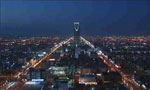
There
are many business and connections between the Bush family and
the elite of Saudi Arabia.
|
It begins in the 1970's in Houston, Texas, when
George W. Bush was just starting out in his family's two businesses of
politics and oil. The powerful - and very rich - Bin Laden family helped
fund his first venture into oil.
The cozy friendship continued for decades. After a
terrorist attack at a barracks in Saudi Arabia which killed 19
Americans, the bin Laden family received a multi-billion dollar contract
to re-build. And incredibly, George Bush Sr. was in a business meeting
at the Ritz Carlton Hotel in Washington on the morning of September 11th
with one of Osama Bin Laden's brothers.
Below is a timeline that details the relationship between the Bin Laden
and Bush families that culminates in the tragic events of September
11th.
1968
George W. Bush joins the Texas Air National Guard, a coveted position
that ensures he doesn’t have to serve in Vietnam. While a member of
the Guard, Bush meets and befriends Jim Bath, a former Air Force pilot
and budding entrepreneur.
1976
George H. W. Bush becomes director of the Central Intelligence Agency
(CIA). During his tenure, Bush helps provide training for the Saudi
royal family’s palace guard, cementing a relationship that proves
critical to the Bush family’s fortunes. Bush also privatizes various
CIA assets, with Bath considered one of the beneficiaries because of his
involvement in the aircraft business. Bath will later tell a business
associate he works for the CIA and was recruited by Bush Sr.
|
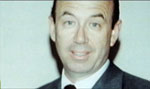
Jim
Bath is alleged to be the link between the Bin Laden and Bush
families.
|
Salem Bin Laden, older brother to future al Qaeda
leader Osama, enters into a trust agreement with Jim Bath, whereby Bath
will act as the bin Laden family’s representative in North America,
investing money in various business ventures. Bath also becomes the
business representative of Khalid bin Mahfouz, a member of Saudi
Arabia’s most powerful banking family and owners of the National
Commercial Bank, the principal bank of the Saudi royal family.
1978
Charles W. “Bill” White, a former Annapolis
graduate and US Navy pilot, graduates from Harvard’s business school.
He is then introduced to Jim Bath who is looking for someone to manage
his real estate company. Bath hires White as his partner. Money from the
bin Laden and bin Mahfouz families is invested in Bath’s real estate
company. Among other things, Bath buys the Saudis an airport, office and
apartment buildings, and invests in Texas banks. Eventually, Salem Bin
Laden and Khalid bin Mahfouz buy an enormous mansion in River Oaks,
Houston’s most affluent neighborhood. Read
an interview with Bill
White
|
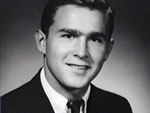
Bush
Jr. was a young man when he received funding for his first oil
venture from Jim Bath.
|
George W. Bush starts up an oil company in Texas
called Arbusto 78. Bath will invest money from Salem bin Laden and
Khalid bin Mahfouz in this new company. Bill White is told by Bath that
more than $1-million of the Saudis’ money was pumped into Bush’s
venture.
1979
The Carter administration, through the CIA, begins to fund the fledgling
mujahadeen in Afghanistan – six months before the Soviet invasion –
in the hopes of drawing the USSR into its own Vietnam.
1980
George H.W. Bush runs for the presidential nomination of the Republican
Party, but loses to Ronald Reagan. He becomes Reagan’s running mate
and eventual vice-president.
1981
Osama bin Laden, son of the founder of the Bin Laden Group, the largest
construction company in Saudi Arabia, travels to Afghanistan to help the
mujahadeen in their bloody war against the Soviet Union.
1986
Bill White and Jim Bath have a falling out. Bath then launches 28
frivolous lawsuits against White, leading to White’s financial ruin
and expulsion from Houston’s business community. White fights the
lawsuits, refusing to take a huge pay off to keep silent about his
knowledge of Bath’s relationship to the Saudis and Bush family. Read
an interview with Bill
White
1987
Harken Energy, a company that George W. Bush’s failed oil companies
have been folded into, receives $25-million stock offering underwritten
by significant players connected to the Bank of Credit and Commerce
International (BCCI), a Middle Eastern banking concern. Bush is key to
Harken obtaining the money.
1989
The Soviets pull out of Afghanistan after the CIA spends (US) $3-billion
on the largest covert operation in its history. Osama bin Laden returns
to Saudi Arabia, angry with how the Americans abandoned Afghanistan
after the Soviet retreat.
|
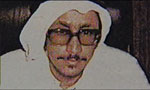
Bin
Mahfouz lived in Houston and had ties to both the bin Ladens and
Jim Bath.
|
1988-92
The BCCI scandal breaks. The bank is exposed as a
massive criminal enterprise, having catered, during it's history, to
some of the most notorious villains of the 20th century, including
Saddam Hussein, Manuel Noriega, terrorist leaders Abu Nidal, and the
Medellin drug cartel, as well as for being involved in money laundering
and the Iran contra scandal and for pilfering investors’ cash.
Following BCCI's seizure in 1991, Khalid Bin Mahfouz (see above) was
indicted in New York State on the grounds that he had withdrawn sizable
investments in the bank just before it was seized. In the end, all the
charges and claims were dropped after he made payments of $225 million
into a Federal Reserve settlement account mainly for the benefit of
depositors and creditors who had suffered losses and $245 million to
BCCI's court-appointed Liquidators also for the benefit of depositors
and creditors.
1991
The first Gulf War occurs, whereby George H. W. Bush is determined to
push Saddam Hussein out of Kuwait to ensure the Iraqi dictator doesn’t
have a stranglehold on world oil markets. Osama bin Laden urges the
Saudi royal family to find an Arab solution, by raising an army on their
own to fight Hussein. When the royal family invites the U.S. in to do
the job instead, Bin Laden becomes disenchanted with the House of
al-Saud. His anger grows when after the war the US leaves 20,000 troops
behind in Saudi Arabia. Soon Bin Laden makes a deal with the Saudi royal
family: he is allowed to leave the kingdom with his fortune, and will
receive funding for al Qaeda from various Saudi charities and banks, but
in return he must not launch attacks against the royal family. Bin Laden
settles in the Sudan, aiming his ire at the US.
1992
George H. W. Bush loses to Bill Clinton. Eventually the former president
becomes an adviser to the Carlyle Group, a powerful Washington-based
private investment firm with interests in the defense industry. Among
his duties, Bush helps strengthen Carlyle’s ties to the Saudi royal
family. He will later visit Saudi Arabia and the bin Laden family
compound. The bin Ladens eventually invest in the Carlyle Group. Carlyle
buys a company called Vinnell Corp., which provides training to the
Saudi palace guard. George W. Bush briefly sits on the board of
directors of one of Carlyle’s subsidiaries.
1993
The first attack on the World Trade Centre, which is connected to Osama
bin Laden and al Qaeda, occurs.
1994
George W. Bush becomes governor of Texas.
1995
Five American soldiers are killed in a car bomb in Saudi Arabia. The
Saudis quickly execute the suspects they arrest, ignoring wishes from
the FBI to interrogate them beforehand.
The Taliban come to power in Afghanistan with the backing of
Pakistan’s notorious intelligence agency, the ISI.
1996
Osama bin Laden is forced to move from the Sudan to Afghanistan under
pressure from the Clinton administration. Neither the US nor the Saudis
make an effort to arrest him – despite the opportunity offered up to
them by the Sudanese government.
June
A truck bomb blows up the al-Khobar barracks, housing US air force
personnel in Saudi Arabia, killing 19 soldiers. A group called Saudi
Hezbollah claims responsibility. Eventually, the Clinton administration
drops the investigation because it does not want to upset relations
between Saudi Arabia and Iran – the country that funds Hezbollah.
Summer
A meeting of prominent Saudis occurs in a Paris hotel. Among the
attendees is the head of Saudi intelligence, Turki bin Faisal. They meet
with a representative of al Qaeda and agree to extend the earlier
arrangement made between the Saudi royal family and Osama bin Laden –
whereby in return for cash, al Qaeda agrees not to attack inside Saudi
Arabia.
The CIA produces an internal report that documents the numerous Saudi
charities that are
1998
Al Qaeda makes it most audacious attack to date by blowing up US
embassies in Kenya and Tanzania, killing 224 people.
2000
January
Ziad Jarrah, pilot of Flight 93, which would crash into a field in
Pennsylvania on 9/11, is stopped and interrogated at an airport in
United Arab Emirates (UAE). He is returning from al Qaeda training camps
in Afghanistan and is carrying Islamic religious material on him. The US
is informed of the interrogation but not the details.
January
A high-powered meeting of al Qaeda occurs in an apartment complex in
Kuala Lumpur in Malaysia. Attending the meeting is Khalid Shaykh
Mohammed, the number three man in al Qaeda and mastermind behind the
1998 US embassy attacks, and architect of the USS Cole and 9/11 attacks
to come. Also at the meeting is Khalid al-Mihdhar and Nawaf al-Hazmi,
two Saudi citizens who would end up as hijackers on Flight 77, the plane
that crashes into the Pentagon on 9/11.
The CIA learns about the meeting beforehand and asks the Malaysian
secret police to place it under surveillance. Video footage and
photographs of the dozen men in attendance are taken, though no tape
recording is possible. After the meeting breaks up, Al-Hazmi and al-Mihdhar
fly to the US on their own passports, landing in Los Angeles. There they
are met by Omar al-Bayoumi, a Saudi national who works for the Saudi
civil aviation authority. Just prior to picking up the two would-be
hijackers, Al-Bayoumi meets with a member of the Saudi consulate in LA
– a man connected to terrorist activity.
Al-Bayoumi takes al-Mihdhar and al-Hazmi to San Diego, puts them up in
an apartment, signs a lease, holds a party for them, enrolls them in
flight school and gives them money. Later, the FBI concludes that al-Bayoumi
is likely a Saudi intelligence agent. Al-Bayoumi also passes on
thousands of dollars to the hijackers that originate from Princess
Haifa, wife of Prince Bandar Saudi ambassador to the US.
May-June
Members of the Hamburg cell, including ringleader Mohammed Atta, enter
the US. They are traveling on Saudi visas, all of which contain errors
on them.
September
Al-Hazmi and Al-Mihdhar move into the home of a local imam in San Diego,
Abdussattar Shaikh. The imam is an FBI informant. In fact, Shaikh holds
meetings with his FBI handler while al-Hazmi and al-Mihdhar sit in a
room next door. Shaikh contends he was never told what mission the
hijackers were on. His FBI handler, meanwhile, was never informed by his
superiors to look out for al-Hazmi and al-Mihdhar.
October
The USS Cole, sitting in a harbour off the coast of Yemen, is attacked
by a boat laden with explosives, killing 17 sailors.
November
George W. Bush is elected president of the US in a contested election.
Support for his campaign from the oil industry is generous.
2001
In the months leading up to 9/11, the CIA, FBI and National Security
Agency receive a burgeoning mountain of intelligence that a terrorist
attack of some magnitude, and launched by Al Qaeda, is imminent. They
assume the attack will happen overseas.
January
The CIA and FBI begin to piece together the importance of the
individuals who met a year earlier in Malaysia. Despite the information
they have, neither al-Hazmi nor al-Mihdhar are placed on the State
Department and Customs watch list.
April
Al-Hazmi is stopped for speeding in Oklahoma. He is let go because his
name does not appear in the police officer’s data bank as a wanted
man.
May
The CIA will later determine that Khalid Shaykh Mohammed, architect of
9/11 and al Qaeda’s other attacks, was entering the US as late as this
month, despite the fact he is a well-known figure in the terrorist
netherworld, his name first becoming known to the CIA as early as 1995.
June
CIA and FBI meet to talk about al-Mihdhar. But the CIA does not hand
over critical information to the FBI. Again, the men are not placed on
any watch list and a search for them is not initiated.
July
A Phoenix, Az.-based FBI counter-terrorism agent writes a lengthy memo
in which he says it has been noticed that a high number of Arabs,
possibly with connections to al Qaeda, are taking flying lessons in
local flight schools. His memo is ignored by FBI headquarters.
August
President Bush receives a detailed and lengthy presidential daily
briefing from the CIA in which Osama Bin Laden and al Qaeda’s aim of
launching an attack against the US is discussed. To this day, the Bush
White House refuses to release the contents of this briefing to
Congressional inquiries into 9/11.
The CIA finally puts al-Hazmi and al-Mihdhar’s name on the watch
lists. By then it is too late. The FBI and CIA do a limited search for
the men.
Sept. 11/2001
The attack occurs. The morning of the attack
George Bush Sr. is meets with members of the Carlyle Group in
Washington. Bin Laden's own brother is at the meeting. Members of the
Bin Laden family are allowed to leave the U.S. without questioning two
days later.
FROM: http://www.cbc.ca/fifth/conspiracytheories/saudi.html
GOP Pressure Builds to Scrap Port Deal
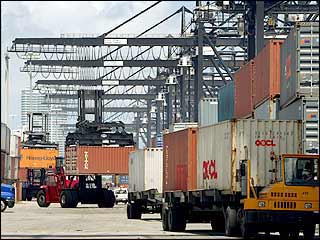
Frist, Republican Governors Urge Bush to Rethink Agreement
WASHINGTON (Feb. 21, 2006) - Senate Republican
Leader Bill Frist called Tuesday for the Bush administration to stop a
deal permitting a United Arab Emirates company to take over six major
U.S. seaports, upping the ante on a fight that several congressmen,
governors and mayors are waging with the White House.
Updated: 12:12 PM EST
GOP Pressure Builds to Scrap Port Deal
Frist, Republican Governors Urge Bush to Rethink Agreement
By WILL LESTER, AP
WASHINGTON (Feb. 21) - Senate Republican
Leader Bill Frist called Tuesday for the Bush administration to stop a
deal permitting a United Arab Emirates company to take over six major
U.S. seaports, upping the ante on a fight that several congressmen,
governors and mayors are waging with the White House.
"The decision to finalize this deal
should be put on hold until the administration conducts a more extensive
review of this matter," said Frist. "If the administration
cannot delay this process, I plan on introducing legislation to ensure
that the deal is placed on hold until this decision gets a more thorough
review."
In the uneasy climate after the Sept. 11
terrorist attacks, the Bush administration decision to allow the
transaction is threatening to develop a major political headache for the
White House.
Frist, R-Tenn., spoke as other lawmakers,
including Rep. Peter King, R-N.Y., and Sen. Charles Schumer, D-N.Y.,
said they would offer emergency legislation next week to block the deal
ahead of a planned March 2 takeover.
Frist's move comes a day after two Republican
governors, New York's George Pataki and Maryland's Robert Ehrlich,
voiced doubts about the acquisition of a British company that has been
running six U.S. ports by Dubai Ports World, a state-owned business in
the United Arab Emirates.
The British company, Peninsular and Oriental
Steam Navigation Co., runs major commercial operations at ports in
Baltimore, Miami, New Jersey, New Orleans, New York and Philadelphia.
Both governors indicated they may try to
cancel lease arrangements at ports in their states because of the DP
World takeover.
"Ensuring the security of New York's port
operations is paramount and I am very concerned with the purchase of
Peninsular & Oriental Steam by Dubai Ports World," Pataki said
in a statement. "I have directed the Port Authority of New York and
New Jersey to explore all legal options that may be available to
them."
Ehrlich, concerned about security at the Port
of Baltimore, said Monday he was "very troubled" that Maryland
officials got no advance notice before the Bush administration approved
the Arab company's takeover of the operations at the six ports.
"We needed to know before this was a done
deal, given the state of where we are concerning security," Ehrlich
told reporters in the State House rotunda in Annapolis.
The arrangement brought protests from both
political parties in Congress and a lawsuit in Florida from a company
affected by the takeover.
Public fears that the nation's ports are not
properly protected, combined with the news of an Arab country's takeover
of six major ports, proved a combustible mix.
Republican Sen. Lindsay Graham of South
Carolina said on Fox News Sunday that the administration approval was
"unbelievably tone deaf politically." GOP Rep. Tom Davis of
Virginia said on ABC's "This Week," "It's a tough one to
explain, but we're in a global economy. ... I think we need to take a
very close look at it."
Democratic Sen. Robert Menendez of New Jersey
said Monday that he and Sen. Hillary Rodham Clinton, D-N.Y., will
introduce legislation prohibiting the sale of port operations to foreign
governments.
At least one Senate oversight hearing was
planned for later this month.
Critics have noted that some of the 9/11
hijackers used the UAE as an operational and financial base. In
addition, they contend the UAE was an important transfer point for
shipments of smuggled nuclear components sent to Iran, North Korea and
Libya by a Pakistani scientist.
The Bush administration got support Monday
from former President Carter, a Democrat and frequent critic of the
administration.
"My presumption is, and my belief is,
that the president and his secretary of state and the Defense Department
and others have adequately cleared the Dubai government organization to
manage these ports," Carter told CNN. "I don't think there's
any particular threat to our security."
Homeland Security Secretary Michael Chertoff
made the rounds on the talk shows Sunday, asserting that the
administration made certain the company agreed to certain conditions to
ensure national security. H said details of those agreements were
secret.
During a stop Monday in Birmingham, Ala.,
Attorney General Alberto Gonzales said the administration had a
"very extensive process" for reviewing such transactions that
"takes into account matters of national security, takes into
account concerns about port security."
Associated Press writers Will Lester in
Washington, Matthew Verrinder in Newark, N.J., and Tom Stuckey in
Annapolis, Md., contributed to this story.
2/21/2006 11:59:35
Copyright 2006 The Associated Press
2-21-06
Bush called reporters at about 2.30 ET aboard Air Force One to
issue a very strong defense of port deal... MORE... He said he would
veto any legislation to hold up deal and warned the United States was
sending 'mixed signals' by going after a company from the Middle East
when nothing was said when a British company was in charge... Lawmakers,
he said, must 'step up and explain why a Middle Eastern company is held
to a different standard.' Bush was very forceful when he delivered the
statement... 'I don't view it as a political fight,' Bush said....
MORE... MORE...
From: www.drudgereport.com
Feb 21, 2006 - 6:45
PM EST
Bush Shrugs Off Objections to
Port Deal
By TED BRIDIS
Associated Press Writer
WASHINGTON (AP) -- Brushing aside objections from Republicans and
Democrats alike, President Bush endorsed the takeover of shipping
operations at six major U.S. seaports by a state-owned business in the
United Arab Emirates. He pledged to veto any bill Congress might approve
to block the agreement.
The president on Tuesday defended his administration's earlier
approval of the sale of London-based Peninsular and Oriental Steam
Navigation Co. to Dubai Ports World, despite concerns in Congress it
could increase the possibility of terrorism at American ports.
The pending sale - expected to be finalized in early March - puts
Dubai Ports in charge of major shipping operations in New York, New
Jersey, Baltimore, New Orleans, Miami and Philadelphia. "If there
was any chance that this transaction would jeopardize the security of
the United States, it would not go forward," Bush said.
"It sends a terrible signal to friends around the world that
it's OK for a company from one country to manage the port, but not a
country that plays by the rules and has got a good track record from
another part of the world," Bush said.
To assuage concerns, the administration disclosed some assurances
it had negotiated with Dubai Ports. It required mandatory participation
in U.S. security programs to stop smuggling and detect illegal shipments
of nuclear materials; roughly 33 other port companies participate in
these voluntarily. The Coast Guard also said Tuesday it was nearly
finished inspecting Dubai Ports' facilities in the United States.
A senior Homeland Security official, Stewart Baker, said this was
the first-ever sale involving U.S. port operations to a state-owned
government. "In that sense this is a new layer of controls,"
he said. Baker added that U.S. intelligence agencies were consulted
"very early on to actually look at vulnerabilities and
threats."
Bush sought to quiet a political storm that has united Republican
governors and Senate Majority Leader Bill Frist of Tennessee with
liberal Democrats, including New York's two Democratic senators, Hillary
Rodham Clinton and Charles Schumer.
Frist said Tuesday, before Bush's comments, that he would
introduce legislation to put the sale on hold if the White House did not
delay the takeover. He said the deal raised "serious questions
regarding the safety and security of our homeland
.
Senator
Charles Schumer, D-N.Y., at news conference: Schumer
says he's introducing legislation to keep port
management out of the hands of the United Arab Emirates.
(partially overlaps previous cut.)
House Speaker Dennis Hastert, R-Ill., asked the president for a
moratorium on the sale until it could be studied further. "We must
not allow the possibility of compromising our national security due to
lack of review or oversight by the federal government," Hastert
said.
Maryland's Republican Gov. Robert Ehrlich, during a tour of
Baltimore's port on Tuesday, called the deal an "overly secretive
process at the federal level."
2-21-06
Bush took the rare step of calling reporters to his conference
room on Air Force One after returning from a speech in Colorado. He also
stopped to talk before television cameras after he returned to the White
House.
"I can understand why some in Congress have raised questions
about whether or not our country will be less secure as a result of this
transaction," the president said. "But they need to know that
our government has looked at this issue and looked at it
carefully."
A senior executive from Dubai Ports World pledged the company
would agree to whatever security precautions the U.S. government
demanded to salvage the deal. Chief operating officer Edward
"Ted" H. Bilkey promised Dubai Ports "will fully
cooperate in putting into place whatever is necessary to protect the
terminals."
Bilkey traveled to Washington in an effort to defuse the growing
controversy.
Bush said that protesting lawmakers should understand his approval
of the deal was final.
"They ought to listen to what I have to say about this,"
the president said. "They'll look at the facts and understand the
consequences of what they're going to do. But if they pass a law, I'll
deal with it with a veto."
Bush, who has never vetoed a bill as president, said on the White
House South Lawn: "This is a company that has played by the rules,
has been cooperative with the United States, from a country that's an
ally on the war on terror, and it would send a terrible signal to
friends and allies not to let this transaction go through."
Lawmakers from both parties have noted that some of the Sept. 11
hijackers used the United Arab Emirates as an operational and financial
base. In addition, critics contend the UAE was an important transfer
point for shipments of smuggled nuclear components sent to Iran, North
Korea and Libya by a Pakistani scientist.
They say a port operator complicit in smuggling or terrorism could
manipulate manifests and other records to frustrate Homeland Security's
already limited scrutiny of shipping containers and slip contraband past
U.S. Customs inspectors.
Rep. Pete King, R-N.Y., and Democrat Schumer said Tuesday they
will introduce emergency legislation to suspend the ports deal. King,
chairman of the Homeland Security Committee, said the government
"cannot consider approving this contract until a much more thorough
investigation takes place on this security matter."
Sen. Susan Collins, R-Maine, and Rep. Jane Harman, D-Calif., said
they would introduce a "joint resolution of disapproval" when
they returned to Washington next week. Collins heads the Senate Homeland
Security and Governmental Affairs Committee, and Harman is the top
Democrat on the House Intelligence Committee.
Bush's veto threat didn't stop local efforts to block the deal.
New Jersey's governor, Jon S. Corzine, said Tuesday the state will file
lawsuits in federal and state courts opposing the agreement. Corzine, a
Democrat, cited a "deep, deep feeling that this is the wrong
direction for our nation to take."
A company at the Port of Miami, a subsidiary of Eller &
Company Inc., sued last week to block the deal in a Florida state court.
It said that under the sale, it will become an "involuntary
partner" with Dubai's government and it may seek more than $10
million in damages.
Frist said Congress should have veto authority over such foreign
sales, which are reviewed by a secretive U.S. panel that considers
security risks of foreign companies buying or investing in American
industry. The panel includes representatives from the departments of
Treasury, Defense, Justice, Commerce, State and Homeland Security.
Defense Secretary Donald H. Rumsfeld described the United Arab
Emirates as a close ally. "It's a country that's been involved in
the global war on terror with us," Rumsfeld said. He added that the
United States and the UAE "have very close military-to-miltary
relations, as well as political and economic relations."
Separately, Attorney General Alberto Gonzales said port security
would not be threatened. "This is not a question about port
security," Gonzales said. "This is a question about port
operation."
---
Associated Press writers Ben Feller, Will Lester, Terence Hunt,
and Devlin Barrett in Washington, Matthew Verrinder in Newark, N.J., and
Tom Stuckey in Annapolis, Md., contributed to this report.
© 2006 The Associated Press. All rights reserved.
UPI !! --> UAE Terminal Takeover EXTENDS To -->>" 21
! " PORTS !!!!!!
United Press International - Security & Terrorism - UAE terminal
takeover extends to 21 ports
Address:http://www.upi.com/SecurityTerrorism/view.php?StoryID=20060223-051657-4981r
United Press International
News. Analysis. Insight.
2/24/2006 7:25:00 AM -0500
SECURITY & TERRORISM
UAE TERMINAL TAKEOVER EXTENDS TO 21 PORTS
By PAMELA HESS
UPI Pentagon Correspondent
WASHINGTON, Feb. 24 (UPI) --
A United Arab Emirates government-owned company is poised to
take over port terminal operations in 21 American ports, far more than
the six widely reported.
The
Bush administration has approved the takeover of British-owned
Peninsular & Oriental Steam Navigation Co. to DP World, a deal set
to go forward March 2 unless Congress intervenes.
P&O is the parent company of P&O Ports North America, which
leases terminals for the import and export and loading and unloading and
security of cargo in 21 ports, 11 on the East Coast, ranging from
Portland, Maine to Miami, Florida, and 10 on the Gulf Coast, from
Gulfport, Miss., to Corpus Christi, Texas, according to the company's
Web site.
President
George W. Bush on Tuesday threatened to veto any legislation designed to
stall the handover. Sen.
Hillary Clinton, D-N.Y. said after the briefing she expects swift,
bi-partisan approval for a bill to require a national security review
before it is allowed to go forward.
At issue is
a 1992 amendment to a law that requires a 45-day review if the foreign
takeover of a U.S. company
"could affect national security." Many members of Congress see
that review as mandatory in this case.
But Bush administration officials said Thursday that review is only
triggered if a Cabinet official expresses a national security concern
during an interagency review of a proposed takeover.
"We
have a difference of opinion on the interpretation of your
amendment," said Treasury Department Deputy
Secretary Robert Kimmitt. The Committee on Foreign Investment in the
United States, comprised of officials from 12 government departments and
agencies, including the National Security Council and the Department of
Homeland Security, approved the deal unanimously on January 17.
"The
structure of the deal led us to believe there were no national security
concerns," said Homeland Security Deputy Secretary Michael P.
Jackson.
The same
day, the White House appointed a DP World executive, David C. Sanborn,
to be the administrator for the Maritime Administration of the
Department of Transportation. Sanborn had been serving as director of
operations for Europe and Latin America at DP World.
Senate Armed
Services Committee Chairman John Warner, R- Va., said he will request
from both the U.S. attorney general and the Senate committee's legal
counsel a finding on the administration's interpretation of the 1992
amendment. Adding to the controversy is the fact Congress was not
notified of the deal. Kimmitt said Congress is periodically updated on
completed CFIUS decisions, but is proscribed from initiating contact
with Congress about pending deals. It may respond to congressional
inquiries on those cases only.
Iowa
Republican Sen. Charles Grassley stated in a letter to Bush on Feb. 21
that he specifically requested to be kept abreast of foreign investments
that may have national security implications. He made the request in the
wake of a
controversial Chinese proposal to purchase an oil company last
year.
"Obviously,
my request fell on deaf ears.
I am disappointed that I was neither briefed nor informed of this sale
prior to its approval. Instead, I read about it in the media," he
wrote.
According to
Kimmitt, the deal was reported on in major newspapers as early as last
October. But it did not
get critical attention in the press until the Associated Press broke the
story Feb. 11 and the Center for Security Policy, a right-leaning
organization, wrote about it Feb. 13. CSP posited the sale as the
Treasury Department putting commerce
interests above national security.
Kimmitt said because the 2005 Chinese proposal had caused such an uproar
before it ever got to CFIUS, the lack of reaction to the Dubai deal when
it was reported on last fall suggested it would not be controversial
enough to require special notification of Congress. Central to the
debate is the fact that the United Arab Emirates, while a key ally of
the United States in the Middle East, has had troubling ties to
terrorist networks, according to the Sept. 11 Commission report. It was
one of the few countries in the world that recognized the al-Qaida-friendly
Taliban government in Afghanistan; al-Qaida funneled millions of dollars
through the U.A.E. financial sector; and A.Q. Khan, the notorious
Pakistani nuclear technology smuggler, used warehouses near the Dubai
port as a key transit point for many of his shipments. Since the
terrorist attacks, it has cut ties with the Taliban, frozen just over $1
million in alleged terrorist funding, and given the United States key
military basing and over-flight rights. At any given time, there are
77,000 U.S. service members on leave in the United Arab Emirates,
according to the Pentagon. Deputy Defense Secretary Gordon England
warned that the uproar about the United Arab Emirates involvement in
U.S. ports could risk alienating the
very countries in the Middle East the United States is trying to court
as allies in the war on terrorism.
"It's very important we strengthen bonds ... especially with
friends and allies in the Arab world. It's important that we treat
friends and allies equally around the world without
discrimination," he said. The security of port terminal operations
is a key concern. More than 7 million cargo containers come through 361
American ports annually, half of the containers through New York-New
Jersey, Los Angeles and Long Beach, Calif. Only a small percentage are
physically searched and just 37 percent currently screened for
radiation, an indication of an attempt to smuggle in nuclear material
that could be used for a "dirty bomb."
After the September 11 terrorist attacks, the government began a new
program that required documentation on all cargo 24 hours before it was
loaded on a ship in a foreign port bound for the United States. A
"risk analysis" is conducted on every shipment, including a
review of the ship's history, the cargo's history and contents and other
factors. Each ship must also provide the U.S. government 96 hours notice
of its arrival in an American port, along with a crew manifest. None of
the nine administration officials assembled for the briefing could
immediately say how many of the more than 3,000 port terminals are
currently under foreign control.
Port facility operators have a major security responsibility, and one
that could be exploited by terrorists if they infiltrate the company,
said Joe Muldoon III. Muldoon is an attorney representing Eller &
Co., a port facility operator in Florida partnered with M&O in
Miami. Eller opposes the Dubai takeover for security reasons. "The
Coast Guard oversees security, and they have the authority to inspect
containers if they want and they can look at manifests, but they are
really dependent on facility operators to carry out security
issues," Muldoon said. The Marine Transportation Security Act of
2002 requires vessels and port facilities to conduct vulnerability
assessments and develop security plans including passenger, vehicle and
baggage screening procedures; security patrols; establishing restricted
areas; personnel
identification procedures; access control measures; and/or installation
of surveillance equipment.
Under the same law, port facility operators may have access to Coast
Guard security incident response plans -- that is, they would know how
the Coast Guard plans to counter and respond to terrorist attacks.
"The concern is that the UAE may be our friend now ... but who's to
say that couldn't change, or they couldn't be infiltrated. Iran was our
big buddy," said Muldoon.
In a January report, the Council on Foreign Relations pointed out the
vulnerability of the shipping security system to terrorist exploitation.
Since the Sept. 11 terrorist attacks, the U.S. customs agency requires
shippers to follow supply chain security practices. Provided there are
no apparent deviations from those practices or intelligence warnings,
the shipment is judged low risk and is therefore unlikely to be
inspected. CFR suggests a terrorist event is likely to be a one-time
operation on a trusted carrier "precisely because they can count on
these shipments entering the U.S. with negligible or no
inspection." "All a terrorist organization needs to do is find
a single weak link within a 'trusted' shipper's complex supply chain,
such as a poorly paid truck driver taking a container from a remote
factory to a port. They can then gain access to the container in one of
the half-dozen ways well known to experienced smugglers," CFR
wrote.
© Copyright 2006 United Press International, Inc. All Rights
ReservedWant to email or reprint this story? Click here for options.
Port Authority Sues to Block Arab Company
By JEFFREY GOLD
The Associated Press
Friday, February 24, 2006; 8:00 PM
TRENTON, N.J. -- Citing security concerns, the agency in
charge of New York City-area ports sued Friday to try to block a
firm owned by the United Arab Emirates from taking over operations
here.
The lawsuit by the Port Authority of New York and New Jersey
claims that Dubai Ports World was violating its lease by not getting
consent for its pending acquisition of the current port operator,
London-based Peninsular & Oriental Steam Navigation Co.
The lawsuit, filed in state Superior Court in Newark, asked
the court to halt the purchase, which would involve takeover of
operations at Port Newark's container terminal and five other U.S.
ports. A hearing was set for March 3.
The state of New Jersey filed a related federal lawsuit
against the Bush administration on Thursday.
The Port Authority also sent a letter Friday to P&O
asserting that the British company has violated its lease, which the
authority now considers to be terminated. A P&O spokesman in
Washington did not immediately return a message seeking comment
Friday.
The actions came as Democrats and Republicans alike questioned
federal approval of the deal. Dubai Ports World on Thursday offered
to delay the takeover while the Bush administration tries to
convince lawmakers that it poses no security risk.
On Thursday, Port Authority Chairman Anthony Coscia said the
U.S. Treasury Department had not responded to the bistate agency's
request for details about how the federal government determined it
was safe to allow Dubai Ports World to buy the British company.
"We as owners of that facility should be made comfortable
that whoever operates that facility is capable of it," Coscia
said.
Dubai Ports World has hired a team of lawyers including former
Sen. Bob Dole as it tries to save the deal.
Dole, husband of Sen. Elizabeth Dole, R-N.C., said he won't
lobby Congress and will limit his involvement to discussions with
Bush administration officials and efforts to "help the American
people understand the real facts."
"I have not nor will I `lobby' members of Congress on
this issue, not even at home," Dole said in a statement issued
late Thursday, after the North Carolina Democratic Party called for
Elizabeth Dole to recuse herself from debate about the deal.
Sen. Elizabeth Dole is among those challenging the deal. Her
spokeswoman Lindsay Taylor Mabry said she didn't know how long the
senator had known of her husband's role in the deal.
"Sen. Elizabeth Dole's decisions are made independent of
Bob Dole," Mabry said.
___
On the Net:
Dubai Ports World: http://www.dpa.co.ae
Port Authority: http://www.panynj.gov
Dubai Company to Transfer US Ports to American Company
By David D. Kirkpatrick and Carl Hulse
The New York Times
Thursday 09 March 2006
Washington - DP World, the United
Arab Emirates state-owned company that had agreed to buy several
port terminals in the United States, said today that it will
transfer those properties to an American-owned company, bowing to a
political groundswell against the acquisition.
The decision came just hours after a
delegation of Republican leaders in Congress told President Bush in
an Oval Office meeting that Congress would act within days to block
the company's acquisition of the United States port terminals in the
name of national security, lawmakers present said.
"The House spoke very
clearly," Senator Bill Frist of Tennessee, the Republican
leader, said in an interview after the meeting.
Announcing the company's decision on
the Senate floor about 1 p.m., Senator John W. Warner, Republican of
Virginia, read a statement from the company: "Because of the
strong relationship between the United Arab Emirates and the United
States and to preserve that relationship, DP World has decided to
transfer fully the U.S. operations of P & O North America to a
United States entity."
The announcement did not immediately
mollify Democrats, though Senator Charles E. Schumer of New York, a
chief critic of the deal, called it a promising development. But he
added that if the Dubai-owned company ultimately retained control
over the port operations, "I don't think our goals would be
accomplished and obviously we will need to study this agreement
carefully."
Senator Harry Reid of Nevada, the
Democratic leader, concurred. "We will have to wait and see
what is really going to happen," Mr. Reid said.
On Wednesday evening, the House
Appropriations Committee voted overwhelmingly to scuttle the deal
giving DP World control of some major seaport operations without
awaiting the outcome of a 45-day review of potential security risks.
Representative Jerry Lewis, the
California Republican who is chairman of the panel, added an
amendment blocking the transaction to an essential emergency
spending measure for the war in Iraq and for Hurricane Katrina
recovery.
The vote was 62 to 2, a signal of the
deep opposition to the takeover on both sides of the aisle.
The committee's ranking Democrat,
Representative David R. Obey of Wisconsin, said he regretted that
President Bush had not done a better job of explaining the proposed
transaction and had not been given enough time. But Mr. Obey said,
"When I heard of the transaction, I thought it sounded
nuts."
Mr. Lewis's effort was endorsed by
Speaker J. Dennis Hastert of Illinois, so the vote was not exactly a
surprise. But it was a stark example of Republicans breaking with
their president, after years of working in tandem or quietly
settling differences behind closed doors.
Carlyle Group Explores Acquisition of Port Operations
By Ben Hammer
The Washington Business Journal
Friday 10 March 2006
Private equity firm The Carlyle Group
established a team to acquire public-purpose facilities such as
ports a day after a United Arab Emirates company said it would
transfer newly acquired operations at American ports to a U.S.
organization.
D.C.-based Carlyle Group announced an
eight-person team would invest in public-purpose infrastructure
projects such as ports, transportation and water facilities,
airports, bridges and stadiums. The team will begin work March 13.
The new infrastructure team had been
planned for six months, but the Carlyle Group decided Thursday to
launch it.
DP World, a company owned by the
United Arab Emirates, acquired a British company that manages
operations at six U.S. ports, but the House Appropriations Committee
voted 62-2 on March 8 to prevent it from taking control of the
ports.
DP World will transfer the operations
to a "U.S. entity," Sen. John Warner, R-Va., said
Thursday.
The Carlyle Group, however, doesn't
want to be that entity, says spokesman Chris Ullman. "We have
zero interest in that deal, and we will continue to have no
interest."
Rep. Duncan Hunter, R-Calif., and
others in Congress are considering legislation that would block any
foreign company from operating ports and other key U.S.
infrastructure. If that legislation is approved, it could give The
Carlyle Group and other private equity firms opportunities to buy
foreign-owned operations at a discount.
The new public infrastructure
investment group is co-headed by Robert Dove, former executive vice
president at Bechtel Enterprises, and Barry Gold, former managing
director and co-head of the structured finance group at Citigroup/Salomon
Smith Barney.
"We are at a crossroads of the
right market, right private equity firm and right team with
complementary skills and experience," Gold says in a statement.
"As a U.S. firm with exceptional experience in government
contracting, Carlyle is now well positioned to invest in U.S. and
other infrastructure either alone or as part of a consortium."
Carlyle's infrastructure team will
invest primarily in U.S. infrastructure in transactions ranging from
$100 million to more than $1 billion. It will enter into
public-private partnerships with federal, state and local
governments by purchasing projects outright or through long-term
concessions.
-------
WHO OWNS THE CARLYLE GROUP?
http://www.thecarlylegroup.com/eng/company/l3-company737.html
2. Who
owns The Carlyle Group?
Carlyle
is a private partnership, which means that it is owned by a group of
individuals, most of whom are Managing Directors at Carlyle, and one
institution, CalPERS, which owns 5.5 percent of Carlyle. CalPERS
is the California Public Employees Retirement System, one of the
largest institutional investors in the world. The companies and
real estate Carlyle buys and the companies it invests venture
capital in are owned by the funds that invested in the companies.
3. How
is the firm structured?
Carlyle,
with more than 600 employees, is based in Washington, DC and
has offices in 14 countries. Day to day management of the
organization is conducted by its three Co-founders and Managing
Directors, William E. Conway, Jr., Daniel A. D’Aniello and
David M. Rubenstein. Carlyle’s Chairman is Louis V. Gerstner and
it has 90+ Managing Directors and more than 330 investment
professionals. One of the reasons Carlyle has a large staff is
because many of the roles other private equity firms contract out
are done in-house at Carlyle, including, fundraising, accounting
oversight, deal sourcing and due diligence and various back office
duties.
Last year, George Bush Sr and John Major traveled to Riyadh to
talk with senior Saudi businessmen. In September 2000, Carlyle hired
speakers including Colin Powell and AOL Time Warner chair Steve Case
to address an extravagant party at Washington's Monarch Hotel.
Months later, Major joined James Baker for a function at the
Lanesborough Hotel in London, to explain the Florida election
controversy to the wealthy attendees.
We can assume that Carlyle pays well. Neither Major's office
nor Carlyle will confirm the details of his salary as European
chairman - an appointment announced shortly before he left the House
of Commons after the election - but we know, for the purposes of
comparison, that he is paid £105,000 for 28 days' work a year for
an unrelated non-executive directorship. Bush gives speeches for the
company and is paid with stakes in the firm's investments, believed
to be worth at least $80,000 per appearance. The benefits have
attracted political stars from around the world: former Philippines
president Fidel Ramos is an adviser, as is former Thai premier Anand
Panyarachun - as well as former Bundesbank president Karl Otto Pohl,
and Arthur Levitt, former chairman of the SEC, the US stock market
regulator.
FROM: http://www.angelfire.com/indie/pearly/htmls/bush-carlyle.html
THE
CARLYLE GROUP FROM GREATDREAMS.COM
Carlyle Group owns Halliburton
|
Halliburton
|
|
| This
company truly has a guardian angel: former Halliburton
CEO and now Vice President Dick Cheney who looks out for its
interests from the White House. The result? $8
billion in contracts “rebuilding”
Iraq
in 2004.
CEO:
David J. Lesar
Military
contracts 2004: $8 billion
Campaign contributions in 2004: $217,199 (Oil & gas related)
The biggest windfall in the invasion of
Iraq
has most
certainly gone to the oil services and logistics company Halliburton
. The company, which was formerly run by Vice President Dick
Cheney, had revenue of over $8 billion
in contracts in
Iraq
in 2003 alone. And while Halliburton
’s dealings in
Iraq
have been dogged everywhere by scandal – including now a
criminal investigation into overcharging by Halliburton
subsidiary Kellogg Brown and Root for gas shipped into
Iraq
– Vice President Cheney manages to be doing quite well from the
deal. He owns $433,000 unexercised Halliburton
stock options worth more than $10 million dollars.
But Halliburton
’s history of benefiting from government largesse goes back a
ways.
From 1962 to 1972 the Pentagon paid the company tens of millions
of dollars to work in
South Vietnam
, where they
built roads, landing strips, harbors, and military bases from the
demilitarized zone to the
Mekong
Delta. The
company was one of the main contractors hired to construct the
Diego Garcia air base in the
Indian Ocean
, according to
Pentagon military histories.
|
HALLIBURTON
FROM GREATDREAMS.COM
|
|
US
Treasury - Committee on Foreign Investments in the United ...
CFIUS seeks to serve US
investment policy through thorough reviews that protect ...
The Committee on Foreign Investment in the United States
("CFIUS") was ...
www.treas.gov/offices/
international-affairs/exon-florio/
|
|
|
THE
BLACKENED WHITEHOUSE
The Saudi Arabian and United
Arab Emirates (UAE) documents likewise feature a map of
each ... The White House ^ | 28 January 2003 | President George
W. Bush ...
www.greatdreams.com/political/blackened-whitehouse.htm
- |
BOMBING
OF THE WORLD TRADE CENTER - 9-11-2001 - DAY 4
Meanwhile, one person was arrested
Thursday in connection with the attacks ... Abu
Dhabi Television in the United Arab Emirates
reported that two men with ...
www.greatdreams.com/trade_day4.htm
|
BOMBING
OF THE WORLD TRADE CENTER - 9-11-2001 - DAY 5
With a scandal about to break
against George W. Bush, he and his circle had an ...
of birth used: June 28, 1976; last known address: United
Arab Emirates. ...
www.greatdreams.com/trade_day5.htm
|
THE
UNITED NATIONS FOOD PROGRAM
49 United Arab Emirates
50 Latvia 51 Bahamas 52 Cuba 53 Mexico ... THE FRENCH CONNECTION
... www.greatdreams.com/political/bechtel.htm - ...
www.greatdreams.com/political/
united_nations_food_program.htm - |
BOMBING
OF THE WORLD TRADE CENTER - 9-11-2001 - PAGE 7
Marwan Al Shehri, 23, from the United
Arab Emirates, had studied with ... WASHINGTON
–– Authorities arrested a second man in connection
with the twin ...
www.greatdreams.com/trade_day7.htm
- |
BOMBING
OF THE WORLD TRADE CENTER 9-11-2001
Saudi Arabia and United Arab Emirates
are the only other countries to recognize the Taliban as the ...
In connection with the events in the United
States, ...
www.greatdreams.com/trade.htm
- |
TERRORISM
- WORLD TRADE CENTER - DAY 2 - 9-12-2001
While US President George W Bush
has hinted he will take retaliatory action, ... seeking a connection to terrorism attacks in the
United
States. ...
www.greatdreams.com/trade_day2.htm
|
IRAN
Iran was promised return of its
frozen assets in the United States and the ...
www.greatdreams.com/political/french-connection.htm - ... GEORGE W BUSH
...
www.greatdreams.com/iran_database.htm
|
TERRORISM
- WORLD TRADE CENTER - 9-11-2001 - PAGE 11
Why do officials of the United
Arab Emirates continue to insist that they questioned
hijacker Ziad Samir Jarrah at US request in January 2001, ...
www.greatdreams.com/trade_day11.htm
- |
ASIA
REVEALS ITS DARK SIDE
Dragon oil, a company based in the
United
Arab Emirates, has the rights to the ... The news
reported it this way: "President George W. Bush has
declined to ...
www.greatdreams.com/war/asia.htm |
TERRORISM
- WORLD TRADE CENTER - 9-11-2001 - PAGE 10
Although pressure from within the
United
States for a retaliatory strike will grow, President George
W. Bush currently enjoys high popularity ratings. ...
www.greatdreams.com/trade_day10.htm |
TERRORISM
- WORLD TRADE CENTER - 9-11-2001 - PAGE 3
According to German records, both
men are from the United Arab Emirates. (Saudi
Arabia) ... Subj: [RMNEWS2] FBI-CIA Connection To
1993 World Trade Bombing ...
www.greatdreams.com/trade_day3.htm
|
MURDER
BY PLANE CRASH
The latest front for the oil fraud,
George
W. Bush, likewise would most ... "sought in connection
with the possible terrorist threats in the United States. ...
www.greatdreams.com/planes/murder_by_plane_crash.htm
|
WILL
THE GASOLINE PRICE PROBLEM TAKE DOWN THE ECONOMY
June 8 - saboteurs opened connections
between two pipelines near the Bayji ... The United
Arab Emirates said it would release an additional 400000
barrels ...
www.greatdreams.com/gasoline-economy.htm |
The
Explosion: 50 Years Later, Texas City Still Remembers
US pilot killed in U-2 crash in United
Arab Emirates: officials ... New connections
are coming fast these days, like a flood of information. ...
www.greatdreams.com/terror/texas_city.htm
- |
RED
LINE - BLUE LINE - THE DREAM AND THE REALITY
USAMA BIN LADEN IS WANTED IN CONNECTION
WITH THE AUGUST 7, 1998, BOMBINGS OF THE UNITED STATES
EMBASSIES IN DAR ES SALAAM, TANZANIA AND NAIROBI, KENYA. ...
www.greatdreams.com/redline.htm
- |
|
|
ASIA
REVEALS ITS DARK SIDE
This company now owns the entrance
and exit ports to the Canal. US Representative Dana
Rohrabacher has stated, "Li Kashing and his Hong Kong-based
company ...
www.greatdreams.com/war/asia.htm
- |
Homeland
Security ???? You Are a Suspect You Are a Suspect 11/14 ...
Other gulf ports have been on
heightened terrorist alert. G2 Bulletin sources say a mysterious
armada of al-Qaida ships has been purchased to target, ...
www.greatdreams.com/homeland-security.htm |
WILLIE
FLOTILLA - THE DANGERS OF SHIPPING PLUTONIUM OVER THE OCEAN
Citing a recent study exposing the
vulnerability of America's ports to terrorism, Chapman
said shipping extremely dangerous material though an unsecured ...
www.greatdreams.com/willie-flotilla.htm
|
DIASPORA
and RACE RIOTS
Despite union claims that the rally
in Oakland and at other ports in the country sent a
message to the PMA, officials at the organization said
negotiations ...
www.greatdreams.com/diaspora.htm
- |
D-DAY
- HISTORICAL OR FUTURE?
An armada of 3000 landing craft,
2500 other ships, and 500 naval vessels -- escorts and
bombardment ships--began to leave English ports. ...
www.greatdreams.com/d-day.htm
ANOTHER
PEARL HARBOR IN OUR FUTURE?
These forces would be
introduced through friendly ports and airfields,
if possible. If necessary, forcible-entry operations
could be conducted using ...
www.greatdreams.com/land_forces.htm
- |
GREATDREAMS
- EARTHCHANGES - NEWS OF TERRORISM
It has 28 land ports
of entry, including some of the nation's most remote.
``We are on a state of heightened alert,'' said Dean
Hove, deputy district ...
www.greatdreams.com/terrsm.htm
- |
A
WARNING OF TERRORISM - UPS TRUCKS
Ports in south
Florida, Los Angeles and New Jersey, say law enforcement
experts, continue to be trouble spots. Increased losses
from high-tech-chip theft ...
www.greatdreams.com/UPS-terrorism-warning.htm |
CALIFORNIA
JUNTA
Well yeah, sure it is -
around ports of the entry. But the other 1969
miles of border are wide open." Ramiro Meerano,
immigrant rights activist: "I think ...
www.greatdreams.com/political/california_junta.htm
- |
WTO
(WORLD TRADE ORGANIZATION) SEATTLE PROTEST
Longshore Union Shuts West
Coast Ports To Protest WTO ... The San
Francisco and Seattle ports will be closed from 8
am to 4 pm local time, union spokesman ...
www.greatdreams.com/prep.htm
|
THE
NEW WORLD ORDER -WHAT IS IT?
These vehicles are coming
into our ports -- namely Port Beaumont, Texas--at
a staggering rate. UN Vehicles Just Off The Port ...
www.greatdreams.com/nwo.htm
BECHTEL
- THE CHENEY CONNECTION
Ports Upon
Bechtel's entry to Iraq in mid-May 2003, we
found the port―consisting of the Old Port,
New Port, and grain facility―in a rundown
condition with ...
www.greatdreams.com/political/bechtel.htm
|
PROPHECY
OF NEW YORK CITY NUCLEAR BOMB TERRORIST ATTACK
"The ship comes
into port on the eve of the 16th or 17th
of the month. ... It looked like some
sort of a nuclear explosion, I guess, a
round,
www.greatdreams.com/nynuke.htm
TERRORISM
IN NEW YORK CITY
The explosion
had taken that out. (Note: there is no
subway system in Milwaukee, ... A
half mile away at the Port
Authority Bus Terminal on Friday, ...
www.greatdreams.com/terrorism_in_new_york_city.htm |
|
Subj:
RAYELAN:...***TWO powerful "FACTIONS"--
After the explosion
I would take to the airwaves and condemn
terrorists is Asian countries for bringing a
nuclear bomb into the port of Los Angeles
in a ...
www.greatdreams.com/managed_news.htm
- |
BOMBING
OF THE WORLD TRADE CENTER - 9-11-2001 - DAY 4
Peter Yerkes, a
spokesman for the Port Authority, which
runs the airports, ... He heard some sort
of explosion and saw white smoke coming
from the plane and ...
www.greatdreams.com/trade_day4.htm
|
THE
KOREAN LEADER - ATTACK ON AMERICA?
The first effect of
a nuclear explosion in the air is an
intense flash of ... of the superpower
arsenals, and delivered by ship to the harbour
of a port. ...
www.greatdreams.com/korean.htm
|
ON
THE BEACH - IT'S JUST A MOVIE - RIGHT?
In The Final War
(1960) an accidental American atomic explosion
over Korea ... Similarly, in Port
of Hell (1955) a Los Angeles Harbour Inspector
and his ...
www.greatdreams.com/atomic.htm
GEORGE
W BUSH
There was
another explosion. And another. I
didn't know which way to run. ...
turned her over to a group of
firefighters and Port Authority
police officers. ...
www.greatdreams.com/political/bush-not-done.htm
|
Terror
in the Skies
The New York
Port Authority closes Newark
International Airport. ... He
didn't see what caused the explosion,
but on the chance that it was a plane, ...
www.greatdreams.com/terror_in_the_skies.htm
WAR
WITH IRAN
("they
are harmless to civilians
because the explosion is
underground") ...
Recently anti-war protestors
blockaded the port of
Oakland, California when the ...
www.greatdreams.com/political/stalemate.htm
|
DREAMS
OF BOMBS
...
brought into the US "two
weeks ago", or in mid-July,
through Port Arthur in
Texas. ... The picture
was a HUGE explosion ...
all black and red fire . ...
www.greatdreams.com/bombs.htm |
DREAMS
OF THE GREAT EARTHCHANGES - MAIN INDEX
|
|
|
|
|
|


