BE WARNED - THIS PAGE IS NOT FOR THE SQUEAMISH
8-21-01 - DREAM -
I was in a house and looked in the closet for something to wear. There were nice clothes in there, but not much of it. I finally chose a skirt suit, but didn't plan to wear the jacket, just the skirt. It was pleated and was yellow and black checked. It was obviously way too small for me.
I then went down to the kitchen to help get dinner ready for a large group of people. The cook, who was a short, chubby woman , was at the sink, preparing two turkey carcasses for the oven. She as washing them in soap and water. I as going to help put on a honey barbecue sauce on the turkeys for the oven, but they weren't quite ready.
The cook was busy washing off an entire cow carcass for a barbecue as well, which she had a sink large enough to fit the whole cow into. It had already been butchered and skinned.
I then went outside where there was a race going on which I relate to the TV show Fear Factor.
A series of men were riding bicycles down to the ocean shore, they had to strip naked, have all their fingers cut off, the crawl over some barriers, do a back flip off a big flat rock into the ocean and swim to another location. I was watching from the perspective of being in or on the ocean myself.
One of the contestants, jumped off his bike, pulled off his clothes, had his fingers cut off and did the back flip into the ocean and started to swim.
Then the next guy came, jumped off his bike, pulled off his clothes, had his fingers cut off, then got down on the flat rock, ready to do his back flip into the ocean, when he started to cry. He said, "Michael! Now I'm really scared. I could handle the worms, but this I can't handle."
I looked at him closer and saw that he had no eyes.
If you annagram 'Osama bin Laden' you get....
"A blind Man O sea"....
'Man o sea' is spanish for..."a man that is"
If you say it...'A Man o sea blind' it means... 'A man that is blind'
If you put in "a man o sea blind" into a language translator
it gives you back... ' to the man that is blind'
Since Osama bin Laden means 'A man that is blind'
you have 'the blind man leading the blind'

Cover of
Self-Initiation
into the Golden Dawn Tradition
by Chic Cicero and Sandra Tabatha Cicero
Web site: http://www.hermeticgoldendawn.org/index.shtml
See: An American Tragedy - A Symbolic Event
It
has also been noted that Terry Nichols involved in the Oklahoma Bombing of
the Murrah Building spent some time in Mindanao. Kelly Patricia O'Meara,
among others, of Insight Magazine, reported that Terry Nichols was
witnessed attending a meeting on that island and that also present in that
meeting were Ramzi Yosef, Abdul Hakim Murad and Wali Khan Amin Shah. Ramzi
Yosef was the mastermind behind the 1993 bombing of the World Trade
Center, , while Murad and Shah, also involved in the 1993 bombing, were
convicted in 1996, for conspiring to blow up 12 airline jets. It was
reported that the subject of the meeting centered around bombing
activities and building bombs.
The New 'Great Game' by LUTZ KLEVEMAN - The most tyrannical of Washington's new allies is Islom Karimov, the ex-Communist dictator of Uzbekistan, who allowed US troops to set up a large and permanent military base on Uzbek soil during the Afghan campaign in late 2001. Ever since, the Bush Administration has turned a blind eye to the Karimov regime's brutal suppression of opposition and Islamic groups. "Such people must be shot in the head. If necessary, I will shoot them myself," Karimov once famously told his rubber-stamp Parliament. [Meet the new Saddam Hussein. -ed.]
Michael Moore stated that American had 11,700+ gun murders during the same period of time that Canada and Great Britain only had 65. (I have not corroborated those numbers as yet)
I didn't like their attitudes and told them to get out of my house. The boys left and walked down the driveway towards the mailbox by the road.
I went outside to pick up broken tree branches that had been broken off the trees from a windstorm. The two boys came back and asked if they could work for me picking up tree branches.
I told them I couldn't afford to pay them, but they volunteered to work for free just to get the experience.
So they joined me in gathering up the branches and taking them to the barn and helped separate the rough hewn boards from the finished wood sticks.
One tree was too heavy for any of us to carry. We had to leave that one for someone else to handle.
After that the boys showed me that more than two boys had been involved in their little gun toting gang. They told me that at least 5 people were involved. Then they told me that the whole thing had been a setup and that everyone should know that. The event was part of a big plot to create fear in the people of America.
They showed me a web page about it where the viewers were supposed to click on a time calculator labeled 'EXPERIENCE and then click on a little square next to it labeled 'GO'. The time calculator was supposed to calculate when the next horrible event would happen again.
I refused to click on the 'EXPERIENCE' and 'GO' tabs, but I said I could accept that what they did was a setup to create fear in America.
I knew I was going to do a web page about this, but I was not going to create the 'EXPERIENCE' and 'GO' tabs to predict for people when another horrible shooting event would occur.
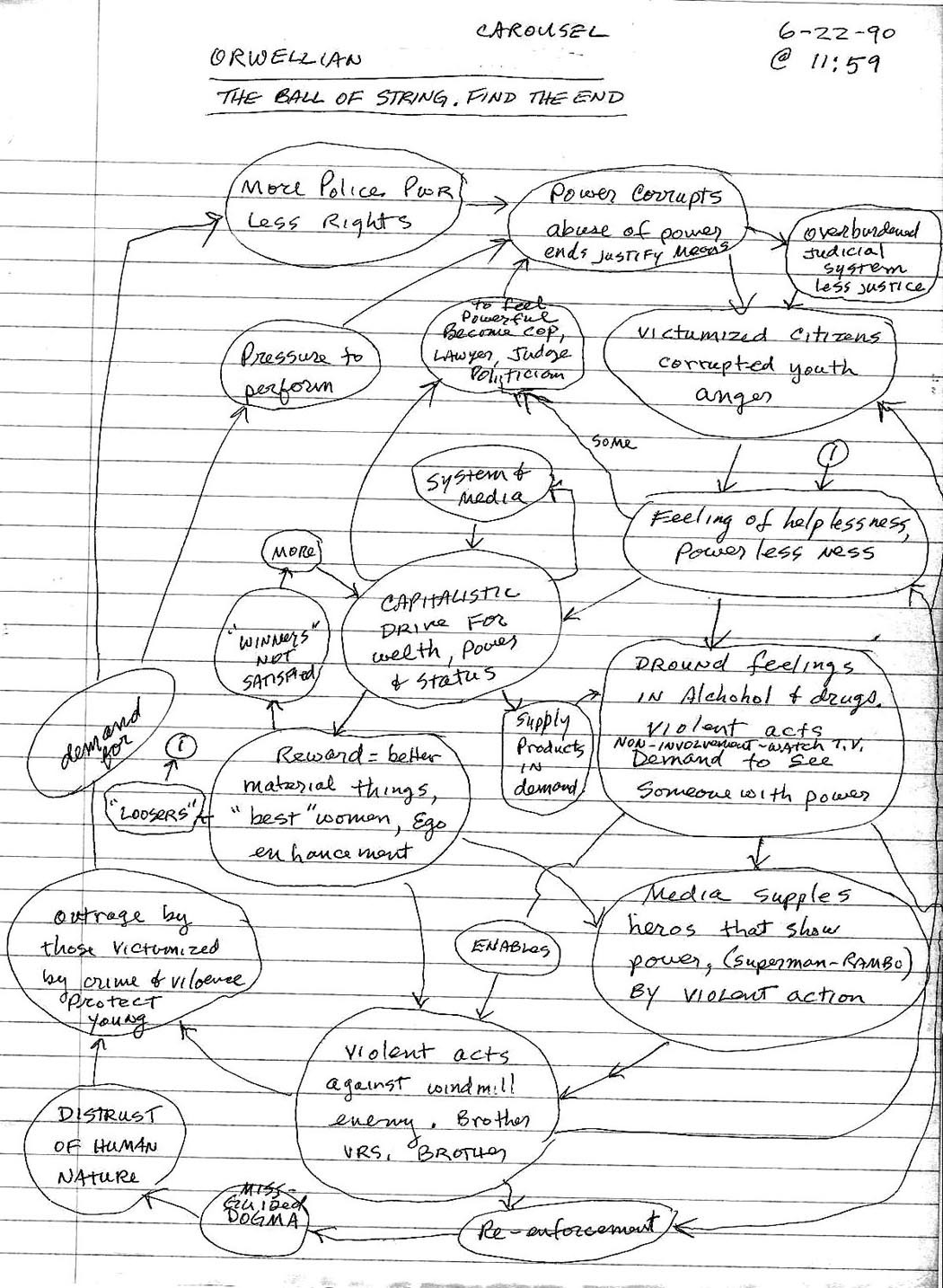
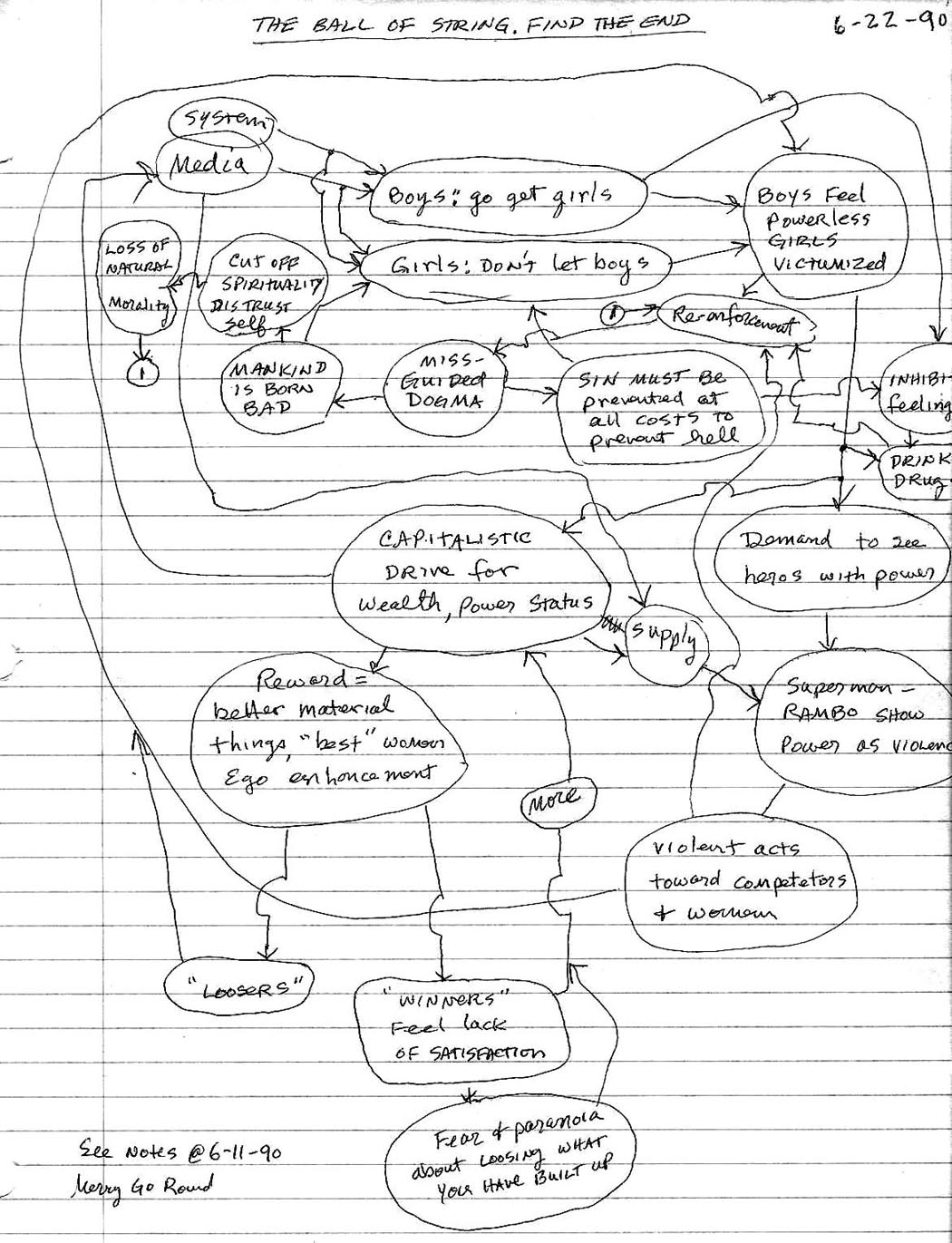
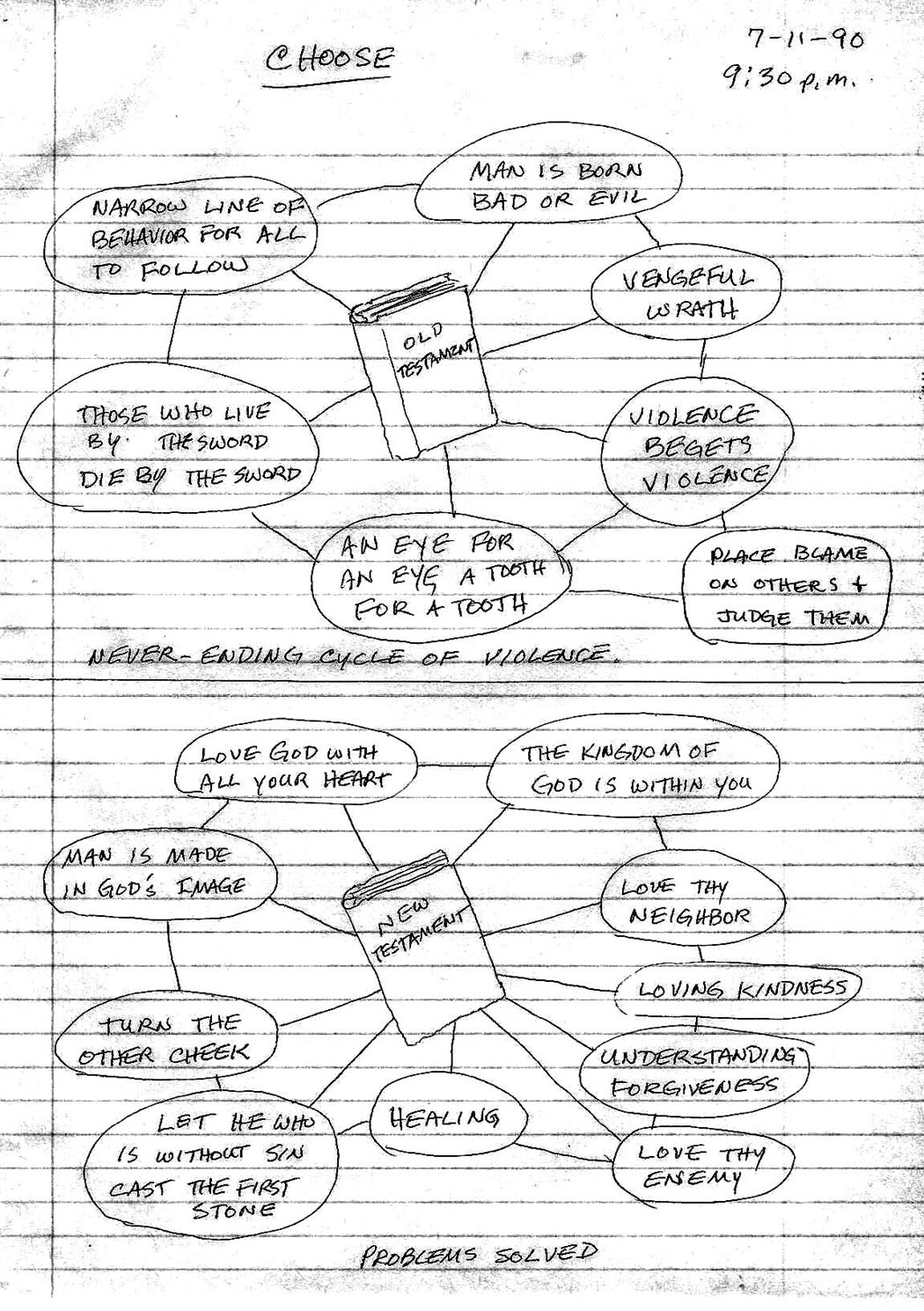
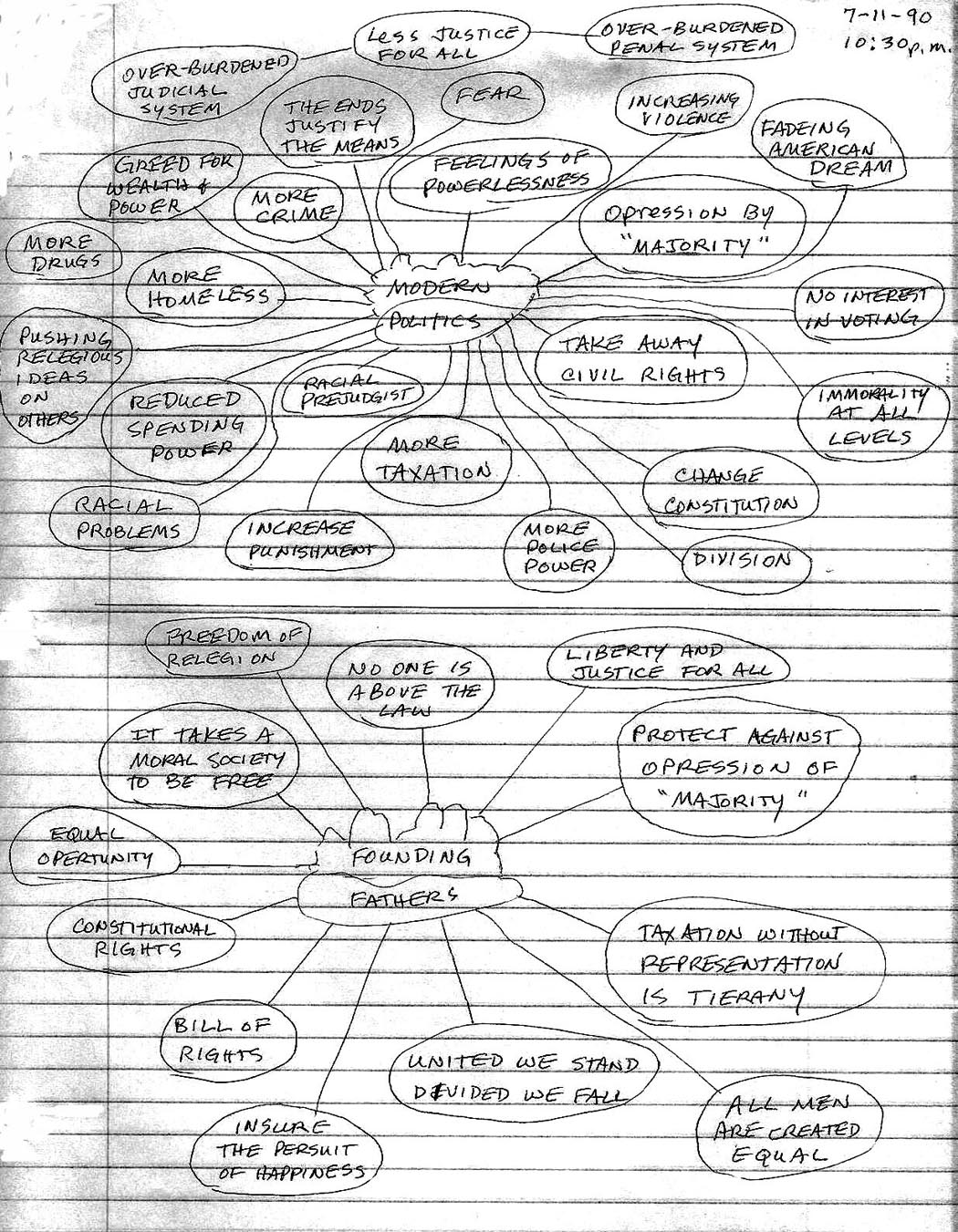
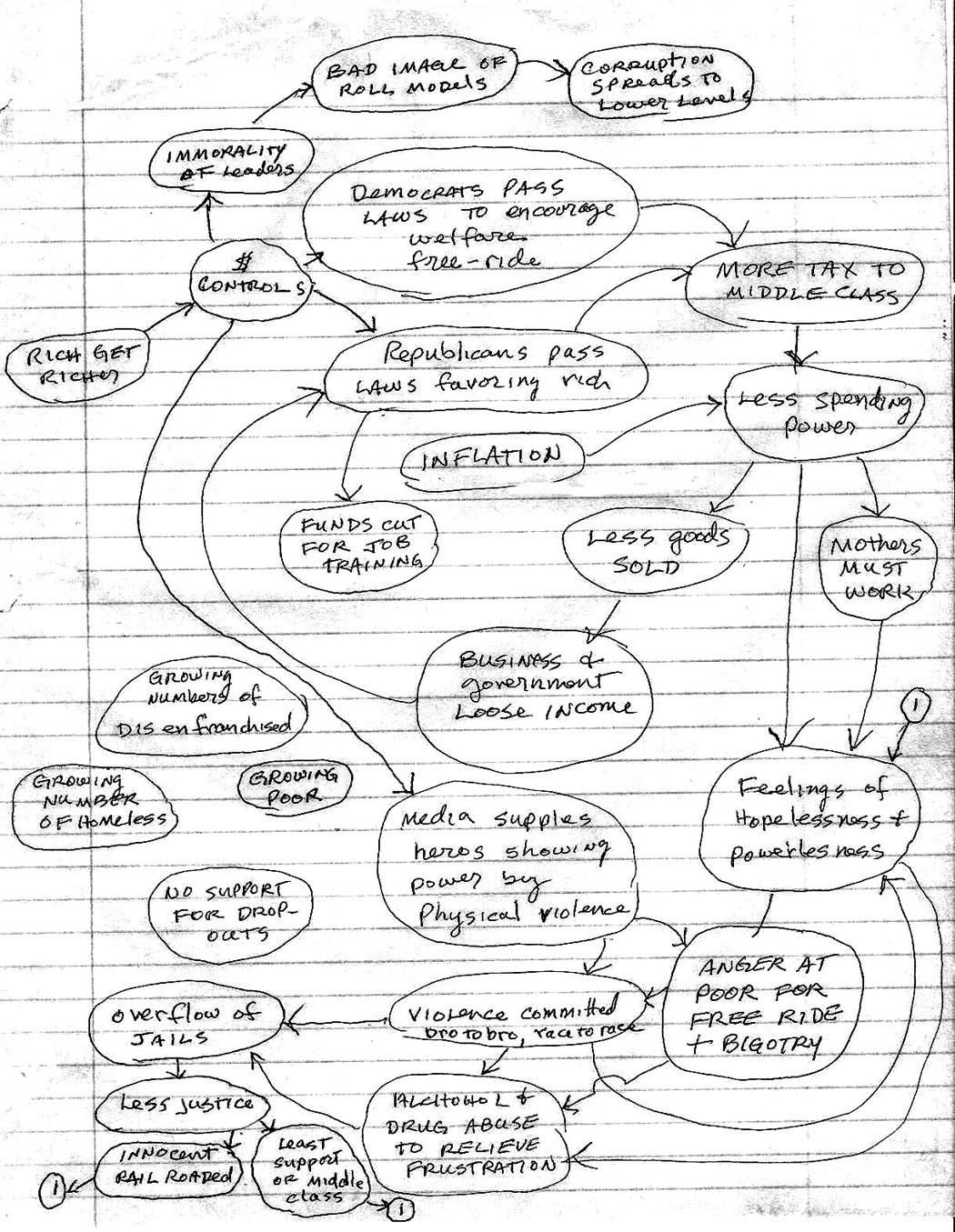
THE FOLLOWING CHARTS WERE PREPARED BY JOE MASON IN
1990
AFTER HE HAD AN EXPERIENCE WITH LOCAL AUTHORITIES
WHO WERE NOT DOING THEIR JOB FOR THE GOOD GUYS
NOTE: IF YOU USE NETSCAPE OR EXPLORER,
YOU CAN USE THE EXPAND ICON TO MAKE THE CHARTS FULL SIZE
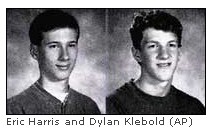
But here are four where I mentioned Harris and Klebold specifically:
PADUKAH
REMEMBERED
... Countless children die via abortions and abandonment
all the time, too ... have collectively
influenced the already-poisoned minds of Eric Harris and Dylan Klebold.
...
www.greatdreams.com/death/padukah.htm -
DEATHSTAR
- A PROPHECY - 1999
... Harris and Klebold killed 12 students and a teacher
and wounded 26 people before ...
Despite the death of a teenager in custody there last spring, Bridge City
is ...
www.greatdreams.com/death/deathstr.htm -
JABBERWOCKY
& THE LORD OF THE FLIES - A DREAM
... after Washington sniper John Allen Muhammad was
recommended for the death penalty
by a ... and telephone since teen gunmen Eric Harris and Dylan Klebold
killed 12 ...
www.greatdreams.com/death/Jabberwocky.htm
NEW
YORK EARTHQUAKES
... there is ample evidence to indicate that teenage
gunmen Harris and Klebold were
victims ... THE PLANES COMING OUT OF PLATTSBURGH, NY WERE CALLED
'WHISPERING DEATH'. ...
www.greatdreams.com/ny/newyork_quakes.htm
|

|
|||||||||||||||||||||||||||||||||||||

WSWS : News & Analysis : North America
Six-year-old Michigan girl shot and killed in classroom
By David Walsh
1 March 2000
A six-year-old girl was shot and killed, apparently by a fellow first grade student, a six-year-old boy, in a classroom at Buell Elementary School in Mt. Morris Township, outside of Flint, Michigan. Flint is a center of General Motors' auto production empire, located sixty miles north of Detroit. The fatal shooting occurred Tuesday morning.
Whether the shooting was intentional or accidental is not known for certain. There are reports that the two children had a quarrel prior to the incident. Authorities identified the weapon as a .32 caliber handgun stolen in December.
According to one account, the shooting took place around 10 AM as students were filing out of a classroom. Allegedly, the boy pulled out the gun and fired one shot at the girl, hitting her in the neck. The boy reportedly then ran into a lavatory where he hid the gun in a trash can.
The girl, Kayla Rolland, was taken to Hurley Medical Center. She died at approximately 10:30 AM. School officials held the boy until police arrived. He is currently in the custody of the state child welfare agency, the so-called Family Independence Agency.
No sooner had the first news reports of the tragic incident emerged than the question was posed as to whether Genesee County authorities might prosecute the alleged “gunman.” As absurd as this might seem, there was good reason for the issue to be raised.
The shooting follows by a few months the conviction in nearby Pontiac of Nathaniel Abraham, who was only 11 at the time of his alleged crime. Abraham was the first youth to be charged with murder under a 1997 Michigan statute that allows children of any age to be prosecuted as adults for serious crimes. Oakland county authorities pursued the case against Abraham in order to establish a precedent and legitimize the 1997 law.
These officials and the Michigan state legislators who framed the law have, in essence, attempted to efface any legal or moral distinction between children and adults. According to this line of reasoning, human beings reach the “age of reason” in elementary school. Supporters of the law have made clear they would be prepared to prosecute children of kindergarten or first-grade age.
The first response of Genesee County Prosecutor Arthur A. Busch was to downplay the likelihood of bringing charges against the boy. “There is a presumption in law that a child ... is not criminally responsible and can't form an intent to kill,” Busch told reporters. “Obviously, he has done a very terrible thing, but legally, he can't be held criminally responsible.”
Whether Busch is more enlightened than Oakland County officials or has simply been chastened by the unfavorable publicity the Abraham case attracted is not clear. Nor can it be ruled out that he might come under pressure to change his mind. Nonetheless, it is telling that every television and print journalist felt obliged to discuss the possibility of charges being laid. That in itself reveals the barbaric state of the American justice system.
Whether the little boy is prosecuted or not, it is safe to assume that the authorities will turn the tragic death of Kayla Rolland into a pure police matter. Busch suggested that the individual responsible for allowing the gun to fall into the boy's hands might face charges.
Bill Clinton, fundraising in Florida, deplored the incident and noted, as he had in his State of the Union address, that the “accidental gun death rate of children in America is nine times higher than that in the other 25 biggest countries combined.” In the same speech Clinton sounded a familiar theme, insisting that Americans had never had it so good. “What are we to do with this enormous amount of prosperity...?” he asked.
These comments ignore an obvious point: if the population were universally enjoying prosperity and happiness, such incidents as the Mt. Morris shooting would either not occur, or they would merely be isolated episodes.
In fact, this latest tragedy is the most recent in a series of school shootings in the US. Since the mass killings at Columbine High School in Colorado last May, in which 14 students (including the two teenage gunmen) and a teacher were killed, there have been numerous other incidents: on May 20, 1999, a 15-year-old boy opened fire at a high school in Conyers, Ga., wounding six students; on November 19, a 13-year-old girl was fatally shot in the head in a school in Deming, New Mexico, allegedly killed by a 12-year-old boy; on December 6, a 13-year-old student fired at least 15 rounds at a middle school in Fort Gibson, Oklahoma, wounding four classmates.
The epidemic of shootings cannot simply be ascribed to individual weaknesses. The deep alienation felt by many of the younger generation, the debased social atmosphere in which backwardness and violence breed, the availability of fire-arms in massive numbers—these are symptoms of a crisis of American society for which the ruling elite has no solutions. Its only response is to lock more people up.
Kip Kinkel, the 17-year-old, who opened fire at a high school in Springfield, Oregon, has been sentenced to nearly 112 years in prison; Andrew Wurst, 15, responsible for the death of a teacher in Edinboro, Pennsylvania has been imprisoned for 30 to 60 years; a 14-year-old student pleaded guilty but mentally ill for a shooting in West Paducah, Kentucky and received a life sentence; Evan Ramsey, 16, who shot and killed a school principal and a fellow student in Bethel, Alaska, is serving a 210-year sentence.
See: DEATHSTAR
FOR MORE EXAMPLES OF THIS TYPE OF VIOLENCE
The U.S. rate for gun deaths in 1994 was 14.24 per 100,000 people. Japan had the lowest rate, at .05 per 100,000.
The study used 1994 statistics supplied by the 36 countries. Of the 88,649 gun deaths reported by all the countries, the United States accounted for 45 percent
Here are gun-related deaths per 100,000 people in the world's 36
richest countries in 1994:
United States 14.24;
Brazil 12.95;
Mexico 12.69;
Estonia 12.26;
Argentina 8.93;
Northern Ireland 6.63;
Finland 6.46;
Switzerland 5.31;
France 5.15;
Canada 4.31;
Norway 3.82;
Austria 3.70;
Portugal 3.20;
Israel 2.91;
Belgium 2.90;
Australia 2.65;
Slovenia 2.60;
Italy 2.44;
New Zealand 2.38;
Denmark 2.09;
Sweden 1.92;
Kuwait 1.84;
Greece 1.29;
Germany 1.24;
Hungary 1.11;
Republic of Ireland 0.97;
Spain 0.78;
Netherlands 0.70;
Scotland 0.54;
England and Wales 0.41;
Taiwan 0.37;
Singapore 0.21;
Mauritius 0.19;
Hong Kong 0.14;
South Korea 0.12;
Japan 0.05.
to give up their instruments of self-defense,
sexual crimes have increased, armed robbery
is up 44% and murders up 3
GUN OWNERSHIP AND MYTHS
Another view commonly
disseminated is that
About 90% of adult murderers already have an adult criminal record, they
are not your average citizen. The profile of the majority of murderers in
the USA is a young male with a low IQ who has a long history of difficulty
getting along with other people.
Statistical mythology
Again and again we hear that,
It is well known that criminals rarely attack armed men, they much prefer
the weak and unarmed. The simple fact that a person could be carrying a
gun is often sufficient to deter the aggressor. This is why so many
tourists have been attacked in Florida, the criminal knows that his victim
will definitely not be carrying a gun.
In Australia, where the people were forced to give up their instruments of
self-defense, sexual crimes have increased, armed robbery is up 44% and
murders up 300%. Oddly enough, unarmed robbery has shown a decrease. In
Britain, where handguns are banned absolutely, more policemen are being
armed in order to deal with the rising crime rate. Assaults with firearms
and attempted murders have risen and the crime rate is expected to
increase even more in the next two years. Excluding murder, rates of
violent crime in England and Wales are higher than in any other European
country or even in the USA. Further evidence, if it were needed, that
criminals much prefer their victims to be unarmed.
From: http://www.quebecoislibre.org/990828-6.htm
REASONS WHY GUNS ARE USED TO MURDER
Feasibility
The third component of murder is feasibility. A person might have both the
desire and the weapon needed to kill, but if the circumstances don't offer
a feasible opportunity to carry it out, then a person will probably decide
against it. With weapons like knives or clubs, a would-be murderer faces
enormous personal risk. Here's why:
- Getting physically close to the victim might be impossible under a wide variety of circumstances.
- Getting closer to the victim reduces the odds of surprise, secrecy or anonymity.
- The intended victim might be taller or stronger.
- The intended victim might be surrounded by friends, family, or bodyguards.
- The victim might shout out for help.
- A crowd might come to the victim's rescue.
- In the ensuing struggle, the murderer might be seriously wounded or even killed.
- The struggle will probably leave tell-tale signs of blood, skin or hair-follicles on the murderer.
- The intended victim might survive and testify against him.
A gun, however, dramatically reduces all these risks. In order of the above, guns allow people to:
- Kill victims from afar.
- Maintain a much greater element of surprise, secrecy and anonymity.
- Kill larger and stronger people.
- Kill crowds.
- Frighten away people who might otherwise help.
- Assume almost no risk of injury from personal struggle.
- Leave no tell-tale blood or other physical evidence on the murderer.
- Leave the victim less likely to survive or see him to testify against him.
What guns do, then, is make it more feasible for a would-be killer
to act out his murderous impulses. Gun possession thus allows a crime to
occur that wouldn't have otherwise. A good analogy is robbery. In medieval
times, wealth was usually stolen only when it was in transit, by highway
brigands who outnumbered the drivers. But in modern times, a lone
individual with a gun can walk into a bank and rob the entire
establishment. Bank robbery became a widespread phenomenon only after the
invention of guns.
Certain types of guns enhance feasibility more than others. Long-barreled
guns like rifles and shotguns are difficult to hide and bulkier to carry;
therefore, easily concealed handguns are the weapon of choice among
murderers. One exception to this rule is the long-barreled gun which is super-efficient,
namely, machine guns or assault weapons. These enhance feasibility in
other ways that might be preferred by a would-be killer. For these
reasons, gun-control advocates especially focus on handguns and assault
weapons when it comes to regulation.
Let's imagine now two countries, both of which have populations of 250
million. Suppose 50,000 people in each of these countries are going to
experience murderous impulses over the course of a year. One nation has a
complete ban on guns. The other has universal gun ownership. Which nation
will see the higher murder rate?
Common sense would dictate that the nation with guns will realize its
enhanced ability and feasibility to commit murder. However, we should
never underestimate the gun advocates' powers of rationalization! A common
counter-argument is Robert Heinlein's: "An armed society is a polite
society." This is hardly true, as the statistics below demonstrate;
you could not get a more polite and murder-free society than Japan, which
bans virtually all guns, or a more violent society than America, which
owns the most guns in the world. But let's treat this counter-argument on
a philosophical level.
If we were to arm everyone in society, then the ability to commit murder
would become universal. This is a serious step in the wrong direction; to
rescue their point, gun advocates must rely even more heavily on arguments
of defeasibility. The fear of getting shot back, they argue, will deter
most murderers. And there is a degree of truth behind this argument --
police, for example, wear sidearms precisely for their deterrence effect
and protective benefits. Surveys of criminals show that they tend to avoid
targets they feel might be armed.
But ultimately this argument fails, even in principle. A central tenet
of game theory is that attackers have the advantage over defenders. A
defender must defend against all possibilities of attack, and in doing so
defends none of them very well. An attacker has to choose only one line of
attack, and therefore can do it extremely well. Attackers have the
advantage of surprise, planning and initiative. An example is a careful,
well-considered plan to shoot someone in the back, even if the person is
openly carrying a sidearm. Another example is bank robbery. The fact that
banks are extremely well-protected hasn't stopped their robbery even today
-- criminals simply arm themselves more heavily and take advantage of the
fact that they are the attackers. Or, in the face of heavily armed
targets, attackers may simply alter their line of attack, selecting weaker
targets: the old, the disabled, or children. A useful analogy here is war.
The fact that the entire world out-armed Hitler did not stop him from
attacking it. And he nearly succeeded -- because, as the attacker, he had
the initiative.
Furthermore, even the certain threat of retaliatory force will not stop
someone whose senses are impaired by drugs, alcohol, jealousy, anger,
insanity, pathology, self-destruction or deception. Although we can
identify some groups at risk for these behaviors, we can hardly predict
them all -- jealous husbands, for instance. And the "failure to
defease" is a tremendously costly one, now that the ability to commit
murder is universal.
Thus, many people suggest gun control as a solution to high murder
rates. We should note there is a spectrum of gun control, ranging from
licensing laws to the total banning of all guns. Comparing different
societies for gun availability alone is insufficient, since we must also
consider their different gun control laws. We should also note that gun
control only reduces the ability and feasibility to commit murder -- it
does not limit desire. That's something for other social policies to
address. The interplay between these three components is where the debate
becomes complex. Desire may sometimes counter ability and feasibility,
which only confounds the issue. Suppose two nations have the same
population size, although nation A sees 50,000 people a year with the
murderous impulse, but only 25,000 in nation B. If nation A has gun
control, and nation B has high gun ownership, then nation A might still
see a higher murder rate. Gun advocates might then claim that this
"proves" their case -- although gun control advocates would
still claim that reducing gun ownership would reduce murder rates in both
nations. Many people debating these issues often fail to take these
considerations into account.
FROM: http://www.huppi.com/kangaroo/L-gunownership.htm
AGAINST GUN CONTROL
Men by their constitutions are naturally divided into two parties: 1) Those who fear and distrust the people . . . . 2) Those who identify themselves with the people, have confidence in them, cherish and consider them as the most honest and safe . . . depository of the public interest.
-- Thomas Jefferson
Real-world experiences validate the sociologists' findings. In 1966 the police in Orlando, Florida, responded to a rape epidemic by embarking on a highly publicized program to train 2,500 women in firearm use. The next year rape fell by 88 percent in Orlando (the only major city to experience a decrease that year); burglary fell by 25 percent. Not one of the 2,500 women actually ended up firing her weapon; the deterrent effect of the publicity sufficed. Five years later Orlando's rape rate was still 13 percent below the pre-program level, whereas the surrounding standard metropolitan area had suffered a 308 percent increase. During a 1974 police strike in Albuquerque armed citizens patrolled their neighborhoods and shop owners publicly armed themselves; felonies dropped significantly. In March 1982 Kennesaw, Georgia, enacted a law requiring householders to keep a gun at home; house burglaries fell from 65 per year to 26, and to 11 the following year. Similar publicized training programs for gun-toting merchants sharply reduced robberies in stores in Highland Park, Michigan, and in New Orleans; a grocers organization's gun clinics produced the same result in Detroit.
Even simple registration laws meet with massive resistance. In Illinois, for example, a 1977 study showed that compliance with handgun registration was only about 25 percent.[13] A 1979 survey of Illinois gun owners indicated that 73 percent would not comply with a gun prohibition.[14] It is evident that New York City's almost complete prohibition is not voluntarily obeyed; estimates of the number of illegal handguns in the city range from one million to two million.[15]
With more widespread American gun control, the number of new outlaws would certainly be huge. Prohibition would label as criminal the millions of otherwise law-abiding citizens who believe they must possess the means to defend themselves, regardless of what legislation dictates.
In addition, strict enforcement of gun prohibition--like our current marijuana prohibition and our past alcohol prohibition--would divert enormous police and judicial resources to ferreting out and prosecuting the commission of private, consensual possessory offenses. The diversion of resources to the prosecution of such offenses would mean fewer resources available to fight other crime.
Do Gun Laws Disarm Criminals?
Although gun control advocates devote much attention to the alleged evils of guns and gun owners, they devote little attention to the particulars of devising a workable, enforceable law. Disarming criminals would be nearly impossible. There are between 100 and 140 million guns in the United States, a third of them handguns. The ratio of people who commit handgun crimes each year to handguns is 1:400, that of handgun homicides to handguns is 1:3,600. Because the ratio of handguns to handgun criminals is so high, the criminal supply would continue with barely an interruption. Even if 90 percent of American handguns disappeared, there would still be 40 left for every handgun criminal. In no state in the union can people with recent violent felony convictions purchase firearms. Yet the National Institute of Justice survey of prisoners, many of whom were repeat offenders, showed that 90 percent were able to obtain their last firearm within a few days. Most obtained it within a few hours. Three-quarters of the men agreed that they would have "no trouble" or "only a little trouble" obtaining a gun upon release, despite the legal barriers to such a purchase.
Even if the entire American gun stock magically vanished, resupply for criminals would be easy. If small handguns were imported in the same physical volume as marijuana, 20 million would enter the country annually. (Current legal demand for new handguns is about 2.5 million a year). Bootleg gun manufacture requires no more than the tools that most Americans have in their garages. A zip gun can be made from tubing, tape, a pin, a key, whittle wood, and rubber bands. In fact, using wood fires and tools inferior to those in the Sears & Roebuck catalogue, Pakistani and Afghan peasants have been making firearms capable of firing the Russian AK-47 cartridge. Bootleg ammunition is no harder to make than bootleg liquor. Although modern smokeless gunpowder is too complex for backyard production, conventional black powder is simple to manufacture.
Apparently, illegal gun production is already common. A 1986 federal government study found that one-fifth of the guns seized by the police in Washington, D.C., were homemade. Of course, homemade guns cannot win target-shooting contests, but they suffice for robbery purposes. Furthermore, the price of bootleg guns may even be lower than the price of the quality guns available now (just as, in prohibition days, bootleg gin often cost less than legal alcohol had).
Most police officers concur that gun control laws are ineffective. A 1986 questionnaire sent to every major police official in the country produced the following results: 97 percent believed that a firearms ownership ban would not reduce crime or keep criminals from using guns; 89 percent believed that gun control laws such as those in Chicago, Washington, D.C., and New York City had no effect on criminals; and 90 percent believed that if firearms ownership was banned, ordinary citizens would be more likely to be targets of armed violence.
Excerpted from: http://www.cato.org/pubs/pas/pa109.html
NRA.org
- Home Page
... Win My Quigley Rifle! ... The Last Nail in Gun
Control. Gay Group Defends Right to
Arms in San Francisco; Joins NRA Efforts to Defeat Handgun Ban. ...
www.nra.org/ -
The
New American - The NRA’s Gun Control Schizophrenia - June 5 ...
... of venom and ink hurled at the National Rifle
Association by ... Clinton, Sarah Brady,
and the anti-gun fanatics of the Establishment press that the NRA is the
...
www.thenewamerican.com/ tna/2000/06-05-2000/vo16no12_nra.htm
-
The
Brady Campaign to Prevent Gun Violence
... Rights of Gun Violence Victims The National Rifle
Association and ... 2004, AMERICANS
URGED TO LEAVE THE GUNS LOCKED UP ... WITH SIX HUNTERS DEAD, WILL THE NRA
TELL THE ...
www.handguncontrol.org/ -
Gun
Control vs. Gun Rights: The Issue
... 2003, and the Coalition to Stop Gun Violence spent ...
The National Rifle Association
has an additional advantage ... As a membership organization, the NRA can
spend ...
www.opensecrets.org/news/guns/
WHERE DOES VIOLENCE COME FROM?
Violence on television affects children negatively, according to psychological research.
The three major effects of seeing violence on television are:
Children may become less sensitive to the pain and suffering of others.Children may be more fearful of the world around them.
Children may be more likely to behave in aggressive ways toward others
FACT: The average American child will have watched 100,000 acts of televised violence, including 8000 depictions of murder, by the time he or she finishes sixth grade (approximately 13 years old).
Studies by George Gerbner, at the University of Pennsylvania, have shown that children's television shows contain about 20 violent acts each hour. They also showed that children who watch a lot of television are more likely to think that the world is a mean and dangerous place.
Children often behave differently after they've been watching violent programmes on television. In one study done at Pennsylvania State University, about 100 pre-school children were observed both before and after watching television. Some watched cartoons that had many aggressive and violent acts; others watched shows that didn't have any kind of violence. The researchers noticed real differences between the children who watched the violent shows and those who watched non-violent ones.
Children who watched the violent shows were more likely to strike out at playmates, argue, disobey authority and were less willing to wait for things than those children who watched non-violent programmes.
For most of television's early years, it was difficult to find role models that would inspire young girls in the viewing audience. In the mid-1970s, a new genre of programmes such as Charlie's Angels, Wonder Woman, The Bionic Woman entered the scene.
Now, there were females on television who were in control, aggressive and were not dependent upon males for their success. Conventional wisdom might suggest this phenomenon would have a positive impact on younger female viewers.
Huesmann's research states that young girls who often watched shows featuring aggressive heroines in the 1970s, have grown up to be more aggressive adults involved in more confrontations, shoving matches, choking and knife fights than women who had watched few or none of these shows.
One example cited by Huesmann is that 59 percent of those who watched an above-average amount of violence on television as children, were involved in more than the average number of such aggressive incidents later inlife.
Huesmann says that ages six to eight are very delicate and critical years in the development of children. Youngsters are learning social behaviour that will last them throughout their life.
Some of the most compelling studies have investigated children's behaviour in areas before and after the introduction of television. In the early seventies, Tannis Macbeth Williams and other researchers from the University of British Columbia compared the levels of aggression in first and second graders from two Canadian towns, one with access to TV and one, due to a mountain range, with no TV access. When the mountain town finally received television, the hitting, biting, and shoving levels of the children increased by 160 percent.
Not Everyone Agrees With These Statistics
One aspect is to see that there is no sense of shame or guilt involved with crime today. Instead, a sense of pride is attached to acts of violence. This was absent a few decades back. Violence then was associated not so much with pride, but with shame. A student used to feel ashamed to do a violent act. But today, due largely to the influence of the media, aggression has become a source of pride. The aggressive students in the classroom get more attention, and they feel proud being aggressive and angry.
When I was a student, if someone was aggressive in the classroom, others would look down on them. That student would feel very apologetic afterwards, and they would have to make it up—by being kinder and doing service in the classroom. But today, we see that aggression seems to be a way of living, a way of moving forward, a way of success, and a source of pride in children. This, in a very subtle way, encourages violence. When aggression and violence are promoted in society, human values diminish.
Today, certain movies and modern music glorify frustration, anger and revenge, and make these status symbols and role models for children. We need to counteract this influence. A sense of shame has to be connected with anger and violence. We need to promote human values, especially love, compassion and a sense of belonging, loud and clear.
From: http://www.newconnexion.net/article/09-01/shankar.html
VIOLENCE IN MUSIC
VIOLENT MUSIC LYRICS INCREASE AGGRESSIVE THOUGHTS AND FEELINGS, ACCORDING TO NEW STUDY
Even Humorous Violent Songs Increase Hostile Feelings
WASHINGTON - Songs with violent lyrics increase aggression related thoughts and emotions and this effect is directly related to the violence in the lyrics, according to a new study published by the American Psychological Association (APA). The findings, appearing in the May issue of the Journal of Personality and Social Psychology, contradicts popular notions of positive catharsis or venting effects of listening to angry, violent music on violent thoughts and feelings.
In a series of five experiments involving over 500 college students, researchers from Iowa State University and the Texas Department of Human Services examined the effects of seven violent songs by seven artists and eight nonviolent songs by seven artists. The students listened to the songs and were given various psychological tasks to measure aggressive thoughts and feelings. One such task involved participants classifying words that can have both aggressive and nonaggressive meanings, such as rock and stick.
To control for factors not related to the content of the lyrics, the violent and nonviolent songs were sung by the same artists and were in the same musical style in three of the experiments. In the two other experiments, the researchers tested the arousal properties of the songs to make sure the violent-lyric effects were not due to differences in arousal. Also, individual personality differences related to hostility were assessed and controlled. The study also included songs with humorous lyrics to see how humor interacted with violent song lyrics and aggressive thoughts.
Results of the five experiments show that violent songs led to more aggressive interpretations of ambiguously aggressive words, increased the relative speed with which people read aggressive vs. nonaggressive words, and increased the proportion of word fragments (such as h_t) that were filled in to make aggressive words (such as hit). The violent songs increased feelings of hostility without provocation or threat, according to the authors, and this effect was not the result of differences in musical style, specific performing artist or arousal properties of the songs. Even the humorous violent songs increased aggressive thoughts.
The violent-song increases in aggressive thoughts and feelings have implications for real world violence, according to lead researcher Craig A. Anderson, Ph.D. of Iowa State University. "Aggressive thoughts can influence perceptions of ongoing social interactions, coloring them with an aggressive tint. Such aggression-biased interpretations can, in turn, instigate a more aggressive response -verbal or physical - than would have been emitted in a nonbiased state, thus provoking an aggressive escalatory spiral of antisocial exchanges," said Dr. Anderson.
The study investigated precursors to aggression rather than aggressive behavior itself. More research is needed, say the authors, to identify the short-term and long-term effects of violent song lyrics. Repeated exposure to violent lyrics may contribute to the development of an aggressive personality and could indirectly create a more hostile social environment, although the authors say it is possible that the effects of violent songs may last only a fairly short time.
"One major conclusion from this and other research on violent entertainment media is that content matters," said Dr. Anderson. "This message is important for all consumers, but especially for parents of children and adolescents."
From: http://www.apa.org/releases/violentsongs.html
As the reader can see, this is a very different way of inquiring about the relationship between today’s teenagers and their music. The first question asks what the music does to adolescents; the second asks what it tells us about them. To answer that second question is necessarily to enter the roiling emotional waters in which that music is created and consumed — in other words, actually to listen to some of it and read the lyrics.
Eminem’s most shocking lyrics about women are not randomly dispersed; they are largely reserved for his mother and ex-wife, and the narrative pose is one of despising them for not being better women — in particular, better mothers. The worst rap directed at his own mother is indeed gut-wrenching: “But how dare you try to take what you didn’t help me to get? / You selfish bitch, I hope you f— burn in hell for this shit!” It is no defense of the gutter to observe the obvious: This is not the expression of random misogyny but, rather, of primal rage over alleged maternal abdication and abuse.
This same theme of awol parenting is rapped at greater length in another award-nominated 2003 song called “Sing for the Moment,” whose lyrics and video would be recognized in an instant by most teenagers in America. That song spells out Eminem’s own idea of what connects him to his millions of fans — a connection that parents, in his view, just don’t (or is that won’t?) understand. It details the case of one more “problem child” created by “His f— dad walkin’ out.” “Sing for the Moment,” like many other songs of Eminem’s, is also a popular video. The “visuals” show clearly what the lyrics depict — hordes of disaffected kids, with flashbacks to bad home lives, screaming for the singer who feels their pain. It concludes by rhetorically turning away from the music itself and toward the emotionally desperate teenagers who turn out for this music by the millions. If the demand of all those empty kids wasn’t out there, the narrator says pointedly, then rappers wouldn’t be supplying it the way they do.
Excerpted from: http://www.policyreview.org/dec04/eberstadt.html
BILDERBERGS AND MUSIC| ...
http://corporatedirt.0catch.com/artists.html for a lowdown on the
alleged controlled activities of artists like Metallica, Linkin
Park, Limp Bizkit, and Eminem ... www.greatdreams.com/bilderbergs.htm |
VIOLENCE IN VIDEOS
In some of these games, players earn points for burning and urinating on African American police officers, having sex with prostitutes and beating them to death to get their money back, decapitating women with shovels, and shooting and brutally murdering almost anyone in the player’s path.
On Martin Luther King Day, Resistance Records, a distributor of racist, anti-Semitic "White Power" music began to advertise Ethnic Cleansing, a CD-ROM based computer game whose object is to kill "sub-humans" — i.e. Blacks and Latinos — and their "masters," the Jews, who are portrayed as the personification of evil.
Resistance Records is owned by the National Alliance, the largest and most active neo-Nazi organization in the United States
Patterned after popular mainstream video games such as Quake and Doom, the game turns racially motivated violence in "entertainment." Racists and anti-Semites are clearly trying to spread their hate-filled vision to a wider, computer-savvy, younger audience through the violent body-strewn world of shoot-em-up computer games while hoping to make some money along the way.
The premise of Ethnic Cleansing is that a city — clearly New York — has been destroyed by gangs of "sub-humans" controlled by Jews who are lead by the "end boss" lurking in the subterranean "Lair of the Beast." Plans for world domination are seen in the subway, along with a map of "problem" areas in the U.S. and a sign reading "Diversity, It's Good for Jews."
The National Alliance is advertising Ethnic Cleansing as the first in a series of games to be produced by Resistance Records. The next release will be Turner Diaries: The Game based on The Turner Diaries, by William Pierce, the long time leader of the National Alliance. The Turner Diaries describes a world wide race war in which white "Aryans" destroy all non-whites and Jews with nuclear, chemical and biological weapons. One of the most widely read and cited books on the far-right, it has explicitly influenced, among others, The Order, the Aryan Republican Army, The New Order and Timothy McVeigh, the Oklahoma City bomber.
From: http://www.adl.org/videogames/default.asp
Real Life Videos:
Videos Amplify Picture of Violence
By Josh White, Christian Davenport and Scott Higham
Washington Post Staff Writers
Friday, May 21, 2004; Page A01
Who wrote the instructions on how to do the violence in the prison in Iraq?
Before a Senate confirmation hearing Jan. 6, Alberto
Gonzalez, President Bush's nominee to be the nation's next attorney
general, repeatedly evaded questions about his involvement in writing
memos that appear to authorize abuse and torture of prisoners held by the
U.S. in Iraq, Afghanistan and the Guantanamo U.S. Naval base in Cuba.
While denying that he or the White House approve of the torture of
prisoners, Gonzalez in his role as counsel to President Bush signed off on
a very narrow definition of torture, which many observers say opened the
door to the widely publicized abuses at the U.S.- run Abu Ghraib prison in
Iraq.
A January 2002 memo signed by Gonzales described some provisions of the
Geneva Conventions as "quaint and obsolete." At the Senate
hearing, Gonzalez refused to renounce claims by the White House that the
president has the authority to ignore anti-torture treaties -- and went on
to say that the administration was considering amending the Geneva
Conventions
Gonzalez has since been approved to be our Attorney General. Violence comes right from the top!
~~~~~~~~
A Father disagrees with the psychologists and thinks violent video games are great:
I've noticed this with my own kids: despite a "no guns" rule in our house, my boys (and girl!) find ways to make weapons out of everyday objects. Today, that little decorative hunk of plastic is a wand from Harry Potter, with Elijah pointing it upwards shouting "Expecto Patronum!" Tomorrow, I discover Zach sheepishly changing that same hunk of plastic from a "gun-position", making "bam bam bam!" noises, to a "musical conductor position" when he sees me glance at him questioningly. Sara smashes that same hunk of plastic against that of a playmate the next day in a sword battle, with occasional epithets shouted in make-believe language.
I have no doubt that young Joshua, when he is of an age to begin acting out make-believe, will join in the fun.
I keep hearing in the media how video games are "corrupting our youth". News outlets make sure to emphasize how youthful killers were involved in Dungeons & Dragons, violent video games, or other forms of roleplay.
And every time I hear of these correlations, I find myself thinking "they just don't get it."
For me, as a kid, violent video games were the catharsis that I needed to avoid taking out my aggressions in real-life on other people. It's make-believe. It's pixels on a screen. Pundits against video-game violence, however, say it's "desensitizing" to real violence.
I don't believe that for a heartbeat.
I watched a man try to shoot another man to death on an East Los Angeles street. I was shocked and horrified, running for cover, adrenaline pumping through my veins as I had no idea what to do. Yet I'd seen that same scene many times in movies and video games.
I stared, aghast, at video footage of an F-16 bombing a group of insurgents in Iraq the other day. It was hard to believe I was seeing what I was seeing, yet it was real life, not make-believe. I was physically ill at the thought of just having watched several dozen Iraqis die, even though I knew they were armed and running to join a fight against U.S. soldiers.
The audio of Nick Berg being executed played on the radio several months ago, left me speechless and teary. I had to shut it off because I couldn't take the stress of hearing it, or hearing anything more about it.
The way I see it, violent video games provide a way for children to feel powerful in a safe environment. They allow them to explore and master their "darker side", preventing it from becoming the dominant force in their personalities. Even as an adult, being able to blow away the bad guys late at night allows me to be more gentle and tolerant with my own family during the day.
A powerless child needs some way to feel powerful and dominant, even if it's only make-believe.
From: http://barnson.org/node/view/513
WHERE DOES THE VIOLENCE REALLY COME FROM?
FROM THE BEGINNING!
(This list is not meant to be all-enclusive)
The Book of Genesis, tells us that Cain became a husbandman while his brother Abel tended flocks. They both offered to the Lord a sacrifice, acknowledging, in a manner analogous to that later prescribed in the law, the sovereign power of the Creator. Cain offered of the fruits of the earth; Abel of the "firstlings of his flock and of their fat". By some means not indicated in the sacred text, perhaps, as has been thought, by some such sign as the fire which consumed the offering of Gideon (Judges, vi, 21) or that of Elias (III, Kings, xviii, 38), God manifested to the brothers that Abel and his sacrifice were acceptable to Him; that, on the contrary, he rejected Cain and his offering. We are not told the reason of this preference.
Among the conjectures on the subject one that has found most favour among commentators is that which is incorporated in the Septuagent version of the words of God to Cain in verse vii: "If thou didst offer well but divide badly, hast thou not committed sin?" This implies that Cain committed the fault of presenting to God imperfect gifts, reserving to himself the better part of the produce of the land. However, St. Augustine, who was under the influence of the Septuagint, understood the division in another way. Cain, he tells us, gave God a part of his goods, but he did not give Him his heart (De Civitate Dei, XV, vii). This is in keeping with the cause more generally assigned for God's preference. The sequel of the story shows us the evil disposition of Cain's heart. St. John says that Cain slew Abel because his works were evil, while those of his brother were just (I John, iii, 12), and we read in Hebrews that "by faith Abel offered to God a more excellent sacrifice than Cain" (Heb., xi, 4).
Cain
The first-born of Adam and Eve. His name is derived, according to Genesis 4:1, from the root kanah, to possess, being given to him in consequence of the words of his mother at his birth: "I have possessed a man by the favour of the Lord". No very serious objection can be urged against this derivation. The Book of Genesis, interested in this section in the origin of the different occupations of men, tells us that Cain became a husbandman while his brother Abel tended flocks. They both offered to the Lord a sacrifice, acknowledging, in a manner analogous to that later prescribed in the law, the sovereign power of the Creator. Cain offered of the fruits of the earth; Abel of the "firstlings of his flock and of their fat". By some means not indicated in the sacred text, perhaps, as has been thought, by some such sign as the fire which consumed the offering of Gideon (Judges, vi, 21) or that of Elias (III, Kings, xviii, 38), God manifested to the brothers that Abel and his sacrifice were acceptable to Him; that, on the contrary, he rejected Cain and his offering. We are not told the reason of this preference. Among the conjectures on the subject one that has found most favour among commentators is that which is incorporated in the Septuagent version of the words of God to Cain in verse vii: "If thou didst offer well but divide badly, hast thou not committed sin?" This implies that Cain committed the fault of presenting to God imperfect gifts, reserving to himself the better part of the produce of the land. However, St. Augustine, who was under the influence of the Septuagint, understood the division in another way. Cain, he tells us, gave God a part of his goods, but he did not give Him his heart (De Civitate Dei, XV, vii). This is in keeping with the cause more generally assigned for God's preference. The sequel of the story shows us the evil disposition of Cain's heart. St. John says that Cain slew Abel because his works were evil, while those of his brother were just (I John, iii, 12), and we read in Hebrews that "by faith Abel offered to God a more excellent sacrifice than Cain" (Heb., xi, 4).
Cain is angered by the Divine rejection. In verses 6 and 7 of
chapter iv of Genesis we have God's
rebuke and warning: "Why art thou wroth, and why is thy countenance
fallen? If thou dost well, is not thy countenance raised up? If thou dost
not well, sin crouches at the door. Its desire is towards thee, but thou
rule over it." Sin here is represented under the figure of a wild
beast crouching at the door of the heart ready to pounce upon its victim.
Cain is able to resist temptation. But he does not, and the Bible story
goes on to relate the terrible crime born of his anger and jealousy. He
slays Abel.
Questioned by the Lord as to the whereabouts of his brother, he answers
defiantly that he knows not. To avenge the blood of Abel, God
pronounces a curse against the first homicide. The Hebrew text of the
curse may be translated either: "Cursed be thou by the earth which
has opened its mouth and drunk the blood of thy brother" etc., or
"Cursed be thou from the earth" etc. The former translation
refers the sentence to the words which follow: "When thou shalt till
it, it shall not give thee its strength" i.e. its produce; the
latter, to the banishment related afterwards. This banishment from the
country where his parents lived and where, as we learn from such passages
from the present one, God
continued to manifest his presence in some special way, is spoken of as
"going out from the face of Jehovah" (verse 16). The country of
Cain's banishment, where he was to lead a wandering, vagrant life, is
called, in the Hebrew, the land of Nod, and is said to be east of Eden. As
we do not know where Eden was, the location of Nod cannot be determined.
The punishment seemed to Cain greater than he could bear; in answer to his
words expressing fear that he might be killed, God
gave him a promise of special protection for his life, and put upon him a
sign. No indication as regards the nature of this sign is given us.
From: http://www.newadvent.org/cathen/03142b.htm
Gen 4: 8 After
that Cain said to Abel his brother: [“Let us go over into the field.”]
So it came about that while they were in the field Cain proceeded to
assault Abel his brother and kill him.
| Genesis 18:
16 And the men rose up from thence, and looked toward Sodom: and Abraham went with them to bring them on the way. |
| 17 And the LORD said, Shall I hide from Abraham that thing which I do; |
| 18 Seeing that Abraham shall surely become a great and mighty nation, and all the nations of the earth shall be blessed in him? |
| 19 For I know him, that he will command his children and his household after him, and they shall keep the way of the LORD, to do justice and judgment; that the LORD may bring upon Abraham that which he hath spoken of him. |
| 20 And the LORD said, Because the cry of Sodom and Gomorrah is great, and because their sin is very grievous; |
| 21 I will go down now, and see whether they have done altogether according to the cry of it, which is come unto me; and if not, I will know. |
| 22 And the men turned their faces from thence, and went toward Sodom: but Abraham stood yet before the LORD. |
| 23 And Abraham drew near, and said, Wilt thou also destroy the righteous with the wicked? |
| 24 Peradventure there be fifty righteous within the city: wilt thou also destroy and not spare the place for the fifty righteous that [are] therein? |
| 25 That be far from thee to do after this manner, to slay the righteous with the wicked: and that the righteous should be as the wicked, that be far from thee: Shall not the Judge of all the earth do right? |
| 26 And the LORD said, If I find in Sodom fifty righteous within the city, then I will spare all the place for their sakes. |
| 27 And Abraham answered and said, Behold now, I have taken upon me to speak unto the Lord, which [am but] dust and ashes: |
| 28 Peradventure there shall lack five of the fifty righteous: wilt thou destroy all the city for [lack of] five? And he said, If I find there forty and five, I will not destroy [it]. |
| 29 And he spake unto him yet again, and said, Peradventure there shall be forty found there. And he said, I will not do [it] for forty's sake. |
| 30 And he said [unto him], Oh let not the Lord be angry, and I will speak: Peradventure there shall thirty be found there. And he said, I will not do [it], if I find thirty there. |
| 31 And he said, Behold now, I have taken upon me to speak unto the Lord: Peradventure there shall be twenty found there. And he said, I will not destroy [it] for twenty's sake. |
| 32 And he said, Oh let not the Lord be angry, and I will speak yet but this once: Peradventure ten shall be found there. And he said, I will not destroy [it] for ten's sake. |
| 33 And the LORD went his way, as soon as he had left communing with Abraham: and Abraham returned unto his place. |
From: http://www.allstarz.org/bible/genesis18_sbs.htm
It was "Jehovah" that Abraham bargained with to save any righteous people found in Sodom, and it was "Jehovah" that destroyed Sodom:
"And the men [i.e. the two angels] turned from thence, and went toward Sodom: but Abraham stood yet before Jehovah. And Abraham drew near, and said, Wilt Thou consume the righteous with the wicked? Peradventure there are fifty righteous within the city: wilt Thou consume and not spare the place for the fifty righteous that are therein? ... And the two angels came to Sodom at even ... The sun was risen upon the earth when Lot came unto Zoar. Then Jehovah rained upon Sodom and upon Gomorrah brimstone and fire from Jehovah out of heaven; and he overthrew those cities, and all the Plain, and all the inhabitants of the cities, and that which grew upon the ground." (Genesis 18:22-24, 19:1,23-25 ASV)
http://www.crievehall.org/BellBible/Exodus_4.htm
| 1 | And the children of Israel journeyed, and encamped in the plains of Moab on the other side of the Jordan from Jericho. |
| 2 | And Balak the son of Zippor saw all that Israel had done to the Amorites. |
| 3 | And Moab was much afraid of the people, because they were many; and Moab was distressed because of the children of Israel. |
| 4 | And Moab said to the elders of Midian, Now will this company lick up all that is round about us, as an ox licks up the green herb of the field. Now Balak the son of Zippor was king of Moab at that time. |
| 5 | And he sent messengers to Balaam the son of Beor, to Pethor, which is on the river in the land of the children of his people, to call him, saying, Behold, a people is come out from Egypt; behold, they cover the face of the land, and they abide over against me. |
| 6 | And now come, I pray thee, curse me this people; for they are mightier than I: perhaps I may be able to smite them, and drive them out of the land; for I know that he whom thou blessest is blessed, and he whom thou cursest is cursed. |
| 7 | And the elders of Moab and the elders of Midian departed, having the rewards of divination in their hand. And they came to Balaam, and spoke to him the words of Balak. |
| 8 | And he said to them, Lodge here this night, and I will bring you word again, according as Jehovah shall speak unto me. And the princes of Moab abode with Balaam. |
| 9 | And God came to Balaam, and said, Who are these men with thee? |
| 10 | And Balaam said to God, Balak the son of Zippor, king of Moab, hath sent unto me, |
| 11 | Behold, a people is come out of Egypt, and it covers the face of the land. Now come, curse me them: perhaps I may be able to fight against them, and drive them out. |
| 12 | And God said to Balaam, Thou shalt not go with them; thou shalt not curse the people; for they are blessed. |
| 13 | And Balaam rose up in the morning, and said to the princes of Balak, Go into your land; for Jehovah refuses to give me leave to go with you. |
| 14 | And the princes of Moab rose up; and they went to Balak, and said, Balaam has refused to come with us. |
| 15 | Then sent Balak yet again princes, more, and more honourable than they. |
| 16 | And they came to Balaam, and said to him, Thus says Balak the son of Zippor: Suffer not thyself, I pray thee, to be restrained from coming to me; |
| 17 | for very highly will I honour thee, and whatever thou shalt say to me will I do; come therefore, I pray thee, curse me this people. |
| 18 | And Balaam answered and said to the servants of Balak, If Balak give me his house full of silver and gold, I could not go beyond the commandment of Jehovah my God, to do less or more. |
| 19 | And now, I pray you, abide ye also here this night, and I shall know what Jehovah will say to me further. |
| 20 | Then God came to Balaam at night, and said to him, If the men have come to call thee, rise up, [and] go with them; but only what I shall say unto thee shalt thou do. |
| 21 | And Balaam rose up in the morning, and saddled his ass, and went with the princes of Moab. |
| 22 | And God's anger was kindled because he went; and the Angel of Jehovah set himself in the way to withstand him. Now he was riding upon his ass, and his two young men were with him. |
| 23 | And the ass saw the Angel of Jehovah standing in the way, and his sword drawn in his hand; and the ass turned aside out of the way, and went into the field, and Balaam smote the ass to turn her into the way. |
| 24 | And the Angel of Jehovah stood in a hollow of the vineyards, a wall being on this side, and a wall on that side. |
| 25 | And the ass saw the Angel of Jehovah, and she pressed herself against the wall, and crushed Balaam's foot against the wall; and he smote her again. |
| 26 | Then the Angel of Jehovah went still further, and stood in a narrow place, where was no way to turn either to the right hand or to the left. |
| 27 | And the ass saw the Angel of Jehovah, and lay down under Balaam; and Balaam's anger was kindled, and he smote the ass with his staff. |
| 28 | And Jehovah opened the mouth of the ass, and she said to Balaam, What have I done to thee, that thou hast smitten me these three times? |
| 29 | And Balaam said to the ass, Because thou hast mocked me: I would there were a sword in my hand, for now would I kill thee! |
| 30 | And the ass said to Balaam, Am not I thine ass, upon which thou hast ridden ever since I was thine to this day? was I ever wont to do so to thee? And he said, No. |
| 31 | Then Jehovah opened the eyes of Balaam, and he saw the Angel of Jehovah standing in the way, and his sword drawn in his hand; and he bowed and prostrated himself on his face. |
| 32 | And the Angel of Jehovah said to him, Wherefore hast thou smitten thine ass these three times? behold, it was I who came forth to withstand thee, for the way [thou walkest in] is for ruin before me. |
| 33 | And the ass saw me, and turned from me these three times; had she not turned from me, I had now certainly slain thee, and saved her alive. |
| 34 | And Balaam said to the Angel of Jehovah, I have sinned; for I
knew not that thou stoodest in the way against me; and now, if it
be evil in thine eyes, I will get me back again.
From: http://www.ccel.org/bible/jnd/Numbers/22.html
|
Number 25:4
And Israel joined himself unto Baal-peor: and the anger of the LORD was
kindled against Israel. And the LORD said unto Moses, Take all the heads
of the people, and hang them up before the LORD against the sun, that the
fierce anger of the LORD may be turned away from Israel.
KJV
http://bible.cc/numbers/25-4.htm
Deuteronomy 2:
2And Jehovah spake unto me, saying, 3Ye have compassed this mountain long enough: turn you northward. 4And command thou the people, saying, Ye are to pass through the border of your brethren the children of Esau, that dwell in Seir; and they will be afraid of you: take ye good heed unto yourselves therefore; 5contend not with them; for I will not give you of their land, no, not so much as for the sole of the foot to tread on; because I have given mount Seir unto Esau for a possession. 6Ye shall purchase food of them for money, that ye may eat; and ye shall also buy water of them for money, that ye may drink. 7For Jehovah thy God hath blessed thee in all the work of thy hand; he hath known thy walking through this great wilderness: these forty years Jehovah thy God hath been with thee; thou hast lacked nothing. 8So we passed by from our brethren the children of Esau, that dwell in Seir, from the way of the Arabah from Elath and from Ezion-geber.
And we turned and passed by the way of the wilderness of Moab. 9And Jehovah said unto me, Vex not Moab, neither contend with them in battle; for I will not give thee of his land for a possession; because I have given Ar unto the children of Lot for a possession. 10(The Emim dwelt therein aforetime, a people great, and many, and tall, as the Anakim: 11these also are accounted Rephaim, as the Anakim; but the Moabites call them Emim. 12The Horites also dwelt in Seir aforetime, but the children of Esau succeeded them; and they destroyed them from before them, and dwelt in their stead; as Israel did unto the land of his possession, which Jehovah gave unto them.) 13Now rise up, and get you over the brook Zered. And we went over the brook Zered. 14And the days in which we came from Kadesh-barnea, until we were come over the brook Zered, were thirty and eight years; until all the generation of the men of war were consumed from the midst of the camp, as Jehovah sware unto them. 15Moreover the hand of Jehovah was against them, to destroy them from the midst of the camp, until they were consumed.
16So it came to pass, when all the men of war were consumed and dead from among the people, 17that Jehovah spake unto me, saying, 18Thou art this day to pass over Ar, the border of Moab: 19and when thou comest nigh over against the children of Ammon, vex them not, nor contend with them; for I will not give thee of the land of the children of Ammon for a possession; because I have given it unto the children of Lot for a possession. 20(That also is accounted a land of Rephaim: Rephaim dwelt therein aforetime; but the Ammonites call them Zamzummim, 21a people great, and many, and tall, as the Anakim; but Jehovah destroyed them before them; and they succeeded them, and dwelt in their stead; 22as he did for the children of Esau, that dwell in Seir, when he destroyed the Horites from before them; and they succeeded them, and dwelt in their stead even unto this day: 23and the Avvim, that dwelt in villages as far as Gaza, the Caphtorim, that came forth out of Caphtor, destroyed them, and dwelt in their stead.) 24Rise ye up, take your journey, and pass over the valley of the Arnon: behold, I have given into thy hand Sihon the Amorite, king of Heshbon, and his land; begin to possess it, and contend with him in battle. 25This day will I begin to put the dread of thee and the fear of thee upon the peoples that are under the whole heaven, who shall hear the report of thee, and shall tremble, and be in anguish because of thee.
26And I sent messengers out of the wilderness of Kedemoth unto Sihon king of Heshbon with words of peace, saying, 27Let me pass through thy land: I will go along by the highway, I will turn neither unto the right hand nor to the left. 28Thou shalt sell me food for money, that I may eat; and give me water for money, that I may drink: only let me pass through on my feet, 29as the children of Esau that dwell in Seir, and the Moabites that dwell in Ar, did unto me; until I shall pass over the Jordan into the land which Jehovah our God giveth us. 30But Sihon king of Heshbon would not let us pass by him; for Jehovah thy God hardened his spirit, and made his heart obstinate, that he might deliver him into thy hand, as at this day. 31And Jehovah said unto me, Behold, I have begun to deliver up Sihon and his land before thee: begin to possess, that thou mayest inherit his land. 32Then Sihon came out against us, he and all his people, unto battle at Jahaz. 33And Jehovah our God delivered him up before us; and we smote him, and his sons, and all his people. 34And we took all his cities at that time, and utterly destroyed every inhabited city, with the women and the little ones; we left none remaining: 35only the cattle we took for a prey unto ourselves, with the spoil of the cities which we had taken. 36From Aroer, which is on the edge of the valley of the Arnon, and from the city that is in the valley, even unto Gilead, there was not a city too high for us; Jehovah our God delivered up all before us: 37only to the land of the children of Ammon thou camest not near; all the side of the river Jabbok, and the cities of the hill-country, and wheresoever Jehovah our God forbade us.
From: http://www.ccel.org/ccel/bible/asv.Deut.2.html
20:1 Then all the children of Israel went out, and the congregation was assembled as one man, from Dan even to Beer-sheba, with the land of Gilead, unto Jehovah at Mizpah.
20:2 And the chiefs of all the people, even of all the tribes of Israel, presented themselves in the assembly of the people of God, four hundred thousand footmen that drew sword.
20:3 (Now the children of Benjamin heard that the children of Israel were gone up to Mizpah.) And the children of Israel said, Tell us, how was this wickedness brought to pass?
20:4 And the Levite, the husband of the woman that was murdered, answered and said, I came into Gibeah that belongeth to Benjamin, I and my concubine, to lodge.
20:5 And the men of Gibeah rose against me, and beset the house round about me by night; me they thought to have slain, and my concubine they forced, and she is dead.
20:6 And I took my concubine, and cut her in pieces, and sent her throughout all the country of the inheritance of Israel; for they have committed lewdness and folly in Israel.
20:7 Behold, ye children of Israel, all of you, give here your advice and counsel.
20:8 And all the people arose as one man, saying, We will not any of us go to his tent, neither will we any of us turn unto his house.
20:9 But now this is the thing which we will do to Gibeah: `we will go up' against it by lot;
20:10 and we will take ten men of a hundred throughout all the tribes of Israel, and a hundred of a thousand, and a thousand out of ten thousand, to fetch victuals for the people, that they may do, when they come to Gibeah of Benjamin, according to all the folly that they have wrought in Israel.
20:11 So all the men of Israel were gathered against the city, knit together as one man.
20:12 And the tribes of Israel sent men through all the tribe of Benjamin, saying, What wickedness is this that is come to pass among you?
20:13 Now therefore deliver up the men, the base fellows, that are in Gibeah, that we may put them to death, and put away evil from Israel. But Benjamin would not hearken to the voice of their brethren the children of Israel.
20:14 And the children of Benjamin gathered themselves together out of the cities unto Gibeah, to go out to battle against the children of Israel.
20:15 And the children of Benjamin were numbered on that day out of the cities twenty and six thousand men that drew sword, besides the inhabitants of Gibeah, who were numbered seven hundred chosen men.
20:16 Among all this people there were seven hundred chosen men lefthanded; every one could sling stones at a hair-breadth, and not miss.
20:17 And the men of Israel, besides Benjamin, were numbered four hundred thousand men that drew sword: all these were men of war.
20:18 And the children of Israel arose, and went up to Beth-el, and asked counsel of God; and they said, Who shall go up for us first to battle against the children of Benjamin? And Jehovah said, Judah `shall go up' first.
20:19 And the children of Israel rose up in the morning, and encamped against Gibeah.
20:20 And the men of Israel went out to battle against Benjamin; and the men of Israel set the battle in array against them at Gibeah.
20:21 And the children of Benjamin came forth out of Gibeah, and destroyed down to the ground of the Israelites on that day twenty and two thousand men.
20:22 And the people, the men of Israel, encouraged themselves, and set the battle again in array in the place where they set themselves in array the first day.
20:23 And the children of Israel went up and wept before Jehovah until even; and they asked of Jehovah, saying, Shall I again draw nigh to battle against the children of Benjamin my brother? And Jehovah said, Go up against him.
20:24 And the children of Israel came near against the children of Benjamin the second day.
20:25 And Benjamin went forth against them out of Gibeah the second day, and destroyed down to the ground of the children of Israel again eighteen thousand men; all these drew the sword.
20:26 Then all the children of Israel, and all the people, went up, and came unto Beth-el, and wept, and sat there before Jehovah, and fasted that day until even; and they offered burnt-offerings and peace-offerings before Jehovah.
20:27 And the children of Israel asked of Jehovah (for the ark of the covenant of God was there in those days,
20:28 and Phinehas, the son of Eleazar, the son of Aaron, stood before it in those days), saying, Shall I yet again go out to battle against the children of Benjamin my brother, or shall I cease? And Jehovah said, Go up; for to-morrow I will deliver him into thy hand.
20:29 And Israel set liers-in-wait against Gibeah round about.
20:30 And the children of Israel went up against the children of Benjamin on the third day, and set themselves in array against Gibeah, as at other times.
20:31 And the children of Benjamin went out against the people, and were drawn away from the city; and they began to smite and kill of the people, as at other times, in the highways, of which one goeth up to Beth-el, and the other to Gibeah, in the field, about thirty men of Israel.
20:32 And the children of Benjamin said, They are smitten down before us, as at the first. But the children of Israel said, Let us flee, and draw them away from the city unto the highways.
20:33 And all the men of Israel rose up out of their place, and set themselves in array at Baal-tamar: and the liers-in-wait of Israel brake forth out of their place, even out of Maareh-geba.
20:34 And there came over against Gibeah ten thousand chosen men out of all Israel, and the battle was sore; but they knew not that evil was close upon them.
20:35 And Jehovah smote Benjamin before Israel; and the children of Israel destroyed of Benjamin that day twenty and five thousand and a hundred men: all these drew the sword.
20:36 So the children of Benjamin saw that they were smitten; for the men of Israel gave place to Benjamin, because they trusted unto the liers-in-wait whom they had set against Gibeah.
20:37 And the liers-in-wait hasted, and rushed upon Gibeah; and the liers-in-wait drew themselves along, and smote all the city with the edge of the sword.
20:38 Now the appointed sign between the men of Israel and the liers-in-wait was, that they should make a great cloud of smoke rise up out of the city.
20:39 And the men of Israel turned in the battle, and Benjamin began to smite and kill of the men of Israel about thirty persons; for they said, Surely they are smitten down before us, as in the first battle.
20:40 But when the cloud began to arise up out of the city in a pillar of smoke, the Benjamites looked behind them; and, behold, the whole of the city went up `in smoke' to heaven.
20:41 And the men of Israel turned, and the men of Benjamin were dismayed; for they saw that evil was come upon them.
20:42 Therefore they turned their backs before the men of Israel unto the way of the wilderness; but the battle followed hard after them; and they that came out of the cities destroyed them in the midst thereof.
20:43 They inclosed the Benjamites round about, `and' chased them, `and' trod them down at `their' resting-place, as far as over against Gibeah toward the sunrising.
20:44 And there fell of Benjamin eighteen thousand men; all these `were' men of valor.
20:45 And they turned and fled toward the wilderness unto the rock of Rimmon: and they gleaned of them in the highways five thousand men, and followed hard after them unto Gidom, and smote of them two thousand men.
20:46 So that all who fell that day of Benjamin were twenty and five thousand men that drew the sword; all these `were' men of valor.
20:47 But six hundred men turned and fled toward the wilderness unto the rock of Rimmon, and abode in the rock of Rimmon four months.
20:48 And the men of Israel turned again upon the children of Benjamin, and smote them with the edge of the sword, both the entire city, and the cattle, and all that they found: moreover all the cities which they found they set on fire.
From: http://www.fridaystudy.org/bible/07_020.htm
34 Howbeit I will not take the whole kingdom out of his hand; but I will make him prince all the days of his life, for David my servant's sake whom I chose, who kept my commandments and my statutes; 35but I will take the kingdom out of his son's hand, and will give it unto thee, even ten tribes. 36And unto his son will I give one tribe, that David my servant may have a lamp alway before me in Jerusalem, the city which I have chosen me to put my name there. 37And I will take thee, and thou shalt reign according to all that thy soul desireth, and shalt be king over Israel. 38And it shall be, if thou wilt hearken unto all that I command thee, and wilt walk in my ways, and do that which is right in mine eyes, to keep my statutes and my commandments, as David my servant did; that I will be with thee, and will build thee a sure house, as I built for David, and will give Israel unto thee. 39And I will for this afflict the seed of David, but not for ever. 40Solomon sought therefore to kill Jeroboam; but Jeroboam arose, and fled into Egypt, unto Shishak king of Egypt, and was in Egypt until the death of Solomon.
From: http://www.ccel.org/ccel/bible/asv.iKgs.11.html
| 13 And Samuel took the horn of oil, and anointed him in the midst of his brethren. And the Spirit of Jehovah came upon David from that day forward. And Samuel rose up, and went to Ramah. |
| 14 And the Spirit of Jehovah departed from Saul, and an evil spirit from Jehovah troubled him. |
| 15And Saul's servants said to him, Behold now, an evil spirit
from God troubles thee. |
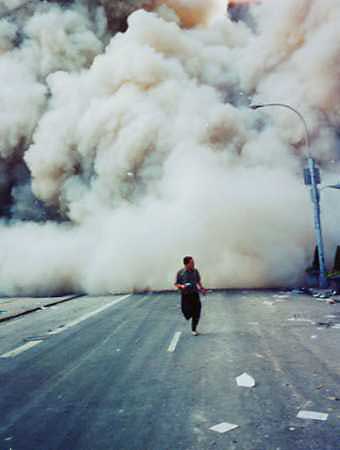
The verses of Revelation and how they relate to the
WTC tragedy
Revelation:
18:10 "...In one
hour has thy judgment come".
18:19 "...In hour she has been laid waste." 18:17 "In one
hour all this wealth has been laid waste."
Interpretation: In one hour is mentioned three times, The south tower
collapsed almost to the hour (56 minutes to be exact). The north tower
lasted a little longer than an hour.
18:11 "And the merchants of the earth...no one buys their cargo...
" Interpretation: Shows that it is world trade, and this trade has
been stopped.
18:16"...bedecked with gold...
" Interpretation: The World
Trade Center, had in its lower floor many tons of gold and silver.
18:17 "...all this wealth...
" Interpretation: Occupying the WTC towers were offices of some of
the world's wealthiest companies, plus the gold and silver.
18:18 "...
what city was like the great city?"
Interpretation: Since the World Trade Center was visited by 150
thousand people daily, and had more than 50 thousand people
18:8 "...and she shall be burned with fire..." 18:17,18
"shipmasters, seafaring men, and sailors...stood far off and cried
out...burning of her."
Interpretation: Since when "far off" out on the open sea, only
tall buildings can be recognized, the "far off" hints that the
great city is tall buildings, and was recognized by shipmasters, seafaring
men, and sailors who no doubt cried out as they saw the burning of her.
These verses also hint that the great city was close to the sea.
18:21 "...the great city be thrown down with violence....found no
more.", 18:19 "...In one hour she has been laid waste."
Interpretation: Any city of 12, 15, 17 million would be impossible to be
"laid waste" by violence, and "found no more" in one
hour, unless a nuclear bomb were dropped, but that would lay the city
waste in 2, 3, 4, or 5 seconds. Jesus knew humanity would form weapons of
utter and rapid destruction and placed emphasis on the one hour, and this
is the finest point of the prophecy which emphasizes three times that this
complete destruction would occur in one hour, as was the case with the WTC
towers.
18:3 "for all nations...the merchants of the earth...", 18:11
"And the merchants...", 18:15 "The merchants of these
wares...", 18:17 "...and all whose trade is on the sea...",
18:23 "...thy merchants were thy great men of the earth...
" Interpretation: This is a complete focus on trade. No literal
city has ever been famous only for its business. Again this is another
fine point.
18:19 "...dust on their heads...
" Interpretation: Thousands were covered by dust, have you ever seen
more dust? You see how the prophecy points out the major details.
18:21 "...the great city be thrown down with violence....found no
more."
Interpretation: If the prophecy is speaking about a literal city then it
would not say thrown down (fell), we never read of Berlin or Hiroshima
fell, the expressions destruction, wasted, devastated are used. The only
way fell (thrown down) is used, is as a metaphor, such as Paris fell to
the Germans, meaning the Germans have taken control of Paris.
The most striking feature of the World Trade Center was its height, it's
this fact that must have given Jesus Christ the inspiration to use the
wording "thrown down." In the history of mankind there has never
been a literal fall such as the fall of the twin towers. "thrown down
with violence and found no more", it certainly rings a bell, how
precise! Of all violent events of history this can only apply to the WTC
tragedy. One can't dismiss it as mere chance as this is the only time this
expression is used by the Bible where violence is mentioned, and violence
is mentioned much in the Bible.
18:22 "And the sound of harpers and minstrels, of flute players and
trumpeters, shal be heard in thee no more;"
Interpretation: Could this mean the street musicians one could see in and
around the towers?
From: www.users.ms11.net/~dejnarde/wtc.htm
UPLIFTING WOMEN - CRIMES OF VIOLENCE AGAINST WOMEN AROUND THE ...
| ... CRIMES OF VIOLENCE
AGAINST WOMEN AROUND THE WORLD. by Dee Finney. ... And all
over the world, women face terrible situations of domestic abuse
and sexual violence. ... www.greatdreams.com/uplifting.htm - 43k - |
CORNPLANTER - US NATIVE AMERICAN POLICY
| ... country. Our Violence
Policy has been developed in the same way. ... It is a
policy that looks at violence in a very broad way. Instead ... www.greatdreams.com/cornplanter.htm - 42k - |
FREQUENCY SICKNESS - WHAT ARE THE CAUSES AND THE SYMPTOMS?
| ... And the entertainment
industry said, let's make TV shows and movies that promote
profanity, violence, and illicit sex. ... www.greatdreams.com/antenna.htm - 73k - |
EVIDENCE FOR THE NEED OF A GLOBAL PEACE VIGIL
| ... tanks were involved in the
final conflagration. Government Violence Is
"Legitimate"? The deputy attorney general of California
commented ... www.greatdreams.com/PeaceVigil.htm - 94k - |
WORLD MEDITATION PRAYERS FOR PEACE
| ... Unto all have I amity, and
unto none enmity. Know that violence is the root cause of
all miseries in the world. Violence, in fact, is the knot
of bondage. ... www.greatdreams.com/prayers2.htm - 11k - |
STIGMATA - THE MOVIE AND THE REALITY - THE THIRD SECRET OF FATIMA
| ... To begin with the violence
is shocking. The movie should never be watched by children. Even
to an adult, the violence could cause disturbing
nightmares. ... www.greatdreams.com/stigmata.htm - 91k - |
| ... This has not happened
without violence. The land masses quake and quiver and
mankind does not tolerate disequilibrium of it's senses ... www.greatdreams.com/can.htm - 48k - |
DREAMS AND VISIONS OF EARTHCHANGES
| ... This has not happened
without violence. The land masses quake and quiver and
mankind does not tolerate disequilibrium of its senses ... www.greatdreams.com/erthdrms.htm - 99k - |
Spare the Rod and Spoil the Child - Speaking of Discipline
| ... We unequivocally say,
"NO!". This is not the way to discipline a child, no
matter what the reason. Violence only begets violence.
... www.greatdreams.com/spirit_message20.htm |
POLAR AXIS SPIN - The Current Location Of The Spin Axis
| ... We can already feel the
influence of this separation as violence... There is much violence
occurring within your planet. Violence ... www.greatdreams.com/spinaxis.htm - 101k - |
CORPORAL PUNISHMENT IN SCHOOLS
| ... take all appropriate
legislative, administrative, social and educational measures to
protect the child from all forms of physical or mental violence,
injury or ... www.greatdreams.com/corporal.htm - 57k - |
| ... Essentially her resignation
is in protest of the police inaction to the violence
perpetrated against Indians at Wismar-Christianburg earlier in
May. ... www.greatdreams.com/1964-patterns.htm - 101k - |
MIRACLES - THE FINGER-POSTS OF GOD
| ... "Stockholm syndrome is
not brainwashing -- it is a means to endure the violence, a
survival technique that the brain uses," says Alan Hilfer,
PhD, child ... www.greatdreams.com/miracle.htm - 74k - |
| ... This has entailed armed violence,
culminating in the 1990s. Consequently, in the present decade
alone the violence has claimed the ... www.greatdreams.com/india.htm - 41k - |
| PADUKAH, KENTUCKY REMEMBERED. SCHOOL VIOLENCE.
WHY DO KIDS KILL KIDS? compiled by Dee Finney 4-18-01. ...
(Page no long available). School violence response expands.
... www.greatdreams.com/death/padukah.htm - 101k - |
Prophecies on the end of the millennium - on 1999-2000
| ... plagues. Rome and Moscow
will fall in the deepest disorder. The end of the millennium will
see a lot of violence and blood. (... The ... www.greatdreams.com/prophen2.htm - 23k - |
Should we Know More About Project Megiddo?
| ... the focus hereon only
concerns the two "outside" sources the FBI credited in
generating its "factors" which indicate a penchant for
"religion-based" violence. ... www.greatdreams.com/megiddo.htm - 42k - |
THE GRAND AGES AND THE COMING OF AQUARIUS
| ... AGE OF ARIES. WARS,
WARFARE, VIOLENCE AND CONQUEST. ... Christianity has
come to dominate the planet during the AGE of PISCES because of
it's inherent violence. ... www.greatdreams.com/ages.htm |
45 Prophecies on the end of the millennium - on 1999-2000
| ... plagues. Rome and Moscow
will fall in the deepest disorder. The end of the millennium will
see a lot of violence and blood. (... The ... www.greatdreams.com/prophen.htm - 29k - |
| ... Kamara said. Kamara
attributed the violence to factions "within or outside
Sierra Leone" opposed to the military government. WASP ... www.greatdreams.com/pol2000.htm - 101k - |
A BRIEF OVERVIEW OF THE NAVAJO PEOPLE
| ... sandpaintings. Harmony is
critical to the Navajo, non-violence a way of life.
Anything ... land. Both cultures believe in non-violence.
Both ... www.greatdreams.com/navajo.htm - 21k - |
| ... Friday August 17 6:33 AM
ET. Six Killed in Violence in India's Restive Kashmir. ...
Wednesday August 15 8:36 AM ET Kashmir Violence Overshadows
Indian Anniversary. ... www.greatdreams.com/pakistan.htm - 101k - |
| ... people on board. The surge
in violence was apparently timed around last Sunday's
Chechen presidential election. President Vladimir ... www.greatdreams.com/russia-terrorism2.htm - 101k - |
EARTH DISASTERS DREAMS AND VISIONS - 1989 - 2003
| ... This has not happened
without violence. The land masses quake and ... This
has not happened without violence. The land masses quake
and ... www.greatdreams.com/disaster-dreams.htm - 101k - |
THE NEW WORLD ORDER -WHAT IS IT?
| ... What does help, in the face
of violence, is preparation and training, which we will
offer to all who come, the support of our companero/as and the
strength of ... www.greatdreams.com/nwo.htm - 101k - |
A THOUSAND LIES - THE NATIVE AMERICAN
| ... New York: Delacorte Press,
1982). Violence in Indian Country over Waste An article
about violent conflicts over toxic waste dumping on native lands. ... www.greatdreams.com/lies.htm - 63k - |
TERRORISM - WORLD TRADE CENTER - 9-11-2001 - PAGE 11
| ... They say intelligence
intercepts, witness interviews and evidence gathered in hijackers'
cars and homes indicated a second wave of violence was
planned. ... www.greatdreams.com/trade_day11.htm - 101k - |
| ... "But 19 out of 20 New
Yorkers draw the line at violence.". ... The
march has been spirited, diverse and without any reports of violence.
... www.greatdreams.com/political/bush-protests.htm |
ET Government Considering "Major or Epic Land Shift"
| ... There was a repetitive
scenario that had developed where there was something on TV about violence,
and then all of a sudden someone would burst out of a closet ... www.greatdreams.com/etgov.htm - 56k - |
| ... in appearance or viewpoint.
I believe this is expressed in Revelation, as Babylon being thrown
down by violence. I believe most ... www.greatdreams.com/greatest.htm - 26k - |
| ... His violence shall
come down on the crown of his own head. ... 11:5 Yahweh
examines the righteous, But the wicked and him who loves violence
his soul hates. ... www.greatdreams.com/psalms.htm - 101k - |
Southwest Indian People - Apache : Mangas, Victorio, Nakaidoklini ...
| ... Additional troops were
called up to curb any more violence. The Chiricahua leaders
at San Carlos resented and feared the growing number of troops. ... www.greatdreams.com/apache/ Apache-treaty-Victorio-1877.htm - 29k - |
TERRORISM - WORLD TRADE CENTER - 9-11-2001 - PAGE 3
| ... While Washington points to
Osama bin Laden as "suspect # 1" in yesterday's horrific
violence, the truth is not being told to the American
people: 'Washington ... www.greatdreams.com/trade_day3.htm - 101k - |
ASCENSION - A TRUE STORY OF A NEAR DEATH EXPERIENCE
| ... I was addicted to watching
the proliferation of violence on the television and in the
movies, and listening to the angry conversations on the radio. ... www.greatdreams.com/nde1.htm - 36k - |
| ... The Royal Welsh Fusiliers
are dispatched to British Guiana to control any outbreak of violence
which may follow the suspension. ... www.greatdreams.com/diaspora.htm - 101k - |
| ... lead story.). Our
president, an ardent advocate of gun control, loves to say that 12
"kids" die each day from gun violence. What ... www.greatdreams.com/political/unarmed.htm - 101k - |
Transcript of President Bush's Speech
| ... depends on us. Our nation,
this generation, will lift the dark threat of violence from
our people and our future. We will rally ... www.greatdreams.com/bush_speech_92001.htm - 23k - |
DIRE MESSAGES OF JESUS AND MOTHER MARY - JANUARY, 2002
| ... To pray for the Israelis
and for the Palestinians. That when there is oppression, there is violence.
Violence vs. violence would lead to war . ... www.greatdreams.com/sacred/dire_jesus6.htm |
BLACK AND WHITE - THE PROBLEMS IN GUATEMALA
| ... Chanteau, who worked in
Chiapas for 30 years and was a close associate of Ruiz, had
criticized the Mexican government for its violence toward
indigenous people ... www.greatdreams.com/guatemala.htm - 76k - |
| ... committed sin. (2) Hail,
Hept-khert, who comest forth from Kher-aha (KERAHA), I have not
committed robbery with violence . (3) Hail ... www.greatdreams.com/karma_judging.htm - 54k - |
| ... All of these cities have
experienced several newsworthy instances of violence in the
last few years. ... School 'on edge' over violence
threats ... www.greatdreams.com/death/deathstr.htm - 101k - |
Fighting Animal Abuse - State Laws and Fines
| ... AHA's campaign against violence
to animals has led us to investigate the cruelty statutes in all
fifty states, and Washington, DC. ... www.greatdreams.com/eeyore/anmlws.htm - 40k - |
DINOTOPIA - Codes, Rules and Regulation
| ... Dinotopians are
vegetarians. They eat only fruits and vegetables. Violence
is looked down upon in Dinotopia. Humans are guests there. ... www.greatdreams.com/rules_regs.htm - 19k - |
Medical Teams' Advice for Protesters
| ... This will help you avoid
the worst effects of the POSSIBLE use of police violence
from tear gas, pepper spray and plastic bullets. ... www.greatdreams.com/protest.htm - 9k - |
PROPHECIES ABOUT THE NEW MILLENIUM
| ... Deserts expand. Crops will
fail; there will be massive starvation Widespread emotional and
mental collapse; increase in crime and violence. ... www.greatdreams.com/proph.htm - 21k - |
DEES DREAMS AND VISIONS - AUGUST, 1990
| ... I asked, "Will there
be any violence in the US because of the Iraqi and Saudi
Arabian war?" There was a man there inquiring about the same
thing I was. ... www.greatdreams.com/aug90.htm - 37k - |
| ... cultural plan to attract
and convince through civilized and humanitarian means as specified
in the human rights laws, far from any use of violence or
coercion. ... www.greatdreams.com/hezbollah.htm - 101k - |
DREAMS AND VISIONS OF THE HOLY GRAIL AND THE SECOND COMING OF ...
| ... son Reuben, but refused to
grant him his rights of inheritence as he was described as
"unstable as water..." Of Simon and Levi; "weapons
of violence are their ... www.greatdreams.com/holygrl.htm |
Uganda - Patricia McFadden, The Challenges and Prospects for the ...
| ... They put on black T-shirts
and marched demanding a co-ownership clause to the Land Act, as
well as enactment of the bills against domestic violence
and sexual ... www.greatdreams.com/uganda-women.htm - 57k - |
| ... Uum" weapons. (The
word "Tuuy" seemed to be Vietnamese) "Uum" is
Latin and means: strength, force, power, might, violence.
The "Tuuy ... www.greatdreams.com/war/weapons-sea.htm - 94k - |
| ... The focus will be on Kerry
and his agenda, said one strategist, who contended that there was
no need to assail Bush because continuing violence in
post-war ... www.greatdreams.com/political/ democratic-convention-2004.htm - 53k - |
The Changing of the Guard - Part One: Corporate Media ...
| ... On other days, they may be
called "Satanic Usurper’s Victory," "Souls United
in Violence," "Sullen Underling’s
Vexation," "Seems Unfair, Victoria," "Sexed ... www.greatdreams.com/political/media01.html - 65k - |
ARTIFICIAL INTELLIGENCE - JAIR FARM
| ... Mizell is the latest in a
line of hip-hop artists to fall victim to violence. ...
But Run DMC and their songs were never about violence. ... www.greatdreams.com/jair-farm.htm - 101k - |
MESSAGE FROM DRUNVALO ABOUT THE POLE SHIFT
| ... So the reason for physical
preparation is to give one a safe place to make the transition
without violence and struggle - A calm place and time to
meditate ... www.greatdreams.com/drun.htm - 10k - |
| ... carriers. The crashes came
against a backdrop of violence in Chechnya, where Moscow
has been battling separatists for a decade. ... www.greatdreams.com/russia-terrorism.htm - 86k - |
| ... Http://bilderberg.techno.cz/
makes the suggestion that Bilderbergers "wish to desensitise
Western youth to violence in order to be able to raise
armies to ... www.greatdreams.com/bilderbergs.htm - 50k - |
WHY DID ABRAHAM LINCOLN FREE THE SLAVES?
| ... There was terrible problems
of slave unrest and white violence in older states like
South Carolina and Virginia where slaves had been bought and sold
for ... www.greatdreams.com/lincoln.htm - 24k - |
THE LAW - DISENFRANCHISED WOMEN
| ... A Philadelphia Quaker and a
veteran of the dramatic British suffragette campaign, Paul
combined non-violence and militance in her leadership
style. ... www.greatdreams.com/disenfranchised.htm |
THE DOGS OF WAR - BLOWBACK AND THE MARBLE GAME
| ... Off Drugs. Now There's More
Cocaine Than Ever in the US, Colombia's Violence is
Spiraling and Bush is Making Things Worse Bill Clinton ... www.greatdreams.com/blowback.html - 58k - |
Humanity On The Pollen Path - Part One
| ... a private school in that
county and that on a calm, sunny day during a school cricket
match, which was open to parents in the large grounds, came sheer violence
... www.greatdreams.com/plpath1.htm - 70k - |
ARTIFICIAL INTELLIGENCE - JAIR FARM
| ... Mizell is the latest in a
line of hip-hop artists to fall victim to violence. ...
But Run DMC and their songs were never about violence. ... www.greatdreams.com/war/jair-farm.htm - 101k - |
PLANETARY INITIATION - by Kiara Windrider
| ... Without condoning violence,
can we place ourselves in the shoes of the "terrorist"
next door and acknowledge their own desperate need to be heard and
... www.greatdreams.com/planetary_initiation.htm - 27k - |
| ... Activists say the chance of
violence at mass protests planned for later this week was
slim because many foreign campaigners were staying away from
Cancun due ... www.greatdreams.com/political/electric-octopus.htm - 88k - |
THE ELECTION - 2000 - DREAMS AND VISIONS
| ... Luca Casarini, media-savvy
leader of the Tute Bianche (White Overalls) at HQ at the Carlini
stadium, admitted that violence was probably inevitable. ... www.greatdreams.com/elec2000.htm - 101k - |
HOW THE GOVERNMENT BLEW UP MANHATTAN - 9-11-2001
| ... what these Satanic
Freemason's are hoping for is that the people of America will beg
the Government to step in and end all this violence, this
bloodshed, this ... www.greatdreams.com/trade_blew_up.htm - 84k - |
| ... a household member before
the age of 18 According to the Ford Foundation, nearly fifty
percent of all homeless women and children are fleeing domestic violence
... www.greatdreams.com/veterans.htm - 81k - |
| ... slumber till they make
someone fall. 17 They eat the bread of wickedness and drink the
wine of violence. 18 The path of the righteous ... www.greatdreams.com/proverbs.htm |
EEYORE'S COMPLAINT - ANIMAL ABUSE
| ... Slaughter Act or failing to
report those who did -- all in an effort to "keep the
production line running." Many also discuss the web of violence
in which they ... www.greatdreams.com/eeyore/eeyore.htm - 56k - |
PABLO SALAZAR - MEXICO - THE FIGHT FOR FREEDOM GOES ON
| ... Chanteau, who worked in
Chiapas for 30 years and was a close associate of Ruiz, had
criticized the Mexican government for its violence toward
indigenous people ... www.greatdreams.com/pablo.htm - 101k - |
WTO (WORLD TRADE ORGANIZATION) SEATTLE PROTEST
| ... As a result, WTO delegates
were placed at risk, the meeting was disrupted, violence
spilled out of downtown into the residential Capitol Hill
neighborhood ... www.greatdreams.com/prep.htm - 101k - |
SCHOOL SHOOTING - FORT GIBSON, OKLAHOMA
| ... Lawmakers reacted swiftly
to the shooting in this country where most weapons can be obtained
only on the black market, and where gun violence - even in
urban ... www.greatdreams.com/gibson.htm - 22k - |
JABBERWOCKY & THE LORD OF THE FLIES - A DREAM
| ... Jack could not stab the pig
because of the great violence involved, but he vows that he
would show no mercy next time. RELATED NEWS. ... No violence
was reported. ... www.greatdreams.com/death/Jabberwocky.htm - 85k - |
| ... architectural designs, the
practice of putting up these bird feeding tables is undoubtedly
linked to the Jain faith which preaches non-violence and
humanity. ... www.greatdreams.com/alex/sacred-birds.htm - 101k - |
KENT STATE - PROTEST - A DREAM
| ... Many protesters blamed US
foreign policy, which they say perpetuates a cycle of violence
and hatred, and ultimately a backlash against America. ... www.greatdreams.com/kent.htm - 101k - |
| ... 6:8). According to this
prophecy, war, violence, starvation and disease may take
hundreds of millions of lives. These disasters ... www.greatdreams.com/sacred/age_kali.htm - 40k - |
On May 18th, 1980 the eruption of Mt. St. Helens in southwest ...
| ... This has not happened
without violence. The land masses quake and quiver and
mankind does not tolerate disequilibrium of its senses ... www.greatdreams.com/volcano/mt_st_helens.htm - 101k - |
| ... 21 And a mighty angel took
up a stone like a great millstone, and cast [it] into the sea,
saying, Thus with violence shall that great city Babylon be
thrown ... www.greatdreams.com/cinnamon.htm |
| ... The second supposedly
created a new place of initiation at Shambhala, the city of violence
in command of the elements and human masses, hastening the arrival
... www.greatdreams.com/solar/black-sun.htm - 42k - |
TERRORISM - WORLD TRADE CENTER - DAY 2 - 9-12-2001
| ... Another Egyptian man,
Gawish Abdel Karim, told AFP he was pleased with the wave of violence
in which another plane crashed into the Pentagon in Washington,
the ... www.greatdreams.com/trade_day2.htm - 101k - |
THE WAR WE WATCHED ON TV - THE FACTS AND MORE
| ... Rev 18:21 And a mighty
angel took up a stone like a great millstone, and cast [it] into
the sea, saying, Thus with violence shall that great city
Babylon be ... www.greatdreams.com/wariraq.htm - 61k - |
DIRE MESSAGES OF JESUS AND MARY - PAGE 2
| ... struck. I told him that he,
who lives by the sword, will die by the sword. Those, who live by violence,
will die by violence. The ... www.greatdreams.com/sacred/dire_jesus2.htm - 101k - |
EARTHQUAKE IN ALGIERS - 5-21-03
| ... sites. Ouyahia said
security forces were on alert to stop looting in a country riven
by a decade of violence by Islamist rebels. ... www.greatdreams.com/algeria-quake-52103.htm - 32k - |
ALL THROUGH THE NIGHT - THE GUARDIAN ANGELS - CUBA
| ... ``The absence of any
punishment for acts of naval and air piracy, and for the hijacking
of Cuban planes and boats sometimes by violence and murder,
have ... www.greatdreams.com/guarding.htm - 99k - |
THE BLOODY WAR OF JOEL FOR WARREN
| ... 19 But Egypt will be
desolate, Edom a desert waste, because of violence done to
the people of Judah, in whose land they shed innocent blood. ... www.greatdreams.com/joel.htm - 30k - |
| ... its whole surroundings!!!
When a great number of people get together very closely,
potentials of violence also dissolve. It looks ... www.greatdreams.com/dna.htm - 72k - |
Dream centre' of the brain found
| ... "Women dream more
often about friends, family and domestic settings," while
"Men are more likely to dream about sex and violence."
(No comment on that ... www.greatdreams.com/brain-dreams.htm - 59k - |
Arkansas Online : 1973 / Investigations
| ... With at least four prior
convictions involving drugs and violence, Minor got four
years' unsupervised probation after the 1995 seizure of drugs and
drug ... www.greatdreams.com/political/ Arkansas-1973-Investigations.htm |
NATIONAL SECURITY - HOLIDAY TERRORISM
| ... Enough questions. I suggest
someone remote view this and see if I'm just whistling in the dark
with this. Thanks! Dee. VIOLENCE MOVES TO AUSTRALIA. . ... www.greatdreams.com/wacovst.htm - 101k - |
CONCENTRATION CAMPS IN THE US?
| ... INVASION; AND ON
APPLICATION OF THE LEGISLATURE, OR OF THE EXECUTIVE (WHEN THE
LEGISLATURE CANNOT BE CONVENED) AGAINST DOMESTIC VIOLENCE."
"REGIONAL GOVERNMENT ... www.greatdreams.com/concentration.htm - 101k - |
BOMBING OF THE WORLD TRADE CENTER - 9-11-2001 - PAGE 8
| ... Attack on America - Impact
around the World. The terrorists thought they were striking
against America, but dozens of countries lost people to the violence.
... www.greatdreams.com/trade_day8.htm - 92k - |
The American Tragedy: A Symbolic Event, Part One
| ... The negative elements of
consciousness, such as anger, violence, and war, may be
directed to earth in order to protect other areas of consciousness
from them. ... www.greatdreams.com/Events/9_11_01/Amertrag.htm - 101k - |
DEES DREAMS AND VISIONS - APRIL, 1992
| ... NOTE: Michael McGee was a
black politician in the city of Milwaukee who was using threats of
violence to create change in the city to force the people
to ... www.greatdreams.com/apr92.htm - 53k - |
| ... 7 - As a cistern welleth
with her waters, so she welleth with her wickedness; violence
and spoil is heard in her; before Me continually is sickness and
wounds. ... www.greatdreams.com/sacred/daughters_of_zion.htm - 71k - |
The Changing of the Guard: Part III: Illuminati Life and ...
| ... abuse; extremely
distressing scenes of shock violence throughout movie,
including beating one’s own self to a bloodied state; betrayal ... www.greatdreams.com/political/media03.html - 73k - |
DEES DREAMS AND VISIONS - AUGUST 2000
| ... I told them to look around,
that it could take hours, but there would be no TV on because of
the violence and it was Christmas Eve, so there would be no
... www.greatdreams.com/aug2000.htm - 101k - |
| ... E-mail Joe Garofoli at
jgarofoli@sfchronicle.com. Sunday, Jan. 16, 2005 9:32 am EST
Inaugural Protesters Threaten Violence. While ... www.greatdreams.com/political/ bush-protests-inauguration.htm - 101k - |
| ... Helder was charged in Iowa
and Illinois with using a pipe bomb in a crime of violence
and destroying property used in interstate commerce. ... www.greatdreams.com/militia.htm |